
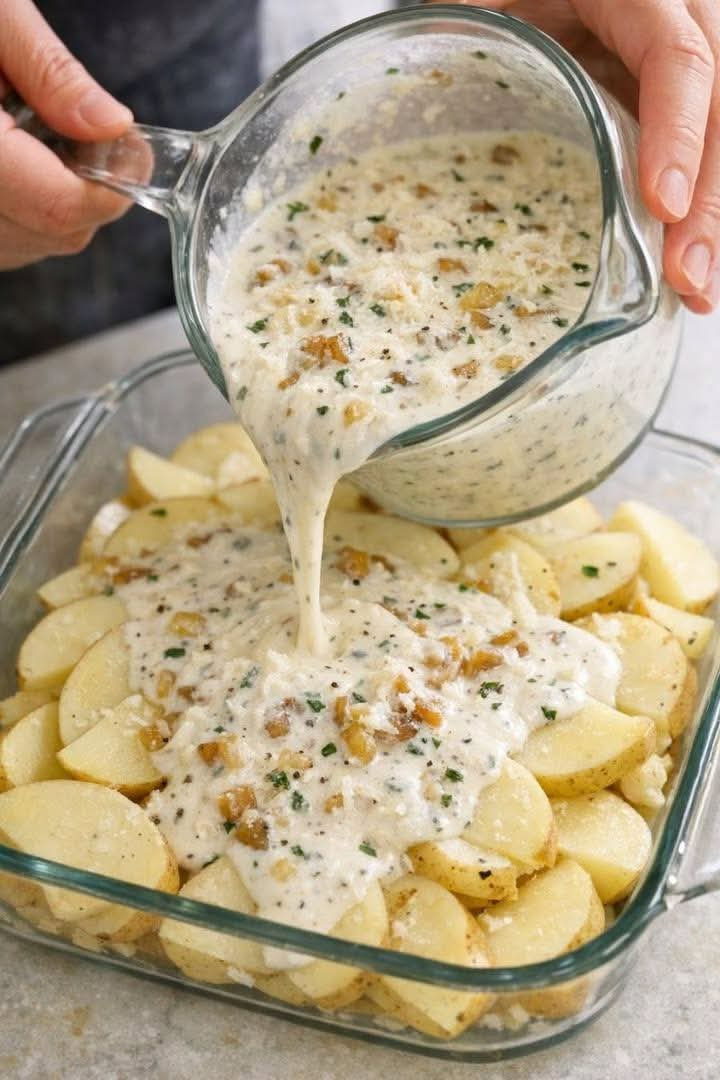
Creamy Pour-Over Potato Casserole
Introduction
There are some dinners that do not need complicated ingredients or fancy presentation to feel completely satisfying. This Creamy Pour-Over Potato Casserole is exactly that kind of meal. Thinly sliced potatoes are layered into a glass casserole dish, then covered with a smooth, savory cream sauce that slowly sinks between every layer as the potatoes bake.
The result is tender potatoes surrounded by a rich, velvety sauce, with a lightly golden top and a comforting homemade flavor. It is the kind of dish that fills the kitchen with the smell of butter, garlic, cream, and baked potatoes and makes everyone ready for dinner before it even reaches the table.
It works beautifully as a cozy winter supper, but it is also substantial enough to serve alongside roasted chicken, baked ham, sausage, or a simple green salad.
Ingredients
For the Potatoes
- 2 1/2 pounds russet or Yukon Gold potatoes
- 2 tablespoons butter, softened
- 1 small onion, very thinly sliced
- 1 teaspoon salt
- 1/2 teaspoon black pepper
- 1/2 teaspoon dried thyme
- 1/4 teaspoon garlic powder
- 1 cup shredded cheddar cheese
- 1/4 cup grated Parmesan cheese
For the Creamy Pour-Over Sauce
- 3 tablespoons butter
- 3 tablespoons all-purpose flour
- 2 cups whole milk
- 1 cup heavy cream
- 2 cloves garlic, finely minced
- 1 teaspoon salt
- 1/2 teaspoon black pepper
- 1/2 teaspoon dried thyme
- 1/4 teaspoon onion powder
- 1/2 cup shredded cheddar cheese
For the Topping
- 1/2 cup shredded cheddar cheese
- 2 tablespoons grated Parmesan cheese
- 1 tablespoon melted butter
- 2 tablespoons breadcrumbs, optional
- A small pinch of dried parsley, optional
Instructions
1. Prepare the Potatoes
Preheat the oven to 375°F (190°C).
Wash and peel the potatoes if desired. Slice them very thinly and evenly, preferably about 1/8 inch thick. Keeping the slices similar in thickness is important because it allows the potatoes to cook at the same rate.
Place the sliced potatoes in a large bowl. Add the salt, black pepper, thyme, and garlic powder. Toss gently so the seasoning is distributed throughout the potatoes.
Thinly slice the onion and set it aside.
2. Prepare the Creamy Pour-Over
Melt the butter in a medium saucepan over medium heat.
Add the minced garlic and cook for about 30 seconds, just until fragrant. Do not allow the garlic to become dark.
Sprinkle the flour over the butter and whisk continuously for about 1 minute. This creates the base of the sauce and removes the raw flour flavor.
Gradually pour in the milk while whisking. Add the heavy cream and continue whisking until the mixture becomes smooth.
Add the salt, black pepper, thyme, and onion powder.
Cook for approximately 4 to 6 minutes, stirring frequently, until the sauce thickens enough to lightly coat the back of a spoon.
Remove the saucepan from the heat and stir in 1/2 cup of shredded cheddar cheese. Continue stirring until the cheese melts completely into the sauce.
The finished sauce should be creamy and pourable rather than extremely thick.
3. Form the Casserole
Lightly butter a 9-by-13-inch glass casserole dish.
Arrange one layer of sliced potatoes across the bottom. Scatter some of the sliced onion over the potatoes.
Add another layer of potatoes and onion, continuing until all the potatoes have been used.
Pour the warm cream sauce slowly over the entire casserole. Pouring gradually allows the sauce to work its way down between the potato slices instead of remaining only on the surface.
Gently press the potatoes down with the back of a spoon so that the sauce reaches as many layers as possible.
4. Add the Cheese Topping
Combine the remaining cheddar cheese and Parmesan cheese.
Sprinkle the mixture evenly over the top of the casserole.
For an especially crisp topping, combine the melted butter with the breadcrumbs and sprinkle this mixture lightly over the cheese.
Cover the casserole tightly with aluminum foil.
5. Bake
Place the covered casserole in the preheated oven and bake for approximately 45 minutes.
Remove the foil and continue baking for another 25 to 35 minutes, or until the potatoes are completely tender and the top is golden brown.
To test the potatoes, insert a thin knife into the center of the casserole. It should slide through the potato layers easily.
If the top becomes golden before the potatoes are fully tender, loosely cover the casserole again with foil and continue baking.
6. Rest Before Serving
Once the casserole is finished, remove it from the oven and let it rest for 10 to 15 minutes.
This resting period is important. The sauce will thicken slightly, the layers will settle, and the casserole will be much easier to serve.
Spoon generous portions onto plates while the casserole is still warm.
Method
The secret to this recipe is the combination of thin potato slices and a creamy sauce that is poured directly over the layers.
The potatoes absorb some of the sauce while baking, while the remaining sauce stays between the layers. This creates a casserole that is creamy throughout rather than simply having a creamy topping.
Cooking the sauce separately also gives you better control over the final texture. Instead of relying on cream to thicken inside the oven, the flour and butter create a smooth base before the casserole even goes into the oven.
The covered baking stage allows the potatoes to steam and soften. Removing the foil near the end allows excess moisture to evaporate and gives the cheese topping time to become golden and slightly crisp.
Formation and Layering
For the best texture, begin with a thin layer of potatoes rather than placing all the slices into the dish at once.
Follow this simple formation:
- Butter the casserole dish.
- Add a layer of potatoes.
- Scatter sliced onions over the potatoes.
- Season lightly.
- Repeat the layers.
- Pour the creamy sauce slowly over everything.
- Add cheddar and Parmesan.
- Finish with the optional buttery breadcrumb topping.
- Cover and bake.
- Uncover and finish until golden.
The sauce should reach down through the potato layers as much as possible. If the potatoes look particularly dry before baking, gently press them down into the sauce without crushing the slices.
A Little History
Creamy baked potato dishes have long been associated with home cooking because potatoes, dairy, butter, and cheese are relatively simple ingredients that can be transformed into a filling family meal.
Potato gratins and scalloped potatoes developed in different culinary traditions, but the basic idea is remarkably similar: thinly sliced potatoes are layered with dairy and baked slowly until tender.
American home cooks have especially embraced these dishes as holiday sides, Sunday suppers, potluck favorites, and cold-weather comfort food. Over time, variations have appeared with onions, garlic, cheddar, Parmesan, bacon, ham, herbs, and different cream sauces.
This version keeps that traditional spirit while making the creamy sauce the star of the dish.
Variations
Creamy Garlic Potatoes
Increase the garlic to 3 or 4 cloves and add a small amount of roasted garlic to the sauce for a deeper flavor.
Ham and Potato Casserole
Add 1 to 1 1/2 cups of diced cooked ham between the potato layers. The salty ham pairs particularly well with the creamy sauce.
Bacon Version
Cook 5 to 6 slices of bacon until crisp, crumble them, and sprinkle some between the layers before baking.
Extra Cheesy Version
Use a combination of cheddar, Monterey Jack, and Parmesan for a richer cheese flavor.
Herb Version
Add fresh thyme, rosemary, or chopped parsley to the sauce. Fresh herbs should be added toward the end of cooking so their flavor remains noticeable.
Vegetable Version
Thinly sliced mushrooms, spinach, or caramelized onions can be added between the potato layers for a more substantial casserole.
Serving Suggestions
This casserole is filling enough to serve as the main attraction for a simple supper.
Serve it with:
- A crisp green salad
- Steamed green beans
- Roasted broccoli
- Glazed carrots
- Roasted chicken
- Baked ham
- Grilled or roasted sausage
- A simple tomato salad
- Warm crusty bread
For a complete winter meal, serve a generous square of the casserole with roasted chicken and a fresh green vegetable.
Tips for the Best Results
Use potatoes that are firm and fresh. Yukon Gold potatoes create an especially creamy texture, while russet potatoes tend to become very soft and absorb the sauce beautifully.
Slice the potatoes thinly and evenly. Thick slices may require significantly more baking time.
Do not skip the resting period. The casserole will be very hot and loose immediately from the oven, but it becomes thicker and easier to serve after resting.
Do not boil the cream sauce aggressively. A gentle simmer is enough to thicken it.
Taste the sauce before pouring it over the potatoes. This is the easiest opportunity to adjust the salt and pepper.
If you want a darker golden top, place the casserole under the broiler for 1 to 2 minutes at the very end, watching it carefully.
Conclusion
Creamy Pour-Over Potato Casserole is the definition of comforting home cooking. Simple potatoes become something much more special when they are layered with onions, covered in a silky garlic cream sauce, finished with melted cheese, and baked until bubbling and golden.
It is warm, rich, filling, and wonderfully uncomplicated. The potatoes become tender enough to cut with a fork, while the creamy sauce settles into every layer and creates a dish that feels made for a cold evening around the dinner table.
This is the kind of recipe that belongs in a family collection because it is flexible enough for an ordinary weeknight but comforting enough for a Sunday dinner or holiday table.
For Potato Casserole Lovers
If you love creamy potatoes, this recipe is easy to make your own. Add ham for a hearty dinner, bacon for extra richness, onions for sweetness, or more cheese for an indulgent version.
The best part is the creamy layer that runs between the potatoes. Every serving brings together tender potatoes, savory onion, melted cheese, and the rich sauce that ties everything together.
Serve it hot, give it a few minutes to settle, and expect everyone to come back for another spoonful.