
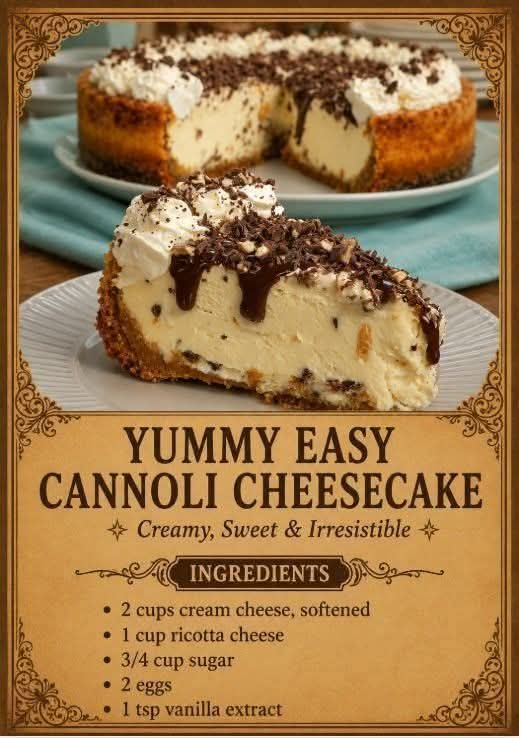
Easy Cannoli Cheesecake — Creamy, Sweet and Irresistible
Introduction
If you love the rich, creamy filling of traditional Italian cannoli and the smooth texture of classic cheesecake, this Easy Cannoli Cheesecake brings the best of both desserts together in one irresistible treat.
This cheesecake has a wonderfully creamy center made with cream cheese and ricotta, lightly sweetened with sugar and flavored with vanilla. The ricotta gives it the unmistakable character of cannoli cream, while the cream cheese provides the silky, rich texture that makes cheesecake so popular.
It is elegant enough for holidays and celebrations, yet simple enough to prepare for a weekend dessert. Serve it chilled with a dusting of powdered sugar, miniature chocolate chips, chopped pistachios, or a few pieces of crispy cannoli shell for a beautiful finishing touch.
Ingredients
For the Cheesecake Filling
- 2 cups cream cheese, softened
- 1 cup whole-milk ricotta cheese
- 3/4 cup granulated sugar
- 2 large eggs
- 1 teaspoon vanilla extract
- 1/2 teaspoon ground cinnamon
- 1/4 teaspoon salt
- 1/2 cup miniature chocolate chips, optional
For the Crust
- 1 3/4 cups crushed graham crackers
- 1/4 cup granulated sugar
- 6 tablespoons unsalted butter, melted
- 1/4 teaspoon cinnamon
For the Topping
- 1/2 cup miniature chocolate chips
- 1/4 cup chopped pistachios
- Powdered sugar, for dusting
- Optional crushed cannoli shells
Instructions
Step 1: Prepare the Crust
Preheat the oven to 350°F (175°C).
In a medium bowl, combine the crushed graham crackers, sugar, cinnamon, and melted butter. Mix until the crumbs are evenly moistened and resemble wet sand.
Press the mixture firmly into the bottom of a 9-inch springform pan. Use the bottom of a glass or measuring cup to create an even, compact layer.
Bake the crust for approximately 8 to 10 minutes. Remove it from the oven and allow it to cool while preparing the filling.
Step 2: Prepare the Ricotta
For the smoothest cheesecake, drain the ricotta before using it. Place the ricotta in a fine-mesh strainer lined with cheesecloth or a clean kitchen towel and allow excess liquid to drain.
This step is important because watery ricotta can make the cheesecake filling too loose.
Step 3: Make the Cheesecake Filling
Place the softened cream cheese in a large mixing bowl. Beat it on medium speed until smooth and creamy.
Add the drained ricotta and mix until the two cheeses are completely combined.
Gradually add the sugar, followed by the vanilla, cinnamon, and salt. Mix just until incorporated.
Add the eggs one at a time, mixing gently after each addition. Do not overbeat the mixture once the eggs are added. Overmixing can incorporate too much air, which may cause the cheesecake to puff and crack during baking.
Fold in the miniature chocolate chips if using.
Step 4: Fill the Pan
Pour the cheesecake mixture over the cooled crust.
Smooth the surface gently with a spatula. Tap the pan lightly against the counter a few times to release large air bubbles.
Step 5: Bake
Place the cheesecake in the preheated oven and bake for approximately 40 to 50 minutes.
The edges should look set while the center should still have a slight gentle wobble when the pan is moved.
Do not wait until the center is completely firm. The cheesecake will continue cooking from residual heat as it cools.
Turn off the oven, open the oven door slightly, and allow the cheesecake to cool inside for approximately 20 to 30 minutes.
Step 6: Cool Completely
Remove the cheesecake from the oven and allow it to cool at room temperature.
Once cooled, cover it and refrigerate for at least 4 hours. For the best texture and flavor, refrigerate it overnight.
The chilling process allows the cheesecake to fully set and gives the ricotta and cream cheese flavors time to develop.
Step 7: Decorate
Before serving, carefully remove the cheesecake from the springform pan.
Sprinkle miniature chocolate chips and chopped pistachios around the top. Add a light dusting of powdered sugar.
For an extra cannoli-inspired presentation, place small pieces of crushed cannoli shell around the edges.
Method
The secret to a successful cannoli cheesecake is controlling moisture and avoiding overmixing.
Begin with room-temperature cream cheese so it becomes smooth without requiring excessive mixing. Drain the ricotta thoroughly because traditional ricotta can contain a considerable amount of moisture.
The crust should be pressed firmly into the pan so it remains together when the cheesecake is sliced.
When making the filling, mix the cheeses and sugar until creamy, but once the eggs are added, mix only until combined. A gentle baking process produces a smooth and creamy texture.
The cheesecake should have a slight wobble in the center when it comes out of the oven. This is a sign that it has not been overbaked.
Finally, patience is essential. Allow the cheesecake to cool completely and refrigerate it for several hours before slicing.
History of Cannoli
Cannoli are one of the best-known traditional desserts from Sicily, Italy. The name comes from the Italian word associated with a small tube or reed, referring to the cylindrical shell traditionally used to shape the pastry.
Classic cannoli consist of crisp pastry shells filled with sweetened ricotta cream. Depending on the region and family recipe, the filling may contain ingredients such as cinnamon, candied citrus, chocolate, or pistachios.
Cannoli became especially popular outside Sicily as Italian communities brought their culinary traditions to other countries. Over time, the flavors of cannoli began appearing in cakes, cookies, cheesecakes, dips, and other desserts.
This cheesecake is a modern interpretation of those traditional flavors. Instead of filling a crispy pastry shell with ricotta cream, the ricotta becomes part of the cheesecake itself.
The Formation of the Cheesecake
The combination of cream cheese and ricotta creates the foundation of this dessert.
Cream cheese contributes richness, smoothness, and structure. Ricotta provides a slightly lighter texture and the distinctive dairy flavor associated with traditional cannoli filling.
Sugar balances the natural tanginess of the cheeses, while vanilla and cinnamon provide warmth.
Chocolate chips add little pockets of sweetness and create a familiar cannoli flavor. Pistachios can also be added because they pair beautifully with ricotta and are commonly associated with Italian pastries.
The result is a cheesecake that is rich without being overly complicated.
Tips for the Best Cannoli Cheesecake
Use full-fat cream cheese for the richest texture.
Choose whole-milk ricotta when possible. Lower-fat ricotta may produce a less creamy filling.
Drain the ricotta before adding it to the mixture.
Make sure the cream cheese is softened before mixing.
Do not overbeat the eggs into the filling.
Avoid opening the oven repeatedly while the cheesecake is baking.
Do not overbake. A slightly wobbly center is preferable to a completely firm center.
Allow the cheesecake to chill thoroughly before cutting.
For clean slices, use a sharp knife and wipe the blade clean between cuts.
Delicious Variations
Chocolate Cannoli Cheesecake
Add 1/2 cup miniature chocolate chips to the filling and sprinkle additional chocolate chips over the top.
Pistachio Cannoli Cheesecake
Fold finely chopped pistachios into the filling and decorate the finished cheesecake with additional pistachios.
Orange Cannoli Cheesecake
Add 1 teaspoon finely grated orange zest to the filling. The citrus flavor gives the cheesecake a bright Italian pastry character.
Chocolate-Dipped Cannoli Style
Drizzle the chilled cheesecake with melted chocolate and allow it to set before serving.
Extra Cannoli Style
Decorate the top with ricotta cream, miniature chocolate chips, chopped pistachios, and crushed cannoli shells.
Serving Suggestions
This cheesecake is best served cold or slightly chilled.
Cut it into wedges and serve it on its own for a simple dessert. For a more elaborate presentation, add a small spoonful of whipped cream, a sprinkling of pistachios, or a light dusting of powdered sugar.
It is particularly beautiful when served after an Italian-inspired dinner, during holidays, at birthday celebrations, or at family gatherings.
Storage
Store the cheesecake covered in the refrigerator.
It should generally be enjoyed within 3 to 4 days for the best quality.
The cheesecake can also be frozen. Wrap individual slices tightly and place them in a freezer-safe container. Thaw the slices in the refrigerator before serving.
For the best texture, add delicate toppings such as powdered sugar, pistachios, and cannoli shells shortly before serving.
Why Cheesecake Lovers Will Love This Recipe
Cheesecake lovers will appreciate the creamy, rich texture and classic cheesecake base.
Cannoli lovers will recognize the familiar combination of ricotta, vanilla, cinnamon, chocolate, and pistachios.
The best part is that you do not have to prepare individual cannoli shells or spend time filling each pastry. Everything comes together in one beautiful cheesecake.
It is creamy, lightly sweet, rich, and full of the flavors that make traditional cannoli so special.
Conclusion
Easy Cannoli Cheesecake is a wonderful meeting point between two beloved desserts. It takes the creamy richness of cheesecake and combines it with the traditional flavors of Italian cannoli.
With a buttery crumb crust, creamy ricotta and cream cheese filling, subtle cinnamon and vanilla, and optional chocolate chips and pistachios, every slice offers something special.
Whether you are making it for a holiday table, a family dinner, a birthday, or simply because you want a memorable homemade dessert, this cheesecake is a recipe worth keeping.
Once you make it, it may become one of those desserts that family and friends request again and again.