
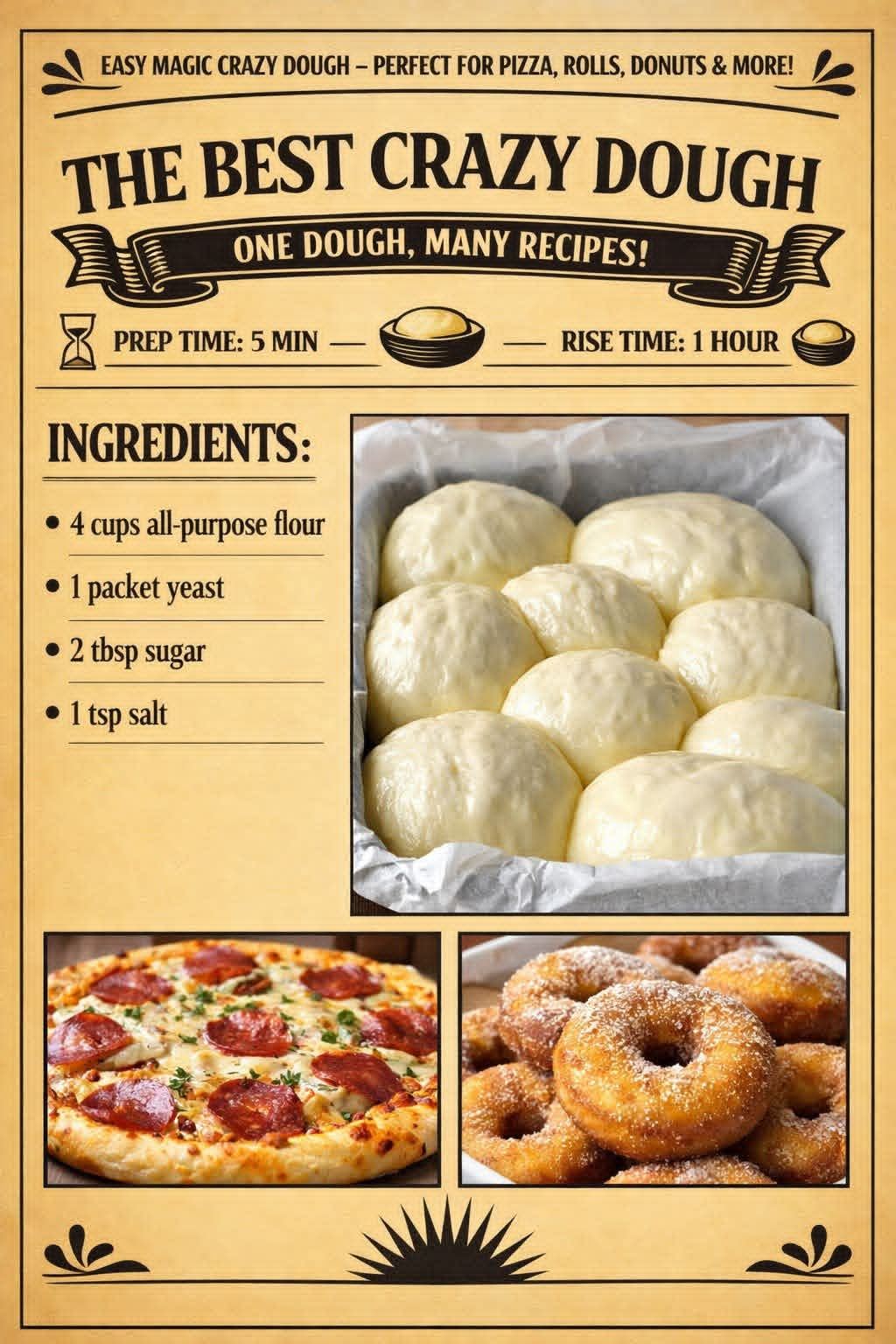
Easy Magic Crazy Dough — One Dough, Many Recipes
Introduction
There are some recipes that become family favorites simply because they make everyday cooking easier. Magic Crazy Dough is one of those wonderfully versatile recipes. Instead of preparing a separate dough for pizza, dinner rolls, breadsticks, fried doughnuts, or other baked treats, you can prepare one basic dough and transform it into many different recipes.
This dough is soft, fluffy, slightly elastic, and easy to work with. It uses simple ingredients that are commonly found in the kitchen: flour, yeast, sugar, salt, warm milk or water, and a little oil or melted butter.
The dough can be baked, shaped, filled, rolled, twisted, or divided into smaller portions depending on what you want to make. Its mild flavor makes it suitable for both savory and lightly sweet recipes.
Whether you are preparing a homemade pizza for dinner, soft rolls for a family meal, or a batch of doughnuts for a weekend treat, this recipe gives you a flexible starting point.
Ingredients
For the Basic Dough
- 4 cups all-purpose flour
- 1 packet active dry yeast, approximately 7 g
- 2 tablespoons granulated sugar
- 1 teaspoon salt
- 1 1/2 cups warm milk or warm water
- 2 tablespoons vegetable oil or melted butter
Optional Ingredients
Depending on how you plan to use the dough, you can also add:
- 1 teaspoon vanilla extract for sweet dough
- 1 tablespoon honey for extra softness and mild sweetness
- 1 tablespoon powdered milk for a richer dough
- 1 tablespoon melted butter for brushing
- Sesame seeds for rolls
- Garlic and herbs for breadsticks
- Cinnamon and sugar for sweet preparations
Important Ingredient Notes
The temperature of the liquid is important. The milk or water should be warm rather than hot. Very hot liquid can damage the yeast and prevent the dough from rising properly.
All-purpose flour works well for this recipe, but the exact amount of flour can vary slightly depending on humidity, flour type, and how accurately the flour is measured.
Add the flour gradually rather than adding all of it at once. The finished dough should be soft and slightly tacky but should not be excessively sticky.
Instructions
Step 1: Prepare the Yeast
Pour the warm milk or water into a large mixing bowl.
Add the sugar and yeast. Stir gently and allow the mixture to stand for approximately 5 to 10 minutes.
If using active dry yeast, a light layer of foam on the surface indicates that the yeast is active.
If the mixture does not show any activity after several minutes, check the yeast’s expiration date and make sure the liquid was not too hot or too cold.
Step 2: Add the Remaining Ingredients
Add the oil or melted butter and stir.
Add the salt.
Begin adding the flour gradually, mixing after each addition. Continue until the mixture begins to form a soft dough.
Avoid adding too much flour at once because a stiff dough will produce heavier rolls and less tender baked goods.
Step 3: Knead the Dough
Transfer the dough to a lightly floured work surface.
Knead it for approximately 8 to 10 minutes by hand.
Push the dough forward with the heel of your hand, fold it back toward yourself, turn it slightly, and repeat.
Continue kneading until the dough becomes smooth, soft, and elastic.
If the dough is extremely sticky, add flour one tablespoon at a time. If it feels unusually dry or difficult to knead, add a small amount of warm milk or water.
Step 4: First Rise
Place the kneaded dough in a lightly oiled bowl.
Turn the dough once so the surface is lightly coated with oil.
Cover the bowl with plastic wrap, a clean kitchen towel, or a lid.
Place it in a warm, draft-free location.
Allow the dough to rise for approximately 1 to 1 1/2 hours, or until it has roughly doubled in size.
The exact rising time depends on the temperature of your kitchen.
Step 5: Deflate and Shape
Once the dough has doubled in size, gently press it down to remove excess air.
Transfer it to a lightly floured surface.
Divide the dough according to what you want to prepare.
For small dinner rolls, divide it into equal portions.
For pizza, keep a larger portion together and roll it into a circle.
For breadsticks, divide the dough into strips.
For doughnuts, roll it out and cut it into rings.
For filled bread, divide the dough into portions and fill each piece before sealing.
Methods for Using Magic Crazy Dough
Method 1: Homemade Pizza
Take a portion of the dough and roll it into a circle or rectangle.
Place it on a lightly greased baking tray.
Spread pizza sauce over the surface, leaving a small border around the edges.
Add shredded mozzarella cheese and your favorite toppings.
Bake in a preheated oven at approximately 220°C until the crust is golden and the cheese is melted and bubbling.
For a softer crust, avoid rolling the dough too thin.
Method 2: Soft Dinner Rolls
Divide the dough into equal pieces.
Shape each piece into a smooth ball by pulling the edges underneath.
Arrange the balls in a greased baking dish, leaving a little space between them.
Cover and allow them to rise again for approximately 20 to 30 minutes.
Brush the tops with melted butter or milk.
Bake at approximately 180°C to 190°C until golden brown.
Brush the warm rolls with butter immediately after removing them from the oven for a soft, flavorful finish.
Method 3: Garlic Breadsticks
Divide the dough into small portions and roll each piece into a long rope.
Place the strips on a baking sheet.
Brush with melted butter mixed with garlic and dried herbs.
Sprinkle with a little cheese if desired.
Bake until lightly golden and cooked through.
Serve warm with soup, pasta, salads, or marinara sauce.
Method 4: Simple Doughnuts
For a sweet preparation, add vanilla to the dough if desired.
Roll the dough to approximately 1 cm thickness.
Cut into doughnut shapes using a doughnut cutter or two round cutters.
Place the shaped doughnuts on a lightly floured tray and cover them.
Allow them to rest for approximately 20 to 30 minutes.
They can be fried in hot oil until golden brown on both sides, then drained well.
Finish with powdered sugar, cinnamon sugar, glaze, or another topping of your choice.
Method 5: Cinnamon Rolls
Roll a portion of the dough into a rectangle.
Spread softened butter over the surface.
Sprinkle generously with a mixture of brown sugar and cinnamon.
Roll the dough tightly from one long side to the other.
Cut into individual rolls.
Arrange them in a greased baking dish.
Allow them to rise again before baking.
Bake until golden and cooked through.
A simple powdered-sugar glaze can be drizzled over the warm rolls.
Method 6: Filled Savory Rolls
Divide the dough into portions and flatten each piece.
Place a small amount of filling in the center.
Possible fillings include cooked ground beef, chicken, cheese, vegetables, spinach, mushrooms, or seasoned potatoes.
Fold the dough around the filling and pinch the edges firmly to seal.
Place seam-side down on a baking tray.
Allow the rolls to rest before baking until golden brown.
The History and Idea Behind Versatile Dough
The concept of making one basic dough that can be transformed into several different foods is closely connected to traditional home baking.
For generations, home cooks have relied on basic yeast doughs because flour, water or milk, yeast, salt, and a little fat can create an enormous variety of breads and pastries.
Instead of preparing a completely different dough every time, families often adapted the same basic mixture according to what was available.
A piece of dough could become bread, rolls, flatbread, filled pastries, fried dough, or sweet treats.
Modern versions often use the name “crazy dough” or “magic dough” because of this versatility. The name describes the concept rather than a single historically standardized recipe.
Formation of the Dough
The formation of this dough depends on several simple baking principles.
Yeast is responsible for fermentation. When the yeast is active, it produces carbon dioxide, which becomes trapped within the developing gluten structure of the dough. This causes the dough to expand and become lighter.
Kneading helps develop gluten from the wheat flour. Gluten gives the dough elasticity and allows it to stretch without immediately tearing.
Sugar provides a small amount of sweetness and also gives the yeast an available source of food. Salt improves flavor and helps regulate yeast activity.
Oil or butter contributes tenderness and helps create a softer texture.
Milk can make the dough richer and softer, while water creates a slightly lighter and more neutral dough.
The combination of these ingredients creates a dough that can be shaped in many different ways.
Tips for Perfect Magic Crazy Dough
Use the Correct Liquid Temperature
The liquid should feel comfortably warm. It should never be extremely hot.
Do Not Add Too Much Flour
This is one of the most important tips. A dough that is too heavily floured can become dense and difficult to work with.
Give the Dough Enough Time to Rise
A proper rise creates a lighter and softer finished product.
Knead Thoroughly
Proper kneading helps develop the gluten structure and makes the dough easier to stretch and shape.
Avoid Overbaking
Remove baked goods once they are cooked through and lightly golden. Overbaking can make them dry.
Allow Dough to Rest After Shaping
A short second rise usually improves the texture of rolls, doughnuts, and other shaped preparations.
Storage
The prepared dough can be stored in the refrigerator if you do not want to use it immediately.
Place the dough in a lightly oiled, airtight container and refrigerate it.
Before using refrigerated dough, allow it to sit at room temperature long enough to become easier to shape.
The dough can also be divided into portions before freezing. Wrap each portion securely and place it in a freezer-safe container or bag.
Thaw frozen dough in the refrigerator and then allow it to warm and rise before shaping.
Serving Ideas
Magic Crazy Dough can be served in countless ways.
For breakfast, turn it into sweet rolls or doughnuts.
For lunch, use it for pizza or savory stuffed rolls.
For dinner, prepare soft dinner rolls or garlic breadsticks.
For parties, make small stuffed bites or mini pizzas.
For family gatherings, prepare a large batch and create several different shapes and flavors from the same dough.
This makes the recipe particularly useful when you want variety without preparing several completely different dough recipes.
Conclusion
Easy Magic Crazy Dough is a practical homemade dough recipe that gives you a foundation for many different foods.
With just flour, yeast, sugar, salt, warm milk or water, and a little oil or butter, you can create soft rolls, pizza crust, breadsticks, doughnuts, cinnamon rolls, and filled pastries.
The real magic of this recipe is its flexibility. Once you learn how the dough should feel and how yeast dough behaves, you can experiment with different shapes, fillings, toppings, and baking methods.
It is an excellent recipe to keep in your kitchen because one batch can become something different every time you prepare it.
For Dough Lovers
If you love homemade bread and enjoy recipes that are simple, economical, and versatile, this dough is worth keeping in your recipe collection.
It is especially useful for busy families because the same basic dough can be divided into several portions and transformed into different foods.
The best part is that you do not need complicated equipment or unusual ingredients. With a little patience during kneading and rising, you can create soft, homemade baked goods with a comforting fresh-from-the-oven texture.
Once you become comfortable with this basic recipe, experiment with herbs, cheese, garlic, cinnamon, fillings, and different toppings to create your own favorite versions.
Magic Crazy Dough is less about following one rigid recipe and more about learning one dependable dough that can become many delicious creations.