
German Chocolate Brownies – Rich, Fudgy, and Loaded with Pecans and Coconut
Introduction
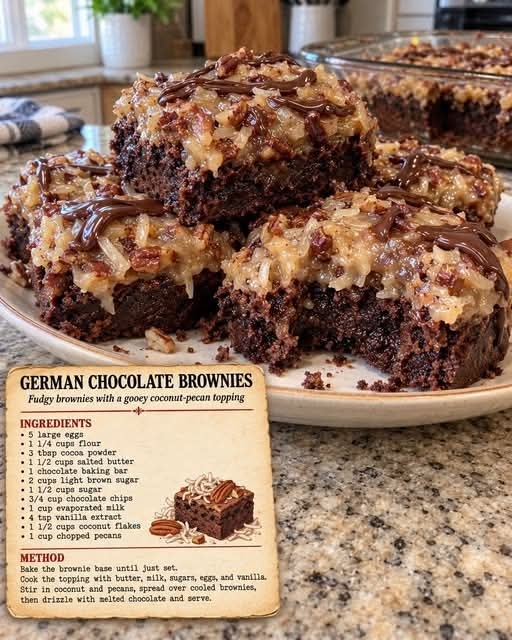
German Chocolate Brownies are a delicious twist on traditional chocolate brownies, combining the deep, rich flavor of chocolate with the sweetness of brown sugar, crunchy pecans, and a delightful coconut topping. These brownies are perfect for chocolate lovers who enjoy a dessert that is both fudgy and wonderfully textured.
Made with real chocolate, cocoa powder, butter, and a combination of brown and granulated sugars, these brownies have a rich chocolate flavor and a soft, chewy center. Chopped pecans add a satisfying crunch, while coconut flakes bring a sweet, nutty flavor that complements the chocolate beautifully.
Whether you are preparing a dessert for a family gathering, a holiday celebration, a potluck, or simply a weekend treat, German Chocolate Brownies are sure to become a favorite. They look impressive, taste incredible, and are perfect for sharing with friends and loved ones.
Ingredients
For the Chocolate Brownies
- 5 large eggs, at room temperature
- 1 1/4 cups all-purpose flour
- 3 tablespoons unsweetened cocoa powder
- 1 1/2 cups salted butter
- 1 chocolate baking bar, 4 ounces, chopped
- 2 cups light brown sugar, packed
- 1 1/2 cups granulated sugar
- 1 teaspoon vanilla extract
- 1 cup chopped pecans
- 1 cup coconut flakes, preferably unsweetened or sweetened according to your preference
Optional Ingredients for Extra Flavor
- 1/2 cup chocolate chips for an even richer chocolate taste
- 1/4 teaspoon salt, only if needed
- 1/2 cup toasted pecans for additional crunch
- Extra coconut flakes for sprinkling over the top
Note: The original ingredient list mentions nut and coconut flakes. Coconut is a traditional flavor in German chocolate desserts, so it is included here as part of the topping.
Instructions
Step 1: Prepare the Oven and Baking Pan
Preheat your oven to 350°F (175°C).
Grease a 9-by-13-inch baking pan with butter or nonstick cooking spray. For easier removal, line the pan with parchment paper, leaving a little overhang on the sides.
Set the prepared pan aside while you make the brownie batter.
Step 2: Melt the Chocolate and Butter
Cut the salted butter into smaller pieces and place it in a heatproof bowl with the chopped chocolate baking bar.
Melt the mixture gently over a saucepan of simmering water, stirring occasionally until the butter and chocolate are completely smooth.
Alternatively, microwave the mixture in 20-second intervals, stirring after each interval to prevent the chocolate from scorching.
Once melted, remove the bowl from the heat and allow the mixture to cool slightly. It should remain fluid but should not be hot enough to cook the eggs.
Step 3: Combine the Sugars and Eggs
In a large mixing bowl, combine the light brown sugar and granulated sugar.
Add the eggs one at a time, whisking well after each addition until the mixture becomes smooth and glossy.
Stir in the vanilla extract.
The combination of brown sugar and granulated sugar helps create brownies with a moist center, a slightly crisp top, and a balanced sweetness.
Step 4: Add the Melted Chocolate
Slowly pour the cooled chocolate and butter mixture into the egg and sugar mixture.
Whisk gently until everything is thoroughly combined and the batter has a rich, glossy chocolate color.
Avoid adding the chocolate while it is extremely hot, as excessive heat could partially cook the eggs.
Step 5: Add the Dry Ingredients
In a separate bowl, whisk together the all-purpose flour and cocoa powder.
Gradually add the dry ingredients to the chocolate mixture, folding gently with a spatula until no large streaks of flour remain.
Do not overmix the batter. Excessive mixing can develop the gluten in the flour and make the brownies less tender.
Fold in the chopped pecans, distributing them evenly throughout the batter.
Step 6: Pour the Batter into the Pan
Transfer the brownie batter into the prepared baking pan.
Use a spatula to spread it evenly into the corners and smooth the surface.
Sprinkle some coconut flakes and a few extra chopped pecans over the top if you want a decorative finish.
For a more traditional German chocolate dessert flavor, you can also prepare a separate coconut-pecan topping and add it after baking.
Step 7: Bake the Brownies
Place the pan on the center rack of the preheated oven.
Bake for approximately 25–35 minutes, checking the brownies toward the end of the baking time.
The edges should look set, while the center should remain slightly soft. Insert a toothpick into the middle; it should come out with a few moist crumbs but not with completely liquid batter.
Because ovens and pans vary, begin checking early to avoid overbaking.
Step 8: Prepare the Coconut-Pecan Topping
For a richer, more traditional German chocolate topping, combine the following ingredients in a saucepan:
- 1/2 cup evaporated milk
- 1/2 cup light brown sugar
- 2 tablespoons butter
- 1 egg yolk
- 1/2 teaspoon vanilla extract
- 1 cup coconut flakes
- 1/2 cup chopped pecans
Whisk the evaporated milk, brown sugar, butter, and egg yolk together in a saucepan over medium-low heat.
Cook, stirring constantly, until the mixture thickens, approximately 5–8 minutes. Do not allow it to boil vigorously.
Remove from the heat and stir in the vanilla, coconut flakes, and chopped pecans.
Let the topping cool slightly until it is thick enough to spread.
Once the brownies have baked, spread the topping evenly over them. You can add the topping while the brownies are still slightly warm, or wait until they have cooled for a neater finish.
This topping is optional but gives the brownies the signature coconut-pecan character associated with German chocolate desserts.
Step 9: Cool and Slice
Allow the brownies to cool completely in the pan before cutting them.
For especially neat slices, refrigerate them for 30–45 minutes after cooling, then cut them with a sharp knife.
Wipe the knife between cuts to keep the edges clean.
Cut into squares or rectangles, depending on the serving size you prefer.
Methods for Making the Best German Chocolate Brownies
1. The Melted-Chocolate Method
Using real baking chocolate instead of relying entirely on cocoa powder creates a deeper chocolate flavor and a rich texture.
Melt the chocolate with the butter slowly and let it cool slightly before combining it with the eggs and sugar.
2. The Gentle-Folding Method
Once the flour and cocoa powder have been added, fold the mixture gently.
This helps preserve the dense, fudgy texture that makes brownies so satisfying. Mix only until the dry ingredients are incorporated.
3. The Coconut-Pecan Method
Coconut and pecans are essential flavors in the classic German chocolate dessert tradition.
For the best texture, use fresh coconut flakes and roughly chopped pecans. Toasting the pecans lightly before adding them can bring out their natural nutty flavor.
4. The Perfect-Baking Method
Avoid baking the brownies until the center becomes completely dry.
Brownies continue to set as they cool, so removing them when a few moist crumbs cling to a toothpick helps prevent a dry result.
5. The Layering Method
For a beautiful bakery-style finish, spread the coconut-pecan topping over the cooled brownies and sprinkle a few extra pecans on top.
The combination of fudgy chocolate beneath a sweet, chewy topping makes every bite delicious.
History of German Chocolate Brownies
German chocolate desserts have an interesting history that is often misunderstood.
Despite the name, German chocolate cake did not originate in Germany. Its name comes from Samuel German, an American chocolate maker who developed a type of sweet baking chocolate in the nineteenth century.
In 1852, German developed a formulation of sweet chocolate for the Baker’s Chocolate Company. The product eventually became known as Baker’s German’s Sweet Chocolate.
In 1957, a recipe for German’s Chocolate Cake appeared in a Dallas newspaper. The cake featured layers of chocolate cake and a distinctive coconut-pecan frosting. Its popularity helped make the dessert famous across the United States.
Over time, bakers adapted those familiar flavors into cookies, cupcakes, bars, and brownies.
German Chocolate Brownies combine the rich, dense texture of American brownies with the coconut and pecan flavors associated with German chocolate cake. They are a modern variation rather than a traditional historical recipe in their own right.
Today, these brownies are enjoyed by home bakers who want the best of both desserts in one delicious treat.
Formation and Texture of German Chocolate Brownies
The secret to excellent German Chocolate Brownies is the balance of ingredients and the way they come together during baking.
The butter and chocolate provide richness and help create a dense, moist crumb.
The eggs bind the ingredients together and contribute structure. Whisking them thoroughly with the sugar also helps create a glossy brownie surface.
The brown sugar adds moisture and a gentle molasses flavor, while the granulated sugar contributes sweetness and helps develop a delicate crust.
The flour and cocoa powder provide structure and intensify the chocolate flavor. Using a moderate amount of flour helps keep the brownies from becoming cake-like.
The pecans introduce a crunchy texture that contrasts with the soft brownie center.
The coconut flakes contribute sweetness and chewiness, especially when combined with the optional coconut-pecan topping.
As the brownies bake, the batter sets around the chocolate, butter, eggs, and flour. Once cooled, the center becomes firmer while retaining its moist, fudgy texture.
The final result is a rich chocolate dessert with several layers of flavor and texture.
Tips for Perfect Results
- Use room-temperature eggs so they combine more easily with the other ingredients.
- Choose good-quality baking chocolate for a deeper flavor.
- Measure the flour accurately. Too much flour can make the brownies dry.
- Do not overmix after adding the flour.
- Use a light-colored metal baking pan for relatively even baking.
- Check the brownies early because baking times vary.
- Allow the brownies to cool before slicing.
- Add the coconut-pecan topping only after the brownies have finished baking.
- Store leftovers in an airtight container to maintain their moisture.
Serving Suggestions
German Chocolate Brownies are delicious on their own, but there are many ways to serve them.
With vanilla ice cream: Serve a slightly warm brownie with a scoop of vanilla ice cream for a classic dessert combination.
With whipped cream: A small spoonful of lightly sweetened whipped cream balances the richness of the chocolate.
With extra pecans: Sprinkle toasted pecans over each serving for additional crunch.
With chocolate drizzle: Add a little melted chocolate over the top for an extra-indulgent presentation.
With coffee: The bold flavor of coffee pairs beautifully with the sweetness of the brownies.
For special occasions: Arrange the brownies on a dessert platter and decorate them with coconut flakes and chopped pecans.
Storage and Freezing
At Room Temperature
If the brownies do not have a perishable topping, store them in an airtight container at room temperature for up to 3 days in a cool environment.
If you use the egg-and-evaporated-milk coconut-pecan topping described above, refrigerate the brownies promptly because the topping contains perishable ingredients.
In the Refrigerator
Store topped brownies in an airtight container in the refrigerator for approximately 4–5 days.
Allow individual portions to sit at room temperature for 10–15 minutes before serving for a softer texture.
In the Freezer
For longer storage, freeze the brownies without the topping or freeze fully assembled portions in a freezer-safe container.
Separate layers with parchment paper and freeze for up to 2–3 months for best quality.
Thaw overnight in the refrigerator, then allow the brownies to soften slightly before serving.
Common Mistakes to Avoid
Overbaking: This is one of the most common reasons brownies become dry. Remove them when the edges are set and the center still has a little moisture.
Adding hot chocolate to the eggs: Let the chocolate mixture cool slightly before combining it with the eggs.
Using too much flour: Measure carefully to preserve the dense texture.
Cutting too early: Warm brownies are delicate and can fall apart. Allow them to cool before slicing.
Burning the topping: Cook the coconut-pecan mixture over medium-low heat while stirring constantly.
Skipping the cooling period: Cooling allows the brownies to finish setting and makes them easier to serve.
Conclusion
German Chocolate Brownies are a wonderful dessert for anyone who loves rich chocolate, buttery sweetness, crunchy pecans, and the distinctive flavor of coconut.
The brownie base is dense, moist, and deeply chocolatey, while the optional coconut-pecan topping brings the familiar character of classic German chocolate cake to every square.
These brownies are perfect for birthdays, family dinners, holiday celebrations, bake sales, and casual afternoons when you want something homemade and delicious.
With simple ingredients, straightforward preparation, and a little patience while they cool, you can create a dessert that looks beautiful and tastes even better. Serve them plain for a classic chocolate treat or add the coconut-pecan topping for a more traditional German chocolate experience.
For German Chocolate Brownie Lovers
If you love the combination of chocolate, coconut, and pecans, this recipe is an excellent addition to your dessert collection. Each bite brings together a fudgy chocolate base, nutty crunch, and sweet coconut flavor.
These brownies are especially appealing to people who enjoy desserts that are rich without being complicated to prepare. They are easy to cut into small portions for sharing, yet indulgent enough to serve as the centerpiece of a dessert table.
For an extra-special finishing touch, warm a brownie slightly and serve it with vanilla ice cream and a spoonful of coconut-pecan topping.
Once you try this combination, German Chocolate Brownies may become one of your favorite homemade chocolate desserts.