
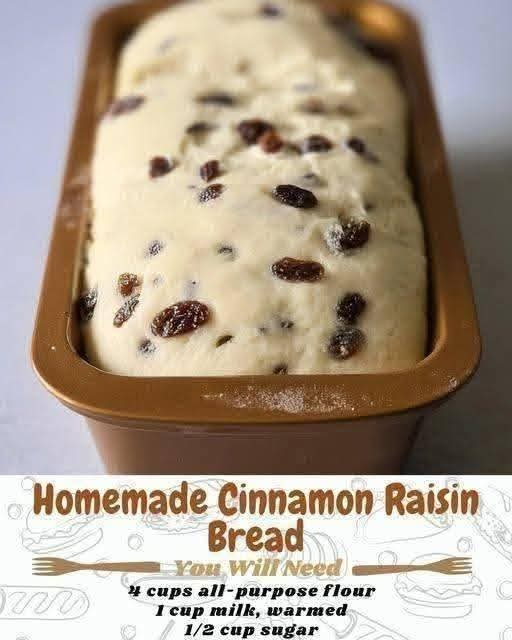
Homemade Cinnamon Raisin Bread – Soft, Sweet, and Full of Cinnamon Flavor
Introduction
There is something truly special about homemade cinnamon raisin bread. The warm aroma of cinnamon filling the kitchen, the sweetness of plump raisins tucked inside every slice, and the soft, tender texture make this classic bread a comforting favorite for breakfast, afternoon snacks, or a cozy evening treat.
This Homemade Cinnamon Raisin Bread is made with simple pantry ingredients, including flour, milk, butter, eggs, sugar, and yeast. A generous swirl of cinnamon and sweet raisins transforms ordinary bread dough into something wonderful. Enjoy it fresh from the oven, toasted with butter, or served alongside your morning coffee or tea.
The best part is that you do not need a bread machine to make it. With a little patience and a few simple steps, you can prepare a beautiful loaf right in your own kitchen.
Ingredients
For the Bread Dough
- 4 cups all-purpose flour, plus a little extra if needed
- 1 cup warm milk, approximately 105–110°F (40–43°C)
- 1/2 cup granulated sugar
- 1/4 cup unsalted butter, melted and slightly cooled
- 2 large eggs, at room temperature
- 1 packet active dry yeast (2 1/4 teaspoons)
- 1 teaspoon salt
- 1 teaspoon vanilla extract, optional
For the Cinnamon Raisin Filling
- 1 cup raisins
- 2 tablespoons unsalted butter, softened
- 1/3 cup brown sugar
- 1 1/2 tablespoons ground cinnamon
For the Egg Wash, Optional
- 1 egg
- 1 tablespoon milk
The egg wash helps create a beautifully golden crust.
Instructions
Step 1: Prepare the Yeast
Pour the warm milk into a small bowl. Add the active dry yeast and a teaspoon of the measured sugar. Stir gently and let the mixture stand for 5–10 minutes, until foamy.
Make sure the milk is warm rather than hot. Excessive heat can damage the yeast and prevent the bread from rising properly.
Step 2: Mix the Wet Ingredients
In a large mixing bowl, whisk together the remaining sugar, eggs, melted butter, and vanilla extract, if using.
Add the activated yeast mixture and stir until everything is well combined.
Step 3: Make the Dough
Add the flour and salt gradually, mixing until a soft dough forms. You can use a wooden spoon at first and then switch to your hands when the mixture becomes too thick to stir.
The dough should be soft and slightly tacky, but not excessively sticky. If it is too wet to handle, add flour one tablespoon at a time.
Step 4: Knead the Dough
Transfer the dough to a lightly floured work surface. Knead for approximately 8–10 minutes, until smooth, elastic, and easy to stretch.
If using a stand mixer, knead with the dough hook for about 5–7 minutes on low to medium-low speed.
Proper kneading develops the gluten, giving the bread its soft, fluffy texture.
Step 5: Let the Dough Rise
Place the dough in a lightly greased bowl and turn it once to coat the surface. Cover with a clean kitchen towel or plastic wrap.
Let it rise in a warm, draft-free place for approximately 1–1 1/2 hours, or until doubled in size.
The rising time may vary depending on the temperature of your kitchen.
Step 6: Prepare the Raisins
Place the raisins in a small bowl. If they seem dry, cover them with warm water for 5–10 minutes, then drain and pat them completely dry.
This optional step helps make the raisins plump and tender throughout the finished loaf.
Step 7: Prepare the Cinnamon Filling
In a small bowl, combine the brown sugar and ground cinnamon.
Once the dough has risen, gently press it down to release excess air. Transfer it to a lightly floured surface and roll it into a rectangle approximately 9 by 15 inches.
Spread the softened butter evenly over the dough, leaving a small border around the edges. Sprinkle the cinnamon-sugar mixture over the butter, then distribute the raisins evenly across the surface.
Step 8: Shape the Loaf
Starting from one of the shorter ends, roll the dough tightly into a log. Pinch the seam to seal it, and tuck the ends underneath.
Place the loaf seam-side down into a greased 9-by-5-inch loaf pan.
Rolling the dough firmly helps create attractive cinnamon layers throughout the bread.
Step 9: Allow the Second Rise
Cover the loaf loosely and let it rise for another 30–45 minutes, or until visibly puffy and nearly doubled.
Avoid allowing the dough to rise too much, as an overproofed loaf may collapse during baking.
Meanwhile, preheat the oven to 350°F (175°C).
Step 10: Apply the Egg Wash
If desired, whisk together the egg and one tablespoon of milk. Gently brush the mixture over the top of the risen loaf.
This step is optional, but it gives the bread an attractive golden finish.
Step 11: Bake the Bread
Place the loaf in the preheated oven and bake for approximately 35–45 minutes.
The top should become golden brown, and the loaf should sound slightly hollow when tapped. If the crust browns too quickly, cover it loosely with aluminum foil during the final part of baking.
For the most reliable result, the center of the loaf should reach approximately 190–200°F (88–93°C).
Step 12: Cool and Slice
Remove the bread from the oven and let it rest in the pan for about 10 minutes. Carefully transfer it to a wire rack to cool.
Allow the loaf to cool substantially before slicing. Cutting it while very hot can compress the soft interior and make the slices appear gummy.
Serve warm or at room temperature, with butter, cream cheese, or your favorite spread.
Method: Tips for Perfect Cinnamon Raisin Bread
Use the right milk temperature. Warm milk helps activate the yeast, but milk that is too hot can prevent the dough from rising.
Measure flour carefully. Too much flour can make the loaf dense and dry. If possible, weigh the flour or spoon it into the measuring cup and level it off.
Do not skip kneading. Kneading creates the structure needed for a tender, elastic loaf.
Keep the raisins dry. If you soak them, drain them thoroughly before adding them to the filling.
Roll the dough evenly. A tight, even roll produces attractive cinnamon layers and helps prevent large gaps inside the loaf.
Let the bread cool before slicing. Cooling allows the interior to finish setting and makes cleaner slices possible.
Watch the baking time. Ovens vary, so begin checking the loaf around the 35-minute mark.
A Brief History of Cinnamon Raisin Bread
Cinnamon raisin bread brings together two ingredients with long histories in baking: dried fruit and aromatic spices.
Raisins have been used in breads and cakes for centuries because they provide natural sweetness and can be stored for long periods. Cinnamon has also been valued for generations for its distinctive fragrance and warm flavor.
Sweet, enriched breads made with eggs, milk, butter, dried fruit, and spices became popular in many European baking traditions. Over time, different regions developed their own versions, from festive fruit loaves to everyday breakfast breads.
In North America, cinnamon raisin bread became a familiar bakery and supermarket favorite. Its combination of soft bread, sweet raisins, and fragrant cinnamon made it especially popular for toast and quick breakfasts.
Homemade versions allow bakers to adjust the sweetness, add more raisins, or create a generous cinnamon swirl. Today, this comforting loaf remains a favorite for families who enjoy traditional baking and simple homemade treats.
Formation: What Makes This Bread So Soft?
The wonderful texture of cinnamon raisin bread comes from the interaction of several ingredients.
Flour provides the gluten-forming proteins that give the dough strength and elasticity.
Yeast produces carbon dioxide as it ferments, creating air pockets that help the dough rise.
Milk and eggs enrich the dough, contributing flavor, tenderness, and a softer crumb.
Butter adds richness and helps create a delicate texture.
Sugar provides sweetness and supports browning during baking.
Cinnamon and brown sugar form a fragrant filling that creates sweet, flavorful layers.
Raisins add little bursts of sweetness and a chewy texture that contrast beautifully with the soft bread.
The first rise develops the dough’s volume and flavor, while the second rise helps create a light, airy loaf. Baking then sets the structure and develops the golden crust.
Serving Suggestions
Homemade cinnamon raisin bread is delicious in many different ways.
- Classic breakfast: Toast a slice and spread it with softened butter.
- Cream cheese treat: Add a thin layer of cream cheese for a creamy contrast to the cinnamon.
- French toast: Dip thick slices into an egg-and-milk mixture and cook until golden.
- Afternoon snack: Serve with coffee, tea, or a glass of milk.
- Sweet breakfast sandwich: Spread one slice with peanut butter or almond butter.
- Weekend brunch: Pair toasted slices with fresh fruit, yogurt, or scrambled eggs.
For an extra-special treat, sprinkle a little cinnamon sugar over a warm, buttered slice.
Storage Instructions
At room temperature: Once completely cool, store the bread in an airtight bag or container for up to 3 days.
In the refrigerator: Refrigeration can cause bread to become stale more quickly, so room-temperature storage is generally preferable for short-term use.
In the freezer: Wrap the cooled loaf tightly in plastic wrap and place it in a freezer-safe bag. Freeze for up to 3 months for the best quality.
You can also slice the loaf before freezing it. Place parchment paper between slices if desired, so you can remove individual portions easily.
To reheat: Toast individual slices directly from frozen, or let them thaw at room temperature before warming them.
Variations to Try
Cinnamon Raisin Swirl Bread
Follow the recipe as written and spread the cinnamon-sugar filling evenly before rolling the dough. This creates a beautiful spiral when sliced.
Cinnamon Raisin Walnut Bread
Add 1/2 cup of chopped walnuts or pecans to the filling for extra crunch.
Extra-Raisin Bread
Increase the raisins to 1 1/4 cups if you love a generous amount of fruit in every slice.
Honey Cinnamon Raisin Bread
Replace part of the granulated sugar with honey for a slightly different sweetness and flavor. Because honey adds moisture, the dough may require a small adjustment in flour.
Cinnamon Raisin French Toast
Use day-old slices to make French toast. The cinnamon, raisins, and soft crumb make it especially delicious with maple syrup and fresh fruit.
Frequently Asked Questions
Can I make this bread without a stand mixer?
Yes. A large bowl, a wooden spoon, and your hands are all you need. Knead the dough by hand until it becomes smooth and elastic.
Why did my bread turn out dense?
Common reasons include adding too much flour, using inactive yeast, insufficient kneading, or not allowing the dough enough time to rise.
Can I prepare the dough ahead of time?
Yes. After kneading, place the covered dough in the refrigerator for an overnight rise. The next day, allow it to warm slightly, shape it, and continue with the second rise before baking. The timing may vary depending on how cold the dough becomes.
How can I prevent gaps around the cinnamon swirl?
Roll the dough evenly and snugly, avoid adding excess butter to the filling, and allow the loaf to rise until puffy without overproofing it.
Can I use instant yeast instead of active dry yeast?
Yes. Use the same quantity of instant yeast and mix it directly with the flour. You can still use warm milk in the wet ingredients, and the rising time may be shorter.
How do I know when the bread is done?
Look for a golden-brown crust and check the center with an instant-read thermometer. A temperature of approximately 190–200°F indicates that the loaf is baked through.
Conclusion
Homemade Cinnamon Raisin Bread is a timeless recipe that turns everyday ingredients into something warm, fragrant, and satisfying. From the soft, buttery dough to the sweet raisins and rich cinnamon filling, every slice offers the comfort of traditional homemade baking.
Enjoy it fresh from the oven, toast it for breakfast, or save a few slices in the freezer for a quick and delicious snack whenever a craving strikes.
Once you experience the aroma of this bread baking in your kitchen, it may quickly become a recipe you return to again and again.
For the Cinnamon Raisin Bread Lovers
If you love soft homemade bread, sweet raisins, and the comforting taste of cinnamon, this recipe deserves a place in your kitchen.
It is perfect for slow weekend mornings, family breakfasts, afternoon coffee breaks, and sharing with friends and neighbors.
Are you a fan of homemade cinnamon raisin bread? Do you prefer it warm with butter, toasted and crispy, or transformed into delicious French toast?
Tell us your favorite way to enjoy it, and share this recipe with someone who loves homemade bread. If you would like more comforting, old-fashioned recipes, keep following for more delicious ideas to bake and share.