
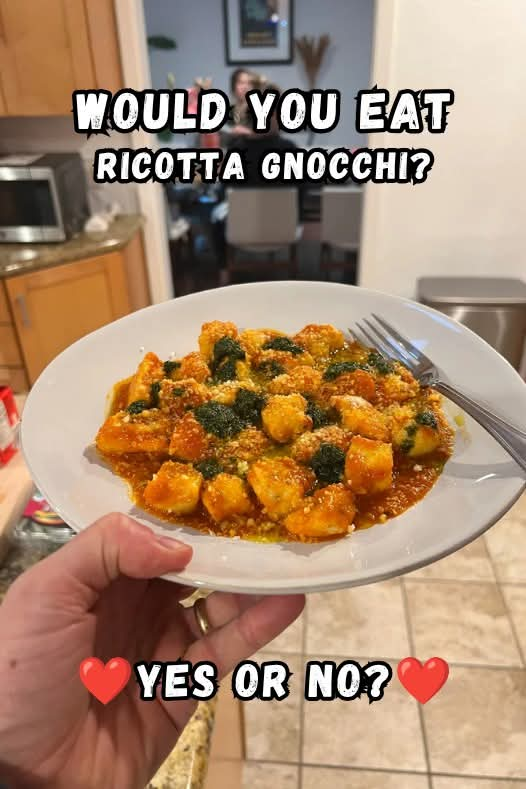
Homemade Ricotta Gnocchi is one of those quiet Italian treasures that feels simple on paper but tastes like something far more luxurious on the plate. Unlike traditional potato gnocchi, this version is lighter, softer, and almost cloud-like thanks to fresh ricotta. When cooked right, it barely holds its shape—just enough to carry sauce while melting the moment it hits your tongue.
This dish belongs to the broader family of Italian dumplings, and it has become especially popular in modern home cooking because it’s faster and more forgiving than potato-based versions. In Italy, it’s often considered a “comfort Sunday dish,” served with butter, sage, or a rich tomato sauce.
🥟 Homemade Ricotta Gnocchi (Soft & Cloud-Like)
🧾 Ingredients
For the gnocchi:
- 2 cups whole milk ricotta (well-drained)
- 1 large egg
- 1 cup all-purpose flour (plus extra for dusting)
- ½ cup grated Parmesan cheese
- ½ tsp salt
- ¼ tsp black pepper
- Pinch of nutmeg (optional but traditional)
For serving (choose one):
- Brown butter & sage sauce
- Classic marinara sauce
- Garlic butter with herbs
- Creamy mushroom sauce
👨🍳 Method & Instructions
1. Preparing the ricotta base
Place the ricotta in a clean cloth or fine sieve and let it drain for at least 30 minutes (longer if very wet). This step is important—too much moisture is the #1 reason gnocchi turns soft and breaks.
2. Mixing the dough
In a large bowl, combine ricotta, egg, Parmesan, salt, pepper, and nutmeg. Mix until smooth. Gradually add flour, just until a soft dough forms. Do not overmix—light hands keep the gnocchi tender.
3. Shaping the gnocchi
Lightly flour a surface. Divide dough into portions and roll into ropes about 2 cm thick. Cut into small bite-sized pieces. You can leave them as is or gently press with a fork for texture.
4. Cooking
Bring a large pot of salted water to a gentle boil (not a violent boil). Drop gnocchi in batches. They are done when they float to the surface—usually 2–3 minutes. Remove with a slotted spoon.
5. Finishing
Toss immediately in your chosen sauce so they absorb flavor while hot.
🔥 Methods (Professional Tips)
- Use well-drained ricotta for structure
- Keep dough soft but not sticky
- Avoid too much flour or gnocchi becomes heavy
- Boil gently—strong boiling water can break them apart
- Cook in small batches for best texture
📜 A Little History
Ricotta gnocchi is a variation of traditional Italian gnocchi, which dates back centuries. The original versions were made from bread or semolina before potatoes arrived in Europe. Once ricotta became widely used in Italian dairy regions, especially in central and northern Italy, cooks began replacing potatoes with fresh cheese.
This created a softer, faster version of gnocchi—often called gnudi in Tuscany, meaning “naked” ravioli, since it’s essentially the filling without the pasta shell.
🧬 Formation (Why It Works)
The structure of ricotta gnocchi depends on:
- Protein from egg + cheese → binding
- Minimal flour → softness
- Moisture control → stability
- Gentle heat cooking → prevents collapse
Think of it as a delicate balance between creaminess and structure.
❤️ Serving Lovers’ Style
For a romantic or cozy dinner presentation:
- Serve with brown butter, crispy sage, and shaved Parmesan
- Add a drizzle of truffle oil for depth
- Pair with roasted vegetables or a light salad
- Finish with a glass of sparkling water with lemon or grape juice
This dish is often described as “comfort food that feels elegant,” perfect for sharing at the table.
💭 Conclusion
Ricotta gnocchi proves that simple ingredients can create something extraordinary. It’s soft, warm, and deeply comforting without being heavy. Once you learn the texture, it becomes one of those recipes you return to again and again—especially when you want something homemade that still feels special.
If you want, I can also give you:
- baked ricotta gnocchi casserole version
- or a 10-minute quick skillet version
- or a restaurant-style brown butter sauce upgrade