
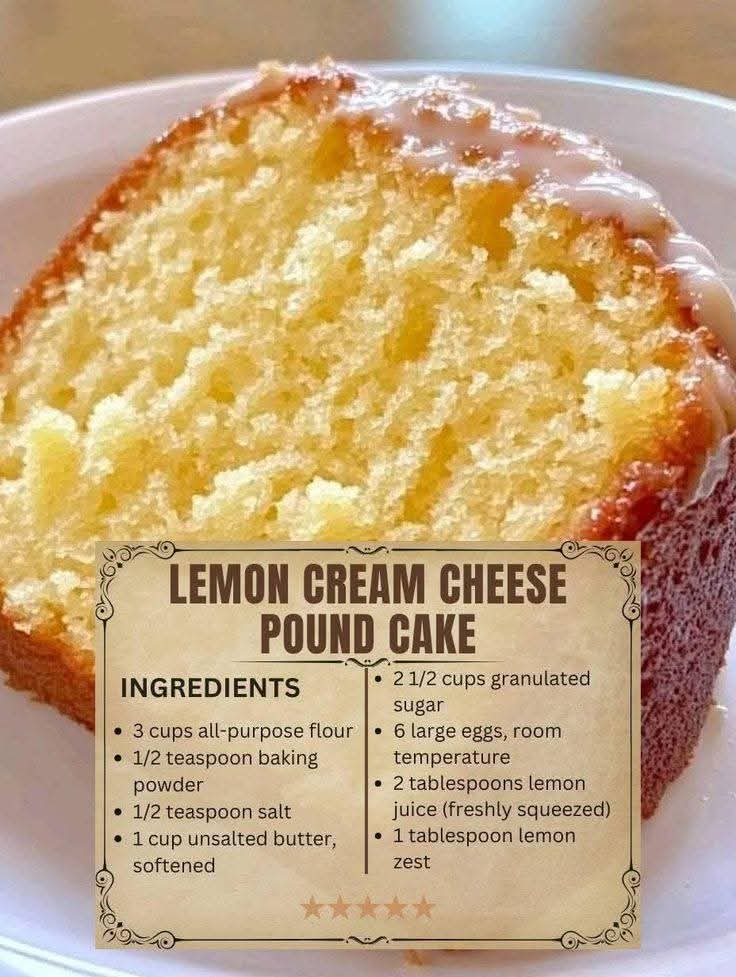
Lemon Cream Cheese Pound Cake – Rich, Buttery, Moist, and Bursting with Fresh Lemon Flavor
Introduction
Lemon Cream Cheese Pound Cake is a timeless homemade dessert that combines the rich, buttery texture of a traditional pound cake with the refreshing taste of fresh lemons. The addition of cream cheese creates a wonderfully moist, tender crumb, while lemon zest and fresh lemon juice provide a bright citrus flavor that makes every bite delicious.
This beautiful cake is perfect for family gatherings, Sunday dinners, afternoon coffee, birthday celebrations, holidays, or simply when you want to bake something special at home. Its golden exterior, soft yellow interior, and delicate lemon aroma make it an irresistible treat for anyone who loves classic homemade cakes.
What makes this recipe especially wonderful is its simplicity. With basic baking ingredients, a little patience, and a good mixing technique, you can create a bakery-style pound cake right in your own kitchen. Finish it with a sweet lemon glaze for an extra burst of citrus flavor, or enjoy it plain to appreciate its rich, buttery taste.
Ingredients
For the Lemon Cream Cheese Pound Cake
- 1 1/2 cups (340 g) unsalted butter, softened to room temperature
- 8 oz (225 g) full-fat cream cheese, softened
- 3 cups (600 g) granulated sugar
- 6 large eggs, at room temperature
- 3 cups (375 g) all-purpose flour
- 1/4 teaspoon baking powder
- 1/2 teaspoon salt
- 2 tablespoons fresh lemon zest, from approximately 2–3 lemons
- 2 tablespoons fresh lemon juice
- 2 teaspoons vanilla extract
- 1/2 teaspoon lemon extract, optional for a stronger lemon flavor
For the Lemon Glaze
- 1 1/2 cups (180 g) powdered sugar
- 2–3 tablespoons fresh lemon juice
- 1 teaspoon finely grated lemon zest, optional
- 1 teaspoon milk or cream, if needed to adjust the consistency
For Preparing the Pan
- 1 tablespoon softened butter or baking spray
- 1–2 tablespoons flour, for dusting if using butter
Equipment Needed
- One 10-inch tube pan or 12-cup Bundt pan
- Large mixing bowl
- Electric mixer or stand mixer
- Measuring cups and spoons
- Kitchen scale, if available
- Fine grater or zester
- Rubber spatula
- Wire cooling rack
- Small bowl for preparing the glaze
Instructions
Step 1: Prepare the Oven and Pan
Preheat your oven to 325°F (165°C). Position the oven rack in the middle so the cake bakes evenly.
Grease the inside of your tube pan or Bundt pan thoroughly with softened butter or baking spray. If using butter, lightly dust the pan with flour and tap out any excess.
Make sure every corner, groove, and detail of the pan is coated. Pound cakes are dense, and proper preparation helps prevent sticking when the cake is ready to be removed.
Step 2: Prepare the Lemon
Wash the lemons thoroughly and dry them before zesting.
Use a fine grater to remove the bright yellow outer peel, avoiding the white layer underneath because it can taste bitter. Measure the zest and set it aside.
Cut the lemons and squeeze out the fresh juice. Remove any seeds and measure two tablespoons for the cake.
Fresh lemon zest is especially important because much of the lemon’s fragrant flavor is concentrated in the peel.
Step 3: Cream the Butter and Cream Cheese
Place the softened butter and cream cheese in a large mixing bowl.
Beat them together with an electric mixer on medium speed for approximately 2–3 minutes, or until the mixture becomes smooth, creamy, and free of lumps.
Both ingredients should be softened but not melted. If they are too cold, they may not combine properly, resulting in an uneven batter.
Scrape down the sides and bottom of the bowl as needed.
Step 4: Add the Sugar
Gradually add the granulated sugar to the butter and cream cheese mixture.
Beat on medium-high speed for approximately 4–5 minutes, until the mixture becomes noticeably lighter in color and fluffy in texture.
This step incorporates air into the batter, helping create a lighter pound cake despite its rich ingredients.
Add the lemon zest during the final minute of mixing so its fragrant oils can blend with the butter and sugar.
Step 5: Add the Eggs
Add the eggs one at a time, beating well after each addition.
Allow each egg to become fully incorporated before adding the next. Scrape the sides of the bowl occasionally to ensure everything mixes evenly.
If the mixture looks slightly curdled after adding an egg, do not worry. Continue mixing gently until the ingredients come together.
Avoid adding all the eggs at once because this can make the batter less smooth and more difficult to combine.
Step 6: Combine the Dry Ingredients
In a separate bowl, whisk together the flour, baking powder, and salt.
Mixing the dry ingredients separately distributes the baking powder and salt throughout the flour, helping the cake bake more evenly.
For the most tender texture, measure the flour accurately. Too much flour can make the finished cake dry or heavy.
Step 7: Add the Flour and Lemon Flavor
Reduce the mixer speed to low.
Add the flour mixture to the butter mixture in three additions, mixing just until each addition is incorporated.
Between additions, add the fresh lemon juice and vanilla extract. If using lemon extract, add it at this stage as well.
Begin and finish with the flour mixture. Do not overmix once the flour has been added, because excessive mixing can develop gluten and create a tougher texture.
Use a rubber spatula to gently scrape the bottom of the bowl and make sure no pockets of dry flour remain.
The finished batter should be thick, creamy, and smooth.
Step 8: Fill the Prepared Pan
Spoon the batter evenly into the prepared pan.
Use a spatula to spread the batter into the corners and around the center tube. Gently tap the pan on the counter once or twice to release any large trapped air pockets.
Smooth the top so the cake bakes evenly.
Do not fill the pan beyond approximately two-thirds to three-quarters of its capacity. If your pan is smaller than recommended, reserve any excess batter for a separate small baking pan.
Step 9: Bake the Pound Cake
Place the pan in the preheated oven and bake for approximately 75–95 minutes.
Baking time depends on the pan’s shape, the accuracy of your oven temperature, and the depth of the batter.
Begin checking the cake around the 70-minute mark. If the top becomes too dark before the center is done, loosely cover it with aluminum foil.
The cake is ready when a long wooden skewer inserted into the center comes out clean or with a few moist crumbs attached. The top should be golden brown, and the center should feel set rather than liquid.
Avoid opening the oven repeatedly during the first hour, as sudden temperature changes can affect the cake’s rise.
Step 10: Cool the Cake Properly
Remove the cake from the oven and place the pan on a wire rack.
Allow it to rest in the pan for approximately 15–20 minutes. This resting period helps the cake firm up and reduces the risk of breaking when removed.
Carefully loosen the edges if necessary, then invert the cake onto a wire rack.
Let it cool completely before adding the glaze. Glazing a warm cake can cause the sugar mixture to melt and run off instead of forming a beautiful finish.
Step 11: Prepare the Lemon Glaze
Place the powdered sugar in a small bowl.
Add two tablespoons of fresh lemon juice and whisk until smooth. If the glaze is too thick, add the remaining lemon juice a little at a time.
For a slightly creamier consistency, add a teaspoon of milk or cream if needed.
The glaze should be thick enough to cling to the cake while still flowing slowly from a spoon.
Stir in a little lemon zest if you want an even more pronounced citrus aroma.
Step 12: Glaze and Serve
Place the completely cooled cake on a serving plate or wire rack.
Drizzle the lemon glaze over the top, allowing it to run naturally down the sides. Let the glaze set for approximately 15–20 minutes before slicing.
For a simple presentation, serve the cake as it is. For a more elegant dessert, add thin lemon slices or a light dusting of powdered sugar just before serving.
Cut into slices with a sharp knife and enjoy the rich, buttery texture balanced by the fresh, tangy lemon flavor.
Detailed Baking Methods
The Creaming Method
The creaming method is the foundation of this recipe. Butter, cream cheese, and sugar are beaten together until light and fluffy.
This process incorporates air into the mixture, helping the cake develop a fine, tender crumb. Proper creaming is particularly important because pound cakes contain more butter and sugar than many ordinary cakes.
The Room-Temperature Method
Using room-temperature butter, cream cheese, and eggs helps the ingredients combine into a smooth, stable batter.
Cold ingredients may cause the butter mixture to become lumpy or separate. For best results, take the refrigerated ingredients out approximately 45–60 minutes before baking, depending on the temperature of your kitchen.
The Gentle Mixing Method
Once the flour is added, mix only until the dry ingredients disappear.
Overmixing can make the cake dense and chewy rather than tender. A gentle hand with the mixer, followed by a spatula for the final scrape, helps maintain the desired texture.
The Low-and-Slow Baking Method
Pound cakes are thick and rich, so they benefit from a moderate oven temperature.
Baking at 325°F allows the center to cook through without causing the outside to brown too quickly. The cake may take longer than a standard layer cake, but the gradual baking process helps produce an evenly cooked interior.
The Cooling Method
Cooling is an essential part of the baking process.
Allowing the cake to rest briefly in its pan gives it time to become firm enough to release cleanly. Cooling it completely before glazing also preserves the glaze’s appearance and consistency.
The History of Pound Cake
Pound cake has a long history in European baking, with early versions appearing centuries ago. Its traditional name comes from a simple formula that used one pound each of butter, sugar, eggs, and flour.
This straightforward ratio made the recipe easy to remember at a time when many home cooks relied on experience rather than written instructions or precise measuring tools.
As baking traditions spread and evolved, cooks began adapting pound cake with new flavors, different proportions, and additional ingredients. Vanilla, citrus zest, extracts, sour cream, and cream cheese became popular additions in various modern versions.
Cream cheese pound cake became a beloved American variation because cream cheese adds richness and helps create a moist, close-textured crumb.
Lemon has also remained a favorite pound cake flavor. Its bright, refreshing taste balances the richness of butter and sugar, making lemon pound cake a popular choice for spring gatherings, summer celebrations, afternoon tea, and family desserts throughout the year.
Although this recipe is inspired by traditional pound cake and modern cream cheese variations, it is a contemporary version rather than a claim to one specific historical recipe.
Formation and Texture: What Makes This Cake Special?
The texture of Lemon Cream Cheese Pound Cake comes from the interaction of its main ingredients.
Butter provides a rich flavor and tender mouthfeel.
Cream cheese adds fat, moisture, and a subtle tang that complements the lemon.
Sugar sweetens the cake, helps retain moisture, and contributes to the golden crust.
Eggs bind the ingredients together and provide structure as the cake bakes.
Flour forms the cake’s framework, giving the batter enough strength to hold its shape.
Lemon zest and juice provide fresh citrus aroma and acidity, balancing the sweetness of the cake.
Vanilla extract rounds out the flavor and complements the lemon without overpowering it.
The result is a cake with a golden exterior, a fine and velvety crumb, and a rich interior that stays moist when stored properly.
The cake should be firm enough to slice neatly while remaining soft and buttery when eaten.
Helpful Tips for the Best Results
- Use full-fat cream cheese. It provides the richness and consistency needed for a classic cream cheese pound cake.
- Use fresh lemons. Fresh zest and juice generally provide a brighter, more natural flavor than bottled juice alone.
- Measure flour carefully. Weighing the flour is ideal. If using measuring cups, spoon the flour into the cup and level it rather than packing it down.
- Cream thoroughly. Give the butter, cream cheese, and sugar enough time to become fluffy before adding the eggs.
- Avoid overmixing. Once the flour is added, mix only until incorporated.
- Check the center. A browned exterior does not necessarily mean the middle is fully baked. Use a skewer to test the deepest part of the cake.
- Let the cake cool. A hot cake is more fragile and can break when removed from the pan.
- Wait before slicing. Allowing the glaze to set makes the cake easier to serve neatly.
Delicious Variations
1. Extra Lemon Pound Cake
For an especially bright lemon flavor, increase the zest to three tablespoons and add another teaspoon of lemon extract. Keep the additional liquid modest so the batter maintains its proper consistency.
2. Lemon Blueberry Cream Cheese Pound Cake
Gently fold one cup of fresh or frozen blueberries into the finished batter. If using frozen berries, add them directly from the freezer rather than thawing them first.
For better distribution, toss the berries with one teaspoon of flour before folding them in.
3. Lemon Coconut Pound Cake
Add 1/2 cup of finely shredded sweetened coconut to the batter. The coconut gives the cake a slightly chewy texture and a tropical flavor that works beautifully with lemon.
4. Lemon Almond Pound Cake
Replace the lemon extract, if using, with 1/2 teaspoon of almond extract. The almond flavor adds a delicate bakery-style aroma while allowing the lemon to remain the main flavor.
5. Lemon Glaze and Cream Cheese Topping
For a richer finish, serve individual slices with a small spoonful of sweetened cream cheese frosting instead of the lemon glaze.
This variation creates a dessert that tastes especially indulgent and is perfect for birthdays or special celebrations.
Serving Suggestions
Lemon Cream Cheese Pound Cake is delicious served at room temperature, when its buttery flavor and tender texture are easiest to appreciate.
Pair a slice with freshly brewed coffee, black tea, or a cup of herbal tea. For a more elaborate dessert, serve it with fresh strawberries, raspberries, blueberries, or a spoonful of lightly sweetened whipped cream.
During warmer months, a slice can be served with fresh fruit and a scoop of vanilla ice cream. During cooler weather, enjoy it with hot tea or coffee as a comforting afternoon treat.
For a dessert platter, cut the cake into small slices and arrange them alongside fresh berries and thin lemon wedges.
Storage Instructions
At room temperature: Store the completely cooled cake in an airtight container in a cool place for up to two days, provided it is kept away from excessive heat. For a glazed cake or a warm kitchen, refrigeration is preferable.
In the refrigerator: Because this cake contains cream cheese, refrigerate it in an airtight container for up to five days for best quality. Allow individual slices to sit at room temperature briefly before serving for a softer texture.
In the freezer: Wrap individual slices or the whole unglazed cake tightly in plastic wrap, then place them in a freezer-safe container or bag. Freeze for up to three months for best quality.
Thaw frozen cake overnight in the refrigerator or thaw individual slices in the refrigerator before bringing them to room temperature. Add fresh glaze after thawing if you want the prettiest finish.
Common Mistakes to Avoid
Using melted butter: Melted butter changes the structure of the batter and prevents proper creaming. Use softened butter instead.
Adding cold eggs: Cold eggs can cause the butter mixture to become less uniform. Room-temperature eggs are preferable.
Overbaking the cake: Too much time in the oven can dry out the crumb. Begin checking for doneness before the estimated baking time ends.
Removing the cake too soon: A very hot pound cake can break apart. Let it rest in the pan for 15–20 minutes before turning it out.
Glazing too early: A warm cake can cause the glaze to disappear into the surface. Cool completely before decorating.
Using too much lemon juice: Excess liquid can alter the cake’s texture. Measure the juice carefully and use zest for extra lemon aroma without adding much liquid.
Conclusion
Lemon Cream Cheese Pound Cake is the perfect combination of old-fashioned baking and fresh citrus flavor. Its buttery richness, moist texture, and delicate lemon aroma make it a dessert worth preparing for both everyday moments and special occasions.
The cream cheese creates a tender, velvety crumb, while the lemon zest and juice bring brightness to every slice. A simple lemon glaze adds just the right amount of sweetness and gives the cake an attractive finish.
Whether you serve it at a family dinner, bring it to a gathering, share it with friends, or enjoy a slice with your morning coffee, this homemade pound cake is a delicious way to make ordinary moments feel special.
Follow the steps carefully, use quality ingredients, and allow the cake enough time to bake and cool. The result is a beautiful lemon dessert that looks inviting, slices neatly, and tastes even better when shared.
For the Lovers of Homemade Cakes
If you love classic desserts with rich flavor and simple ingredients, this Lemon Cream Cheese Pound Cake deserves a place in your recipe collection.
It is ideal for lemon lovers, pound cake enthusiasts, home bakers, and anyone who appreciates a moist homemade dessert with a balance of sweetness and tang.
Save this recipe for your next baking day, share it with someone who loves lemon desserts, and enjoy the comforting pleasure of a cake made from scratch.
A good pound cake does not need complicated decorations or expensive ingredients. Sometimes, the combination of butter, cream cheese, sugar, eggs, flour, and fresh lemons is all you need to create a dessert that everyone will remember.
Final Recipe at a Glance
- Preparation time: Approximately 25 minutes
- Baking time: Approximately 75–95 minutes
- Cooling time: Approximately 1–2 hours
- Total time: Approximately 2 hours 40 minutes to 3 hours
- Yield: 12–16 slices
- Oven temperature: 325°F (165°C)
- Difficulty: Intermediate
- Texture: Rich, moist, tender, and buttery
- Flavor: Sweet lemon with a gentle cream cheese tang
- Best occasion: Family gatherings, holidays, afternoon tea, celebrations, and everyday dessert
Enjoy every slice of this homemade Lemon Cream Cheese Pound Cake, a timeless treat with a refreshing lemon twist.