
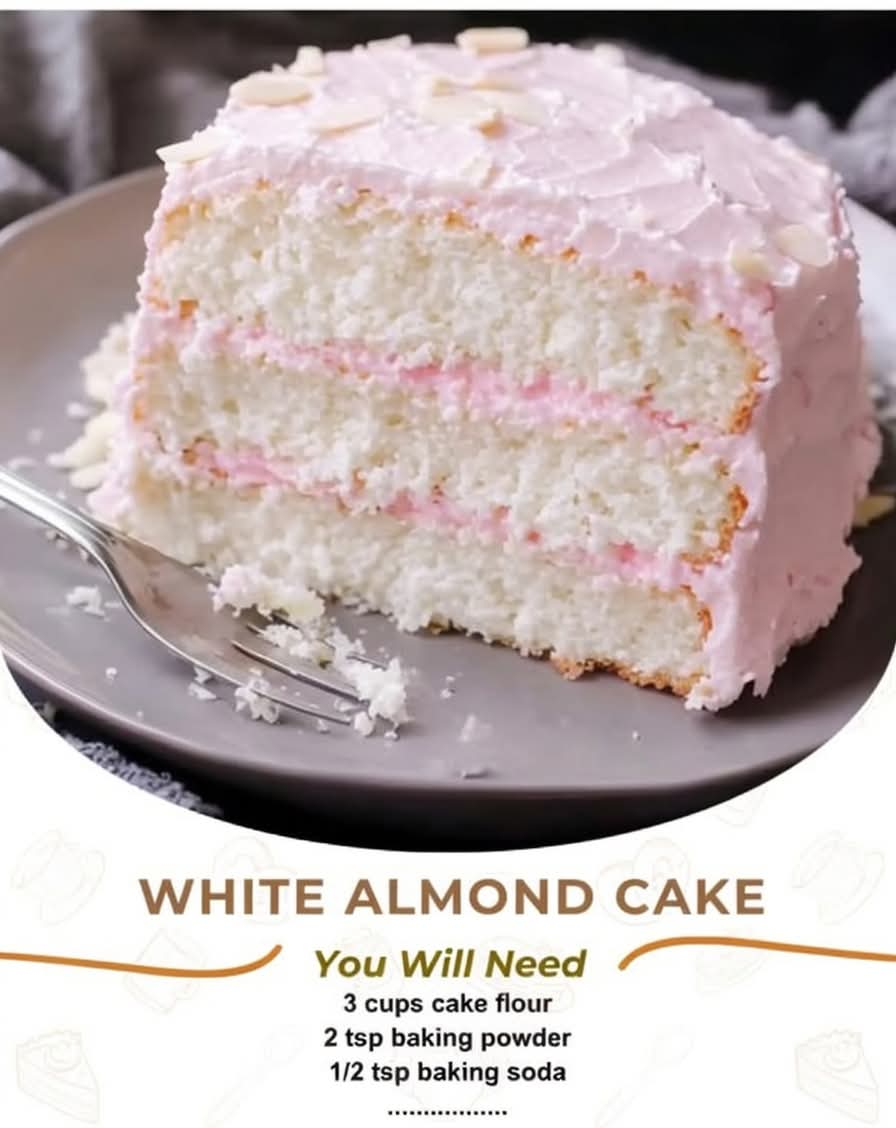
Old-Fashioned Almond Birthday Cake withOld-Fashioned Almond Birthday Cake with Pink Buttercream Frosting


Introduction
Some cakes are more than desserts. They are part of our family traditions, the centerpiece of birthday celebrations, and the sweet memories that stay with us long after the last slice has disappeared. This old-fashioned almond birthday cake is exactly that kind of dessert. With its delicate almond flavor, soft and tender crumb, and silky buttercream frosting, it is a cake that turns an ordinary occasion into something worth remembering.
For many families, birthdays simply would not feel complete without a homemade cake. Perhaps your mother had one special recipe she returned to year after year, not because she lacked imagination, but because she knew it was a recipe everyone loved. This almond cake brings that same comforting feeling to the kitchen.
The secret to its wonderful flavor is almond extract. Just a small amount gives the cake a sweet, delicate aroma that feels elegant without overpowering the other ingredients. Combined with butter, sour cream, and cake flour, it produces a tender cake that is moist, light, and rich enough to serve at any celebration.
The frosting is equally special. A smooth almond buttercream adds another layer of flavor while creating a beautiful finish. A touch of soft pink coloring makes the cake look elegant, and toasted sliced almonds provide a delicate crunch that contrasts beautifully with the fluffy frosting.
Whether you are preparing a birthday cake for your daughter, planning a family gathering, celebrating an anniversary, or simply craving a homemade dessert on an ordinary Tuesday, this almond cake deserves a place on your table.
Recipe Overview
Preparation time
30 minutes
Baking time
28–32 minutes
Cooling and decorating
60–90 minutes
Yield
12–16 servings
Difficulty
Moderate, beginner-friendly
Ingredients
For the almond cake
- 3 cups cake flour, approximately 330–360 g depending on how it is measured
- 2 teaspoons baking powder
- 1/2 teaspoon baking soda
- 1/2 teaspoon salt
- 1 cup unsalted butter, softened to room temperature (227 g)
- 2 cups granulated sugar (approximately 400 g)
- 4 large egg whites, at room temperature
- 1 cup whole milk (240 ml)
- 1/2 cup sour cream (120 g)
- 2 teaspoons almond extract
- 1 teaspoon vanilla extract
For the almond buttercream frosting
- 1 cup unsalted butter, softened (227 g)
- 4 cups powdered sugar, sifted (approximately 480 g)
- 3–4 tablespoons heavy cream
- 1 teaspoon almond extract
- A small amount of pink gel food coloring, optional
For decoration
- 1/2 cup sliced almonds, toasted
- Additional buttercream for piping, if desired
- A few extra almond slices for the finishing touches
Equipment Needed
- Two 9-inch round cake pans
- Mixing bowls
- Electric hand mixer or stand mixer
- Whisk
- Rubber spatula
- Measuring cups and spoons or a kitchen scale
- Wire cooling rack
- Offset spatula or butter knife
- Parchment paper, if available
Instructions: How to Make Almond Birthday Cake
Step 1: Prepare the oven and cake pans
Preheat your oven to 350°F (175°C). Grease two 9-inch round cake pans with butter or baking spray, then lightly dust them with flour. Alternatively, line the bottoms with parchment paper to make releasing the cakes easier.
Prepare the pans before mixing the batter so that the cake can go into the oven as soon as it is ready.
Step 2: Combine the dry ingredients
In a medium mixing bowl, whisk together the cake flour, baking powder, baking soda, and salt.
Whisking distributes the leavening agents evenly throughout the flour. This helps the cake rise uniformly and prevents pockets of baking powder or baking soda from affecting the texture.
Set the bowl aside while you prepare the butter mixture.
Step 3: Cream the butter and sugar
Place the softened butter in a large mixing bowl. Beat it with an electric mixer until smooth and creamy.
Gradually add the granulated sugar and continue beating for approximately 3–4 minutes, until the mixture becomes pale, fluffy, and noticeably lighter.
This step is important because it incorporates air into the batter, helping create a soft and delicate cake.
Avoid using butter that is melted or excessively warm. It should be soft enough to leave a slight indentation when pressed but still hold its shape.
Step 4: Add the egg whites
Add the egg whites one at a time, beating well after each addition.
Scrape down the sides of the bowl occasionally to ensure that everything mixes evenly.
Egg whites help give this cake its beautiful pale color and light texture. They also contribute structure without the deeper yellow color that whole eggs would create.
If the mixture looks slightly separated, do not worry. Adding the dry ingredients and milk mixture gradually should help bring the batter together.
Step 5: Prepare the milk mixture
In a separate bowl, combine the whole milk, sour cream, almond extract, and vanilla extract.
Stir until smooth.
The sour cream is one of the most important ingredients in this recipe. Its acidity and moisture help create a tender crumb, while its creamy consistency adds richness without making the cake feel heavy.
The almond and vanilla extracts work together to create a balanced flavor. The almond provides the signature taste, while the vanilla rounds out the sweetness.
Step 6: Combine the wet and dry ingredients
Add approximately one-third of the flour mixture to the butter mixture and mix on low speed until just incorporated.
Pour in about half of the milk mixture and mix gently. Continue alternating the flour mixture and milk mixture, beginning and ending with the dry ingredients.
Mix only until the batter is smooth and no large streaks of flour remain.
Do not overmix. Excessive mixing can develop the gluten in the flour and make the finished cake less tender.
The batter should be thick but spreadable, with a smooth consistency.
Step 7: Divide the batter between the pans
Divide the batter evenly between the prepared cake pans.
Use a spatula to spread it gently toward the edges and smooth the tops.
If you want perfectly even layers, weigh the filled pans or divide the batter as accurately as possible.
Tap each pan lightly on the counter once or twice to release any unusually large air pockets.
Step 8: Bake the cake layers
Place the pans on the center rack of the preheated oven.
Bake for 28–32 minutes, checking toward the end of the baking time.
The cakes are ready when the tops spring back gently when touched and a toothpick inserted into the center comes out clean or with a few moist crumbs.
If the centers still appear wet, continue baking for a few minutes and check again.
Avoid opening the oven repeatedly during the first 20 minutes, as sudden temperature changes may affect the rise.
Step 9: Cool the cakes properly
Remove the pans from the oven and allow the cakes to cool in their pans for approximately 10 minutes.
Run a thin knife around the edges if needed, then carefully turn the cakes out onto a wire rack.
Remove the parchment paper if you used it and allow the layers to cool completely.
This step is essential. Warm cake will soften the buttercream and may cause the layers to slide or the frosting to melt.
If you are preparing the cake ahead of time, let the layers cool completely and wrap them securely until you are ready to assemble.
Step 10: Make the almond buttercream
Place the softened butter in a clean mixing bowl. Beat for 2–3 minutes until creamy and smooth.
Gradually add the sifted powdered sugar, mixing on low speed at first to prevent it from scattering.
Once the sugar has been incorporated, add 3 tablespoons of heavy cream and the almond extract.
Beat for another 2–3 minutes until the frosting becomes light, fluffy, and spreadable.
If the frosting is too thick, add the remaining tablespoon of cream a little at a time. If it becomes too soft, add a little more sifted powdered sugar.
For a delicate blush color, add a tiny amount of pink gel food coloring and mix until the color is evenly distributed.
Start with less coloring than you think you need. A small amount can produce a lovely pastel shade.
Step 11: Assemble the cake
Place the first completely cooled cake layer on a serving plate or cake stand.
Spread an even layer of buttercream over the top, reaching close to the edges.
Carefully position the second cake layer on top, keeping the cake centered.
Spread a thin layer of frosting over the top and sides to catch loose crumbs. This is called a crumb coat.
Refrigerate the cake for approximately 15–20 minutes, or until the crumb coat is slightly firm.
Then apply the remaining buttercream, smoothing the sides and top with an offset spatula.
For a rustic homemade appearance, gentle swirls in the frosting look beautiful. For a more polished birthday cake, smooth the frosting and add a piped border around the top.
Step 12: Toast and add the almonds
Place the sliced almonds in a dry skillet over medium-low heat. Stir frequently for 3–5 minutes, until lightly golden and fragrant.
Transfer them immediately to a plate to cool. They can burn quickly if left in the hot pan.
Once cool, sprinkle the almonds over the top of the cake or gently press them around the sides of the frosting.
You can keep the decoration simple with a scattering of almonds or arrange them in a neat ring around the top.
If you prefer a completely soft texture, use fewer almonds or leave them off individual slices.
Step 13: Slice and serve
For the cleanest slices, chill the assembled cake for 20–30 minutes before cutting.
Use a sharp knife, wiping it clean between cuts.
Allow the cake to sit at room temperature for approximately 20–30 minutes before serving so the buttercream softens and the almond aroma becomes more pronounced.
Serve each slice on its own or alongside fresh berries, coffee, tea, or a glass of cold milk.
Methods and Techniques for the Best Results

1. The creaming method
Beating butter and sugar together incorporates air into the batter. This helps the cake rise and gives it a lighter texture. Take your time with this stage rather than rushing it.

2. The alternating mixing method
Adding the dry ingredients and liquid ingredients in stages helps maintain a smooth batter. Start and finish with the dry mixture, and stop mixing once everything is combined.

3. The crumb-coating method
A thin first layer of frosting traps loose crumbs and creates a cleaner final finish. Chilling it briefly before the final coating makes decorating easier.

4. The dry-toasting method
Toasting almonds briefly deepens their flavor and adds a delicate crunch. Cool them completely before adding them to the frosting so they do not soften the buttercream.
The History of Almond Cakes
Almond-flavored cakes belong to a long tradition of baking with nuts, aromatic extracts, and rich ingredients. Almonds have been used in sweets across Mediterranean, Middle Eastern, and European culinary traditions for centuries.
Before modern refrigeration and commercial flavorings became widely available, ground almonds and almond-based pastes were valued for their flavor and versatility. Almonds appeared in pastries, celebratory breads, confectionery, and cakes served on important occasions.
In European baking, almond cakes became associated with elegant desserts and festive tables. Different regions developed their own versions, ranging from dense cakes made with ground almonds to delicate sponge cakes scented with almond essence.
As home baking became more accessible, butter cakes made with flour, sugar, eggs, milk, and baking powder became popular choices for birthdays and family celebrations. Almond extract offered an easy way to give a familiar cake a distinctive flavor without requiring expensive ingredients or complicated techniques.
The modern almond layer cake combines these traditions with American-style buttercream frosting. Its tender crumb, sweet frosting, and decorative finish make it suitable for birthdays, showers, anniversaries, and holidays.
Although this particular recipe should not be attributed to a specific historical person or family without evidence, it reflects the kind of dependable homemade baking that many families treasure: a familiar recipe made special through flavor, presentation, and shared memories.
Formation: Understanding What Makes This Cake Special
The beauty of this almond cake comes from the way its ingredients work together.
Cake flour creates tenderness. Cake flour generally contains less protein than all-purpose flour, which helps limit gluten development and produces a finer crumb.
Butter creates richness. Properly creamed butter contributes flavor and helps incorporate air into the batter.
Sugar contributes moisture and softness. It sweetens the cake, helps with browning, and works with the butter to create a delicate texture.
Egg whites provide structure. Their proteins help the cake set as it bakes while keeping the interior pale.
Sour cream improves the texture. Its acidity and moisture help create a soft, tender crumb with a pleasant richness.
Milk balances the batter. It supplies moisture and helps the dry ingredients combine into a smooth mixture.
Almond extract creates the signature flavor. Its distinctive aroma gives the cake a sophisticated character, even though the recipe itself is straightforward.
Vanilla adds depth. A little vanilla complements the almond without competing with it.
Buttercream provides the finishing touch. Butter and powdered sugar create a smooth, creamy frosting that balances the light cake layers with a richer sweetness.
Together, these ingredients create a dessert that feels elegant but remains practical for a home baker.
Tips for a Perfect Almond Birthday Cake
- Bring the butter, egg whites, milk, and sour cream to room temperature before mixing.
- Measure flour carefully. For the most consistent results, use a kitchen scale; if measuring by cups, spoon the flour into the cup and level it rather than packing it down.
- Use almond extract sparingly if you prefer a subtle flavor. Extract strengths vary by brand, so taste and adjust the frosting cautiously.
- Do not replace the cake flour with the same weight of all-purpose flour without considering the texture difference.
- Avoid opening the oven door too early.
- Allow the cake layers to cool completely before frosting.
- If the frosting feels too soft, refrigerate it briefly and beat it again before spreading.
- Toast the almonds ahead of time and allow them to cool completely.
- For the prettiest slices, use a sharp knife and clean it between cuts.
Variations to Try
1. Classic white almond cake
Leave out the pink coloring and decorate with white buttercream and toasted almonds. This version looks elegant at weddings, anniversaries, and formal celebrations.
2. Pink birthday almond cake
Use a small amount of pink gel coloring in the frosting. Finish with piped buttercream swirls and toasted almonds for a soft, festive appearance.
3. Almond and raspberry cake
Spread a thin layer of raspberry preserves over the filling buttercream between the cake layers. The tart fruit complements the sweet almond flavor beautifully. Keep the preserve layer thin so the cake remains stable.
4. Almond and lemon cake
Add a little finely grated lemon zest to the batter for a brighter flavor. Lemon and almond work particularly well together, especially when the cake is served in warmer weather.
5. Almond wedding-style cake
Frost the cake with white buttercream and decorate with sliced almonds arranged around the sides. Use a simple piped border for an understated, classic finish.
6. Almond cupcakes
Divide the batter among lined cupcake wells, filling each approximately two-thirds full. Bake at 350°F (175°C), checking for doneness after about 16–22 minutes. Baking time will depend on the size of the cupcakes and your oven.
Serving Suggestions
This cake is sweet, buttery, and aromatic, so it pairs well with simple accompaniments.
- Fresh strawberries, raspberries, or blueberries add freshness and color.
- Unsweetened tea or black coffee balances the buttercream.
- A small scoop of vanilla ice cream turns a slice into a more indulgent dessert.
- Fresh fruit salad makes a light accompaniment for a birthday brunch.
- A few extra toasted almonds on each plate reinforce the cake’s signature flavor.
For a birthday celebration, serve the cake after dinner with coffee or tea. For a casual afternoon treat, a modest slice is wonderful on its own.
Storage and Make-Ahead Instructions
At room temperature: If your kitchen is cool and the buttercream is stable, the cake can generally be kept covered for up to one day. Because the frosting contains butter and cream, avoid leaving it in a hot environment for extended periods.
In the refrigerator: Store the covered cake for approximately 3–4 days. Keep it in an airtight cake container to prevent it from absorbing other food odors.
Before serving: Allow refrigerated slices to stand at room temperature for about 20–30 minutes for a softer crumb and creamier frosting.
Freezing the cake layers: Once completely cool, wrap each unfrosted layer tightly in plastic wrap and place it in a freezer-safe bag or container. Freeze for up to 2–3 months for best quality. Thaw while wrapped to help retain moisture.
Making it ahead: Bake the cake layers the day before, cool completely, wrap, and store. Prepare the buttercream and assemble the cake on the day you plan to serve it, or assemble it ahead and refrigerate it.
Frequently Asked Questions
Can I use whole eggs instead of egg whites?
You can experiment with whole eggs, but the cake will have a different color, flavor, and texture. The recipe is specifically designed to use egg whites for a pale, delicate crumb.
Can I use all-purpose flour?
Yes, although the result may be slightly less tender. Cake flour is preferred for the fine texture this recipe is intended to achieve.
Can I make the cake without sour cream?
Plain, full-fat yogurt can be a practical substitute in the same amount, although the final texture and flavor may differ slightly.
Why did my cake turn out dry?
Common causes include too much flour, overbaking, or mixing the batter excessively. Measure carefully and begin checking for doneness near the lower end of the baking time.
Can I make the frosting without heavy cream?
Yes. You can use milk a teaspoon at a time to adjust the consistency. The frosting may be slightly less rich, but it will still be suitable for decorating.
Can I prepare the cake without food coloring?
Absolutely. The frosting will remain a natural creamy white, which looks beautiful with toasted almonds.
Can I make it a day before a birthday?
Yes. Bake and assemble it a day ahead, cover it carefully, and refrigerate it. Allow time for it to soften slightly before serving.
Conclusion
This old-fashioned almond birthday cake is a wonderful reminder that a memorable dessert does not have to be complicated. A few familiar ingredients, a little patience, and the delicate aroma of almond extract are enough to create something that looks beautiful and tastes even better.
The soft cake layers, creamy almond buttercream, and toasted almond topping make every slice feel special. Whether you decorate it with a gentle blush of pink or keep it classic with white frosting, the result is a dessert that belongs at the center of a celebration.
It is the kind of cake you can bake for a daughter’s birthday, share with neighbors, bring to a family dinner, or make simply because you want something homemade and comforting.
Sometimes the best family recipes are the ones we return to again and again. After one bite of this tender almond cake, it is easy to understand why.
For Almond Cake Lovers
If you love soft layer cakes, delicate flavors, and homemade buttercream, this recipe is worth saving for your next special occasion. You can make it your own with fruit fillings, different frosting colors, or a simple almond topping.
And perhaps the best part is watching everyone take that first bite, pause for a moment, and then reach for another slice.
Would you serve this almond cake for a birthday celebration, or would you bake it on an ordinary weekday just because you are craving something sweet? Pink Buttercream Frosting
Introduction
Some cakes are more than desserts. They are part of our family traditions, the centerpiece of birthday celebrations, and the sweet memories that stay with us long after the last slice has disappeared. This old-fashioned almond birthday cake is exactly that kind of dessert. With its delicate almond flavor, soft and tender crumb, and silky buttercream frosting, it is a cake that turns an ordinary occasion into something worth remembering.
For many families, birthdays simply would not feel complete without a homemade cake. Perhaps your mother had one special recipe she returned to year after year, not because she lacked imagination, but because she knew it was a recipe everyone loved. This almond cake brings that same comforting feeling to the kitchen.
The secret to its wonderful flavor is almond extract. Just a small amount gives the cake a sweet, delicate aroma that feels elegant without overpowering the other ingredients. Combined with butter, sour cream, and cake flour, it produces a tender cake that is moist, light, and rich enough to serve at any celebration.
The frosting is equally special. A smooth almond buttercream adds another layer of flavor while creating a beautiful finish. A touch of soft pink coloring makes the cake look elegant, and toasted sliced almonds provide a delicate crunch that contrasts beautifully with the fluffy frosting.
Whether you are preparing a birthday cake for your daughter, planning a family gathering, celebrating an anniversary, or simply craving a homemade dessert on an ordinary Tuesday, this almond cake deserves a place on your table.
Recipe Overview
Preparation time
30 minutes
Baking time
28–32 minutes
Cooling and decorating
60–90 minutes
Yield
12–16 servings
Difficulty
Moderate, beginner-friendly
Ingredients
For the almond cake
- 3 cups cake flour, approximately 330–360 g depending on how it is measured
- 2 teaspoons baking powder
- 1/2 teaspoon baking soda
- 1/2 teaspoon salt
- 1 cup unsalted butter, softened to room temperature (227 g)
- 2 cups granulated sugar (approximately 400 g)
- 4 large egg whites, at room temperature
- 1 cup whole milk (240 ml)
- 1/2 cup sour cream (120 g)
- 2 teaspoons almond extract
- 1 teaspoon vanilla extract
For the almond buttercream frosting
- 1 cup unsalted butter, softened (227 g)
- 4 cups powdered sugar, sifted (approximately 480 g)
- 3–4 tablespoons heavy cream
- 1 teaspoon almond extract
- A small amount of pink gel food coloring, optional
For decoration
- 1/2 cup sliced almonds, toasted
- Additional buttercream for piping, if desired
- A few extra almond slices for the finishing touches
Equipment Needed
- Two 9-inch round cake pans
- Mixing bowls
- Electric hand mixer or stand mixer
- Whisk
- Rubber spatula
- Measuring cups and spoons or a kitchen scale
- Wire cooling rack
- Offset spatula or butter knife
- Parchment paper, if available
Instructions: How to Make Almond Birthday Cake
Step 1: Prepare the oven and cake pans
Preheat your oven to 350°F (175°C). Grease two 9-inch round cake pans with butter or baking spray, then lightly dust them with flour. Alternatively, line the bottoms with parchment paper to make releasing the cakes easier.
Prepare the pans before mixing the batter so that the cake can go into the oven as soon as it is ready.
Step 2: Combine the dry ingredients
In a medium mixing bowl, whisk together the cake flour, baking powder, baking soda, and salt.
Whisking distributes the leavening agents evenly throughout the flour. This helps the cake rise uniformly and prevents pockets of baking powder or baking soda from affecting the texture.
Set the bowl aside while you prepare the butter mixture.
Step 3: Cream the butter and sugar
Place the softened butter in a large mixing bowl. Beat it with an electric mixer until smooth and creamy.
Gradually add the granulated sugar and continue beating for approximately 3–4 minutes, until the mixture becomes pale, fluffy, and noticeably lighter.
This step is important because it incorporates air into the batter, helping create a soft and delicate cake.
Avoid using butter that is melted or excessively warm. It should be soft enough to leave a slight indentation when pressed but still hold its shape.
Step 4: Add the egg whites
Add the egg whites one at a time, beating well after each addition.
Scrape down the sides of the bowl occasionally to ensure that everything mixes evenly.
Egg whites help give this cake its beautiful pale color and light texture. They also contribute structure without the deeper yellow color that whole eggs would create.
If the mixture looks slightly separated, do not worry. Adding the dry ingredients and milk mixture gradually should help bring the batter together.
Step 5: Prepare the milk mixture
In a separate bowl, combine the whole milk, sour cream, almond extract, and vanilla extract.
Stir until smooth.
The sour cream is one of the most important ingredients in this recipe. Its acidity and moisture help create a tender crumb, while its creamy consistency adds richness without making the cake feel heavy.
The almond and vanilla extracts work together to create a balanced flavor. The almond provides the signature taste, while the vanilla rounds out the sweetness.
Step 6: Combine the wet and dry ingredients
Add approximately one-third of the flour mixture to the butter mixture and mix on low speed until just incorporated.
Pour in about half of the milk mixture and mix gently. Continue alternating the flour mixture and milk mixture, beginning and ending with the dry ingredients.
Mix only until the batter is smooth and no large streaks of flour remain.
Do not overmix. Excessive mixing can develop the gluten in the flour and make the finished cake less tender.
The batter should be thick but spreadable, with a smooth consistency.
Step 7: Divide the batter between the pans
Divide the batter evenly between the prepared cake pans.
Use a spatula to spread it gently toward the edges and smooth the tops.
If you want perfectly even layers, weigh the filled pans or divide the batter as accurately as possible.
Tap each pan lightly on the counter once or twice to release any unusually large air pockets.
Step 8: Bake the cake layers
Place the pans on the center rack of the preheated oven.
Bake for 28–32 minutes, checking toward the end of the baking time.
The cakes are ready when the tops spring back gently when touched and a toothpick inserted into the center comes out clean or with a few moist crumbs.
If the centers still appear wet, continue baking for a few minutes and check again.
Avoid opening the oven repeatedly during the first 20 minutes, as sudden temperature changes may affect the rise.
Step 9: Cool the cakes properly
Remove the pans from the oven and allow the cakes to cool in their pans for approximately 10 minutes.
Run a thin knife around the edges if needed, then carefully turn the cakes out onto a wire rack.
Remove the parchment paper if you used it and allow the layers to cool completely.
This step is essential. Warm cake will soften the buttercream and may cause the layers to slide or the frosting to melt.
If you are preparing the cake ahead of time, let the layers cool completely and wrap them securely until you are ready to assemble.
Step 10: Make the almond buttercream
Place the softened butter in a clean mixing bowl. Beat for 2–3 minutes until creamy and smooth.
Gradually add the sifted powdered sugar, mixing on low speed at first to prevent it from scattering.
Once the sugar has been incorporated, add 3 tablespoons of heavy cream and the almond extract.
Beat for another 2–3 minutes until the frosting becomes light, fluffy, and spreadable.
If the frosting is too thick, add the remaining tablespoon of cream a little at a time. If it becomes too soft, add a little more sifted powdered sugar.
For a delicate blush color, add a tiny amount of pink gel food coloring and mix until the color is evenly distributed.
Start with less coloring than you think you need. A small amount can produce a lovely pastel shade.
Step 11: Assemble the cake
Place the first completely cooled cake layer on a serving plate or cake stand.
Spread an even layer of buttercream over the top, reaching close to the edges.
Carefully position the second cake layer on top, keeping the cake centered.
Spread a thin layer of frosting over the top and sides to catch loose crumbs. This is called a crumb coat.
Refrigerate the cake for approximately 15–20 minutes, or until the crumb coat is slightly firm.
Then apply the remaining buttercream, smoothing the sides and top with an offset spatula.
For a rustic homemade appearance, gentle swirls in the frosting look beautiful. For a more polished birthday cake, smooth the frosting and add a piped border around the top.
Step 12: Toast and add the almonds
Place the sliced almonds in a dry skillet over medium-low heat. Stir frequently for 3–5 minutes, until lightly golden and fragrant.
Transfer them immediately to a plate to cool. They can burn quickly if left in the hot pan.
Once cool, sprinkle the almonds over the top of the cake or gently press them around the sides of the frosting.
You can keep the decoration simple with a scattering of almonds or arrange them in a neat ring around the top.
If you prefer a completely soft texture, use fewer almonds or leave them off individual slices.
Step 13: Slice and serve
For the cleanest slices, chill the assembled cake for 20–30 minutes before cutting.
Use a sharp knife, wiping it clean between cuts.
Allow the cake to sit at room temperature for approximately 20–30 minutes before serving so the buttercream softens and the almond aroma becomes more pronounced.
Serve each slice on its own or alongside fresh berries, coffee, tea, or a glass of cold milk.
Methods and Techniques for the Best Results
1. The creaming method
Beating butter and sugar together incorporates air into the batter. This helps the cake rise and gives it a lighter texture. Take your time with this stage rather than rushing it.
2. The alternating mixing method
Adding the dry ingredients and liquid ingredients in stages helps maintain a smooth batter. Start and finish with the dry mixture, and stop mixing once everything is combined.
3. The crumb-coating method
A thin first layer of frosting traps loose crumbs and creates a cleaner final finish. Chilling it briefly before the final coating makes decorating easier.
4. The dry-toasting method
Toasting almonds briefly deepens their flavor and adds a delicate crunch. Cool them completely before adding them to the frosting so they do not soften the buttercream.
The History of Almond Cakes
Almond-flavored cakes belong to a long tradition of baking with nuts, aromatic extracts, and rich ingredients. Almonds have been used in sweets across Mediterranean, Middle Eastern, and European culinary traditions for centuries.
Before modern refrigeration and commercial flavorings became widely available, ground almonds and almond-based pastes were valued for their flavor and versatility. Almonds appeared in pastries, celebratory breads, confectionery, and cakes served on important occasions.
In European baking, almond cakes became associated with elegant desserts and festive tables. Different regions developed their own versions, ranging from dense cakes made with ground almonds to delicate sponge cakes scented with almond essence.
As home baking became more accessible, butter cakes made with flour, sugar, eggs, milk, and baking powder became popular choices for birthdays and family celebrations. Almond extract offered an easy way to give a familiar cake a distinctive flavor without requiring expensive ingredients or complicated techniques.
The modern almond layer cake combines these traditions with American-style buttercream frosting. Its tender crumb, sweet frosting, and decorative finish make it suitable for birthdays, showers, anniversaries, and holidays.
Although this particular recipe should not be attributed to a specific historical person or family without evidence, it reflects the kind of dependable homemade baking that many families treasure: a familiar recipe made special through flavor, presentation, and shared memories.
Formation: Understanding What Makes This Cake Special
The beauty of this almond cake comes from the way its ingredients work together.
Cake flour creates tenderness. Cake flour generally contains less protein than all-purpose flour, which helps limit gluten development and produces a finer crumb.
Butter creates richness. Properly creamed butter contributes flavor and helps incorporate air into the batter.
Sugar contributes moisture and softness. It sweetens the cake, helps with browning, and works with the butter to create a delicate texture.
Egg whites provide structure. Their proteins help the cake set as it bakes while keeping the interior pale.
Sour cream improves the texture. Its acidity and moisture help create a soft, tender crumb with a pleasant richness.
Milk balances the batter. It supplies moisture and helps the dry ingredients combine into a smooth mixture.
Almond extract creates the signature flavor. Its distinctive aroma gives the cake a sophisticated character, even though the recipe itself is straightforward.
Vanilla adds depth. A little vanilla complements the almond without competing with it.
Buttercream provides the finishing touch. Butter and powdered sugar create a smooth, creamy frosting that balances the light cake layers with a richer sweetness.
Together, these ingredients create a dessert that feels elegant but remains practical for a home baker.
Tips for a Perfect Almond Birthday Cake
- Bring the butter, egg whites, milk, and sour cream to room temperature before mixing.
- Measure flour carefully. For the most consistent results, use a kitchen scale; if measuring by cups, spoon the flour into the cup and level it rather than packing it down.
- Use almond extract sparingly if you prefer a subtle flavor. Extract strengths vary by brand, so taste and adjust the frosting cautiously.
- Do not replace the cake flour with the same weight of all-purpose flour without considering the texture difference.
- Avoid opening the oven door too early.
- Allow the cake layers to cool completely before frosting.
- If the frosting feels too soft, refrigerate it briefly and beat it again before spreading.
- Toast the almonds ahead of time and allow them to cool completely.
- For the prettiest slices, use a sharp knife and clean it between cuts.
Variations to Try
1. Classic white almond cake
Leave out the pink coloring and decorate with white buttercream and toasted almonds. This version looks elegant at weddings, anniversaries, and formal celebrations.
2. Pink birthday almond cake
Use a small amount of pink gel coloring in the frosting. Finish with piped buttercream swirls and toasted almonds for a soft, festive appearance.
3. Almond and raspberry cake
Spread a thin layer of raspberry preserves over the filling buttercream between the cake layers. The tart fruit complements the sweet almond flavor beautifully. Keep the preserve layer thin so the cake remains stable.
4. Almond and lemon cake
Add a little finely grated lemon zest to the batter for a brighter flavor. Lemon and almond work particularly well together, especially when the cake is served in warmer weather.
5. Almond wedding-style cake
Frost the cake with white buttercream and decorate with sliced almonds arranged around the sides. Use a simple piped border for an understated, classic finish.
6. Almond cupcakes
Divide the batter among lined cupcake wells, filling each approximately two-thirds full. Bake at 350°F (175°C), checking for doneness after about 16–22 minutes. Baking time will depend on the size of the cupcakes and your oven.
Serving Suggestions
This cake is sweet, buttery, and aromatic, so it pairs well with simple accompaniments.
- Fresh strawberries, raspberries, or blueberries add freshness and color.
- Unsweetened tea or black coffee balances the buttercream.
- A small scoop of vanilla ice cream turns a slice into a more indulgent dessert.
- Fresh fruit salad makes a light accompaniment for a birthday brunch.
- A few extra toasted almonds on each plate reinforce the cake’s signature flavor.
For a birthday celebration, serve the cake after dinner with coffee or tea. For a casual afternoon treat, a modest slice is wonderful on its own.
Storage and Make-Ahead Instructions
At room temperature: If your kitchen is cool and the buttercream is stable, the cake can generally be kept covered for up to one day. Because the frosting contains butter and cream, avoid leaving it in a hot environment for extended periods.
In the refrigerator: Store the covered cake for approximately 3–4 days. Keep it in an airtight cake container to prevent it from absorbing other food odors.
Before serving: Allow refrigerated slices to stand at room temperature for about 20–30 minutes for a softer crumb and creamier frosting.
Freezing the cake layers: Once completely cool, wrap each unfrosted layer tightly in plastic wrap and place it in a freezer-safe bag or container. Freeze for up to 2–3 months for best quality. Thaw while wrapped to help retain moisture.
Making it ahead: Bake the cake layers the day before, cool completely, wrap, and store. Prepare the buttercream and assemble the cake on the day you plan to serve it, or assemble it ahead and refrigerate it.
Frequently Asked Questions
Can I use whole eggs instead of egg whites?
You can experiment with whole eggs, but the cake will have a different color, flavor, and texture. The recipe is specifically designed to use egg whites for a pale, delicate crumb.
Can I use all-purpose flour?
Yes, although the result may be slightly less tender. Cake flour is preferred for the fine texture this recipe is intended to achieve.
Can I make the cake without sour cream?
Plain, full-fat yogurt can be a practical substitute in the same amount, although the final texture and flavor may differ slightly.
Why did my cake turn out dry?
Common causes include too much flour, overbaking, or mixing the batter excessively. Measure carefully and begin checking for doneness near the lower end of the baking time.
Can I make the frosting without heavy cream?
Yes. You can use milk a teaspoon at a time to adjust the consistency. The frosting may be slightly less rich, but it will still be suitable for decorating.
Can I prepare the cake without food coloring?
Absolutely. The frosting will remain a natural creamy white, which looks beautiful with toasted almonds.
Can I make it a day before a birthday?
Yes. Bake and assemble it a day ahead, cover it carefully, and refrigerate it. Allow time for it to soften slightly before serving.
Conclusion
This old-fashioned almond birthday cake is a wonderful reminder that a memorable dessert does not have to be complicated. A few familiar ingredients, a little patience, and the delicate aroma of almond extract are enough to create something that looks beautiful and tastes even better.
The soft cake layers, creamy almond buttercream, and toasted almond topping make every slice feel special. Whether you decorate it with a gentle blush of pink or keep it classic with white frosting, the result is a dessert that belongs at the center of a celebration.
It is the kind of cake you can bake for a daughter’s birthday, share with neighbors, bring to a family dinner, or make simply because you want something homemade and comforting.
Sometimes the best family recipes are the ones we return to again and again. After one bite of this tender almond cake, it is easy to understand why.
For Almond Cake Lovers
If you love soft layer cakes, delicate flavors, and homemade buttercream, this recipe is worth saving for your next special occasion. You can make it your own with fruit fillings, different frosting colors, or a simple almond topping.
And perhaps the best part is watching everyone take that first bite, pause for a moment, and then reach for another slice.
Would you serve this almond cake for a birthday celebration, or would you bake it on an ordinary weekday just because you are craving something sweet?