
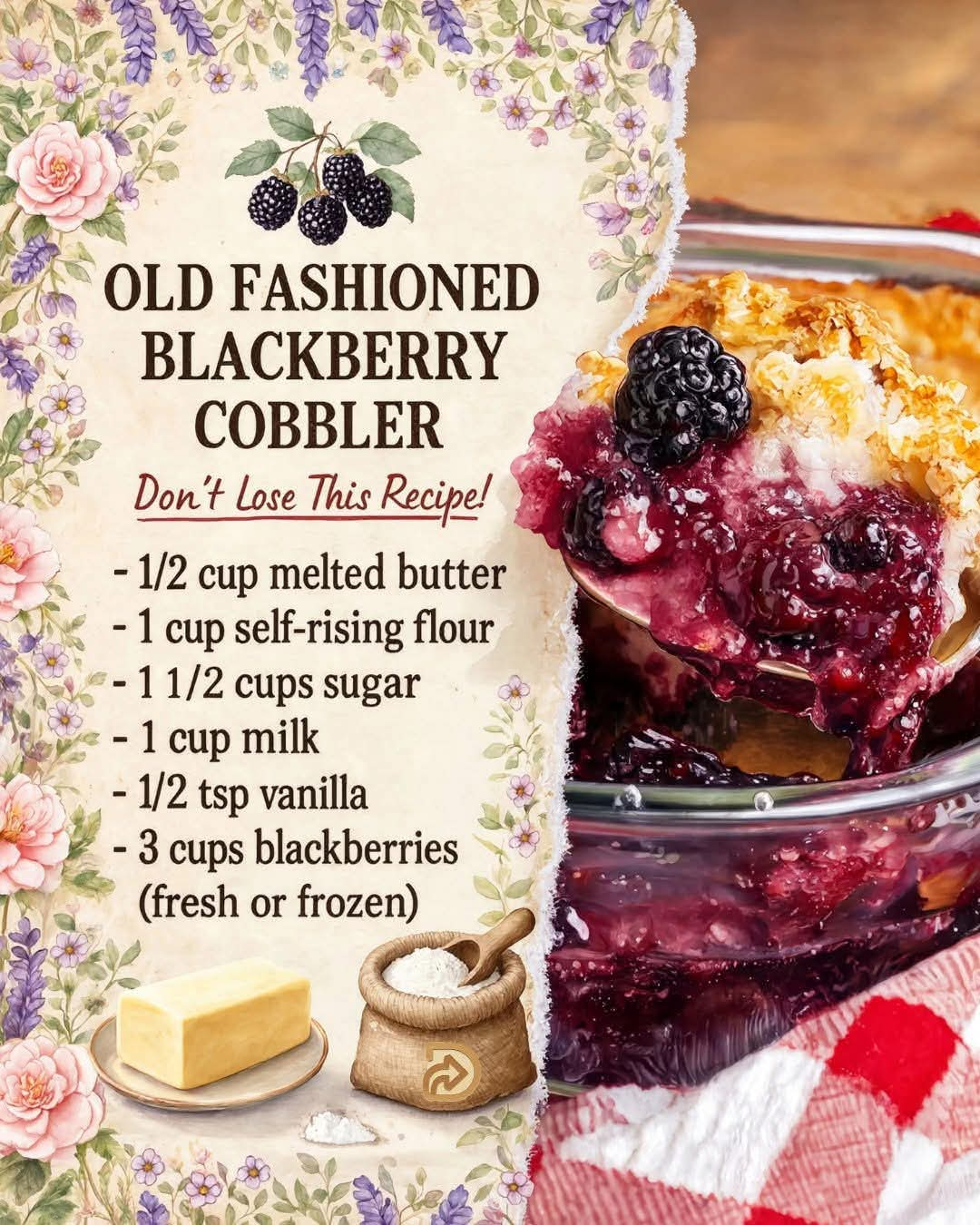
Old-Fashioned Blackberry Cobbler – A Classic Homemade Dessert
Introduction
There is something truly special about an old-fashioned blackberry cobbler fresh from the oven. With its golden, buttery edges, tender cake-like topping, and juicy blackberries bubbling beneath the surface, this traditional dessert brings the comforting flavors of homemade baking straight to the family table.
This Old-Fashioned Blackberry Cobbler is made with simple pantry ingredients, including butter, self-rising flour, sugar, milk, vanilla, and fresh or frozen blackberries. The preparation is wonderfully easy, making it perfect for beginner bakers and experienced home cooks alike.
One of the secrets to this recipe is the melted butter poured directly into the baking dish. The batter is placed over the butter without stirring, allowing the cobbler to develop deliciously rich edges as it bakes. As the fruit releases its natural juices, the berries create a sweet, slightly tart filling that pairs beautifully with the soft, golden topping.
And if you are someone who always reaches for the corner piece first, this recipe is especially satisfying. The corners become beautifully browned and buttery, offering a delightful contrast to the tender center.
Serve it warm after Sunday dinner, bring it to a family gathering, or enjoy a generous spoonful on a quiet evening at home. This is the kind of simple dessert that makes ordinary moments feel memorable.
Ingredients
Preparation time: 10 minutes
Cooking time: 45–55 minutes
Total time: Approximately 1 hour
Servings: 8–10
For the Blackberry Cobbler
- 1/2 cup unsalted butter, melted
- 1 cup self-rising flour
- 1 1/2 cups granulated sugar
- 1 cup whole milk
- 1/2 teaspoon vanilla extract
- 3 cups fresh or frozen blackberries
Optional Ingredients for Extra Flavor
- 1 teaspoon lemon zest for a fresh citrus note
- 1 tablespoon lemon juice to brighten the berry flavor
- 1/4 teaspoon ground cinnamon for a warm, comforting aroma
- 1 tablespoon additional sugar for sprinkling over the top, if desired
- Vanilla ice cream or freshly whipped cream for serving
The optional ingredients are not necessary for the traditional version, but they can add a personal touch.
Instructions
Step 1: Preheat the Oven
Preheat your oven to 350°F (175°C).
Choose a 9-by-13-inch baking dish or a similarly sized oven-safe dish. Make sure it is clean and dry before beginning.
Place the butter in a microwave-safe bowl and melt it gently. You can also melt it in a small saucepan over low heat.
Pour the melted butter into the baking dish, spreading it evenly across the bottom. Do not grease the dish separately, and do not stir the butter into the batter later. The butter helps create the rich, golden edges that make this cobbler so delicious.
Step 2: Prepare the Batter
In a medium mixing bowl, combine the self-rising flour and granulated sugar.
Whisk the dry ingredients together until evenly distributed. This helps prevent pockets of flour or sugar from forming in the finished cobbler.
Gradually pour in the milk while whisking. Continue mixing until the batter becomes smooth and free of large lumps.
Add the vanilla extract and stir until incorporated.
The batter should be pourable, similar to a thin cake batter. Avoid overmixing, as excessive mixing can make the finished topping less tender.
Step 3: Pour the Batter Over the Butter
Carefully pour the prepared batter evenly over the melted butter in the baking dish.
This is an important step: do not stir the batter and butter together.
The butter should remain underneath and around the batter. As the cobbler bakes, the batter will rise and develop a soft, golden topping while the butter contributes to the crisp, flavorful edges.
It may look unusual at first, but this traditional method is part of what makes this style of cobbler so easy and appealing.
Step 4: Add the Blackberries
If you are using fresh blackberries, rinse them gently and pat them dry. Remove any stems or damaged berries.
If you are using frozen blackberries, you can generally add them directly from the freezer. Avoid thawing them first unless they are unusually icy, as thawed berries can release excess liquid.
Scatter the blackberries evenly over the batter.
Do not stir the berries into the mixture. Simply distribute them across the surface and allow them to settle naturally.
As the cobbler bakes, the batter will rise around the fruit, creating a soft topping with pockets of sweet, juicy blackberries throughout.
If you enjoy a slightly brighter fruit flavor, add a little lemon zest to the berries before scattering them over the batter.
Step 5: Bake Until Golden
Place the baking dish in the preheated oven on the center rack.
Bake for 45–55 minutes, checking toward the end of the cooking time.
The cobbler is ready when the top is golden brown, the edges are bubbling, and the batter has set. The corners may become darker and more caramelized than the center, which is part of their appeal.
If the center still looks wet or the batter appears undercooked, continue baking for another 5–10 minutes, checking periodically.
Remember that ovens vary, and frozen berries may increase the baking time slightly.
Step 6: Allow the Cobbler to Rest
Remove the dish from the oven and place it on a heat-safe surface.
Let the cobbler rest for approximately 10–15 minutes before serving.
This short resting period allows the fruit juices to settle and the topping to firm up slightly. It also makes the cobbler easier to spoon into bowls.
The filling will remain juicy, but it should be less runny than when it first comes out of the oven.
Step 7: Serve and Enjoy
Spoon the warm blackberry cobbler into individual serving bowls.
For a classic presentation, serve it just as it is, allowing the natural blackberry flavor and buttery topping to shine.
For a more indulgent dessert, add a scoop of vanilla ice cream. The cold, creamy ice cream melts into the warm berry filling, creating a delicious combination of temperatures and textures.
Freshly whipped cream is another wonderful option.
Do not forget to save a corner piece for anyone who loves those buttery, golden edges.
Method: The Secret to Perfect Old-Fashioned Cobbler
The beauty of this recipe lies in its simple preparation method. Unlike traditional fruit pies, which require a prepared crust, this cobbler uses a quick batter that transforms in the oven.
The Melted Butter Method
Pouring melted butter directly into the baking dish gives the cobbler its rich flavor and helps the edges become beautifully browned.
Keeping the butter separate from the batter at the beginning is important. Do not combine the two in the mixing bowl.
The Pour-Over Batter Method
The batter is poured over the melted butter without stirring. During baking, the mixture changes as the batter sets and rises around the fruit.
This produces a tender, cake-like topping with a buttery finish.
The Fruit-on-Top Method
Placing the blackberries over the batter allows them to release their juices as the cobbler cooks.
The berries become soft and jammy, while the topping bakes around them. The result is a comforting dessert with a balance of sweetness, tartness, and buttery richness.
The Golden-Edge Method
Baking the cobbler until the edges are golden and bubbling gives it its signature texture.
The center stays softer, while the edges become more browned and flavorful. For the best result, avoid removing the cobbler too early simply because the fruit begins bubbling. Make sure the batter has had enough time to cook through.
A Brief History of Blackberry Cobbler
Cobblers are part of a long tradition of home-style fruit desserts associated with British and American cooking.
Early British settlers brought pie-making traditions to North America, where ingredients, cooking equipment, and available fruit influenced the development of new desserts. In many households, elaborate pastry crusts were difficult or time-consuming to prepare, so cooks developed simpler baked fruit dishes using biscuit dough, batter, or other readily available toppings.
Cobblers became especially popular in American home cooking because they could be made with seasonal fruit and basic pantry staples. Peaches, apples, cherries, blueberries, and blackberries all became familiar choices.
Blackberries were particularly suitable for these desserts because they grow wild in many regions and provide a naturally sweet yet tangy flavor. When baked with sugar, their juices form a rich fruit filling that pairs wonderfully with a tender topping.
Over generations, many families developed their own versions. Some use biscuit-style dough, while others use a simple pour-over batter. This recipe follows the easy batter-style tradition, making it practical for everyday baking.
Although the exact origins of this particular combination of ingredients are difficult to establish, the recipe reflects the enduring appeal of traditional fruit cobblers: affordable ingredients, straightforward preparation, and a dessert meant to be shared.
The Formation of the Perfect Cobbler
A successful blackberry cobbler depends on the way its ingredients work together during baking.
The Tender Topping
Self-rising flour contains flour, baking powder, and salt in proportions intended to help baked goods rise. When combined with milk, sugar, and vanilla, it creates a batter that bakes into a soft, cake-like layer.
The batter should be mixed only until smooth enough to pour. Overmixing can encourage a tougher texture.
The Juicy Blackberry Filling
Blackberries contain natural moisture, acidity, and flavor. Heat softens the berries and releases their juices, creating the cobbler’s characteristic fruit-filled texture.
Fresh berries often retain a little more definition, while frozen berries may soften more quickly. Both work well.
The Buttery Bottom and Edges
The melted butter provides richness and helps the outer edges brown during baking.
Because the butter is placed in the dish first, it coats the bottom and sides of the batter as the mixture cooks. This helps produce the rich, golden edges that many people consider the best part of the cobbler.
The Balance of Sweetness
The sugar sweetens both the batter and the tart blackberries. The berries themselves vary in sweetness, so the finished flavor may change slightly depending on the fruit.
If your blackberries are particularly sweet, the natural fruit flavor will be more pronounced. If they are tart, the sugar provides a pleasant contrast.
The Final Texture
When properly baked, the cobbler has a golden top, a soft interior, and a juicy fruit layer. It should be moist without having large areas of raw batter.
Allowing it to rest before serving helps the juices settle while preserving the tender texture.
Tips for the Best Blackberry Cobbler
Use ripe blackberries. Choose berries that are plump and dark, without mold or excessive softness. Good-quality fruit provides the best flavor.
Frozen berries are perfectly acceptable. Add them directly to the batter while frozen. If they have a thick coating of ice, remove the excess to avoid adding too much water.
Do not stir the layers together. Pour the batter over the melted butter and place the blackberries on top. This keeps the preparation simple and encourages the classic texture.
Measure the flour carefully. Too much flour can make the topping dense. Spoon flour into a measuring cup and level it off rather than packing it tightly.
Watch the center, not just the edges. Golden edges are desirable, but the center must also be set. If the top browns too quickly, loosely cover the dish with foil for the remaining baking time.
Adjust the sweetness thoughtfully. The recipe uses 1 1/2 cups of sugar, which gives the batter a traditional sweet flavor. You can experiment with a modest reduction if you prefer a less-sweet dessert, although the result may differ from the original.
Let it rest before serving. Ten to fifteen minutes helps the filling settle and makes serving easier.
Delicious Variations
1. Blackberry Lemon Cobbler
Add 1 teaspoon of finely grated lemon zest and 1 tablespoon of lemon juice to the blackberries. The citrus flavor brightens the berries and creates a refreshing contrast to the buttery topping.
2. Blackberry Cinnamon Cobbler
Add 1/4 teaspoon of ground cinnamon to the batter. The gentle warmth of cinnamon complements the blackberries and gives the dessert a cozy, homemade flavor.
3. Blackberry Peach Cobbler
Replace 1 cup of the blackberries with sliced peaches. The peaches add sweetness and a soft texture, while the blackberries provide a slightly tart flavor.
4. Mixed Berry Cobbler
Use a mixture of blackberries, raspberries, and blueberries to create a colorful fruit filling. Keep the total amount of fruit close to 3 cups.
5. Blackberry Cobbler with Vanilla Ice Cream
Bake the cobbler according to the original instructions and serve it warm with vanilla ice cream. This classic combination makes a simple homemade dessert feel extra special.
Serving Suggestions
Old-Fashioned Blackberry Cobbler is delicious on its own, but a few simple additions can make it even more enjoyable.
- Serve warm with vanilla ice cream for a classic dessert.
- Add a spoonful of freshly whipped cream for a lighter finish.
- Pair it with a cup of coffee or tea for an afternoon treat.
- Serve small portions after a hearty family meal.
- Offer it at potlucks, picnics, holiday gatherings, or Sunday dinners.
For a family-style presentation, bring the baking dish directly to the table after allowing it to cool slightly. The golden top and bubbling blackberry filling make it an inviting centerpiece.
Storage and Reheating
Storing Leftovers
Allow the cobbler to cool, then cover the dish or transfer the leftovers to an airtight container.
Refrigerate within two hours of baking and consume within approximately 3–4 days for the best quality.
Reheating in the Oven
Preheat the oven to 325°F (165°C). Place a portion of cobbler in an oven-safe dish and warm for approximately 10–15 minutes, depending on the portion size.
For a larger quantity, cover the dish loosely with foil and heat until warmed through. Remove the foil toward the end if you want to refresh the top.
Reheating in the Microwave
Place an individual serving in a microwave-safe bowl and heat in short intervals until warm. The topping may be softer than when freshly baked, but the flavor will remain delicious.
Freezing
You can freeze cooled cobbler in a freezer-safe container for up to about 2–3 months for good quality. Thaw it in the refrigerator before reheating.
Keep in mind that freezing may soften the fruit and topping, so the texture may not be exactly the same as freshly baked cobbler.
Frequently Asked Questions
Can I use frozen blackberries?
Yes. Frozen blackberries work very well. Add them directly to the batter without thawing, and allow extra baking time if needed.
Why should I avoid stirring the batter and butter together?
The recipe relies on the butter remaining in the baking dish while the batter bakes. Stirring everything together changes the method and can affect the characteristic buttery edges.
Can I use all-purpose flour instead of self-rising flour?
Yes, but you will need to add leavening and salt. For this recipe, substitute 1 cup of all-purpose flour plus approximately 1 1/2 teaspoons of baking powder and 1/4 teaspoon of salt.
How do I know when the cobbler is done?
Look for a golden-brown topping, bubbling fruit around the edges, and a center that is set rather than wet. If necessary, bake for a few additional minutes.
Can I prepare the cobbler ahead of time?
It is best baked shortly before serving for the freshest topping. You can measure the ingredients and prepare the berries in advance, then assemble and bake when needed.
Is the cobbler supposed to be juicy?
Yes. A fruit cobbler should have a moist, juicy filling. However, the topping should be cooked through, not raw or doughy.
Why are the corners so delicious?
The edges come into contact with the hot baking dish and melted butter, allowing them to brown more deeply. They often have a richer flavor and slightly firmer texture than the center.
Conclusion
Old-Fashioned Blackberry Cobbler is proof that a memorable dessert does not need complicated techniques or expensive ingredients. With just six basic ingredients, you can create a warm, comforting treat filled with juicy blackberries and topped with a tender, golden layer.
The melted butter gives the edges their distinctive richness, while the blackberries provide a beautiful balance of sweetness and tartness. Every spoonful offers the familiar comfort of homemade baking.
Whether you use fresh blackberries from the market or a bag of frozen berries from your freezer, this easy recipe is ideal for family dinners, special occasions, or whenever you want something sweet without spending hours in the kitchen.
Serve it warm, add a scoop of vanilla ice cream if you like, and remember to save the corner piece for the person who loves those buttery edges most.
For Blackberry Cobbler Lovers
If you love old-fashioned desserts, this blackberry cobbler deserves a place in your collection of favorite homemade recipes.
It is simple enough for a weekday treat, comforting enough for a family gathering, and delicious enough to serve to guests. The combination of juicy fruit, tender topping, and golden buttery edges makes it a dessert that people will look forward to enjoying again.
Bake it once, share it with the people you love, and you may find that everyone begins asking for the recipe.
Recipe at a Glance
- Recipe: Old-Fashioned Blackberry Cobbler
- Prep time: 10 minutes
- Bake time: 45–55 minutes
- Oven temperature: 350°F (175°C)
- Yield: 8–10 servings
- Difficulty: Easy
- Best served: Warm
- Favorite topping: Vanilla ice cream
- Signature feature: Golden, buttery edges and a juicy blackberry filling
A simple baking dish, a handful of everyday ingredients, and three cups of blackberries are all you need to make this timeless homemade dessert.