
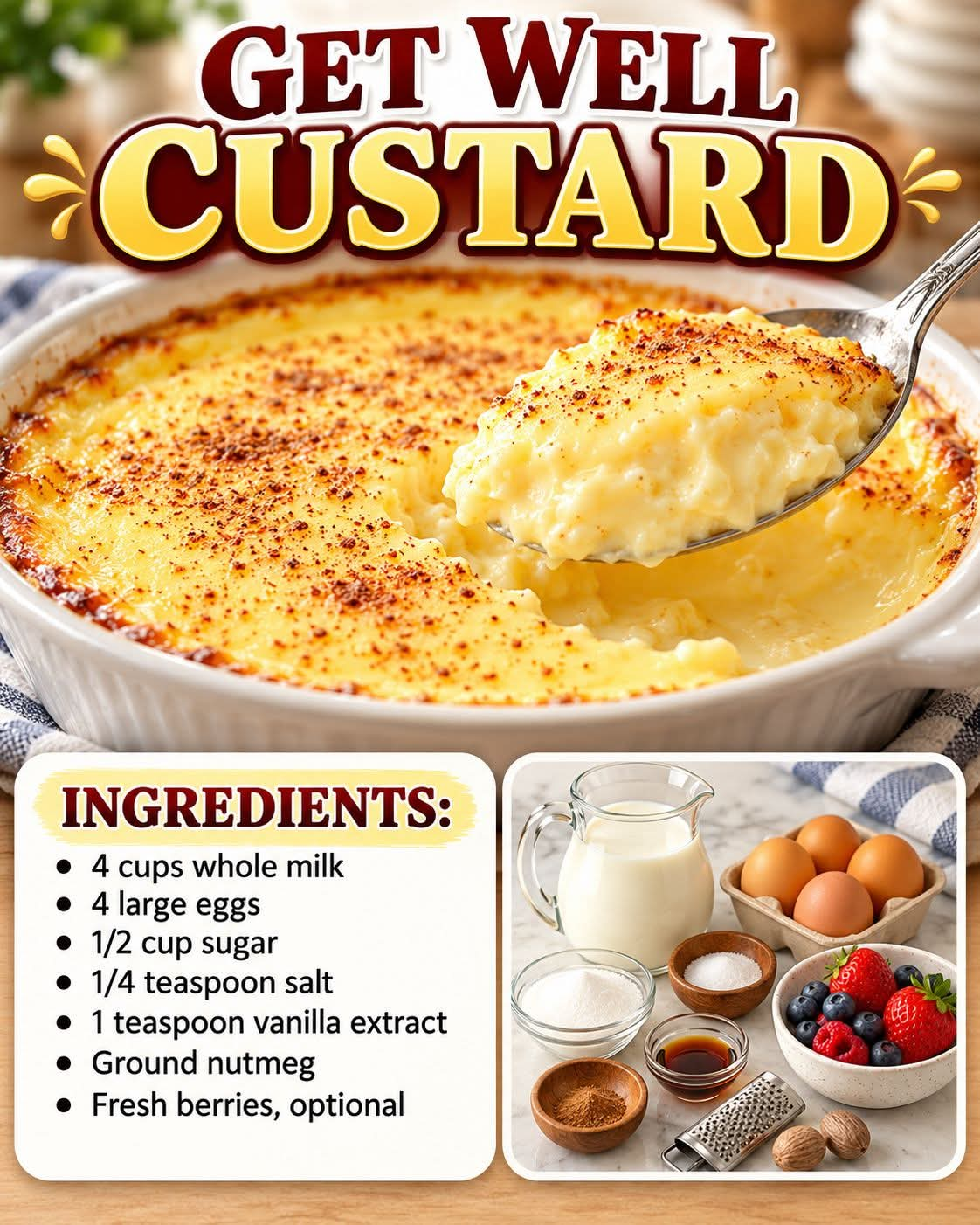
Old-Fashioned Get-Well Custard
Introduction
There is something wonderfully comforting about an old-fashioned baked custard. Silky, creamy, gently sweet, and delicately flavored with nutmeg, this simple dessert has the kind of homemade character that brings back memories of quiet kitchens, family tables, and recipes passed from one generation to the next.
Get-Well Custard is especially comforting because it is made with humble ingredients that are usually already in the kitchen. Eggs, milk, sugar, vanilla, and a little nutmeg come together to create a smooth and tender custard that is baked slowly in a water bath.
The gentle baking method is the secret to its beautiful texture. Instead of becoming firm and rubbery, the custard cooks gradually and evenly, producing a delicate consistency that almost melts in your mouth.
Although it has the name “Get-Well Custard,” you do not need to be under the weather to enjoy it. It makes a lovely everyday dessert, afternoon treat, or nostalgic ending to a family dinner.
Ingredients
- 4 large eggs
- 2 cups whole milk
- 1/2 cup granulated sugar
- 1 teaspoon pure vanilla extract
- 1/4 teaspoon salt
- 1/4 teaspoon freshly grated nutmeg, plus a little extra for the top
- 1 tablespoon butter, for greasing the baking dish
- Optional: 2 tablespoons heavy cream for an especially rich custard
Instructions
Step 1: Prepare the Oven
Preheat the oven to 325°F (165°C).
Lightly butter a 1 1/2-quart baking dish or several small oven-safe custard cups.
Place the prepared dish inside a larger roasting pan. The larger pan will later be filled with hot water to create the water bath.
Step 2: Warm the Milk
Pour the milk into a saucepan and warm it gently over medium-low heat.
The milk should become hot but should not come to a boil. Remove it from the heat as soon as it is steaming lightly.
If using heavy cream, combine it with the milk before warming.
Step 3: Prepare the Egg Mixture
In a large mixing bowl, whisk the eggs gently until they are combined.
Add the sugar, salt, vanilla extract, and nutmeg. Whisk until the mixture is smooth.
Avoid whipping the eggs too vigorously. Too much air can create bubbles in the finished custard and prevent it from having that classic smooth surface.
Step 4: Combine the Milk and Eggs
Slowly pour the warm milk into the egg mixture while whisking continuously.
Adding the milk gradually prevents the eggs from cooking too quickly.
Once everything is incorporated, strain the custard through a fine-mesh sieve into a clean bowl or measuring jug. This optional step removes any tiny pieces of cooked egg and helps produce an exceptionally smooth texture.
Step 5: Fill the Baking Dish
Pour the custard mixture into the prepared baking dish or individual custard cups.
Sprinkle a very small amount of nutmeg over the surface.
Step 6: Create the Water Bath
Carefully pour hot water into the larger roasting pan surrounding the custard dish.
The water should come approximately halfway up the sides of the custard dish.
Be careful not to splash water into the custard.
Step 7: Bake Slowly
Place the roasting pan in the preheated oven.
Bake for approximately 45 to 60 minutes for one large dish, or about 30 to 40 minutes for individual cups.
The exact baking time will depend on the depth and size of the dish.
The custard is ready when the edges are set but the center still has a gentle wobble when the dish is carefully moved.
Do not wait until the center is completely firm. The custard will continue to set as it cools.
Step 8: Cool
Carefully remove the custard dish from the hot-water bath.
Allow it to cool at room temperature for a while before serving.
It can be enjoyed warm, at room temperature, or chilled in the refrigerator for several hours.
For a chilled dessert, cover it loosely and refrigerate until completely cold.
Method
The most important part of this recipe is gentle cooking.
Custard is made by combining eggs and milk, and the eggs naturally thicken the mixture as they heat. If the temperature becomes too high, the eggs can overcook and separate, producing a grainy texture.
The water bath protects the custard from direct, intense heat. The surrounding hot water keeps the temperature gentle and helps the custard cook evenly from the edges toward the center.
For the smoothest result, use whole milk and fresh eggs. Warm the milk slowly, combine it gradually with the eggs, and avoid excessive whisking.
A fine-mesh strainer is another excellent old-fashioned technique. Straining the mixture before baking removes any small pieces of egg and creates a particularly silky finished custard.
History
Baked custards have a long history in home cooking because they require only a few inexpensive and readily available ingredients.
Egg-and-milk custards have appeared in many forms throughout European and American cooking traditions. Families adapted them according to what was available, sometimes adding vanilla, cinnamon, nutmeg, cream, or other flavorings.
Simple custards were especially valued in traditional home kitchens because eggs and milk could be transformed into something nourishing, filling, and comforting without requiring complicated equipment or expensive ingredients.
The tradition of baking custard in a water bath became especially useful because it allowed delicate egg mixtures to cook slowly and evenly.
The name “Get-Well Custard” reflects the long-standing association between simple homemade foods and comfort during periods of illness or recovery. A warm, gentle custard was the sort of dessert that could be prepared for someone who needed something soft, soothing, and easy to enjoy.
Formation
The formation of this custard happens gradually.
First, the eggs provide the structure. When heated gently, the proteins in the eggs coagulate and thicken the liquid.
The milk provides moisture and richness, while the sugar adds sweetness and helps create the tender texture.
Vanilla gives the custard its familiar dessert aroma, while nutmeg adds a warm, traditional flavor.
During baking, the outer edges set first because they are closest to the heat. The center remains softer for longer. This is why the custard should be removed from the oven while the center still has a slight wobble.
As the custard cools, the remaining heat allows it to finish setting. The result is a delicate dessert with a smooth, creamy texture.
Serving Suggestions
This custard is delicious served simply with a light dusting of freshly grated nutmeg.
For a more elaborate dessert, you can serve it with:
- Fresh berries
- Sliced bananas
- Stewed apples
- A small spoonful of whipped cream
- Fresh peaches
- Cinnamon
- A drizzle of caramel sauce
- A few toasted nuts
For an especially nostalgic presentation, serve individual custards in small glass or ceramic dishes.
Tips for Perfect Custard
Use gentle heat. High temperatures are the easiest way to turn smooth custard into a grainy mixture.
Do not overbeat the eggs. Whisk just enough to combine the ingredients.
Strain the mixture before baking if you want an exceptionally smooth texture.
Do not overbake. The center should still jiggle slightly when the custard comes out of the oven.
Use hot water for the water bath so the custard begins cooking gently and evenly.
Let the custard cool before serving. Its texture becomes firmer and creamier as it rests.
Freshly grated nutmeg gives the most traditional flavor, but ground nutmeg can also be used.
Make-Ahead Method
Get-Well Custard is an excellent make-ahead dessert.
Prepare and bake the custard according to the recipe, then allow it to cool completely. Cover and refrigerate for up to several days.
When ready to serve, enjoy it chilled or allow it to sit at room temperature briefly.
If you prefer it warm, reheat it very gently. Avoid high heat, as this can cause the eggs to become tough.
Conclusion
Get-Well Custard is proof that a memorable dessert does not need a long ingredient list or complicated technique.
With eggs, milk, sugar, vanilla, and a little nutmeg, you can create something smooth, creamy, delicate, and deeply comforting.
The slow water-bath method gives this custard its signature silky texture, while the nutmeg adds the old-fashioned character that makes it feel like a treasured family recipe.
It is the kind of dessert that feels equally appropriate after a Sunday dinner, on a quiet afternoon, or whenever someone could use a little homemade comfort.
For Custard Lovers
Anyone who loves traditional homemade desserts will appreciate this recipe. It is especially appealing to people who enjoy simple recipes, creamy textures, gentle flavors, and desserts that remind them of earlier generations.
There is no need for elaborate decoration. The beauty of this custard comes from its simplicity.
Serve it warm for a comforting dessert on a cool evening, or chill it for a refreshing creamy treat. However you serve it, the combination of vanilla, milk, eggs, and nutmeg creates the unmistakable flavor of an old-fashioned homemade custard.
This is a recipe worth keeping in the family recipe box and making whenever you want something simple, comforting, and timeless.