
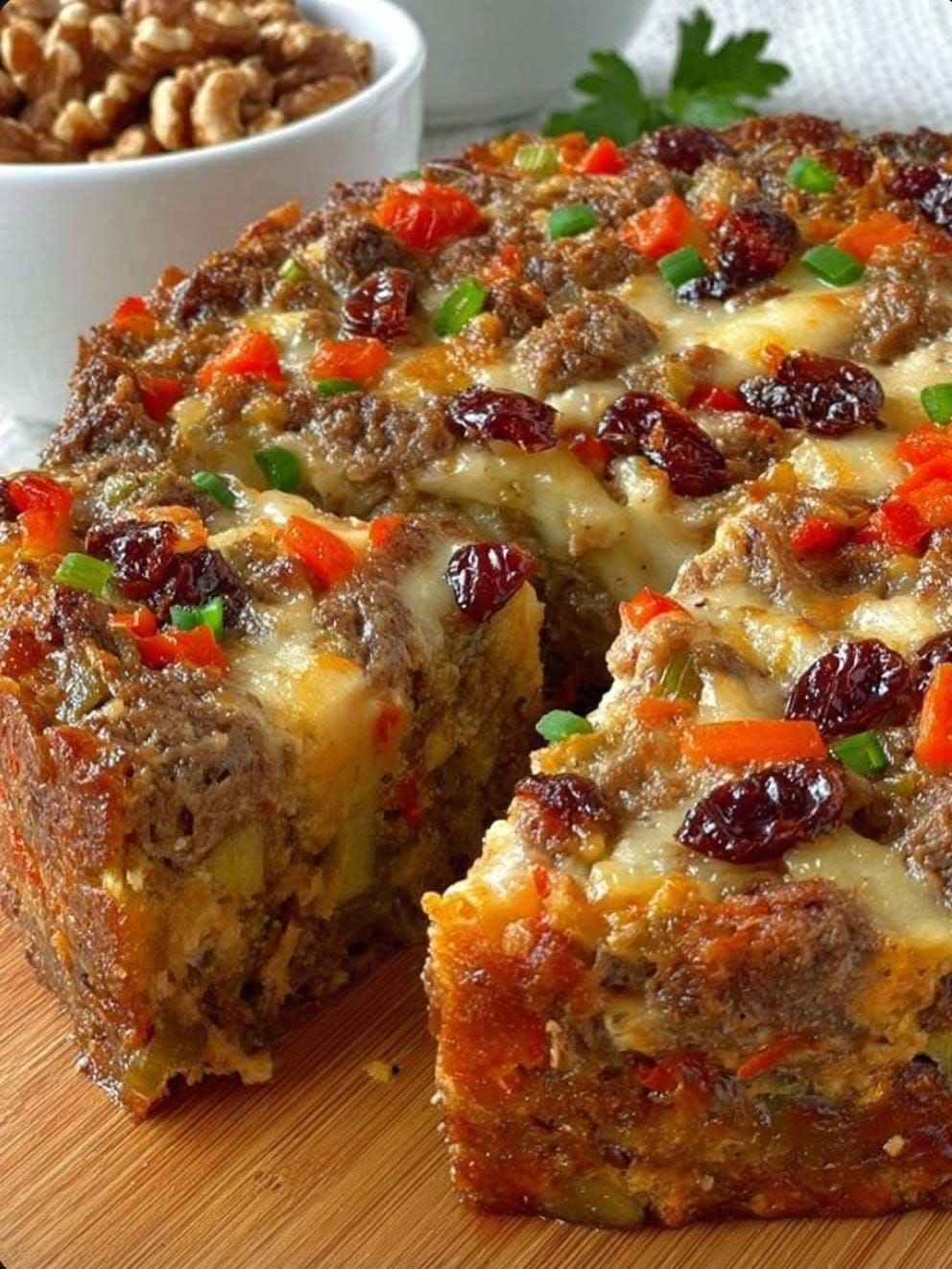
Old-Fashioned Tennessee Christmas Fruit Cake
Introduction
Every Christmas has a special smell that seems to bring the past rushing back, and for many Southern families, that smell comes from an old-fashioned fruit cake baking in the oven. This rich and moist Tennessee Christmas Fruit Cake is the kind of dessert that belongs on a holiday table surrounded by family, conversation, and memories.
For generations, fruit cake has been a traditional Christmas favorite. It is filled with dried and candied fruits, nuts, warm spices, and a tender cake that becomes even more flavorful as it rests. This particular version is inspired by the kind of fruit cake a great aunt might have baked every Christmas: simple, generous, moist, fragrant, and made with plenty of love.
The moment the cake goes into the oven, the kitchen fills with the aroma of cinnamon, nutmeg, butter, vanilla, fruit, and toasted nuts. When it finally comes out golden and rich, it is almost impossible to wait for it to cool.
This is more than just a Christmas dessert. It is a recipe made for creating memories.
Ingredients
For the Fruit Cake
- 2 cups all-purpose flour
- 1 cup granulated sugar
- 1/2 cup light brown sugar, packed
- 1 cup unsalted butter, softened
- 4 large eggs, room temperature
- 1 teaspoon vanilla extract
- 1/2 teaspoon almond extract
- 1 teaspoon baking powder
- 1/2 teaspoon baking soda
- 1/2 teaspoon salt
- 1 teaspoon ground cinnamon
- 1/2 teaspoon ground nutmeg
- 1/4 teaspoon ground cloves
- 1/4 teaspoon ground ginger
- 1/2 cup buttermilk
- 1 cup candied cherries
- 1 cup candied pineapple
- 1 cup golden raisins
- 1 cup raisins
- 1 cup chopped pecans
- 1/2 cup chopped walnuts
- 1/2 cup chopped dates
For Soaking the Fruit
- 1/2 cup orange juice
- 1/4 cup apple juice
- 1 teaspoon vanilla extract
Optional Glaze
- 1 cup powdered sugar
- 2 to 3 tablespoons orange juice or milk
- 1/2 teaspoon vanilla extract
Instructions
Step 1: Prepare the Fruit
Place the raisins, golden raisins, chopped dates, candied cherries, and candied pineapple in a large bowl.
Pour the orange juice and apple juice over the fruit. Add the vanilla extract and stir well.
Cover the bowl and allow the fruit to soak for at least 30 minutes. For an even richer flavor, the fruit can be soaked for several hours or overnight in the refrigerator.
Soaking helps soften the dried fruit and allows it to become juicy and flavorful instead of dry after baking.
Step 2: Prepare the Oven and Pan
Preheat the oven to 325°F.
Grease a large Bundt pan or 9-inch tube pan thoroughly with butter or cooking spray. Dust lightly with flour, making sure the sides and center tube are well coated.
Because fruit cake is dense and contains plenty of fruit and nuts, properly preparing the pan is important.
Step 3: Mix the Dry Ingredients
In a medium bowl, whisk together the flour, baking powder, baking soda, salt, cinnamon, nutmeg, cloves, and ginger.
Set the mixture aside.
These warm spices are an important part of the traditional holiday flavor. They give the cake its unmistakable Christmas aroma.
Step 4: Cream the Butter and Sugar
In a large mixing bowl, beat the softened butter, granulated sugar, and brown sugar until light and creamy.
This usually takes about 3 to 5 minutes.
Adding air to the butter mixture helps give the finished cake a lighter texture while still keeping it rich and moist.
Step 5: Add the Eggs
Add the eggs one at a time, beating well after each addition.
Add the vanilla extract and almond extract.
The batter should become smooth and creamy.
Step 6: Combine the Batter
Add about one-third of the dry ingredients to the butter mixture and mix gently.
Add half of the buttermilk and continue mixing.
Repeat with another portion of the dry ingredients, followed by the remaining buttermilk, and finish with the remaining dry ingredients.
Do not overmix the batter. Mix only until the ingredients are combined.
Step 7: Add the Fruit and Nuts
Drain the soaked fruit if there is a large amount of remaining liquid.
Toss the fruit lightly with a tablespoon or two of flour. This helps prevent the fruit from sinking completely to the bottom of the cake.
Fold the fruit, pecans, and walnuts gently into the batter using a large spoon or spatula.
The finished batter should be thick and packed with fruit and nuts.
Step 8: Fill the Pan
Spoon the batter evenly into the prepared pan.
Smooth the top with a spatula.
Tap the pan gently against the counter a few times to remove large air pockets.
Step 9: Bake
Place the cake in the preheated oven and bake for approximately 75 to 95 minutes.
Because ovens and pan sizes vary, begin checking the cake around the 75-minute mark.
Insert a wooden skewer or cake tester into the thickest part of the cake. It should come out mostly clean, although a little moisture from the fruit is perfectly normal.
If the top begins browning too quickly, loosely cover it with aluminum foil during the final portion of baking.
Step 10: Cool the Cake
Remove the cake from the oven and allow it to cool in the pan for approximately 15 to 20 minutes.
Carefully turn the cake onto a wire rack and allow it to cool completely.
Do not cut the cake while it is still hot. Fruit cake becomes easier to slice and develops a better texture as it cools.
Optional Holiday Glaze
For a simple glaze, whisk together powdered sugar, orange juice or milk, and vanilla extract until smooth.
Drizzle the glaze over the completely cooled cake.
For a more traditional appearance, you can leave the cake unglazed and simply dust it lightly with powdered sugar before serving.
Methods
The Soaking Method
The most important technique for a moist fruit cake is preparing the fruit properly.
Soaking dried and candied fruit allows it to absorb moisture before it goes into the batter. This prevents the fruit from taking moisture away from the cake during baking.
Orange juice adds brightness and complements the rich fruit and spices beautifully.
The Creaming Method
Creaming the butter and sugar together until light and fluffy incorporates air into the batter.
This gives the cake a tender texture while maintaining the dense, rich character expected from traditional fruit cake.
The Folding Method
Once the fruit and nuts are added, fold them into the batter gently.
Overmixing at this stage can make the cake heavier than necessary. The goal is to distribute the fruit and nuts evenly without overworking the batter.
The Slow-Baking Method
Fruit cake benefits from moderate, steady heat.
Baking at 325°F allows the center to cook properly while helping prevent the fruit and nuts on the outside from burning.
A slower baking process also helps preserve the moisture and rich texture of the cake.
How to Store the Fruit Cake
Once completely cooled, wrap the cake tightly in plastic wrap and then place it in an airtight container.
It can be stored at room temperature for several days.
For longer storage, refrigerate the cake.
Fruit cake is one of those desserts that can actually become more flavorful after resting for a day or two. The spices, fruit, nuts, and cake have time to blend together.
Before serving, allow a refrigerated cake to come closer to room temperature for the best flavor and texture.
The History of Christmas Fruit Cake
Fruit cake has a long history in holiday baking. Versions of fruit-filled cakes have been made in Europe for centuries, with recipes changing as they traveled from one region and family to another.
When these traditions became part of American cooking, fruit cake developed many regional variations. Southern cooks became especially known for rich cakes filled with dried fruits, candied fruits, nuts, warm spices, and sometimes spirits or fruit juices.
In the American South, fruit cake became closely associated with Christmas gatherings. Families often had their own versions, passed from mothers and grandmothers to daughters and grandchildren.
Tennessee kitchens were no exception.
A Christmas fruit cake was often more than something sweet served after dinner. It was something prepared ahead of time, brought out when family visited, sliced for guests, and shared throughout the holiday season.
The Formation of the Cake
The beauty of this fruit cake comes from the way all of its ingredients work together.
The butter creates richness. Brown sugar provides deeper sweetness and moisture. Buttermilk gives the cake tenderness, while the eggs provide structure.
The dried and candied fruits bring sweetness and chewy texture. Pecans and walnuts provide crunch and a warm, nutty flavor.
Cinnamon, nutmeg, cloves, and ginger create the familiar holiday spice profile.
As the cake bakes, all of these flavors combine into a dense but tender Christmas dessert with a wonderful aroma.
Tips for the Best Fruit Cake
Use room-temperature butter and eggs so the batter combines smoothly.
Do not skip the fruit-soaking step if you want especially moist fruit.
Tossing the fruit with a little flour helps distribute it throughout the cake.
Do not overmix after adding the flour.
Bake the cake slowly and check it with a skewer rather than relying only on the baking time.
Allow the cake to cool completely before slicing.
For the best flavor, make the cake one day before serving.
Use good-quality pecans because they contribute a significant amount of flavor to the finished cake.
Serving Suggestions
This Tennessee Christmas Fruit Cake is delicious served on its own with a cup of coffee or tea.
For an extra-special holiday dessert, serve a warm slice with a spoonful of whipped cream.
A small scoop of vanilla ice cream also pairs beautifully with the rich fruit and spice flavors.
For Christmas gatherings, arrange thin slices on a festive serving platter with additional pecans and candied cherries.
Why Fruit Cake Lovers Will Love This Recipe
Fruit cake lovers will appreciate the generous amount of fruit and nuts in every slice.
The cake is moist without being overly soft, rich without being heavy, and warmly spiced without allowing any single spice to overpower the others.
The combination of raisins, cherries, pineapple, dates, pecans, and walnuts creates different textures in every bite.
Most importantly, this recipe has the comforting character of an old-fashioned family Christmas cake.
It tastes like something that has been sitting on a holiday table while family members gather around, tell stories, drink coffee, and return for just one more slice.
Conclusion
This Old-Fashioned Tennessee Christmas Fruit Cake is the kind of recipe that deserves to be kept and passed down.
It is rich, moist, fragrant, and filled with the flavors that make Christmas baking so memorable. From the first moment the fruit begins soaking to the moment the finished cake is sliced, the entire process feels like part of the holiday tradition.
Bake it for Christmas morning, serve it after a family dinner, or wrap it carefully and give it as a homemade holiday gift.
And when the smell of butter, spices, fruit, and toasted nuts fills the kitchen, you may understand why recipes like this become family memories.
Sometimes the best Christmas recipes are not simply recipes.
They are memories baked into every slice.