
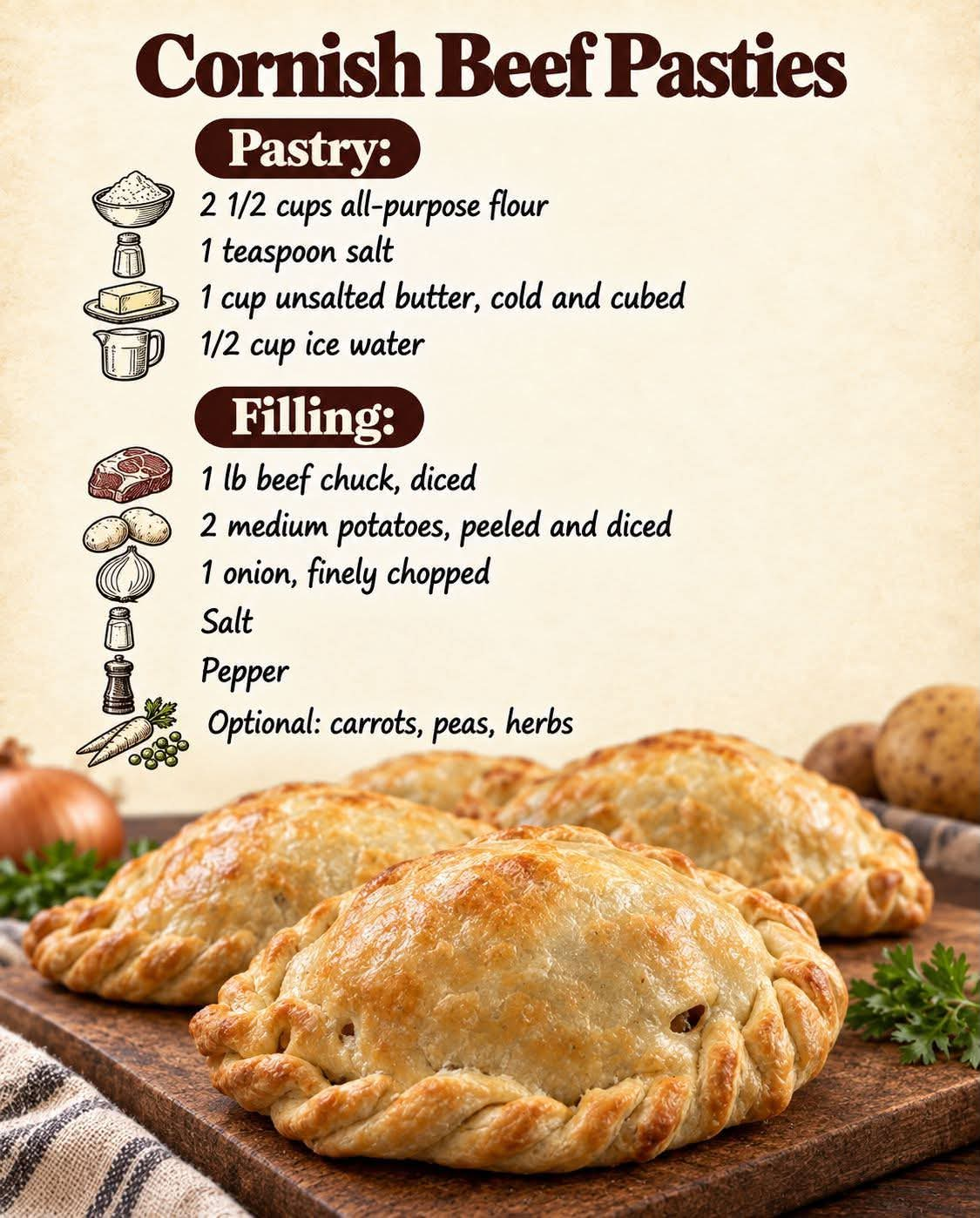
Old-School Yooper Pasties
Introduction
There are some recipes that are more than just food. They are little pieces of family history, packed into a homemade crust and carried from one generation to the next. These old-school Yooper pasties are exactly that kind of recipe.
If you grew up around Michigan’s Upper Peninsula, or have family roots there, you may already know how special a good pasty can be. With a golden, tender pastry wrapped around a hearty filling of beef, potatoes, rutabaga, onions, and simple seasonings, pasties were made to be filling, practical, and satisfying.
They make a wonderful lunch because they are hearty enough to keep you satisfied for hours. They are also perfect for making in large batches, which is why many families prepare extra pasties and freeze them for another day.
My husband absolutely loves these for lunch, and once you make a batch yourself, it is easy to understand why. They are rustic, comforting, inexpensive, and full of old-fashioned homemade flavor.
Ingredients
For the Pastry
- 4 cups all-purpose flour
- 1 teaspoon salt
- 1 cup cold butter or shortening
- 1 cup cold water, approximately
- 1 egg, beaten, for brushing the crust
For the Filling
- 1 pound ground beef or finely diced beef
- 3 large potatoes, peeled and diced into very small pieces
- 1 small rutabaga, peeled and finely diced
- 1 large onion, finely chopped
- 1 teaspoon salt
- 1/2 teaspoon black pepper
- 1/2 teaspoon garlic powder, optional
- 2 tablespoons butter
Instructions
Step 1: Prepare the Pastry
In a large bowl, combine the flour and salt.
Cut the cold butter or shortening into the flour until the mixture resembles coarse crumbs. Slowly add the cold water, a little at a time, mixing just until a soft dough forms.
Do not overwork the dough. The less you handle it, the more tender the finished pastry will be.
Shape the dough into a ball, wrap it, and refrigerate for at least 30 minutes.
Step 2: Prepare the Filling
While the dough chills, prepare the vegetables.
Peel the potatoes and rutabaga and cut them into very small, evenly sized pieces. Finely chop the onion.
Place the beef, potatoes, rutabaga, and onion in a large bowl. Add the salt, black pepper, and garlic powder if using.
Mix everything gently until evenly combined.
Keep the vegetables fairly small. This helps them cook completely inside the pastry while the crust becomes beautifully golden.
Step 3: Roll Out the Dough
Preheat the oven to 400°F (200°C).
Divide the chilled dough into approximately six equal portions.
Roll each portion into a circle about 8 to 9 inches wide.
Keep the remaining dough covered while you work so it does not dry out.
Step 4: Fill the Pasties
Place a generous portion of the filling onto one half of each pastry circle, leaving a border around the edge.
Add a small piece of butter over the filling.
Fold the empty half of the dough over the filling to create a half-moon shape.
Press the edges together firmly, then crimp them with your fingers or the tines of a fork.
Make a small slit or two in the top of each pasty to allow steam to escape.
Step 5: Prepare for Baking
Arrange the pasties on a parchment-lined baking sheet.
Brush the tops lightly with beaten egg. This gives the pastry a beautiful golden finish as it bakes.
Make sure the pasties are sealed well so the juices remain inside during baking.
Step 6: Bake
Bake for approximately 45 to 55 minutes, or until the pastry is deeply golden and the filling is completely cooked.
Because the vegetables are enclosed inside the pastry, give them enough time to become tender.
Remove the pasties from the oven and let them rest for about 10 minutes before serving.
Traditional Cooking Method
The beauty of a traditional pasty is its simplicity.
The pastry is prepared from basic pantry ingredients, while the filling relies on inexpensive vegetables and beef. Everything is enclosed together and baked until the crust becomes crisp and golden while the vegetables and meat become tender and flavorful.
The butter placed inside the filling melts during baking and helps create a rich, savory interior.
For an especially traditional texture, avoid adding too many extra ingredients. The classic combination of beef, potato, rutabaga, onion, salt, and pepper is what gives these pasties their old-fashioned character.
The History of the Yooper Pasty
Pasties are strongly associated with Michigan’s Upper Peninsula, where they became an important food among mining communities.
The tradition is closely connected with Cornish immigrants who came to the region to work in the copper mines. Cornish miners brought their traditional pasty with them, and the food eventually became deeply established in Upper Peninsula culture.
A pasty was especially practical for miners because it could be prepared ahead of time, carried easily, and eaten as a complete meal.
The thick pastry provided a sturdy container for the hot filling. The miners could hold the pasty by the crust while eating it, keeping their hands relatively clean while working underground.
Over time, Upper Peninsula families developed their own versions, and the pasty became much more than a miner’s lunch. It became a beloved regional comfort food associated with family, community, tradition, and home cooking.
Formation and Assembly
The shape of the pasty is one of its most recognizable features.
The dough is rolled into a circle, the filling is placed on one side, and the pastry is folded over to create a half-moon.
The edges are sealed tightly and traditionally crimped by hand.
Do not worry about making every pasty look perfectly identical. Homemade pasties are supposed to look rustic. The important thing is creating a strong seal so the filling stays inside while baking.
Freezer Method
These pasties are excellent for freezing, which makes them perfect for meal preparation.
To freeze unbaked pasties, assemble them completely and place them on a parchment-lined tray. Freeze until firm, then transfer them to airtight freezer bags or containers.
When you are ready to bake them, they can be baked from frozen with additional cooking time. Make sure the center reaches a safe temperature and the filling is thoroughly cooked.
You can also freeze fully baked pasties after they have cooled completely.
Wrap each pasty individually and store them in the freezer. Reheat them in the oven until hot throughout for the best crust.
Serving Suggestions
Traditional pasties are delicious on their own, but several simple accompaniments work beautifully.
Serve them with:
- Gravy
- Butter
- Ketchup
- Pickles
- Simple green salad
- Roasted vegetables
- Homemade soup
Some families have strong opinions about the proper way to serve a pasty, but ultimately the best method is the one your family enjoys.
Tips for Perfect Yooper Pasties
Use cold butter or shortening when preparing the pastry. This helps create a flaky crust.
Cut the vegetables into small, uniform pieces so everything cooks evenly.
Do not overfill the pastry. A pasty that is too full can be difficult to seal and may split while baking.
Seal the edges firmly before crimping them.
Allow the baked pasties to rest for several minutes before serving. The filling will be extremely hot when they first come out of the oven.
For meal preparation, make a double batch. One batch can go straight onto the dinner table while the extras can be frozen for future lunches.
Why Pasties Make Such Wonderful Lunches
A good pasty has almost everything you want in a satisfying lunch. It has meat, potatoes, vegetables, and a golden pastry crust all wrapped together in one convenient package.
They are easy to transport, easy to reheat, and filling enough to make a complete meal.
That is part of what makes this old-fashioned food so special. It was created for practicality, but generations of families continued making it because it also tastes like home.
For Pasty Lovers
If you love old-fashioned comfort food, homemade pasties deserve a place in your recipe collection.
They are especially wonderful on cold days when you want something warm and substantial. The aroma of buttery pastry and savory beef filling coming from the oven makes the whole kitchen feel welcoming.
And because they freeze so well, you do not have to wait for a special occasion to enjoy them.
Make a big batch, serve some for lunch, and save the rest for another busy day.
Conclusion
These old-school Yooper pasties are a wonderful example of how simple ingredients can become a treasured family meal.
Tender pastry, savory beef, potatoes, rutabaga, and onions come together to create a hearty lunch with deep regional history and plenty of homemade comfort.
For families who grew up eating pasties, the first bite can bring back memories of parents, grandparents, hometown kitchens, and meals shared around the table.
For anyone trying them for the first time, they are an easy way to experience a little piece of Upper Peninsula food tradition right at home.
Make them for your family, make extra for the freezer, and enjoy them whenever you need a warm, filling, old-fashioned lunch.