
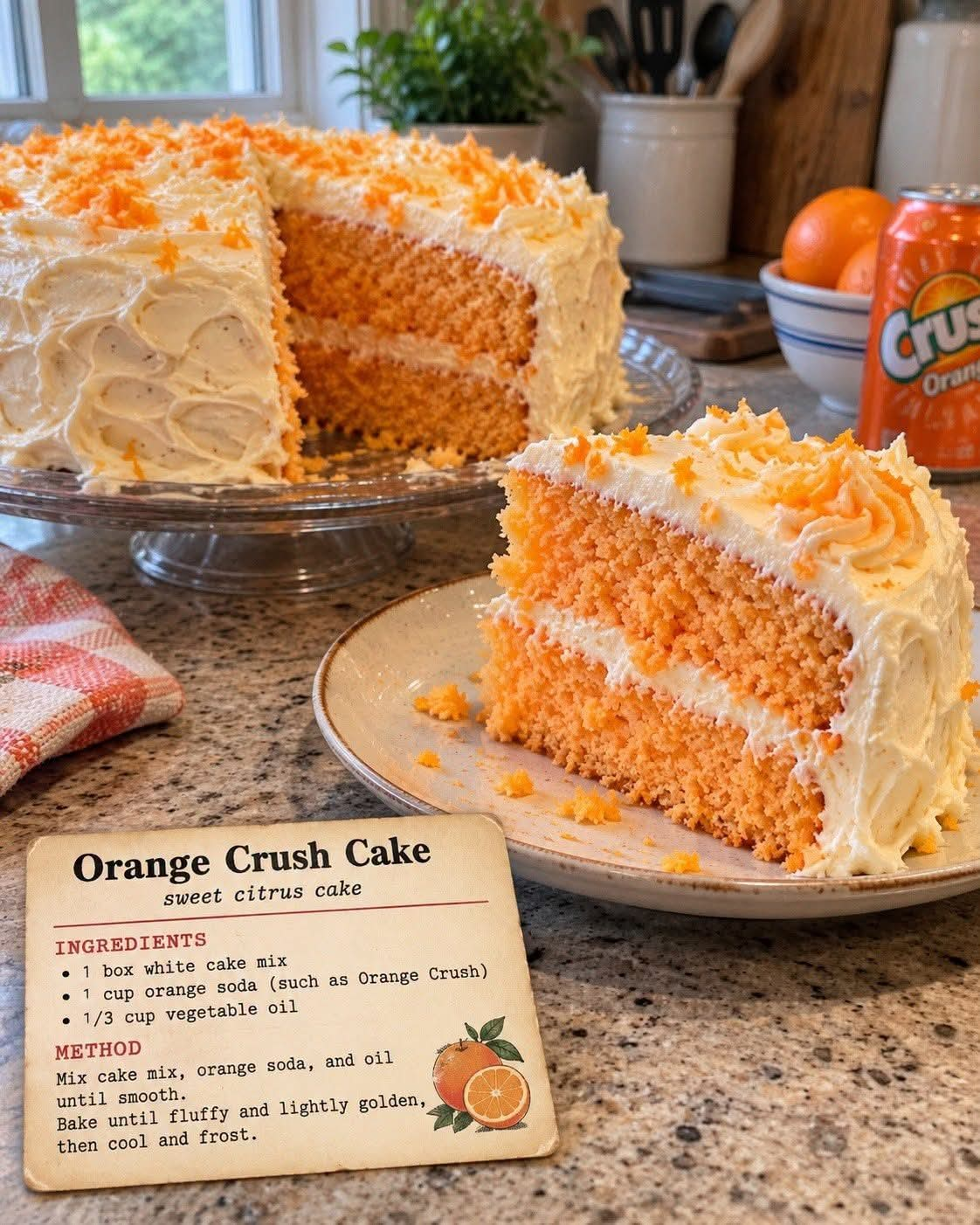
Orange Crush Cake – The Ultimate Citrus Dessert
Introduction
Orange Crush Cake is a deliciously moist, soft, and flavorful dessert that brings the refreshing taste of oranges into every bite. With its bright citrus flavor, tender cake texture, and creamy orange frosting, this cake is perfect for family gatherings, birthdays, summer parties, holidays, potlucks, or simply enjoying with a cup of coffee or tea.
What makes this cake so special is the combination of orange soda, orange gelatin, and fresh citrus flavor. The soda adds sweetness and a subtle orange taste, while the gelatin helps create a beautiful orange color and enhances the fruity flavor. Once the cake is topped with a smooth, creamy frosting, it becomes a delightful dessert that looks beautiful and tastes even better.
This recipe uses a convenient boxed cake mix, making it easy enough for beginner bakers while still delivering the flavor and appearance of a homemade dessert. You can prepare it as a traditional layer cake or bake it in a rectangular pan for an easy family-style treat.
If you love orange creamsicles, citrus desserts, and soft cakes with creamy frosting, this Orange Crush Cake deserves a place in your recipe collection.
Ingredients

For the Orange Cake
- 1 box (15.25 ounces / approximately 432 g) yellow cake mix
- 1 package (3 ounces / 85 g) orange gelatin dessert mix
- 3 large eggs
- 1 cup (240 ml) Orange Crush soda or another orange-flavored soda
- 1/2 cup (120 ml) vegetable oil
- 1 teaspoon vanilla extract
- 1 tablespoon finely grated orange zest, optional
- 2 tablespoons fresh orange juice, optional
For the Creamy Orange Frosting
- 8 ounces (225 g) cream cheese, softened
- 1/2 cup (115 g) unsalted butter, softened
- 3 cups (360 g) powdered sugar
- 2 tablespoons orange juice
- 1 teaspoon vanilla extract
- 1 teaspoon finely grated orange zest
- 1–2 tablespoons milk or heavy cream, if needed
Optional Decoration
- Fresh orange slices
- Thin strips of orange zest
- Orange sprinkles
- Small pieces of candied orange peel
- A little extra orange zest for the top
Instructions
Step 1: Prepare the Oven and Baking Pan
Preheat your oven to 350°F (175°C).
Grease a 9-by-13-inch baking pan with butter or nonstick cooking spray. You can also line the bottom with parchment paper to make removing the cake easier.
If you prefer a layered cake, prepare two 8-inch round cake pans instead, greasing and lining them carefully.
Set the prepared pan aside while you make the batter.
Step 2: Mix the Dry Ingredients
In a large mixing bowl, combine the yellow cake mix and orange gelatin powder.
Whisk them together until evenly distributed. Mixing these ingredients first helps the orange flavor spread throughout the cake.
If you want a stronger natural citrus aroma, add the finely grated orange zest at this stage.
Step 3: Add the Wet Ingredients
Add the eggs, orange soda, vegetable oil, and vanilla extract to the dry mixture.
If desired, add the fresh orange juice for an extra citrus note.
Using an electric mixer, beat the ingredients on low speed until the dry ingredients are moistened. Increase to medium speed and beat for approximately 2 minutes, scraping down the sides of the bowl as necessary.
The batter should look smooth and evenly colored.
Avoid overmixing, because excessive mixing can make the finished cake less tender.
Step 4: Pour the Batter into the Pan
Pour the prepared batter into your greased baking pan.
Use a spatula to spread it evenly into the corners. Gently tap the pan against the counter once or twice to release any large air bubbles.
Place the pan on the center rack of the preheated oven.
Step 5: Bake the Cake
Bake for approximately 28–35 minutes in a 9-by-13-inch pan. If using two round pans, begin checking after approximately 22–28 minutes.
Baking time will vary depending on your oven and the depth of the batter.
To check for doneness, insert a toothpick into the center of the cake. If it comes out clean or with a few moist crumbs, the cake is ready.
The top should be lightly golden, and the center should spring back gently when touched.
Remove the cake from the oven and place it on a wire rack.
Allow it to cool completely before adding the frosting. Frosting a warm cake will cause the butter and cream cheese to melt.
Step 6: Prepare the Creamy Orange Frosting
In a large bowl, beat the softened cream cheese and butter together until smooth, creamy, and free of lumps.
Add the vanilla extract, orange zest, and orange juice. Mix until incorporated.
Gradually add the powdered sugar, about one cup at a time, beating on low speed at first to prevent a cloud of sugar from escaping the bowl.
Once all the sugar has been added, increase the speed and beat until the frosting becomes fluffy and spreadable.
If the frosting is too thick, add a little milk or heavy cream, one teaspoon at a time. If it is too thin, add a little more powdered sugar.
For the best texture, use room-temperature cream cheese and butter, but avoid allowing them to become warm or melted.
Step 7: Frost the Cake
Once the cake has cooled completely, spread the orange cream cheese frosting over the top using an offset spatula or the back of a spoon.
Create gentle swirls across the surface for a homemade appearance.
For a more decorative finish, add fresh orange zest, small orange slices, or candied orange peel.
If you prefer a lighter topping, you can substitute whipped topping for the cream cheese frosting. This creates a softer, more mousse-like finish.
Step 8: Chill and Serve
Place the frosted cake in the refrigerator for approximately 30–60 minutes to help the frosting set.
Cut into squares or slices using a sharp knife. Wipe the knife between cuts for cleaner portions.
Serve chilled or allow each slice to stand at room temperature for about 10–15 minutes before serving.
The result is a soft, moist orange cake with a sweet citrus flavor and a rich, creamy topping.
Methods of Preparation
1. The Easy Box-Mix Method
This is the simplest approach and works well for busy days. The yellow cake mix provides the flour, leavening, and much of the structure, while the orange soda and gelatin add flavor and color.
It is an excellent choice for beginner bakers or anyone who wants a dependable dessert without measuring numerous dry ingredients.
2. The Citrus-Enhanced Method
For a fresher orange flavor, add grated orange zest and a small amount of fresh orange juice to the batter.
The zest contains aromatic oils that give the cake a natural citrus fragrance. Use only the colored outer peel of the orange, avoiding the bitter white pith beneath it.
3. The Layer Cake Method
Bake the batter in two prepared 8-inch round pans. Let both cakes cool completely, then spread frosting between the layers and over the top and sides.
For a more elegant presentation, decorate the top with orange zest and a few thin orange slices.
Make sure the cakes are completely cool and level before stacking them.
4. The Poke Cake Method
For an extra-moist dessert, bake the cake in a 9-by-13-inch pan and allow it to cool for approximately 10–15 minutes.
Use the handle of a wooden spoon to make holes across the surface, spacing them about an inch apart. Slowly pour a small amount of orange gelatin mixture prepared according to a suitable reduced-liquid recipe over the cake so it seeps into the holes.
Refrigerate until thoroughly chilled, then top with whipped topping or cream cheese frosting.
This variation produces a more pronounced orange flavor and a soft, pudding-like texture in the areas where the liquid settles. Avoid adding too much liquid, as the cake can become soggy.
History of Orange Crush Cake
Orange Crush Cake belongs to a broad tradition of American soda cakes, which use carbonated soft drinks to add flavor, sweetness, and moisture to baked desserts.
Soda cakes became especially popular in home kitchens because they offered an easy way to create distinctive flavors with readily available ingredients. Bakers experimented with cola, lemon-lime soda, root beer, and orange soda to create cakes for birthdays, family dinners, church gatherings, and neighborhood celebrations.
Orange-flavored cakes also have a long-standing place in home baking. Orange zest, juice, extracts, and gelatin mixes have all been used to give cakes a bright citrus taste without requiring complicated techniques.
There is no single verified origin for the specific Orange Crush Cake recipe. Rather, it is best understood as a modern variation of the American soda-cake tradition, combining convenient cake mix with orange soda and a creamy topping.
Its lasting appeal comes from its simplicity, colorful appearance, and familiar sweet orange flavor.
Formation and Texture of the Cake
The delicious texture of Orange Crush Cake comes from the way its ingredients work together.
The cake mix: Provides the flour structure, sugar, leavening agents, and other ingredients that help the cake rise and hold its shape.
The eggs: Help bind the ingredients together and contribute structure, richness, and a tender crumb.
The vegetable oil: Adds moisture and helps keep the cake soft after cooling.
The orange soda: Contributes sweetness, liquid, and orange flavor. Most of the carbonation escapes during mixing and baking, so the soda should not be relied upon as the cake’s only leavening agent.
The orange gelatin mix: Adds concentrated orange flavor and color, as well as sugar and gelatin. Because gelatin can affect the texture, it is important to use the specified amount rather than adding extra powder.
The orange zest: Provides aromatic citrus oils that complement the sweeter flavor of the soda.
The cream cheese frosting: Creates a smooth, rich contrast to the fruity cake. The slight tanginess of cream cheese balances the sweetness of the powdered sugar and orange flavor.
Together, these ingredients create a cake that is tender, moist, sweet, and refreshing without being overly complicated to prepare.
Tips for the Best Orange Crush Cake
- Use room-temperature eggs. They mix more evenly into the batter.
- Measure accurately. Too much liquid can make the cake dense or gummy.
- Do not overmix. Stop beating once the batter is smooth.
- Check the cake early. Ovens vary, and a toothpick is more reliable than the clock alone.
- Cool completely before frosting. This keeps the topping thick and creamy.
- Use fresh orange zest. It adds a fragrant, natural citrus aroma.
- Adjust the frosting sweetness. Add the powdered sugar gradually until the desired consistency is reached.
- Refrigerate leftovers. Because the frosting contains cream cheese, keep the cake covered in the refrigerator and use it within about 3–4 days for best quality.
Variations to Try

Orange Creamsicle Cake
Add a little extra vanilla to the cake and frosting. The combination of orange and vanilla creates a flavor reminiscent of a classic orange creamsicle.

Orange Pineapple Cake
Add well-drained crushed pineapple to the batter, reducing other liquid slightly if needed. This gives the cake a tropical flavor and extra fruitiness.

Orange Bundt Cake
Bake the batter in a well-greased Bundt pan, adjusting the baking time and checking for doneness. Finish with a simple orange glaze instead of cream cheese frosting.

Orange Poke Cake
Add an orange gelatin filling after baking and top with whipped topping. Keep it refrigerated for a cool, soft dessert.
Serving Suggestions
Orange Crush Cake pairs beautifully with a variety of simple accompaniments.
- Serve with freshly brewed coffee or black tea.
- Add fresh strawberries, raspberries, or blueberries alongside each slice.
- Serve with a scoop of vanilla ice cream for a more indulgent dessert.
- Garnish with thin orange slices for a festive presentation.
- Cut into small squares for dessert tables, potlucks, or family celebrations.
For special occasions, arrange the slices on a white serving platter and add a little orange zest just before serving. The bright citrus color looks especially attractive against the creamy frosting.
Storage and Make-Ahead Instructions
Refrigerator: Store the frosted cake in an airtight container in the refrigerator for approximately 3–4 days.
Freezer: For longer storage, freeze the unfrosted cake, tightly wrapped, for up to 2–3 months for best quality. Thaw it in the refrigerator before frosting. Individual frosted slices may also be frozen, although the cream cheese frosting’s texture may change slightly after thawing.
Make ahead: Bake the cake a day in advance, allow it to cool, wrap it well, and refrigerate. Prepare and spread the frosting before serving or on the day of your gathering.
Transporting: Keep the cake chilled during transport, particularly in warm weather, because the frosting contains dairy.
Conclusion
Orange Crush Cake is a wonderful example of how a few simple ingredients can create a dessert that feels special. Its soft crumb, bright orange flavor, and creamy frosting make every slice a satisfying combination of sweetness and citrus freshness.
Whether you bake it for a birthday, prepare it for a family dinner, bring it to a potluck, or simply want something delicious for the weekend, this cake is easy to make and attractive enough to serve on almost any occasion.
The best part is that you can customize it to suit your taste. Add extra orange zest for a stronger citrus aroma, choose a tangy cream cheese frosting, or turn it into a chilled poke cake for a different texture.
Once you have tried this recipe, it may become one of those dependable homemade desserts that family and friends request again and again.
For Orange Cake Lovers
If you love soft cakes, refreshing citrus desserts, and creamy frosting, Orange Crush Cake is a recipe worth keeping. Every slice offers a balance of sweet orange flavor, tender cake, and rich frosting that makes it difficult to stop at just one piece.
It is simple enough for an ordinary afternoon and special enough for a celebration. Serve it chilled, share it with people you love, and enjoy a homemade dessert that brings a little sunshine to the table.
Recipe at a Glance
- Prep time: 15–20 minutes
- Bake time: 28–35 minutes for a 9-by-13-inch pan
- Cooling time: Approximately 1 hour
- Chilling time: 30–60 minutes
- Total time: Approximately 2–2½ hours
- Yield: 12–15 servings
- Difficulty: Easy
- Flavor: Sweet orange and vanilla
- Texture: Moist, soft cake with creamy frosting
Enjoy your homemade Orange Crush Cake with a cup of coffee, a glass of cold milk, or your favorite tea.