
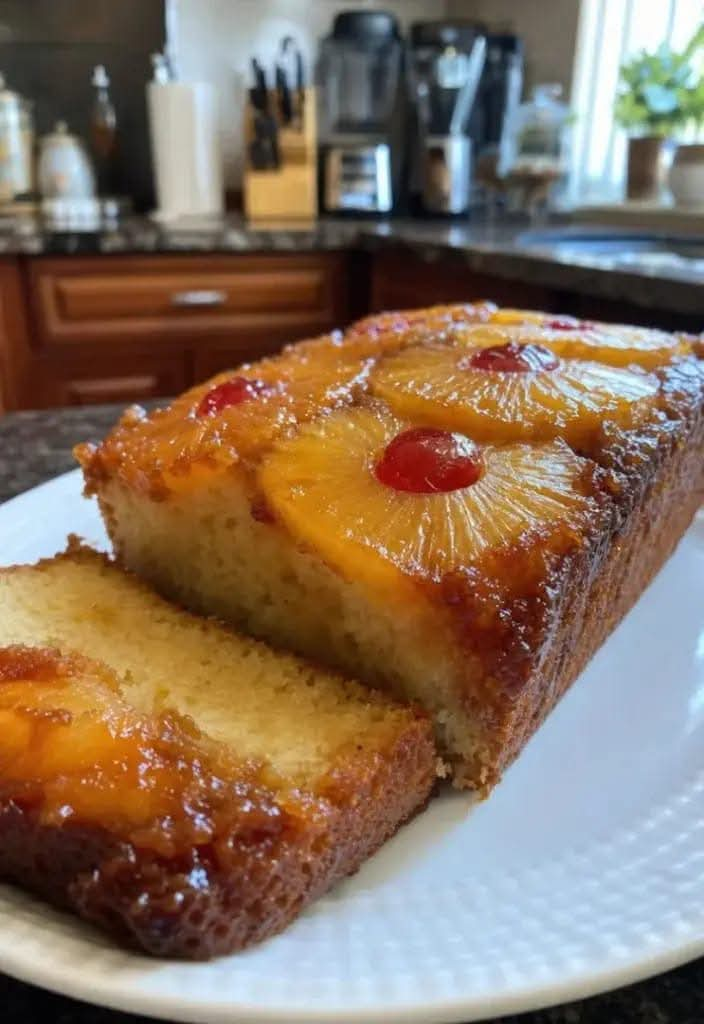
Pineapple Upside Down Bread: A Nostalgic, Buttery Pineapple Dessert Loaf
Introduction
Pineapple Upside Down Bread is a delicious twist on the classic pineapple upside-down cake, combining the sweetness of caramelized brown sugar, juicy pineapple rings, and a soft, buttery loaf with a beautiful golden topping. Every slice delivers a wonderful balance of fruity sweetness, rich buttery flavor, and a tender cake-like texture that makes this dessert difficult to resist.
What makes this recipe especially appealing is its simple preparation. You do not need complicated decorating techniques, special equipment, or professional baking skills. The pineapple and brown sugar create a gorgeous topping as they bake, and when the loaf is carefully turned upside down, the fruit becomes the centerpiece of the dessert.
This homemade pineapple loaf is perfect for family gatherings, weekend baking, afternoon coffee, holiday dessert tables, or whenever you want to prepare something sweet and comforting. Serve it slightly warm for a soft, buttery treat, or chill it and enjoy a slice later when the caramelized pineapple flavors have had time to settle.
Preparation and Baking Time
- Preparation time: 20 minutes
- Baking time: 45–60 minutes
- Cooling time: 15–20 minutes
- Total time: Approximately 1 hour and 35 minutes
- Servings: 8–10 slices
- Difficulty: Easy
- Baking temperature: 350°F (175°C)
Ingredients

For the caramelized pineapple topping
- ¼ cup unsalted butter, melted
- ½ cup packed light brown sugar
- 6–8 pineapple rings, canned or fresh
- 6–8 maraschino cherries, optional
- 1 tablespoon pineapple juice
For the buttery bread loaf
- 1½ cups all-purpose flour
- ¾ cup granulated sugar
- ½ cup unsalted butter, softened
- 2 large eggs, at room temperature
- ½ cup sour cream or plain Greek yogurt
- ¼ cup pineapple juice
- 1 teaspoon vanilla extract
- 1½ teaspoons baking powder
- ¼ teaspoon baking soda
- ¼ teaspoon salt
Optional additions
- ¼ teaspoon ground cinnamon
- ½ teaspoon coconut extract
- 2 tablespoons finely chopped pineapple, well drained
- 2 tablespoons shredded coconut
These additions can give the loaf a slightly warmer flavor or a tropical twist without changing the basic recipe.
Instructions
Step 1: Prepare the oven and loaf pan
Preheat your oven to 350°F (175°C). Grease a 9-by-5-inch loaf pan thoroughly with butter or nonstick baking spray.
For easier removal, line the bottom and the long sides of the pan with parchment paper, leaving a little overhang to help lift the loaf after baking.
Make sure your pineapple rings are well drained. Pat them gently with paper towels to remove excess moisture. This step is important because too much pineapple juice can make the topping watery and prevent the loaf from setting properly.
Step 2: Make the caramelized brown sugar topping

In a small bowl, combine the melted butter, packed brown sugar, and one tablespoon of pineapple juice.
Stir until the mixture resembles a thick, glossy brown sugar sauce. Spread it evenly across the bottom of the prepared loaf pan.
Arrange the pineapple rings over the sugar mixture. Depending on the size of your pan and pineapple rings, you may need to overlap them slightly or cut a few rings in half to fit along the sides.
If desired, place a maraschino cherry in the center of each ring.
Take a moment to arrange the fruit neatly because this will become the top of your finished loaf when it is inverted.
Step 3: Combine the dry ingredients
In a medium bowl, whisk together the all-purpose flour, baking powder, baking soda, and salt.
If you are using cinnamon, add it at this stage.
Whisking the dry ingredients helps distribute the leavening agents evenly throughout the flour, encouraging the loaf to rise consistently and develop a soft, tender crumb.
Set the bowl aside while you prepare the wet ingredients.
Step 4: Cream the butter and sugar
In a large mixing bowl, beat the softened butter and granulated sugar together for approximately 2–3 minutes, until the mixture becomes pale and fluffy.
This process incorporates air into the batter, helping create a lighter texture.
Add the eggs one at a time, beating well after each addition. Stir in the vanilla extract.
Scrape down the sides of the bowl as needed to ensure that all the ingredients are evenly combined.
Step 5: Add the sour cream and pineapple juice
Mix the sour cream or Greek yogurt into the butter mixture until smooth.
Pour in the pineapple juice and stir gently. The sour cream adds moisture and a subtle tang, while the pineapple juice brings additional fruit flavor to the loaf.
The mixture may look slightly curdled at this stage, but it should come together once you add the dry ingredients.
Step 6: Prepare the batter
Add the dry ingredients to the wet mixture in two or three additions. Mix on low speed or fold gently with a spatula until the flour is just incorporated.
Avoid overmixing. Excessive mixing can develop the gluten in the flour and make the finished loaf tougher than desired.
If you want extra pineapple flavor inside the bread, gently fold in two tablespoons of finely chopped, well-drained pineapple.
The batter should be thick but spreadable.
Step 7: Assemble the loaf

Carefully spoon the batter over the arranged pineapple rings.
Spread it evenly with a spatula, making sure the batter reaches the corners of the pan. Work gently so that the pineapple rings remain in place.
Do not worry if the batter seems thick. It will spread and rise as it bakes.
Tap the pan lightly against the counter once or twice to release any large air pockets.
Step 8: Bake until golden
Place the loaf pan on the center rack of the preheated oven.
Bake for approximately 45–60 minutes. Baking time will vary depending on your oven, the moisture in the pineapple, and the material of your loaf pan.
Begin checking the loaf at around 45 minutes. The top should be golden brown, and a toothpick inserted into the center of the cake portion should come out clean or with a few moist crumbs.
If the top becomes too dark before the center is cooked, loosely cover the pan with aluminum foil and continue baking.
Avoid opening the oven repeatedly during the first 35 minutes because sudden temperature changes may affect the loaf’s rise.
Step 9: Cool before turning upside down
Remove the loaf from the oven and let it rest in the pan for approximately 10–15 minutes.
Run a thin knife around the edges to loosen any areas that may have stuck.
Place a serving plate over the top of the loaf pan. Using oven mitts, carefully and confidently invert the pan so that the loaf releases onto the plate with the pineapple topping facing upward.
Lift the pan slowly. If a pineapple ring remains stuck, gently remove it and reposition it on the loaf.
Do not wait until the loaf is completely cold before turning it out, because the caramelized sugar can harden and make removal more difficult.
Allow the loaf to cool for another 10–20 minutes before slicing.
Method: How to Achieve the Perfect Pineapple Upside Down Bread

The secret to a successful pineapple upside-down loaf is balancing moisture, sweetness, and texture.
1. Drain the pineapple properly. Excess liquid can create a soggy layer between the fruit and the bread. Patting the pineapple dry helps the topping caramelize more evenly.
2. Use softened butter. Butter that is soft but not melted creams more effectively with sugar, helping produce a light and tender crumb.
3. Measure the flour carefully. Too much flour can make the loaf dry. For the most consistent result, weigh the flour if possible or spoon it into the measuring cup and level it off.
4. Avoid overmixing. Once the flour is added, mix only until the ingredients come together. This helps maintain a delicate texture.
5. Allow a short cooling period. The brief rest after baking helps the caramelized topping settle and makes the loaf easier to release from the pan.
6. Use a reliable doneness test. The pineapple topping may look ready before the center is fully baked. Check the middle of the loaf with a toothpick rather than relying on color alone.
The History of Pineapple Upside-Down Desserts
Pineapple upside-down cake has a long history connected to the tradition of cooking fruit with sugar in a pan and turning the dessert out before serving.
Before modern ovens and convenient cake pans became common, cooks prepared fruit desserts in heavy pans, often using cast iron. Fruit and sugar were placed at the bottom, with batter added on top. Once cooked, the dessert could be inverted to reveal a decorative layer of caramelized fruit.
Pineapple became especially popular in American baking during the early twentieth century as canned pineapple became more widely available. Its consistent sweetness, attractive circular slices, and convenient preparation made it an ideal fruit for upside-down cakes.
The classic version often includes pineapple rings, brown sugar, butter, and maraschino cherries. Over time, home bakers developed many variations, including cupcakes, skillet cakes, sheet cakes, and loaf-shaped desserts.
Pineapple Upside Down Bread follows the same basic idea while presenting it in a convenient loaf form. Although it is called bread, this recipe is closer to a sweet quick bread or loaf cake than traditional yeast bread. It relies on baking powder and baking soda for its rise rather than yeast.
Its appeal comes from combining an old-fashioned presentation with a simple baking method that suits modern home kitchens.
Formation: Understanding the Layers and Texture
The beauty of this recipe comes from the way its ingredients work together during baking.
The caramelized bottom layer
Butter and brown sugar melt together in the oven, forming a rich, syrupy coating around the pineapple. The natural acidity and sweetness of the fruit balance the deep flavor of the brown sugar.
The pineapple layer
Pineapple rings retain their recognizable shape while becoming soft and juicy. When the loaf is inverted, the rings create an attractive decorative surface that makes the dessert look more elaborate than it is.
The soft interior
The combination of butter, eggs, sour cream, and pineapple juice produces a moist, tender crumb. The baking powder and baking soda help the batter rise, giving the loaf a light cake-like structure.
The finished glaze
As the loaf rests, the buttery brown sugar mixture settles over the pineapple and creates a glossy finish. Some of the syrup may run down the sides, making each slice rich and flavorful.
The result is a dessert with three appealing qualities: a sticky fruit topping, a soft interior, and a buttery sweetness throughout.
Serving Suggestions
Pineapple Upside Down Bread can be served in several delicious ways.
- Warm with vanilla ice cream: The contrast between the warm pineapple loaf and cold ice cream makes a wonderful dessert.
- With whipped cream: A spoonful of lightly sweetened whipped cream adds a soft, creamy finish.
- With coffee or tea: Serve a slice with your favorite hot drink for an afternoon treat.
- With toasted coconut: Sprinkle toasted coconut over the loaf for extra texture and tropical flavor.
- With fresh fruit: Add fresh strawberries, raspberries, or additional pineapple for a colorful dessert plate.
- As a holiday dessert: Arrange the slices on a serving platter for family celebrations, potlucks, and festive gatherings.
For cleaner slices, use a sharp serrated knife and wipe it between cuts.
Recipe Variations
1. Coconut Pineapple Upside Down Bread
Add ¼ cup shredded coconut to the batter and replace the vanilla extract with coconut extract if desired. The coconut adds texture and complements the pineapple beautifully.
2. Pineapple Cherry Loaf
Place maraschino cherries between the pineapple rings or in the center of each ring before adding the batter. This creates a traditional upside-down cake appearance.
3. Brown Sugar Cinnamon Pineapple Bread
Add ½ teaspoon ground cinnamon to the dry ingredients. The warm spice adds depth and works particularly well during autumn and winter.
4. Tropical Pineapple Mango Bread
Replace a small portion of the chopped pineapple folded into the batter with finely diced mango. Drain the fruit well to avoid introducing too much moisture.
5. Pineapple Pecan Upside Down Bread
Sprinkle ¼ cup finely chopped pecans over the brown sugar topping before arranging the pineapple. The nuts add a pleasant crunch and a buttery, nutty flavor.
Storage Instructions
At room temperature: Because this loaf contains a moist fruit topping, cool it completely and store it in an airtight container in the refrigerator for food safety and best quality, rather than leaving it out for several days.
In the refrigerator: Store for up to 4 days in a covered container. Allow individual slices to come closer to room temperature before serving, or warm them briefly.
In the freezer: Wrap individual slices tightly in plastic wrap, then place them in a freezer-safe container or bag. Freeze for up to 2 months for best quality. Thaw overnight in the refrigerator.
To reheat: Warm a slice in the microwave for approximately 10–15 seconds, then add a little more time if needed. Avoid overheating, as this can dry out the interior.
Troubleshooting Tips
Why did my loaf turn out soggy?
The pineapple may have contained too much liquid, or the loaf may have been underbaked. Drain the fruit thoroughly and check that the center is cooked before removing it from the oven.
Why did the pineapple stick to the pan?
The caramel may have cooled and hardened before the loaf was inverted, or the pan may not have been greased adequately. Let the loaf rest for 10–15 minutes, loosen the edges, and invert while the topping is still warm.
Why is the middle dense?
Overmixing, too much flour, expired leavening agents, or underbaking can contribute to a dense center. Measure carefully and mix gently once the flour is added.
Why did the loaf break when I turned it over?
It may have been inverted while too hot, or it may not have been fully baked. Allow a short cooling period and use parchment paper to help support the loaf during removal.
Can I use fresh pineapple instead of canned?
Yes. Cut the fresh pineapple into rings of similar thickness and remove the core. Fresh pineapple can release more juice, so pat it dry before arranging it in the pan.
Frequently Asked Questions
Can I prepare this recipe the day before?
Yes. Bake the loaf, allow it to cool, cover it, and refrigerate it. For the best texture, serve it within a few days and warm individual slices slightly if desired.
Is pineapple upside-down bread the same as pineapple upside-down cake?
They are very similar. Both use fruit and caramelized sugar at the bottom of the pan before being inverted. This loaf version is baked in a rectangular pan and has a quick-bread-style presentation.
Can I make it without sour cream?
Yes. Plain Greek yogurt is a suitable substitute. You can also use plain yogurt, although the final texture may be slightly different.
Can I use a different pan?
Yes, but the baking time will change. A round cake pan may work, provided the batter and pineapple fit comfortably. Avoid filling the pan too close to the top.
How do I know when it is ready?
The loaf should be golden on top, and a toothpick inserted into the center should come out clean or with a few moist crumbs. If you use a thermometer, the center of the cake portion should generally reach about 200–205°F (93–96°C).
Conclusion
Pineapple Upside Down Bread is a wonderful homemade dessert that brings together the familiar flavors of buttery cake, sweet pineapple, and rich caramelized brown sugar. Its attractive fruit topping makes it suitable for special occasions, while its straightforward preparation makes it easy enough for an ordinary weekend.
Whether you serve it warm with vanilla ice cream, enjoy it with a cup of coffee, or share it with family after dinner, this golden pineapple loaf offers a comforting combination of sweetness and softness in every slice.
The best part is that it looks impressive without requiring complicated decorating skills. With properly drained pineapple, a well-prepared pan, and a little patience while baking, you can create a beautiful dessert that tastes as good as it looks.
For Pineapple Dessert Lovers
If you love old-fashioned desserts, tropical flavors, and easy homemade baking, this recipe deserves a place in your collection. The caramelized fruit, buttery crumb, and glossy brown sugar topping make it a lovely alternative to traditional cakes.
It is the kind of recipe you can bring to a family gathering, serve to unexpected guests, or bake simply because you want something sweet at home.
Recipe tip: For the prettiest presentation, arrange the pineapple rings carefully before adding the batter, and invert the loaf while it is still slightly warm. That simple step helps reveal the beautiful golden pineapple topping.
Enjoy your homemade Pineapple Upside Down Bread, one delicious slice at a time.