
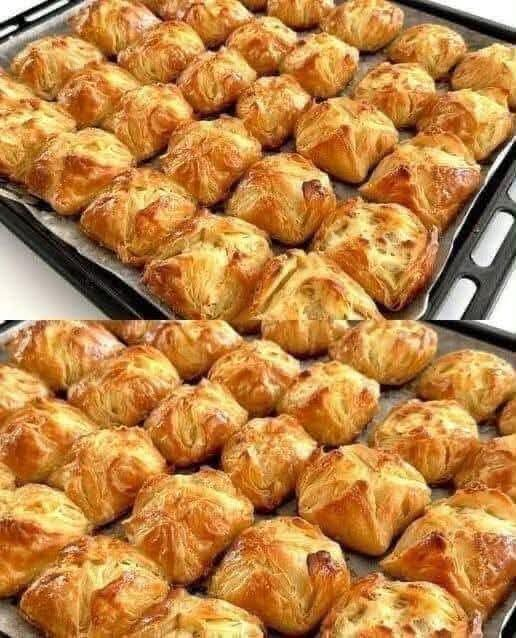
Savory Cheese and Herb Puff Pastry Twists
Introduction
There is something wonderfully satisfying about turning a simple sheet of puff pastry into a golden, flaky, cheese-filled treat. This Savory Cheese and Herb Puff Pastry recipe is one of those recipes that looks impressive when it comes out of the oven, yet is surprisingly easy to prepare.
The secret is in the method. A good sheet of puff pastry does most of the work, while a creamy mixture of cream cheese, cheddar, fresh chives, garlic, and black pepper gives every bite a rich and savory flavor. The pastry becomes beautifully crisp on the outside while the cheese filling stays soft and flavorful inside.
This recipe is especially useful when you need something quick for breakfast, afternoon tea, a family gathering, a party, or an appetizer table. It can also be prepared ahead of time and baked when needed.
The combination of buttery pastry, melted cheese, fresh herbs, and a delicate golden crust makes these little pastries difficult to resist.
Ingredients
For the Puff Pastry
- 1 sheet frozen puff pastry, approximately 17.3 oz (490 g), thawed
- 1 large egg
- 1 tablespoon water or milk
For the Savory Cheese and Herb Filling
- 4 oz (115 g) cream cheese, softened
- 1/2 cup (50 g) shredded cheddar cheese
- 2 tablespoons fresh chives, finely chopped
- 1/4 teaspoon garlic powder
- A pinch of black pepper
- 1/4 cup (30 g) finely chopped cooked spinach, optional, squeezed completely dry
- Sesame seeds or poppy seeds, optional, for sprinkling
Equipment
- Baking sheet
- Parchment paper
- Small mixing bowl
- Rolling pin, if needed
- Sharp knife or pizza cutter
- Pastry brush
- Fork
- Cooling rack
Instructions
1. Thaw the Puff Pastry
Remove the puff pastry from the freezer and allow it to thaw according to the package instructions.
The pastry should be soft enough to unfold without cracking but still cool to the touch. Do not allow it to become warm or sticky, because cold puff pastry is much easier to handle and produces better layers when baked.
Preheat the oven to 400°F (200°C). Line a baking sheet with parchment paper.
2. Prepare the Cheese Filling
Place the softened cream cheese in a mixing bowl.
Add the shredded cheddar cheese, finely chopped fresh chives, garlic powder, and black pepper. If using spinach, make sure it has been cooked, cooled, and squeezed very dry before adding it to the mixture.
Stir everything together until the ingredients are evenly distributed and the filling becomes creamy and spreadable.
Taste a small amount and adjust the seasoning if desired. The cheddar provides saltiness, while the garlic, chives, and pepper add extra flavor.
3. Prepare the Pastry
Gently unfold the thawed puff pastry onto a lightly floured work surface or a sheet of parchment paper.
If the pastry is uneven or has thick areas, gently roll it out just enough to create an even rectangle. Avoid excessive rolling because you want to preserve the pastry’s delicate layers.
Spread the cheese and herb mixture evenly over half of the pastry, leaving a small border around the edges.
Fold the other half of the puff pastry over the filling.
Press the edges gently to help seal the pastry.
4. Cut the Pastry
Using a sharp knife or pizza cutter, cut the filled pastry into strips.
For smaller appetizer-sized pieces, make thinner strips. For larger pastries, make wider strips.
Twist each strip gently several times. Be careful not to twist too aggressively, because the filling can squeeze out and the pastry may tear.
Arrange the twists on the prepared baking sheet, leaving some space between each one.
5. Prepare the Egg Wash
Crack the egg into a small bowl and add 1 tablespoon of water or milk.
Whisk until smooth.
Using a pastry brush, lightly coat the exposed pastry with the egg wash. This gives the finished pastries their beautiful golden color and slightly glossy surface.
If desired, sprinkle sesame seeds or poppy seeds over the top.
6. Chill Before Baking
For especially flaky results, place the prepared pastries in the refrigerator for approximately 10 to 15 minutes before baking.
This short chilling period helps the butter in the puff pastry firm up again. When the cold pastry enters the hot oven, the moisture in the butter turns into steam, helping create the characteristic flaky layers.
7. Bake
Place the baking sheet in the preheated oven.
Bake for approximately 18 to 25 minutes, or until the puff pastry has risen dramatically and the outside is deeply golden brown.
The exact baking time will depend on the thickness of your pastry strips and your oven.
Do not remove them too early. Puff pastry should look fully puffed and golden rather than pale.
8. Cool and Serve
Remove the pastries from the oven and allow them to cool on the baking sheet for several minutes.
Transfer them to a wire rack if desired.
They are delicious while still warm, when the cheese filling is soft and creamy and the pastry is wonderfully crisp.
The Method
The beauty of this recipe comes from using a simple layered pastry technique.
First, the puff pastry is kept cold. Then the creamy cheese filling is spread evenly across the dough. Folding the pastry over the filling creates layers of pastry surrounding the savory center.
Cutting the dough into strips and gently twisting each piece exposes different layers to the heat of the oven. As the pastry bakes, the butter between the layers creates steam, causing the dough to rise and separate into flaky layers.
The egg wash encourages browning, while sesame seeds or poppy seeds provide an additional bit of texture.
The result is a crisp, golden exterior surrounding a warm, cheesy, herb-filled center.
Formation and Texture
These pastries should have several contrasting textures.
The outside should be crisp and flaky.
The middle should be light and tender.
The cheese filling should remain creamy, savory, and flavorful.
The chives provide a fresh herbal note, while the garlic powder adds warmth. Cheddar contributes a stronger cheese flavor, and cream cheese gives the filling a smooth consistency.
If spinach is included, it adds color, mild earthiness, and additional texture without overpowering the cheese.
The key to good formation is not overfilling the pastry. Too much filling can cause the cheese mixture to leak during baking and may prevent the pastry from rising properly.
Tips for Perfect Puff Pastry
Keep the pastry cold
Cold puff pastry is easier to work with and generally produces better layers.
Do not overwork the dough
Puff pastry already contains carefully created layers. Excessive rolling or handling can flatten those layers.
Squeeze spinach thoroughly
If you use spinach, remove as much water as possible. Excess moisture can make the filling watery and interfere with the pastry’s crispness.
Do not overcrowd the baking sheet
Leave enough space around each pastry so hot air can circulate.
Bake until properly golden
Puff pastry needs enough heat and time to become crisp. Removing it while it is still pale can result in a softer texture.
Use freshly shredded cheddar
Freshly shredded cheese melts particularly well and gives the filling a smooth, rich texture.
Make-Ahead Method
These pastries can be prepared ahead of time.
Prepare the filled and twisted pastries, arrange them on a parchment-lined baking sheet, and cover them carefully.
Refrigerate for several hours before baking.
When ready to bake, brush them with egg wash, add the seeds if desired, and place them directly into the preheated oven.
You may need to add a few extra minutes to the baking time if the pastries are very cold.
Freezer Method
For longer storage, the unbaked pastries can be frozen.
Arrange the prepared pastries in a single layer on a parchment-lined tray and freeze until firm. Once frozen, transfer them to a suitable freezer container or bag.
When you want to bake them, place the frozen pastries on a lined baking sheet and bake until completely puffed and golden. They may require additional baking time compared with freshly prepared pastries.
Serving Ideas
These savory puff pastry treats can be served in many different ways.
They make an excellent breakfast alongside eggs and fresh fruit.
For lunch, serve them with a simple green salad or vegetable soup.
For parties, arrange them on a large platter alongside other appetizers.
They are also wonderful for afternoon tea, family gatherings, holiday celebrations, brunches, and potlucks.
For an extra special presentation, serve them with a small bowl of marinara sauce, tomato relish, or a mild herb dip.
Flavor Variations
The basic recipe is easy to customize.
For a stronger cheese flavor, replace part of the cheddar with Parmesan.
For a different herb profile, use parsley, dill, basil, or thyme.
For a slightly spicy version, add a pinch of red pepper flakes.
For a richer filling, add a small amount of grated mozzarella.
For a Mediterranean-inspired version, add finely chopped sun-dried tomatoes and parsley.
For a spinach-and-cheese version, increase the spinach slightly while keeping it thoroughly squeezed dry.
You can also experiment with different combinations of cheeses depending on what you have available.
History of Puff Pastry
Puff pastry belongs to a long tradition of European laminated pastry-making. The basic technique involves repeatedly layering dough and fat, then folding and rolling the dough so that numerous thin layers are created.
During baking, moisture in the butter or other fat produces steam. The steam pushes the layers apart, creating the light, flaky structure that makes puff pastry so distinctive.
Over generations, puff pastry became an important part of European baking and eventually spread into countless variations around the world.
Today, commercially prepared frozen puff pastry makes this traditional technique much more accessible to home cooks. Instead of spending hours preparing and laminating dough, cooks can use a ready-made sheet and concentrate on the filling and shaping.
That convenience is one reason puff pastry appetizers have remained so popular.
Why People Love This Recipe
There are many reasons this recipe is easy to love.
It uses a small number of ingredients.
The preparation is straightforward.
It looks beautiful when served.
The pastry becomes crisp and golden.
The filling is creamy and cheesy.
The herbs give it a fresh homemade flavor.
It works for breakfast, appetizers, parties, holidays, and everyday snacking.
Most importantly, it is the kind of recipe that feels more complicated than it actually is.
Conclusion
Savory Cheese and Herb Puff Pastry Twists are a wonderful example of how a few simple ingredients can be transformed into something special.
The buttery layers of puff pastry provide the perfect foundation for the creamy combination of cream cheese and cheddar, while fresh chives and garlic bring brightness and savory depth. A light egg wash gives the pastries their beautiful golden finish, and optional sesame or poppy seeds add a pleasant crunch.
Whether you prepare them for a family breakfast, a holiday gathering, a party platter, or simply because you want something warm and delicious from the oven, these pastries are an excellent recipe to keep close at hand.
Once you learn the method, you can change the filling again and again and create your own favorite combinations.
For the Lovers of Homemade Savory Pastries
If you love recipes that are simple, comforting, flaky, cheesy, and impressive without requiring complicated techniques, this is one worth making again and again.
The wonderful thing about this recipe is that it can become your own. Change the cheese, add your favorite herbs, include spinach or leave it out, make the twists small for appetizers or larger for breakfast, and create a version that suits your family.
Serve them warm, place them in the center of the table, and watch how quickly they disappear.
This is the kind of old-fashioned kitchen recipe that proves you do not need dozens of ingredients to make something memorable. Sometimes all you need is good pastry, a flavorful filling, and a simple method.