
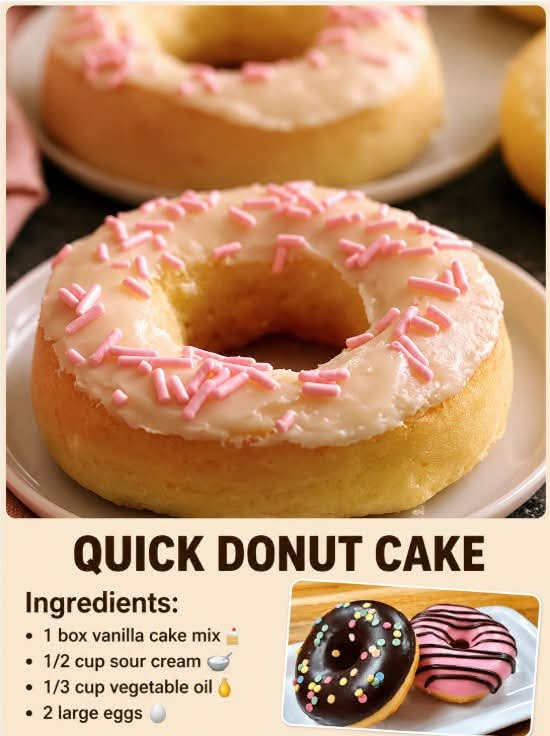
Soft and Fluffy Homemade Donut-Style Cake
Introduction
If you love the comforting flavor of a classic homemade donut but do not want to spend time mixing, rolling, cutting, frying, and cleaning up a pot of oil, this soft and fluffy donut-style cake is the perfect answer.
This simple cake captures many of the flavors people associate with old-fashioned cake donuts: a tender crumb, gentle sweetness, buttery richness, and a warm vanilla flavor. Instead of making individual donuts, the batter is baked as one beautiful cake and finished with a sweet glaze or a light dusting of powdered sugar.
It is an excellent choice for breakfast, an afternoon coffee break, dessert, weekend baking, or sharing with family and friends. The preparation is straightforward enough for a beginner, yet the finished cake feels special enough to serve at a gathering.
The secret is not complicated. A balanced combination of butter, sugar, eggs, milk, vanilla, and flour creates a soft batter, while baking powder gives the cake its light texture. A simple glaze adds the familiar sweet finish that makes this cake taste wonderfully donut-like.
Ingredients
For the Cake
- 2 cups all-purpose flour
- 1 1/2 teaspoons baking powder
- 1/2 teaspoon baking soda
- 1/2 teaspoon salt
- 1/2 teaspoon ground cinnamon
- 1/4 teaspoon ground nutmeg, optional
- 1/2 cup unsalted butter, softened
- 3/4 cup granulated sugar
- 2 large eggs, room temperature
- 2 teaspoons vanilla extract
- 3/4 cup whole milk
- 1/4 cup sour cream or plain Greek yogurt
For the Glaze
- 1 1/2 cups powdered sugar
- 2 to 3 tablespoons milk
- 1 teaspoon vanilla extract
- Pinch of salt
Optional Topping
- Ground cinnamon
- Powdered sugar
- Chopped nuts
- Fine sugar
- A light sprinkle of cinnamon-sugar
Equipment
- 9-inch round cake pan or Bundt-style pan
- Mixing bowls
- Electric mixer or hand whisk
- Rubber spatula
- Measuring cups and spoons
- Cooling rack
- Whisk for the glaze
Preparation
Begin by preheating the oven to 350°F (175°C). Grease a 9-inch round cake pan thoroughly with butter or nonstick spray. If desired, lightly dust the pan with flour to make removing the finished cake easier.
Allow the butter, eggs, milk, and sour cream to come close to room temperature before beginning. Room-temperature ingredients blend more evenly and help create a smoother batter.
Method
Step 1: Prepare the Dry Ingredients
In a medium bowl, whisk together the flour, baking powder, baking soda, salt, cinnamon, and nutmeg if using.
Set this mixture aside while you prepare the wet ingredients.
The cinnamon and nutmeg are optional, but they add the subtle warm spice associated with traditional cake donuts.
Step 2: Cream the Butter and Sugar
Place the softened butter and granulated sugar in a large mixing bowl.
Beat them together for approximately 2 to 3 minutes, until the mixture becomes lighter and creamy.
This step helps incorporate air into the batter and contributes to the cake’s soft texture.
Step 3: Add the Eggs and Vanilla
Add the eggs one at a time, mixing well after each addition.
Add the vanilla extract and mix until everything is smooth and well combined.
If the mixture looks slightly separated at this stage, do not worry. It will come together when the dry ingredients and milk are added.
Step 4: Combine the Batter
Add approximately one-third of the dry ingredients to the butter mixture and mix gently.
Add half of the milk and sour cream mixture.
Continue alternating between the dry ingredients and the remaining milk, finishing with the dry ingredients.
Mix only until the flour disappears.
Do not overmix the batter. Excessive mixing can develop too much gluten and make the finished cake dense instead of soft and fluffy.
Step 5: Fill the Pan
Transfer the batter into the prepared cake pan.
Use a spatula to gently spread the batter into an even layer.
Tap the pan lightly against the counter once or twice to remove any large air pockets.
Step 6: Bake
Place the cake in the preheated oven and bake for approximately 30 to 38 minutes.
The exact baking time will depend on the pan and your oven.
The cake is ready when the top is lightly golden and a toothpick inserted into the center comes out clean or with a few moist crumbs attached.
Avoid overbaking because this can take away from the soft, tender texture.
Step 7: Cool the Cake
Remove the cake from the oven and allow it to cool in the pan for about 10 to 15 minutes.
Carefully loosen the edges with a thin knife or spatula, then transfer the cake to a cooling rack.
Allow it to cool further before adding the glaze.
If the cake is too hot, the glaze may melt completely and slide off instead of creating a beautiful sweet coating.
Making the Glaze
Place the powdered sugar in a small bowl.
Add 2 tablespoons of milk and the vanilla extract. Whisk until smooth.
If the glaze is too thick, add a small amount of milk, about 1 teaspoon at a time.
If it becomes too thin, add a little more powdered sugar.
The ideal consistency should be thick enough to coat the cake while still being easy to drizzle.
Add a small pinch of salt to balance the sweetness.
Finishing the Cake
Once the cake has cooled, drizzle the glaze generously over the top.
For a more traditional donut flavor, lightly sprinkle the glaze with cinnamon or add a small amount of cinnamon-sugar.
You can also leave the cake simply glazed for a classic appearance.
Allow the glaze to sit for approximately 15 to 20 minutes before slicing so that it can begin to set.
Formation of the Cake
The formation of this donut-style cake is what makes it different from a traditional yeast donut.
Instead of preparing a yeast dough and allowing it to rise, this recipe uses a cake batter. Baking powder and baking soda provide the necessary lift during baking, creating a soft and tender crumb.
Creaming the butter and sugar introduces air into the mixture. The eggs provide structure and richness, while the milk and sour cream add moisture.
The final result is a cake that is dense enough to have the familiar bite of a cake donut but tender enough to remain soft and pleasant to eat.
The glaze adds another important element. It provides the sweetness and finish associated with bakery-style donuts without requiring deep frying.
A Little History
Donuts have a long history of evolving from simple fried doughs into the many varieties enjoyed today.
Traditional cake donuts became especially popular because they could be prepared without the lengthy rising process required for yeast-raised donuts. Their characteristic texture comes from a chemically leavened batter rather than yeast.
Over time, bakers began creating donut-inspired cakes, muffins, breads, and other desserts that reproduced the familiar flavors of donuts in easier forms.
The donut-style cake follows this same idea. It takes the flavors people love about a classic cake donut and turns them into a simple baked cake that can be prepared in one pan.
It is a good example of how traditional flavors can be transformed into convenient homemade desserts.
Tips for the Softest Cake
Use softened butter rather than melted butter when creaming it with the sugar.
Do not overmix after adding the flour.
Measure flour carefully. Too much flour can make the cake heavy and dry.
Use room-temperature eggs and dairy ingredients when possible.
Do not open the oven repeatedly while the cake is baking.
Start checking the cake near the lower end of the suggested baking time.
Allow the cake to cool before glazing.
For a stronger donut flavor, add a small amount of extra cinnamon or nutmeg.
Serving Suggestions
This cake is delicious served at room temperature with coffee, tea, or a glass of cold milk.
For breakfast, serve thin slices alongside fresh fruit.
For dessert, add a spoonful of whipped cream or a scoop of vanilla ice cream.
For a family gathering, cut the cake into generous slices and place it on a serving plate with extra powdered sugar or cinnamon sprinkled around the edges.
It can also be served slightly warm. If reheating a slice, warm it gently for a few seconds so that the cake remains moist.
Storage
Store the cooled cake in an airtight container at room temperature for up to 2 to 3 days.
For longer storage, refrigerate the cake in a tightly covered container. Allow refrigerated slices to come to room temperature before serving for the best texture.
The cake can also be frozen before glazing. Wrap it securely in plastic wrap and place it in a freezer-safe container or bag.
Thaw completely before adding the glaze.
Variations
Cinnamon Sugar Donut Cake
Skip the glaze and brush the warm cake lightly with melted butter. Sprinkle generously with cinnamon-sugar.
Vanilla Glazed Donut Cake
Keep the recipe exactly as written and make a slightly thicker vanilla glaze for a classic bakery-style finish.
Chocolate Glazed Version
Prepare a simple chocolate glaze using powdered sugar, cocoa powder, milk, and vanilla.
Maple Donut Cake
Replace part of the milk in the glaze with maple syrup and add a small pinch of cinnamon.
Nut-Topped Donut Cake
Add finely chopped pecans or walnuts over the glaze before it sets.
Why People Love This Recipe
There is something especially comforting about a dessert that tastes familiar without requiring complicated techniques.
This cake gives you the soft texture of a homemade cake with the nostalgic flavor of a classic donut. There is no yeast to activate, no dough to roll out, no individual donuts to shape, and no deep fryer filled with hot oil.
Everything comes together in a simple cake pan.
It is the kind of recipe that works beautifully for a lazy weekend morning, a family breakfast, an afternoon coffee gathering, or an easy homemade dessert when you want something sweet without spending hours in the kitchen.
Conclusion
This soft and fluffy donut-style cake is a simple way to enjoy classic donut flavor in an easy homemade dessert.
With its tender crumb, buttery vanilla flavor, subtle warm spices, and sweet glaze, it delivers the comforting character of a traditional cake donut while eliminating much of the work involved in making individual donuts.
It is easy enough for everyday baking and delicious enough to share with guests. Once you make it, you can easily customize the glaze, spices, and toppings to create your own favorite version.
Slice it, serve it with coffee or milk, and enjoy a homemade treat that brings together the best parts of a classic cake and a beloved donut.
For Donut Lovers
If you are someone who loves old-fashioned donuts, this cake is a recipe worth keeping.
It has that familiar bakery aroma, a soft interior, a lightly golden outside, and a sweet finish that makes every slice satisfying.
The best part is its simplicity. You get the comforting taste of homemade donuts without standing over a pot of hot oil or spending time shaping dozens of individual pieces.
Make it for breakfast, prepare it for a family gathering, or bake it simply because you are craving something sweet and comforting.
This is the kind of homemade recipe that can quickly become a family favorite and one you will want to make again and again.