
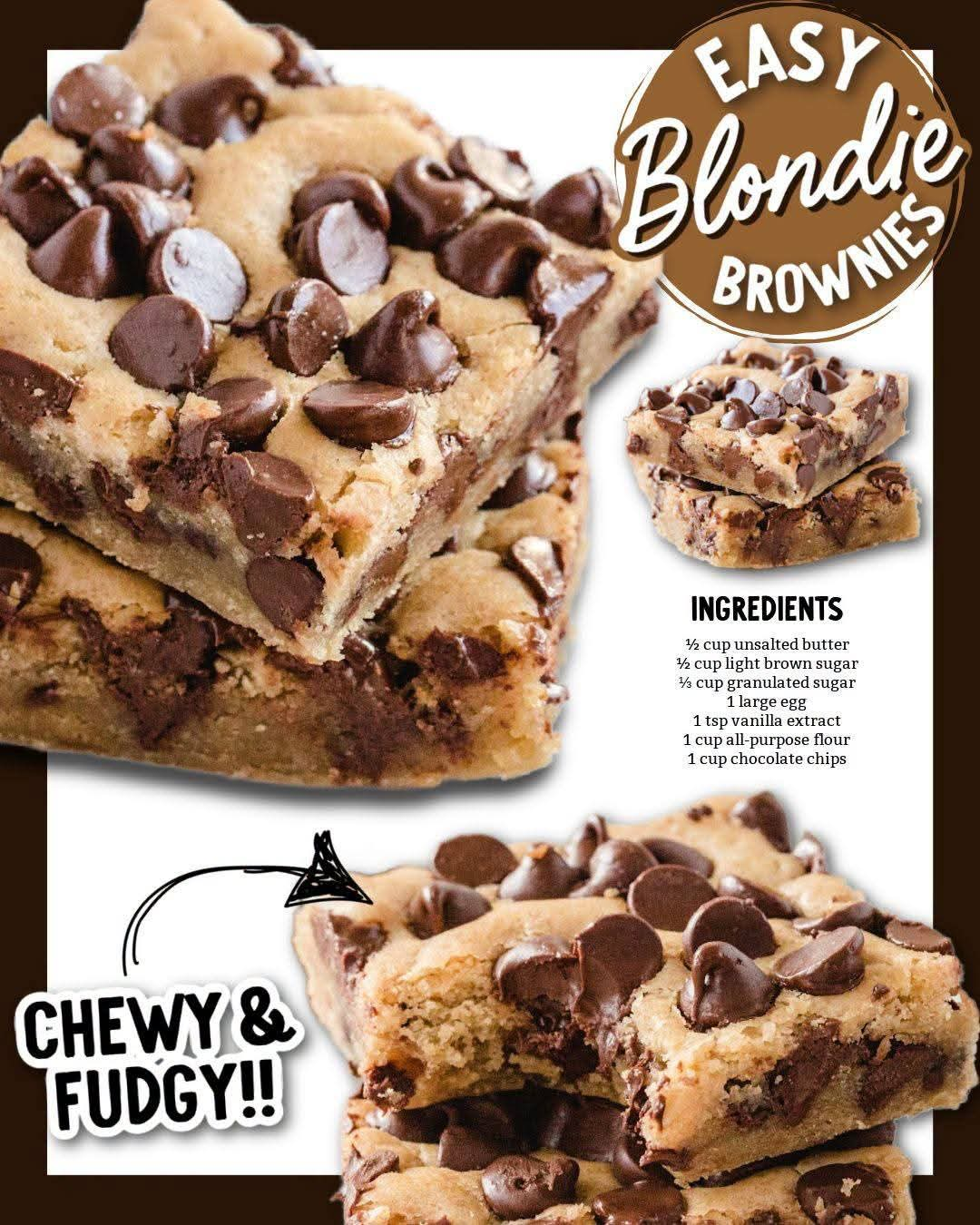
🍪 Soft & Chewy Blondies (Buttery Chocolate Chip Bars)
Blondies are often called the “vanilla cousin” of brownies—but that’s a serious understatement. They’re rich, caramel-like, buttery dessert bars with a deep brown sugar flavor and a soft, chewy bite that melts slightly in your mouth. Add chocolate chips and you get the perfect balance of sweet, buttery, and slightly gooey goodness.
They’re simple, fast, and dangerously easy to eat.
🧈 Ingredients
- ½ cup unsalted butter, melted
- ½ cup packed light brown sugar
- ⅓ cup granulated sugar
- 1 large egg (room temperature)
- 1 teaspoon vanilla extract
- 1 cup all-purpose flour
- ¼ teaspoon salt
- 1 cup semi-sweet chocolate chips
👩🍳 Instructions
- Preheat your oven to 350°F (175°C). Line an 8×8-inch baking pan with parchment paper or lightly grease it.
- In a mixing bowl, whisk together the melted butter, brown sugar, and granulated sugar until smooth and glossy.
- Add the egg and vanilla extract, mixing until fully combined and slightly thickened.
- Gently fold in the flour and salt. Mix just until no dry flour remains—don’t overmix or the blondies will lose their softness.
- Stir in the chocolate chips, distributing them evenly through the batter.
- Pour the batter into the prepared pan and spread it evenly.
- Bake for 20–25 minutes, or until the edges are lightly golden and the center is set but still slightly soft.
- Let cool completely before cutting into squares for the best chewy texture.
🔥 Method (How It Works)
Blondies rely on a simple one-bowl method where melted butter replaces creamed butter. This creates a denser, fudgier texture. The combination of brown sugar and white sugar is key:
- Brown sugar adds moisture and caramel depth
- White sugar helps create slight structure and chew
- Minimal flour keeps them soft instead of cakey
The goal is a batter that is thick but spreadable, producing that signature chewy bite once baked.
📜 History of Blondies
Blondies date back to the late 19th and early 20th centuries in America, originally appearing before brownies became popular chocolate desserts. Early versions were called “butterscotch bars” because they relied heavily on brown sugar and butter instead of cocoa.
When brownies gained popularity in the 1900s, blondies became known as their “vanilla counterpart.” Over time, chocolate chips were added, making them the sweet hybrid we know today.
🧬 Formation (Why Texture Matters)
The structure of a blondie depends on three key formations:
- Fat formation (butter): creates richness and softness
- Sugar caramelization: gives golden edges and butterscotch flavor
- Gluten control (low flour): prevents toughness
When baked correctly, the center stays soft while edges form a delicate chew. That contrast is what makes blondies addictive.
❤️ Serving Ideas (For Lovers of Dessert)
Blondies are incredibly versatile and loved in many forms:
- Warm with a scoop of vanilla ice cream
- Drizzled with caramel or chocolate sauce
- Paired with coffee or milk
- Cut into bite-size squares for parties
- Slightly warmed for that “fresh from the oven” feel
They’re the kind of dessert that disappears quickly once shared.
🍫 Conclusion
Blondies are proof that simple ingredients can create something unforgettable. With their buttery base, caramel-like sweetness, and melty chocolate chips, they strike the perfect balance between chewy and soft.
Whether you’re baking for friends, family, or just yourself, these blondies are a guaranteed crowd-pleaser.
💛 Final “Lovers” Note
People who love blondies usually love desserts that are:
- soft but rich
- sweet but not overwhelming
- simple but deeply satisfying
And once you bake a good batch, it’s hard to stop at just one square.