
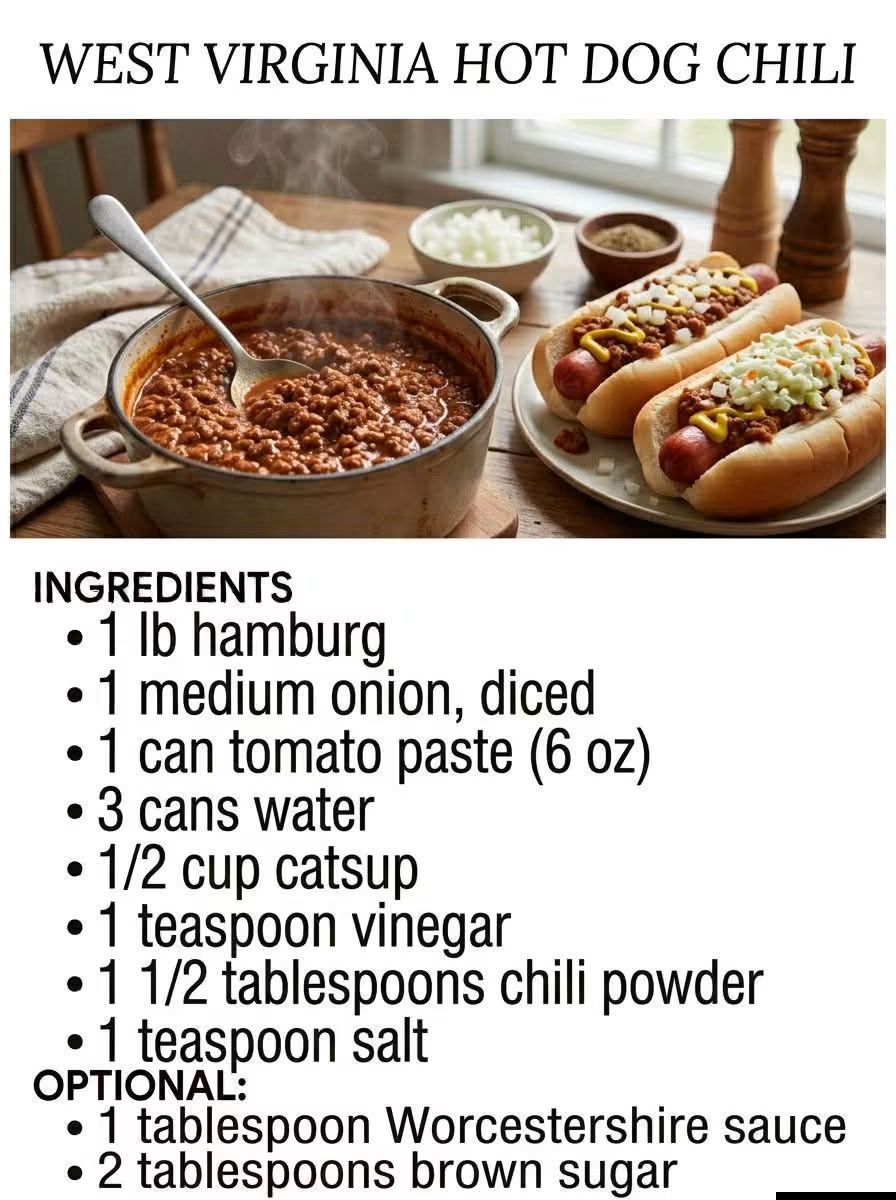
The 50-Year-Old West Virginia Hot Dog Chili Recipe My Grandma Made
Introduction
Some recipes are simply good food. Others carry memories, family traditions, and the feeling of coming home.
This old-fashioned West Virginia hot dog chili is one of those recipes. Passed down through more than 50 years, it represents the kind of simple, comforting food that families make again and again because it reminds them of where they came from.
In West Virginia, a hot dog is often more than a frankfurter in a bun. It can be a regional tradition, served with a particular combination of toppings that makes it instantly recognizable. One of the most important parts is the chili: finely textured, savory, mildly seasoned, and spooned generously over the hot dog.
This recipe has another special connection to the past. The original family recipe was handwritten by Grandma, who wrote “hamburg” instead of hamburger and “catsup” instead of ketchup. Those little details are part of what makes an old family recipe special. They are reminders that recipes are not only instructions for cooking; they are pieces of family history.
Ingredients
For the Hot Dog Chili
- 1 pound ground beef
- 1 small onion, very finely chopped
- 2 cups water, divided
- 2 tablespoons tomato paste
- 2 tablespoons ketchup or catsup
- 1 tablespoon yellow mustard
- 1 tablespoon chili powder
- 1 teaspoon paprika
- 1/2 teaspoon ground cumin
- 1/2 teaspoon garlic powder
- 1/2 teaspoon onion powder
- 1/2 teaspoon salt, or to taste
- 1/4 teaspoon black pepper
- 1 tablespoon Worcestershire sauce
- 1 teaspoon sugar, optional
- 1 tablespoon butter or beef drippings, optional
For Serving
- 8 hot dogs
- 8 hot dog buns
- Yellow mustard
- Finely chopped onion
- Catsup, if desired
- Shredded cheese, optional
Instructions
Step 1: Prepare the Beef
Place the ground beef in a medium saucepan or deep skillet. Add about 1 cup of water.
Using a wooden spoon, potato masher, or sturdy whisk, break the beef apart as finely as possible while it cooks.
For this style of hot dog chili, the beef should not remain in large chunks. The mixture should have a very fine, almost loose texture so that it can easily spread over the hot dog.
Cook over medium heat, stirring and breaking apart the meat continuously, until the beef is completely cooked.
Step 2: Drain if Necessary
If the beef has produced a large amount of excess fat, carefully drain some of it.
Do not remove every bit of moisture. A little natural beef flavor helps give the chili its rich, savory character.
Step 3: Add the Seasonings
Add the remaining water, tomato paste, catsup, mustard, chili powder, paprika, cumin, garlic powder, onion powder, salt, black pepper, and Worcestershire sauce.
Add the finely chopped onion as well.
Stir everything together until the tomato paste dissolves and the ingredients are evenly distributed.
Step 4: Simmer Slowly
Bring the mixture to a gentle simmer.
Reduce the heat to low and cook uncovered for approximately 30 to 45 minutes.
Stir occasionally while the chili cooks.
If the mixture becomes too thick, add a small amount of water. If it seems too thin, continue simmering until some of the liquid evaporates.
The finished chili should be moist and spoonable, but it should not be watery.
Step 5: Taste and Adjust
Taste the chili near the end of cooking.
Add a little more salt if necessary. For a slightly sweeter old-fashioned flavor, add the teaspoon of sugar.
If you prefer more spice, increase the chili powder slightly.
The goal is a balanced chili that complements the hot dog rather than overpowering it.
Step 6: Prepare the Hot Dogs
While the chili is simmering, cook the hot dogs using your preferred method.
They can be grilled, steamed, boiled, or cooked in a skillet.
For a particularly traditional presentation, warm the buns gently so they are soft but sturdy enough to hold the toppings.
Step 7: Assemble the Hot Dogs
Place each cooked hot dog inside a warm bun.
Add a line of yellow mustard.
Spoon a generous amount of the warm chili over the hot dog.
Finish with finely chopped onion.
Catsup can be added according to personal preference, although toppings vary from family to family and region to region.
Serve immediately while the chili is hot.
Traditional Cooking Method
The secret to this style of hot dog chili is not complicated ingredients. It is the texture and the slow cooking.
The ground beef should be broken down extremely finely during cooking. Instead of creating a chunky meat sauce, the goal is a smooth, finely textured chili that settles naturally around the hot dog.
Slow simmering is also important. It gives the seasonings time to blend with the beef and allows the excess water to gradually reduce.
If you have time, prepare the chili a few hours before serving. Allow it to cool, refrigerate it, and gently reheat it before serving. Like many traditional chili recipes, the flavor can become even more developed after resting.
The History Behind the Recipe
West Virginia has a distinctive hot dog tradition that developed around local restaurants, roadside stands, family gatherings, and community food culture.
The West Virginia hot dog is commonly associated with a combination of toppings that may include chili, mustard, onions, and other regional additions. Different towns, restaurants, and families have their own versions.
That is what makes recipes like Grandma’s so interesting.
There is rarely one single version that represents every family. Instead, recipes are passed from one generation to another, with small changes made along the way.
Some families make their chili sweeter. Others prefer more mustard or chili powder. Some add onions while the meat cooks, while others add fresh onions at serving time.
The handwritten words “hamburg” and “catsup” make this particular recipe feel even more connected to its history. They preserve the language and habits of the person who originally wrote it down.
Formation of the Chili
The formation of this chili is simple but deliberate.
First, the ground beef is cooked with water and broken into tiny pieces. This creates the fine texture traditionally desired for hot dog chili.
Next, tomato paste provides body and a concentrated tomato flavor. Catsup adds sweetness and acidity, while mustard contributes a familiar tang.
Chili powder, paprika, cumin, garlic, and onion create the savory seasoning base.
Finally, everything is slowly simmered together until the liquid reduces and the flavors become unified.
The result should be a rich, finely textured topping that is easy to spoon over a hot dog without becoming excessively thick or dry.
Tips for Making Authentic-Style Hot Dog Chili
Break the Meat Down Very Finely
This is one of the most important steps. Use a potato masher or wooden spoon while the beef cooks to create very small pieces.
Do Not Rush the Simmer
A gentle simmer allows the flavors to develop and gives the chili its proper consistency.
Keep the Chili Moist
Hot dog chili should be spoonable and moist. If it becomes dry, add a little water and continue cooking gently.
Use Fresh Onion for Serving
Finely minced fresh onion gives the finished hot dog a crisp contrast against the soft chili.
Make It Ahead
The chili can be prepared in advance and refrigerated. Reheat it gently over low heat, adding a splash of water if necessary.
Adjust It to Your Family
A recipe passed down through generations does not have to remain completely unchanged. You can adjust the seasoning while keeping the basic preparation and character of the original.
How to Serve It
For a classic family-style presentation, place the cooked hot dog in a soft bun and add mustard first.
Spoon the warm chili generously over the top, then sprinkle with finely chopped onion.
Serve with potato chips, French fries, coleslaw, baked beans, or a simple side salad.
For gatherings, keep the chili warm in a slow cooker and let everyone assemble their own hot dogs.
Storage
Allow leftover chili to cool before transferring it to an airtight container.
Refrigerate for up to 3 to 4 days.
For longer storage, freeze the cooled chili in freezer-safe containers. Thaw it in the refrigerator before reheating.
Reheat thoroughly on the stovetop over medium-low heat, stirring occasionally. Add a small amount of water if the chili has thickened during storage.
Why Families Love This Recipe
People love recipes like this because they are uncomplicated, inexpensive, and deeply comforting.
There is something special about opening an old recipe box and finding a handwritten recipe that has been made for decades.
The ingredients may be ordinary, but the memories attached to them are not.
Maybe Grandma made these hot dogs for family reunions. Maybe they were served during summer cookouts. Maybe the family stopped at a favorite hot dog stand whenever they returned to West Virginia.
Whatever the memory, the food becomes part of the story.
Conclusion
This 50-year-old West Virginia hot dog chili is more than a topping for a hot dog. It is a piece of family tradition.
The finely crumbled beef, simple seasonings, tangy catsup, mustard, and chopped onions create a comforting combination that has stood the test of time.
Most importantly, the recipe reminds us why family recipes are worth preserving. A handwritten word such as “hamburg” or “catsup” can bring back memories of a grandmother, a kitchen, a hometown, and generations of people sitting down together to enjoy the same food.
Make it for a family dinner, a cookout, a game day gathering, or simply when you want an old-fashioned hot dog that tastes like home.
For the Lovers of Old-Fashioned Family Recipes
This recipe is especially for anyone who loves recipes that have a story behind them.
If you grew up eating homemade chili on hot dogs, remember the little roadside stands from your childhood, or have an old recipe card tucked away in a drawer, this is the kind of recipe worth keeping.
The best family recipes are not always the fanciest.
Sometimes they are the simple ones that Grandma made for more than 50 years and everyone still remembers.