
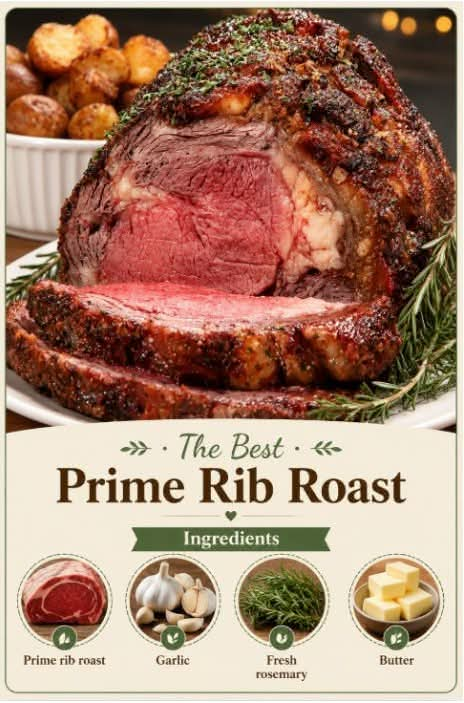
The Best Prime Rib Roast You’ll Ever Make
Introduction
A beautifully roasted prime rib is one of those meals that instantly makes a dinner feel special. Tender, juicy, richly flavored, and surrounded by a savory herb crust, this classic roast is perfect for Christmas, Thanksgiving, Sunday dinner, birthdays, anniversaries, or any occasion when you want to serve something truly impressive.
The secret to an unforgettable prime rib is keeping the preparation simple. A generous coating of butter, garlic, and fresh rosemary creates a flavorful crust while the roast slowly develops a beautifully browned exterior and a tender center.
This recipe uses only a handful of ingredients, allowing the natural flavor of the beef to remain the star of the meal.
Ingredients
- 1 prime rib roast, approximately 5 to 6 pounds
- 6 cloves garlic, finely minced
- 2 tablespoons fresh rosemary, finely chopped
- 1/2 cup unsalted butter, softened
- 2 teaspoons kosher salt
- 1 teaspoon freshly ground black pepper
- 1 tablespoon olive oil, optional
Optional for Serving
- Prepared horseradish
- Creamy horseradish sauce
- Au jus or beef gravy
- Roasted potatoes
- Steamed green beans
- Roasted carrots
Instructions
1. Prepare the Roast
Remove the prime rib from the refrigerator about 1 to 2 hours before cooking. Allowing the roast to lose some of its chill helps it cook more evenly.
Pat the entire roast dry with paper towels. A dry surface will help the butter and seasonings adhere while also encouraging a beautifully browned crust.
If your roast has a thick fat cap, leave a thin layer intact for additional flavor. Trim away any excessive hard fat.
2. Make the Garlic-Rosemary Butter
Place the softened butter in a small bowl.
Add the minced garlic, chopped fresh rosemary, salt, and black pepper. Stir until everything is evenly combined.
The butter should be soft enough to spread easily over the roast without being melted.
3. Season the Prime Rib
Rub the entire roast generously with the garlic-rosemary butter. Make sure to cover the top, sides, and ends.
For an especially flavorful roast, gently press the seasoning into the surface so that it forms a thick, fragrant coating.
Place the roast bone-side down, if using a bone-in roast, in a roasting pan. If your roast is boneless, place it fat-side up.
4. Begin Roasting
Preheat the oven to 450°F (230°C).
Place the seasoned prime rib in the oven and roast at 450°F for approximately 15 minutes. This initial high heat helps develop a rich, browned exterior.
After 15 minutes, reduce the oven temperature to 325°F (165°C).
Continue roasting until the beef reaches your desired internal temperature.
For the most reliable results, use an instant-read or probe thermometer inserted into the thickest part of the roast without touching the bone.
Approximate internal temperatures are:
- Rare: 120–125°F (49–52°C)
- Medium-rare: 130–135°F (54–57°C)
- Medium: 140–145°F (60–63°C)
- Medium-well: 150–155°F (66–68°C)
Remember that the internal temperature will usually rise several degrees while the roast rests.
5. Rest the Roast
When the prime rib reaches your preferred temperature, remove it from the oven.
Transfer it carefully to a cutting board and loosely cover it with aluminum foil.
Allow the roast to rest for at least 20 to 30 minutes before slicing.
This resting period is extremely important because it allows the juices to redistribute throughout the meat instead of running onto the cutting board when you slice it.
6. Slice and Serve
Remove the foil and carve the roast into thick, generous slices.
For a bone-in roast, you can remove the bones first and then slice the meat, or serve individual portions with the bone attached.
Serve immediately with au jus, horseradish sauce, roasted vegetables, mashed potatoes, or your favorite holiday side dishes.
Cooking Method
The two-temperature roasting method gives this prime rib a beautifully browned exterior while allowing the center to remain tender and juicy.
The initial high-temperature roast creates the flavorful crust. Lowering the oven temperature afterward allows the heat to move gradually toward the center without aggressively overcooking the outer portions.
The most important tool is a meat thermometer. Cooking time can vary depending on the size and shape of the roast, the starting temperature of the meat, and the individual oven.
Rather than relying entirely on the clock, cook according to internal temperature.
The History of Prime Rib
Prime rib is one of the classic preparations associated with American steakhouse and holiday dining. The cut comes from the rib section of the beef and is prized for its marbling, tenderness, and rich flavor.
The name “prime rib” can sometimes be confusing. It refers to the rib roast preparation and does not necessarily mean that the beef carries the USDA “Prime” quality grade.
Large rib roasts have long been associated with celebratory meals because a single roast can feed an entire family or gathering. Over time, different cooks developed their own methods involving garlic, herbs, butter, mustard, and various roasting techniques.
The combination of beef, garlic, rosemary, and butter remains one of the most timeless ways to prepare this impressive cut.
Formation of the Flavor
The flavor of this recipe comes from the combination of a few simple ingredients.
The beef provides the rich, savory foundation. Butter coats the surface and helps carry the flavors of the garlic and rosemary. Garlic adds a deep savory character, while fresh rosemary contributes a fragrant herbal note.
As the roast cooks, the seasoned butter helps create a flavorful exterior. Meanwhile, the marbling inside the beef melts during roasting, helping produce the juicy and tender texture associated with a great prime rib.
Helpful Tips for the Best Prime Rib
Bring the Roast Toward Room Temperature
Allowing the roast to sit out briefly before cooking helps reduce the temperature difference between the center and exterior.
Use Fresh Rosemary
Fresh rosemary provides a stronger and more aromatic flavor than dried rosemary in this preparation.
Do Not Skip the Thermometer
Every roast is different. A thermometer is much more dependable than estimating doneness by cooking time alone.
Do Not Cut Immediately
Resting the roast is one of the most important steps. Give the meat enough time to relax before slicing.
Slice Against the Grain
When carving, identify the direction of the muscle fibers and slice across them. This helps make each piece easier to chew.
What to Serve With Prime Rib
Prime rib pairs beautifully with classic comfort-food sides.
Consider serving it with:
- Creamy mashed potatoes
- Crispy roasted potatoes
- Yorkshire pudding
- Roasted carrots
- Green beans
- Creamed spinach
- Roasted Brussels sprouts
- Dinner rolls
- Horseradish cream
- Rich beef au jus
Conclusion
This garlic and rosemary prime rib roast proves that an extraordinary meal does not require a long list of complicated ingredients. A quality roast, flavorful butter, fresh rosemary, garlic, salt, and pepper are enough to create an impressive centerpiece.
The combination of a deeply browned exterior and a tender, juicy interior makes this roast perfect for holidays, family gatherings, Sunday dinners, and special celebrations.
Once you learn the basic technique, prime rib becomes much less intimidating. Keep the seasoning simple, monitor the internal temperature carefully, and most importantly, allow the roast to rest before carving.
For Prime Rib Lovers
If you love tender, flavorful beef, this recipe is one to keep in your collection. The garlic and rosemary create a classic savory crust without overpowering the natural flavor of the roast.
It is the kind of meal that looks elegant enough for a special occasion but is surprisingly straightforward to prepare at home.
A beautifully carved prime rib served alongside creamy potatoes, roasted vegetables, and a spoonful of horseradish sauce can turn an ordinary dinner into a memorable feast.