
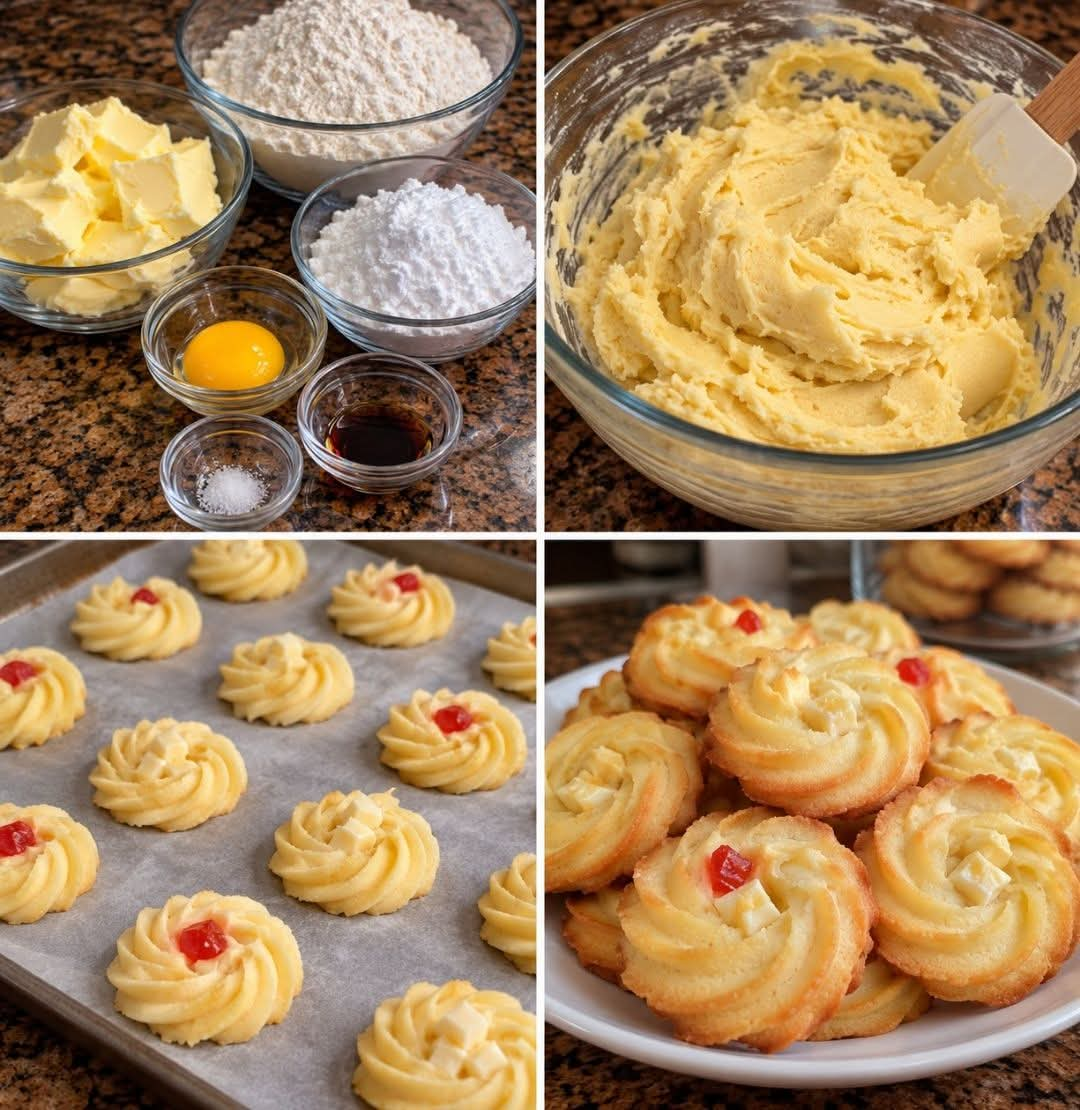
World’s Best Butter Cookies: A Classic, Melt-in-Your-Mouth Recipe
Introduction
There is something truly special about homemade butter cookies. Their rich buttery flavor, delicate sweetness, crisp edges, and tender centers make them a timeless treat that never goes out of style. Whether served with a cup of coffee, enjoyed with afternoon tea, or arranged on a holiday dessert platter, these classic cookies bring warmth and comfort to every occasion.
These World’s Best Butter Cookies are made with simple pantry ingredients, including unsalted butter, granulated sugar, pure vanilla extract, egg yolk, and all-purpose flour. The recipe does not require complicated techniques or expensive ingredients. The secret lies in using good-quality butter, measuring everything carefully, and mixing the dough just enough to create a tender, delicate texture.
Perfect for beginners and experienced bakers alike, these cookies are wonderful for family gatherings, homemade gifts, holiday baking, or simply satisfying a sweet craving. Once you try them fresh from the oven, you may find yourself making them again and again.
Ingredients
Preparation time: 15 minutes
Chilling time: 30–60 minutes
Baking time: 10–14 minutes
Total time: Approximately 1 hour
Yield: About 24–30 cookies, depending on size
Main Ingredients
- 8 ounces (227 g) unsalted butter, softened to room temperature
- 3/4 cup granulated sugar
- 1/4 teaspoon salt
- 1 1/2 teaspoons pure vanilla extract
- 1 large egg yolk
- 2 cups all-purpose flour, spooned and leveled
Optional Decorations
- A little extra granulated sugar for sprinkling
- Melted chocolate for dipping
- Colored sugar for festive occasions
- Chopped nuts for additional texture
- Powdered sugar for a light finishing touch
The optional decorations are not necessary for the original recipe. These cookies are delicious in their simplest form.
Instructions
Step 1: Prepare the Oven and Baking Sheets
Preheat your oven to 350°F (175°C). Line two baking sheets with parchment paper to prevent sticking and help the cookies bake evenly.
Make sure your oven has reached the correct temperature before placing the cookies inside. An adequately preheated oven helps the dough bake consistently and develop lightly golden edges.
Step 2: Cream the Butter and Sugar
Place the softened butter in a large mixing bowl. Add the granulated sugar and beat with an electric mixer for approximately 2–3 minutes, until the mixture becomes smooth, creamy, and slightly fluffy.
Scrape down the sides of the bowl as needed so that the butter and sugar combine evenly.
Avoid using melted butter. Softened butter holds air during mixing, helping create a tender cookie with a pleasant texture.
Step 3: Add the Vanilla and Egg Yolk
Add the salt, pure vanilla extract, and egg yolk to the butter mixture.
Beat until everything is thoroughly incorporated and the mixture looks smooth.
The egg yolk contributes richness and tenderness without adding the extra moisture of a whole egg. Meanwhile, vanilla enhances the natural flavor of the butter and gives the cookies their familiar bakery-style aroma.
Step 4: Incorporate the Flour
Gradually add the all-purpose flour, mixing on low speed until a soft dough forms.
Stop mixing as soon as the flour disappears and the ingredients come together. Overmixing can develop excess gluten, which may make the cookies firmer than desired.
The dough should be soft enough to shape but not excessively sticky. If it feels too soft to handle, refrigerate it for a short time.
Step 5: Chill the Dough
Cover the bowl and refrigerate the dough for 30–60 minutes.
Chilling helps firm the butter, making the dough easier to roll or pipe. It also helps the cookies maintain their shape during baking.
If you plan to use a piping bag with a large star tip, the dough should remain soft enough to pipe. If it becomes too firm, allow it to sit at room temperature briefly before shaping.
Step 6: Shape the Cookies
Choose your preferred shape.
For simple round cookies, roll small portions of dough into balls and gently flatten them with a fork or the bottom of a glass.
For traditional butter-cookie shapes, place the dough into a piping bag fitted with a large star tip and pipe small swirls onto the prepared baking sheets.
You can also roll the dough into a log, chill it until firm, and slice it into even rounds.
Leave approximately 1–2 inches between cookies to allow for slight spreading.
Step 7: Bake Until Lightly Golden
Bake for 10–14 minutes, depending on the size and thickness of the cookies.
The cookies are ready when their edges are lightly golden and the centers look set. They should not become deeply browned, as this can overpower the delicate butter flavor.
Check them toward the beginning of the baking window because smaller cookies may finish sooner.
Step 8: Cool Properly
Remove the baking sheets from the oven and allow the cookies to rest for about 5 minutes.
They will be delicate while hot, so avoid moving them immediately. Transfer them carefully to a wire rack and let them cool completely.
As they cool, the cookies will become firmer while retaining their tender, buttery texture.
Step 9: Decorate and Serve
Once completely cool, serve the cookies plain or add your preferred decoration.
For an elegant finish, dip half of each cookie into melted chocolate and allow the coating to set. For a simple homemade presentation, arrange the cookies on a serving plate alongside coffee, tea, or a glass of milk.
Cooking Method
This recipe uses the traditional creaming method, a classic baking technique that combines softened butter and sugar before adding the remaining ingredients.
First, the butter and sugar are beaten together to create a smooth, aerated mixture. The egg yolk and vanilla are then incorporated to provide richness and flavor. Finally, the flour is mixed in gently to form a cohesive dough.
After chilling, the cookies are shaped and baked at a moderate temperature. The butter melts as the cookies heat, while the flour and egg yolk help establish their structure. The result is a delicate cookie with a rich aroma, lightly crisp edges, and a tender bite.
For the best results, use room-temperature butter that is soft but not greasy, measure the flour accurately, and avoid overbaking.
The History of Butter Cookies
Butter cookies belong to a long tradition of European baking, particularly in regions where butter was an important ingredient in everyday cooking.
In Denmark, butter cookies became especially well known for their rich flavor, delicate texture, and decorative shapes. Danish butter cookies eventually gained international popularity and became familiar additions to festive biscuit tins and holiday gift collections.
Similar butter-based biscuits developed throughout Europe, with different countries creating their own variations. Scottish shortbread, for example, is known for its rich butter content and crumbly texture, while traditional piped butter cookies are often lighter and shaped into elegant swirls.
Over time, butter cookies became a favorite for celebrations, afternoon tea, family gatherings, and homemade gifts. Their enduring popularity comes from their simplicity: a handful of ordinary ingredients can produce something that tastes wonderfully special.
This homemade recipe follows that same timeless principle, relying on butter, sugar, flour, vanilla, and careful baking rather than complicated additions.
Formation and Texture
The beauty of these cookies comes from the way each ingredient contributes to the finished result.
Butter: Butter provides the signature flavor and richness. It also contributes to the cookies’ delicate texture and helps create lightly crisp edges.
Granulated sugar: Sugar sweetens the dough and helps the cookies develop a subtle golden color as they bake.
Egg yolk: The yolk adds richness and helps bind the ingredients together. It also contributes to a tender, satisfying bite.
All-purpose flour: Flour provides structure and gives the cookies their shape. Accurate measurement is important because excess flour can make them dry or crumbly.
Vanilla extract: Vanilla rounds out the buttery flavor and adds a warm, inviting aroma.
Salt: Even a small amount of salt helps balance the sweetness and enhance the other ingredients.
When properly mixed and baked, these ingredients produce a classic butter cookie that is flavorful without being overly sweet.
Tips for Perfect Butter Cookies
Use Good-Quality Butter
Butter is the main flavor of this recipe, so choose a brand you enjoy. Unsalted butter allows you to control the amount of salt in the dough.
Measure Flour Carefully
Too much flour can make the cookies dry and difficult to pipe. Spoon the flour into your measuring cup and level it off rather than packing it tightly.
Do Not Overmix
Once the flour has been added, mix only until the dough comes together. Gentle mixing helps keep the cookies tender.
Chill When Necessary
If the dough is too soft, chilling it will make shaping easier and reduce excessive spreading.
Watch the Baking Time
Butter cookies can change from lightly golden to overbaked quickly. Remove them when the edges have just begun to color.
Let Them Cool Before Storing
Allow the cookies to cool completely before placing them in a storage container. Warm cookies can create condensation, which may soften their texture.
Delicious Variations
1. Chocolate-Dipped Butter Cookies
Bake and cool the cookies completely. Melt your favorite chocolate and dip one end of each cookie into it. Place them on parchment paper until the chocolate sets.
2. Lemon Butter Cookies
Add 1 teaspoon of finely grated lemon zest to the butter and sugar mixture. The citrus aroma provides a refreshing contrast to the rich butter flavor.
3. Almond Butter Cookies
Replace the vanilla extract with 1/2 teaspoon of almond extract, or use half vanilla and half almond extract for a balanced flavor.
4. Cinnamon-Sugar Butter Cookies
Before baking, sprinkle the shaped cookies lightly with a mixture of granulated sugar and ground cinnamon.
5. Festive Holiday Butter Cookies
Pipe the dough into stars, rosettes, or other decorative shapes. Add a small amount of colored sugar before baking for an attractive holiday presentation.
6. Sandwich Butter Cookies
Bake small, evenly sized cookies and allow them to cool. Spread a thin layer of jam, chocolate ganache, or buttercream between two cookies to create a simple sandwich dessert.
Storage Instructions
At room temperature: Store completely cooled cookies in an airtight container for up to 1 week. Keep them in a cool, dry place away from direct sunlight.
In the refrigerator: Refrigeration is generally unnecessary for plain butter cookies, but they can be refrigerated in an airtight container if your kitchen is particularly warm.
In the freezer: Freeze baked cookies in a freezer-safe container for up to 2–3 months for best quality. Separate layers with parchment paper to prevent breakage.
Freezing the dough: Shape the dough into a log or individual portions, wrap securely, and freeze. Thaw in the refrigerator before slicing or shaping, then bake as directed.
Serving Suggestions
These butter cookies are versatile enough for everyday treats and special celebrations.
- Serve them with hot coffee or black tea.
- Arrange them on a holiday cookie platter with gingerbread and sugar cookies.
- Package them in decorative tins as homemade gifts.
- Offer them alongside vanilla ice cream or fresh berries.
- Serve them after dinner as a simple, elegant dessert.
- Pair them with hot chocolate for a comforting afternoon treat.
Their mild sweetness makes them particularly suitable for serving with drinks that have a slightly bitter or rich flavor.
Frequently Asked Questions
Why did my butter cookies spread too much?
The butter may have been too warm, the dough may not have been chilled sufficiently, or the flour may have been undermeasured. Chill the shaped cookies briefly before baking if your kitchen is warm.
Why are my cookies dry or crumbly?
Too much flour or overbaking is often responsible. Measure the flour carefully and remove the cookies when their edges are only lightly golden.
Can I make the dough ahead of time?
Yes. Prepare the dough, cover it well, and refrigerate it for up to 2 days. Allow it to soften slightly if necessary before shaping.
Can I use salted butter?
Yes, but omit the additional salt or reduce it according to your preference.
Can I pipe these cookies?
Yes. A large piping tip works best. If the chilled dough is too firm to pipe, let it soften slightly at room temperature before trying again.
Are butter cookies the same as shortbread?
They are similar but not identical. Traditional shortbread generally contains butter, sugar, and flour without egg, while many butter-cookie recipes include egg or egg yolk and are designed to hold decorative shapes.
Conclusion
World’s Best Butter Cookies prove that the simplest recipes can create some of the most memorable homemade treats. With just six ingredients, a little patience, and a few basic baking techniques, you can make cookies that are buttery, fragrant, delicately sweet, and wonderfully satisfying.
Their crisp edges, tender centers, and rich vanilla aroma make them ideal for quiet afternoons, family celebrations, festive cookie trays, or thoughtful homemade gifts.
Keep this recipe close whenever you need an easy, dependable dessert that brings people together. Once you master the basic dough, you can experiment with different shapes, flavors, and decorations to make every batch your own.
For the Love of Homemade Butter Cookies
Some recipes become favorites not because they are complicated, but because they remind us of the simple pleasures of home. Butter cookies are one of those timeless treats.
They bring back memories of baking with family, waiting impatiently beside the oven, and reaching for a cookie while it is still slightly warm. Their familiar flavor makes them just as welcome at a holiday gathering as they are on an ordinary afternoon.
Whether you bake them for your children, share them with friends, or keep a small container ready for your afternoon coffee, these classic butter cookies are a delicious reminder that homemade treats do not need to be elaborate to be special.
Bake a batch, share them with someone you love, and enjoy the simple pleasure of a perfectly buttery cookie.
Recipe note: If you enjoyed this recipe, save it for your next baking day and share it with someone who loves classic homemade cookies.