
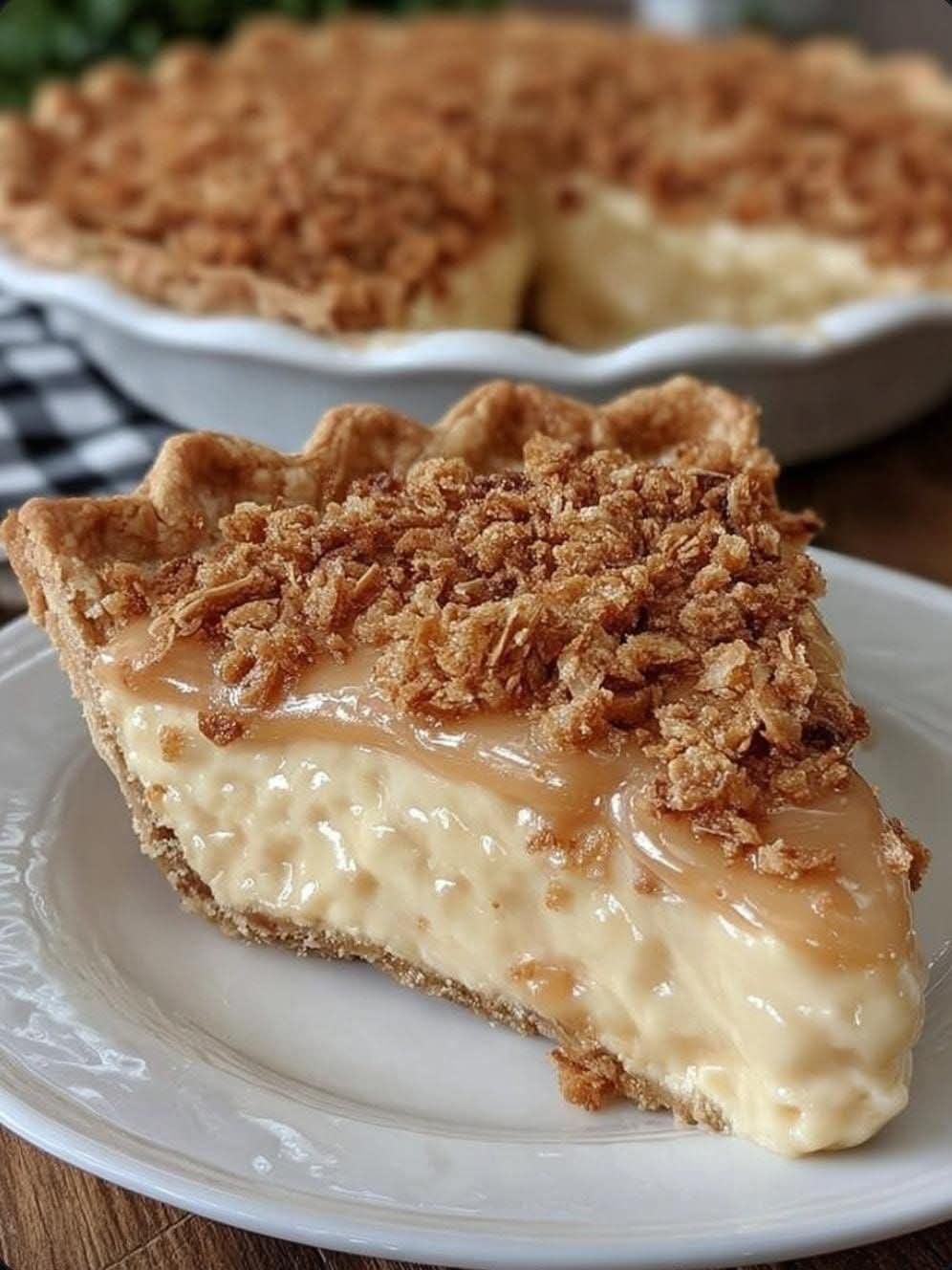
Church Supper Gooey Butter Pie
Introduction
There is something wonderfully old-fashioned about a pie that does not need a fancy decoration to make everyone gather around the kitchen counter. This Church Supper Gooey Butter Pie has a golden, slightly crunchy top that gives way to a soft, buttery, almost custard-like center. It is rich without being complicated, and every bite has that comforting homemade quality that reminds you of community suppers, family reunions, holiday tables, and handwritten recipes passed from one generation to the next.
The magic comes from the contrast in texture. The surface becomes lightly crisp and golden while the middle remains wonderfully gooey and tender. Served warm with a scoop of vanilla ice cream or allowed to cool completely for a firmer slice, it is the kind of dessert that disappears quickly from the table.
Ingredients
For the Crust
- 1 1/2 cups all-purpose flour
- 1/2 cup granulated sugar
- 1/2 cup unsalted butter, melted
- 1 teaspoon vanilla extract
- 1/4 teaspoon salt
For the Gooey Filling
- 1/2 cup unsalted butter, melted and slightly cooled
- 1 1/2 cups granulated sugar
- 3 large eggs
- 1 teaspoon vanilla extract
- 1/2 cup evaporated milk
- 1/2 cup all-purpose flour
- 1/2 teaspoon baking powder
- 1/4 teaspoon salt
- 1 cup sweetened shredded coconut, optional
- 1/2 cup chopped pecans or walnuts, optional
For the Golden Top
- 2 tablespoons granulated sugar
- 1 tablespoon melted butter
Equipment
- 9-inch pie dish
- Mixing bowls
- Whisk
- Rubber spatula
- Measuring cups and spoons
- Wire cooling rack
Instructions
Step 1: Prepare the Oven
Preheat the oven to 350°F (175°C).
Lightly grease a 9-inch pie dish with butter. If desired, place a round piece of parchment paper in the bottom of the dish to make serving easier.
Step 2: Make the Crust
In a medium bowl, combine the flour, sugar, and salt.
Pour in the melted butter and vanilla extract. Stir until the ingredients form a soft, crumbly dough.
Press the mixture evenly into the bottom and slightly up the sides of the prepared pie dish.
There is no need to roll the crust. Simply use your fingertips or the bottom of a measuring cup to create an even layer.
Step 3: Prepare the Gooey Filling
In a large bowl, whisk together the melted butter and granulated sugar.
Add the eggs one at a time, whisking well after each addition.
Stir in the vanilla extract and evaporated milk.
In a separate bowl, combine the flour, baking powder, and salt. Gradually add the dry ingredients to the wet mixture, stirring just until combined.
Do not overmix. The filling should be smooth but thick.
If using coconut and nuts, fold them in gently at this stage.
Step 4: Assemble the Pie
Pour the filling over the prepared crust.
Use a spatula to spread it evenly.
The filling will look fairly loose before baking, but it will transform as it cooks.
For the characteristic crunchy top, brush the surface lightly with the tablespoon of melted butter and sprinkle the remaining 2 tablespoons of sugar evenly over the top.
Step 5: Bake
Place the pie in the center of the preheated oven.
Bake for approximately 40 to 50 minutes.
The edges should be golden and set, while the center should still have a slight jiggle when the pie is gently moved.
Do not wait until the entire center becomes completely firm. The residual heat will continue cooking the filling as the pie cools.
If the top begins browning too quickly, loosely cover the pie with aluminum foil during the final portion of baking.
Step 6: Cool
Remove the pie from the oven and place it on a wire rack.
Allow it to cool for at least 1 hour before slicing.
For the classic gooey texture, serve it slightly warm or at room temperature.
For cleaner slices and a firmer center, refrigerate it for several hours before serving.
Method and Formation
The structure of this pie comes from three simple layers of texture.
The bottom crust is made with flour, sugar, and butter. Because it is pressed directly into the pie dish rather than rolled, it remains tender and slightly crumbly.
The filling contains eggs, butter, sugar, flour, and milk. The eggs help the mixture set as it bakes, while the butter and sugar create the rich, soft center.
The final sprinkling of sugar and butter helps form the lightly crisp, caramelized surface. This is what creates the wonderful contrast between the crunchy top and the gooey middle.
The key is not to overbake the pie. A completely firm center usually means the dessert has been baked longer than necessary. The center should have a gentle wobble when it comes out of the oven.
History and Inspiration
Church-supper desserts have long been associated with practical, comforting baking. Community meals traditionally called for recipes that could feed a crowd, travel well, use familiar pantry ingredients, and appeal to both children and adults.
Pies and simple butter-rich desserts fit perfectly into that tradition. They could be prepared ahead of time and placed on a long dessert table alongside cakes, cookies, cobblers, puddings, and other homemade favorites.
Recipes like this one also reflect the way family cooks often worked before precise written recipes became common. A familiar combination of butter, sugar, eggs, flour, and milk could be adapted according to what was available in the pantry.
That is part of the charm. There is no need for elaborate decoration or unusual ingredients. The appeal comes from texture, richness, and the comforting flavor of something made at home.
Tips for the Best Pie
Do Not Overbake
The most important tip is to watch the center. It should look set around the edges but retain a gentle jiggle in the middle.
Let the Butter Cool
Melted butter should be warm rather than piping hot before it is mixed with the eggs. Very hot butter can partially cook the eggs.
Measure the Flour Carefully
Too much flour can make the center cakey rather than gooey. Spoon flour into your measuring cup and level it rather than packing it down.
Give It Time to Cool
The filling continues setting after the pie leaves the oven. Cutting it immediately can result in a filling that is much too loose.
Add Pecans for Extra Texture
Chopped pecans provide a pleasant contrast to the soft filling and crunchy surface.
Try Coconut for a Southern-Style Variation
Sweetened shredded coconut gives the pie a slightly chewy texture and a deeper sweetness.
Serving Suggestions
Serve the pie plain for the simplest presentation.
For a special dessert, add a scoop of vanilla ice cream while the pie is still slightly warm. The cold ice cream slowly melts over the crunchy crust and gooey filling.
Whipped cream is another excellent choice.
For an extra touch, lightly dust individual slices with powdered sugar or serve them with a spoonful of caramel sauce.
A cup of coffee makes an especially good companion because its bitterness balances the sweetness of the pie.
Make-Ahead Instructions
This pie is ideal for preparing ahead of time.
Bake it the day before serving and allow it to cool completely. Cover it loosely and refrigerate.
Before serving, allow the pie to sit at room temperature for approximately 20 to 30 minutes.
If you prefer it warm, place individual slices in the microwave for a few seconds. Warm them gently rather than overheating them, so the filling stays soft without becoming runny.
Storage
Cover leftover pie and refrigerate for up to 4 days.
Individual slices can also be wrapped well and frozen for up to 2 months. Thaw them in the refrigerator overnight and bring them toward room temperature before serving.
Why People Love This Pie
People love this dessert because it combines two textures that are hard to resist.
The top is lightly crisp and golden.
The center is rich, buttery, soft, and gooey.
The crust provides just enough structure to hold everything together.
It is also wonderfully adaptable. You can keep it completely plain, add pecans, add coconut, or serve it with ice cream.
Most importantly, it tastes homemade. It feels like the kind of dessert someone would carry into a church supper in an old-fashioned pie plate, set down among dozens of other dishes, and watch disappear before the evening was over.
A Few Favorite Variations
Chocolate Gooey Pie
Add 2 tablespoons of unsweetened cocoa powder to the filling and reduce the flour by 2 tablespoons.
Pecan Butter Pie
Fold 3/4 cup toasted chopped pecans into the filling.
Coconut Cream Version
Add 1 cup sweetened shredded coconut and replace the evaporated milk with coconut milk.
Cinnamon Sugar Version
Add 1 teaspoon ground cinnamon to the filling and sprinkle the top with a mixture of sugar and cinnamon before baking.
Lemon Butter Pie
Add 1 tablespoon finely grated lemon zest and 2 tablespoons fresh lemon juice to the filling for a bright contrast to the buttery sweetness.
Conclusion
This Church Supper Gooey Butter Pie is a reminder that the most memorable desserts are not always the most complicated ones. A handful of familiar ingredients can create something truly special when they are combined with the right technique.
The golden crunchy top, buttery crust, and soft gooey center make every slice satisfying from the first bite to the last.
It is the kind of recipe that belongs on a family dessert table, at a community supper, or simply on the kitchen counter waiting for someone to sneak a slice.
And if your son takes one bite and says, “This tastes like a church supper classic,” you will know the pie has done exactly what it was meant to do.