
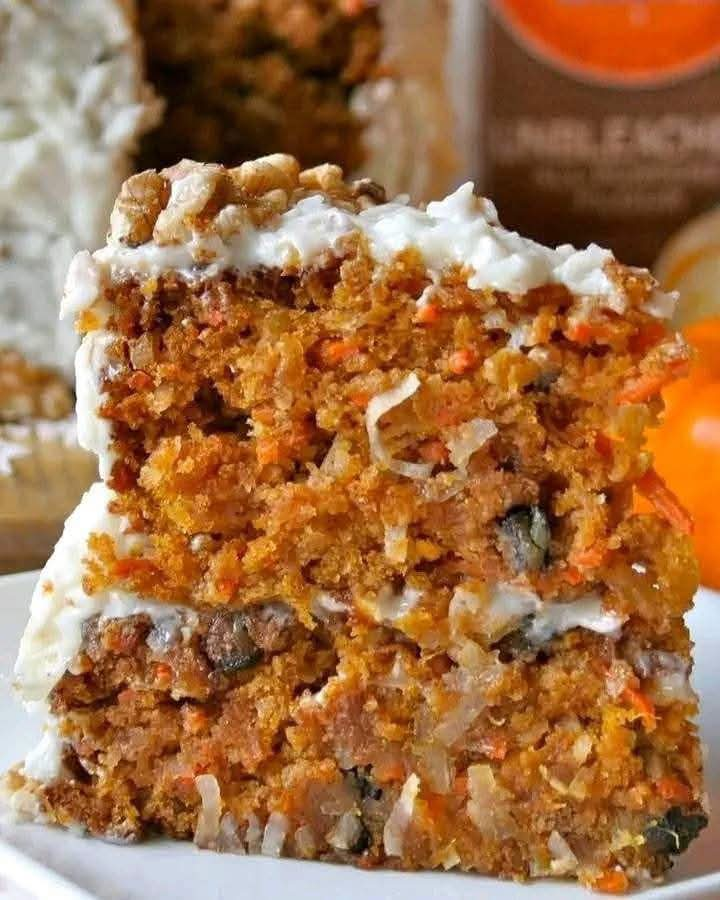
Classic Carrot Cake with Cream Cheese Frosting
Introduction
Carrot cake is one of those timeless desserts that combines simple ingredients into something wonderfully rich, moist, fragrant, and comforting. Freshly grated carrots give the cake its natural sweetness and incredible moisture, while cinnamon adds a warm, aromatic flavor. Raisins provide little bursts of sweetness, crushed pineapple contributes tenderness and a subtle tropical note, and chopped walnuts add a satisfying crunch.
This version makes two generous 10-inch cake layers, perfect for birthdays, holidays, family gatherings, potlucks, afternoon coffee, or simply enjoying a homemade dessert with loved ones. Once the layers have cooled completely, they are finished with a smooth cream cheese frosting that balances the sweetness of the cake with a mild tangy richness.
Ingredients
For the Carrot Cake
- 6 cups finely grated carrots
- 1 cup packed brown sugar
- 1 cup raisins
- 4 large eggs
- 1 1/2 cups granulated white sugar
- 1 cup vegetable oil
- 2 teaspoons vanilla extract
- 1 cup crushed pineapple, well drained
- 3 cups all-purpose flour
- 1 1/2 teaspoons baking soda
- 1 teaspoon salt
- 4 teaspoons ground cinnamon
- 1 cup chopped walnuts
For the Cream Cheese Frosting
- 8 ounces cream cheese, softened
- 1/2 cup unsalted butter, softened
- 3 to 4 cups powdered sugar, depending on desired sweetness and consistency
- 2 teaspoons vanilla extract
- 1 to 2 tablespoons milk or heavy cream, if needed
Preparation
Begin by preparing the carrots. Peel and finely grate fresh carrots until you have approximately 6 cups. Finely grated carrots blend beautifully into the batter and release enough moisture during baking to create the characteristic soft texture of carrot cake.
Place the grated carrots in a medium bowl and combine them with the brown sugar. Allow this mixture to rest for approximately 60 minutes. This step gives the brown sugar time to draw moisture from the carrots, helping create a particularly moist cake. After resting, stir in the raisins.
While the carrots are resting, prepare the remaining ingredients and cake pans.
Instructions
Step 1: Prepare the Oven and Pans
Preheat the oven to 350°F (175°C).
Grease and flour two 10-inch round cake pans. You can also place parchment paper circles on the bottoms of the pans to make releasing the cakes easier.
Step 2: Prepare the Wet Ingredients
In a large mixing bowl, beat the eggs until they become light and slightly foamy.
Gradually add the granulated white sugar while continuing to beat. Slowly pour in the vegetable oil and then add the vanilla extract.
Continue mixing until the ingredients are well incorporated.
Stir in the drained crushed pineapple. Make sure the pineapple is drained thoroughly so that excess liquid does not make the batter too loose.
Step 3: Combine the Dry Ingredients
In a separate bowl, whisk together the all-purpose flour, baking soda, salt, and ground cinnamon.
Mixing the dry ingredients separately distributes the baking soda, salt, and cinnamon throughout the flour, helping them incorporate evenly into the cake.
Step 4: Make the Batter
Gradually add the dry mixture to the wet mixture.
Stir just until the flour has been absorbed. Avoid excessive mixing because overmixing can produce a denser cake.
Add the carrot and brown sugar mixture along with the raisins.
Fold everything together gently until the carrots and raisins are evenly distributed.
Finally, fold in the chopped walnuts.
Step 5: Fill the Cake Pans
Divide the batter evenly between the two prepared cake pans.
Spread the batter gently with a spatula so that the surface is relatively even.
Step 6: Bake
Place the pans in the preheated oven.
Bake for approximately 45 to 50 minutes, or until a toothpick inserted into the center comes out clean or with only a few moist crumbs attached.
Because oven temperatures can vary, begin checking the cakes around the 45-minute mark.
Step 7: Cool the Cakes
Remove the cakes from the oven and allow them to cool in their pans for approximately 10 minutes.
Carefully remove the cakes from the pans and transfer them to wire racks.
Allow the layers to cool completely before frosting. Frosting a warm cake can cause the cream cheese frosting to melt and slide.
Cream Cheese Frosting Method
Place the softened cream cheese and butter in a large mixing bowl.
Beat until smooth, creamy, and well combined.
Gradually add the powdered sugar, mixing after each addition. Add the vanilla extract and continue beating until the frosting is smooth and fluffy.
If the frosting is too thick, add a small amount of milk or heavy cream. If it is too thin, gradually add more powdered sugar.
For the best texture, make sure both the butter and cream cheese are softened before mixing.
Cake Assembly
Place the first completely cooled cake layer on a serving plate or cake stand.
Spread a generous layer of cream cheese frosting over the top.
Place the second cake layer carefully on top.
Cover the top and sides with the remaining frosting. You can create a smooth finish with a cake spatula or leave the frosting slightly textured for a more homemade appearance.
For an attractive finishing touch, sprinkle a small amount of chopped walnuts over the top.
Refrigerate the finished cake for approximately 30 to 60 minutes before slicing. This allows the frosting to firm slightly and makes the cake easier to cut.
The Method Behind the Moist Texture
The secret to this carrot cake is the combination of several moisture-rich ingredients.
The grated carrots provide natural moisture and sweetness. Allowing the carrots to rest with brown sugar helps draw out their natural juices before they are incorporated into the batter.
Vegetable oil keeps the cake tender because oil remains liquid after the cake cools. Crushed pineapple contributes additional moisture and a gentle fruity flavor, while the eggs provide structure and richness.
The combination of white sugar and brown sugar also contributes to the cake’s texture. White sugar provides sweetness, while brown sugar adds moisture and a deeper caramel-like flavor.
History of Carrot Cake
Carrot-based cakes have a long history, with sweet carrot preparations appearing in various European cuisines before the modern carrot cake became popular. Carrots were sometimes used in sweet dishes because they contain natural sugars and were more readily available than certain expensive sweeteners.
Modern carrot cake developed into the familiar spiced cake we know today, particularly becoming popular in the United States during the 20th century. The cake eventually became strongly associated with cream cheese frosting, creating the classic combination of warmly spiced carrot cake and tangy, creamy frosting.
Today, carrot cake appears in countless variations. Some versions include raisins, walnuts, pecans, pineapple, coconut, or additional spices, but the heart of the dessert remains the same: grated carrots baked into a tender, warmly spiced cake.
Formation and Texture
The formation of this cake begins with the eggs, sugar, oil, and vanilla creating a rich liquid foundation.
The dry ingredients provide the structure. Baking soda helps the cake rise, while flour gives the batter its framework.
The carrots, pineapple, and raisins are then incorporated into the batter, creating pockets of moisture and sweetness throughout the cake. The walnuts add texture and contrast to the soft crumb.
During baking, the heat causes the baking soda to help expand the batter while the eggs and flour set the structure. The oil and moisture from the carrots and pineapple help keep the finished cake soft.
Once cooled, the layers are joined with cream cheese frosting, creating a rich dessert with contrasting textures and flavors.
Helpful Tips
Use fresh carrots and grate them yourself for the best texture.
Drain the pineapple well before adding it to the batter.
Do not skip the resting period for the carrots and brown sugar if you want to follow the original method closely.
Avoid overmixing once the flour is added.
Make sure the cake layers are completely cool before frosting.
For cleaner slices, chill the finished cake before serving.
If you prefer a slightly less sweet frosting, begin with 3 cups of powdered sugar and add more only if necessary.
Walnuts can be replaced with pecans if desired.
Serving Suggestions
This carrot cake is delicious served chilled or slightly cool.
It makes an excellent dessert for birthdays, Easter celebrations, Thanksgiving gatherings, Christmas tables, family dinners, afternoon tea, and weekend baking.
For an especially beautiful presentation, decorate the top with chopped walnuts, small carrot-shaped decorations, or a light dusting of cinnamon.
A cup of coffee or tea makes a wonderful companion to a slice of this rich cake.
For Carrot Cake Lovers
If you love desserts that are moist, warmly spiced, nutty, fruity, and generously frosted, this carrot cake is a classic worth making.
The combination of carrots, cinnamon, raisins, pineapple, and walnuts gives every bite several layers of flavor. The cream cheese frosting adds the perfect creamy, tangy finish and turns an already delicious cake into a celebration-worthy dessert.
It is also the kind of cake that often tastes even better after resting for several hours because the flavors have time to come together.
Conclusion
This classic carrot cake is a beautiful example of how humble ingredients can create an extraordinary homemade dessert. Fresh carrots provide moisture and sweetness, cinnamon brings warmth, raisins and pineapple add fruity character, walnuts provide crunch, and cream cheese frosting completes everything with a rich and tangy finish.
Whether you are making it for a special celebration or simply because you are craving a comforting homemade cake, this recipe delivers a generous, flavorful dessert that is meant to be shared.
Slice it generously, add plenty of cream cheese frosting, and enjoy one of the most beloved classic cakes.