
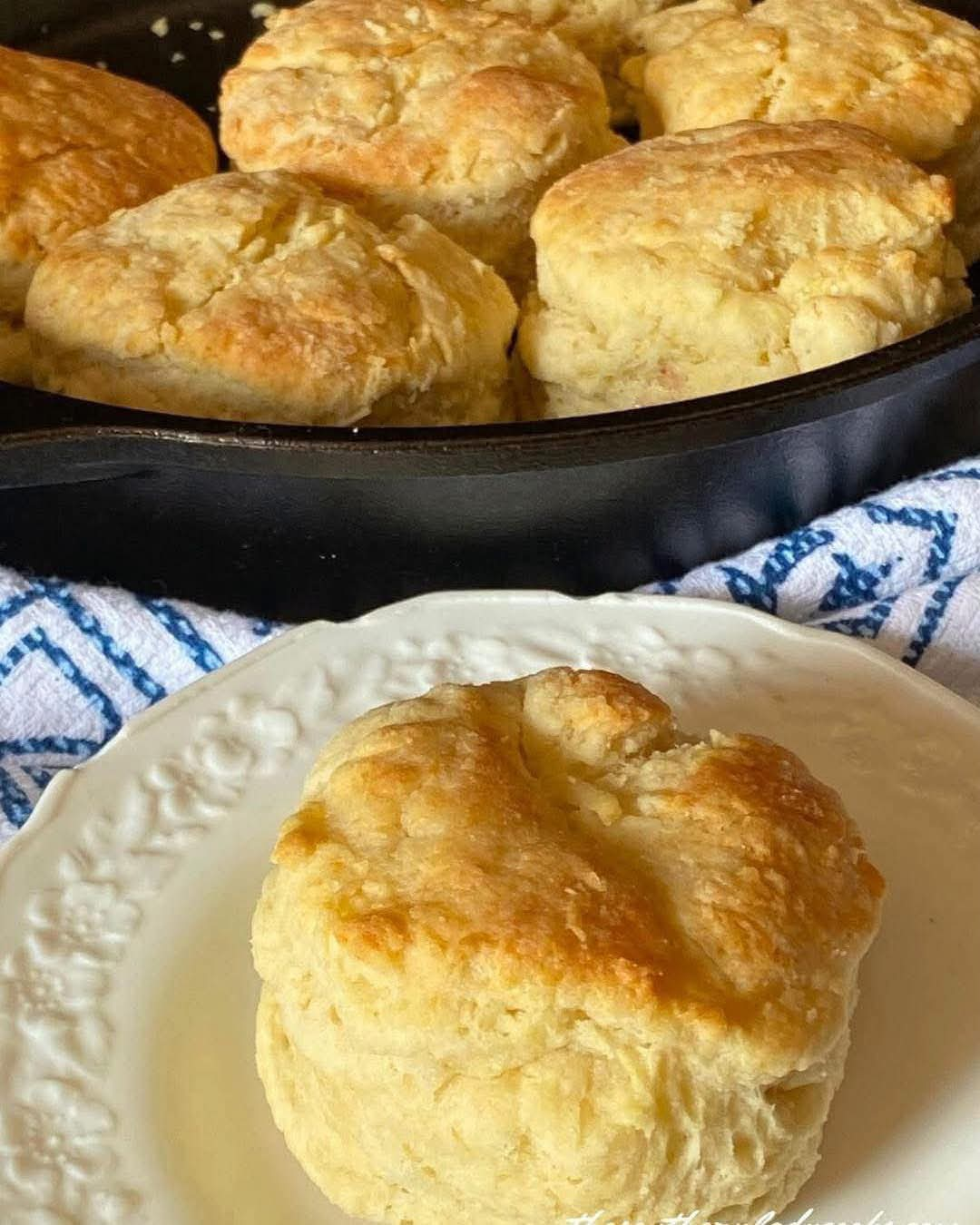
Southern High Rise Biscuits
Introduction
Southern High Rise Biscuits are wonderfully tall, tender, buttery biscuits with a lightly crisp golden exterior and a soft, fluffy center. They are the kind of homemade biscuits that can turn an ordinary breakfast into a comforting family meal. Made with simple pantry ingredients, these biscuits rise beautifully in the oven and are especially delicious when served warm with butter, honey, jam, sausage gravy, or country-style breakfast dishes.
The secret to their impressive height is a combination of baking powder, cream of tartar, a little fat, and gentle handling of the dough. The egg and milk add richness and tenderness, while the lard or shortening helps create a delicate texture.
These biscuits are particularly good when eaten straight from the oven. Split one open while it is still warm, add a little butter, and let it melt into the soft layers.
Ingredients
Dry Ingredients
- 3 cups all-purpose flour
- 2 tablespoons granulated white sugar
- 4 1/2 teaspoons baking powder
- 1/4 teaspoon cream of tartar
- 1 teaspoon salt
Fat and Liquid Ingredients
- 3/4 cup lard or vegetable shortening
- 1 cup milk, preferably 2%
- 1 large egg
For Finishing
- Melted butter, optional
- Additional flour for the work surface
Instructions
1. Prepare the Oven
Preheat the oven to 450°F (230°C). Allow the oven to become fully heated before placing the biscuits inside. A properly preheated oven gives the biscuits an immediate burst of heat, helping them rise quickly and develop a golden top.
Prepare a baking sheet by lightly greasing it, or prepare a cast-iron skillet if you prefer biscuits with a beautifully browned bottom.
2. Combine the Dry Ingredients
In a large mixing bowl, whisk together the flour, sugar, salt, cream of tartar, and baking powder.
Whisking thoroughly is important because it distributes the baking powder, salt, sugar, and cream of tartar evenly throughout the flour. This helps the biscuits rise consistently.
3. Cut in the Lard or Shortening
Add the lard or shortening to the dry ingredients.
Using a pastry cutter, fork, or your fingertips, work the fat into the flour until the mixture resembles coarse crumbs.
Do not completely blend the fat into the flour. Small pieces of fat throughout the mixture help contribute to a tender biscuit texture.
4. Prepare the Milk and Egg
In a separate bowl, whisk the egg and milk together until well combined.
The egg adds richness and structure, while the milk provides moisture and helps produce a soft interior.
5. Make the Biscuit Dough
Pour the milk-and-egg mixture into the bowl containing the dry ingredients.
Stir gently with a spoon until the ingredients just come together and a soft dough forms.
Avoid overmixing. Biscuit dough does not need to be kneaded like bread dough. Overworking it can develop too much gluten and result in biscuits that are tough rather than light and tender.
6. Turn Out the Dough
Lightly flour a clean work surface and transfer the dough onto it.
Sprinkle just enough flour over the dough to prevent sticking. Gently bring the dough together with your hands.
7. Knead Gently
Knead the dough approximately 8 to 10 times.
The goal is not to develop a smooth, elastic dough. Instead, gently fold and press the dough just enough to bring it together.
This light handling helps preserve the tender texture while giving the biscuits enough structure to rise.
8. Roll the Dough
Pat or roll the dough to approximately 1 inch thick.
For especially tall biscuits, try to maintain an even thickness across the entire piece of dough.
Avoid repeatedly rolling and re-rolling the scraps, as excessive handling can make the biscuits less tender.
9. Cut the Biscuits
Using a biscuit cutter, cut the dough into rounds.
Press the cutter straight down rather than twisting it. Twisting can seal the edges of the dough and may prevent the biscuits from rising as high.
Arrange the biscuits on a prepared baking sheet or place them into a lightly greased cast-iron skillet.
For softer sides, position the biscuits close together. For more golden, crisp edges, leave a little space between them.
10. Bake
Place the biscuits in the fully preheated 450°F (230°C) oven.
Bake for approximately 15 minutes, or until the tops are beautifully golden brown and the biscuits have risen high.
Because ovens vary, begin checking them near the end of the baking time.
11. Add Butter
Remove the biscuits from the oven and, if desired, immediately brush the tops with melted butter.
The butter adds richness, flavor, and a beautiful finish.
Allow the biscuits to cool for a few minutes before serving, although they are best enjoyed warm.
Methods
The Mixing Method
The dry ingredients should be combined first so the leavening agents and seasonings are evenly distributed. Once the fat is cut into the flour, the mixture should have a coarse, crumbly appearance.
The milk and egg are then incorporated gently. The dough should be mixed only until it comes together.
The Fat Method
Lard or shortening contributes tenderness by coating portions of the flour and limiting gluten development. Lard can provide a particularly traditional Southern character, while shortening creates a soft and tender texture.
Keeping some small pieces of fat in the flour mixture is beneficial rather than a problem.
The Gentle Kneading Method
Only 8 to 10 gentle kneads are necessary. Fold the dough over itself and press lightly rather than aggressively kneading it.
This helps maintain tenderness while giving the dough enough structure to hold its shape.
The High-Rise Method
The dough should be approximately 1 inch thick before cutting. The relatively thick dough, combined with a generous amount of baking powder and a very hot oven, helps create the characteristic high-rise shape.
Cut the biscuits cleanly and avoid twisting the cutter.
The Baking Method
A 450°F oven provides strong initial heat. This encourages rapid expansion from the leavening agents and moisture in the dough.
The biscuits are ready when they are tall, firm enough to hold their shape, and golden brown across the tops.
History of Southern Biscuits
Biscuits became an important part of Southern American cooking because they could be made from inexpensive, readily available ingredients. Flour, fat, salt, and a leavening agent were enough to produce a satisfying bread-like accompaniment without requiring yeast or a long rising period.
As commercial baking powder became increasingly common during the nineteenth and twentieth centuries, quick biscuits became especially practical for home cooks. Southern cooks developed many regional techniques for producing biscuits that were tender, flaky, soft, or exceptionally tall.
High-rise biscuits represent one of those traditions. Rather than being a single standardized historical recipe, the name generally describes biscuits designed to rise substantially during baking. Different families and communities have their own preferred combinations of flour, fat, milk, buttermilk, eggs, and leavening.
Formation and Texture
The formation of these biscuits begins when the dry ingredients are mixed and the fat is worked into the flour. The fat creates small pockets throughout the dough.
When the biscuits enter the hot oven, the moisture in the dough produces steam while the baking powder releases carbon dioxide. These gases expand inside the dough, helping push the biscuit upward.
The egg contributes structure and richness, while the milk keeps the interior moist and tender.
The finished biscuit should have a golden exterior with a soft, fluffy center. When split open, it should be tender enough to pull apart easily.
Serving Ideas
Southern High Rise Biscuits are extremely versatile.
Serve them warm with:
- Butter and honey
- Strawberry or blackberry jam
- Apple butter
- Sausage gravy
- Country ham
- Fried chicken
- Scrambled eggs
- Bacon and eggs
- Sausage and cheese
- Chicken gravy
- Fried apples
- Country-style breakfast potatoes
They can also be used to make breakfast sandwiches. Slice a biscuit in half and fill it with egg, cheese, sausage, ham, or bacon.
Tips for the Best Biscuits
Use fresh baking powder. Since baking powder is responsible for much of the rise, old or inactive baking powder can result in flat biscuits.
Do not overmix the dough. The less you work the dough, the more tender the biscuits are likely to be.
Keep the dough about 1 inch thick. Rolling it too thin will produce shorter biscuits.
Do not twist the biscuit cutter. A straight downward cut helps the sides remain capable of expanding upward.
Use a very hot oven. The 450°F temperature is important for achieving a strong rise and golden exterior.
Do not add excessive flour during shaping. Too much additional flour can make the biscuits dry and heavy.
For the best flavor, serve them shortly after baking while they are still warm.
Storage
Store completely cooled biscuits in an airtight container at room temperature for up to 2 days.
For longer storage, place cooled biscuits in a freezer-safe container or bag and freeze them for up to approximately 2 to 3 months for best quality.
To warm frozen baked biscuits, heat them in a 300–350°F oven until warmed through. Brushing them lightly with butter before reheating can help restore some of their fresh-baked richness.
Conclusion
Southern High Rise Biscuits are a wonderful example of how a handful of simple ingredients can create something truly comforting. With flour, baking powder, cream of tartar, lard or shortening, milk, and an egg, you can make tall, tender biscuits with a golden exterior and soft center.
The most important techniques are gentle mixing, limited kneading, keeping the dough thick, cutting the biscuits cleanly, and baking them in a very hot oven.
Fresh from the oven and brushed with melted butter, these biscuits make a memorable breakfast, brunch, or dinner-table side. They are especially satisfying when shared with family and served alongside hearty Southern favorites.
For Biscuit Lovers
If you love homemade biscuits, this is the kind of recipe worth keeping close. The biscuits are simple enough for a weekday breakfast but special enough for a weekend family meal.
Biscuit lovers can enjoy them sweet with butter and honey or jam, or savory with sausage gravy, country ham, eggs, cheese, or fried chicken.
The best part is that they are meant to be served warm. Break one open, add a generous pat of butter, and enjoy the soft, tender center while the biscuit is still fresh from the oven.