
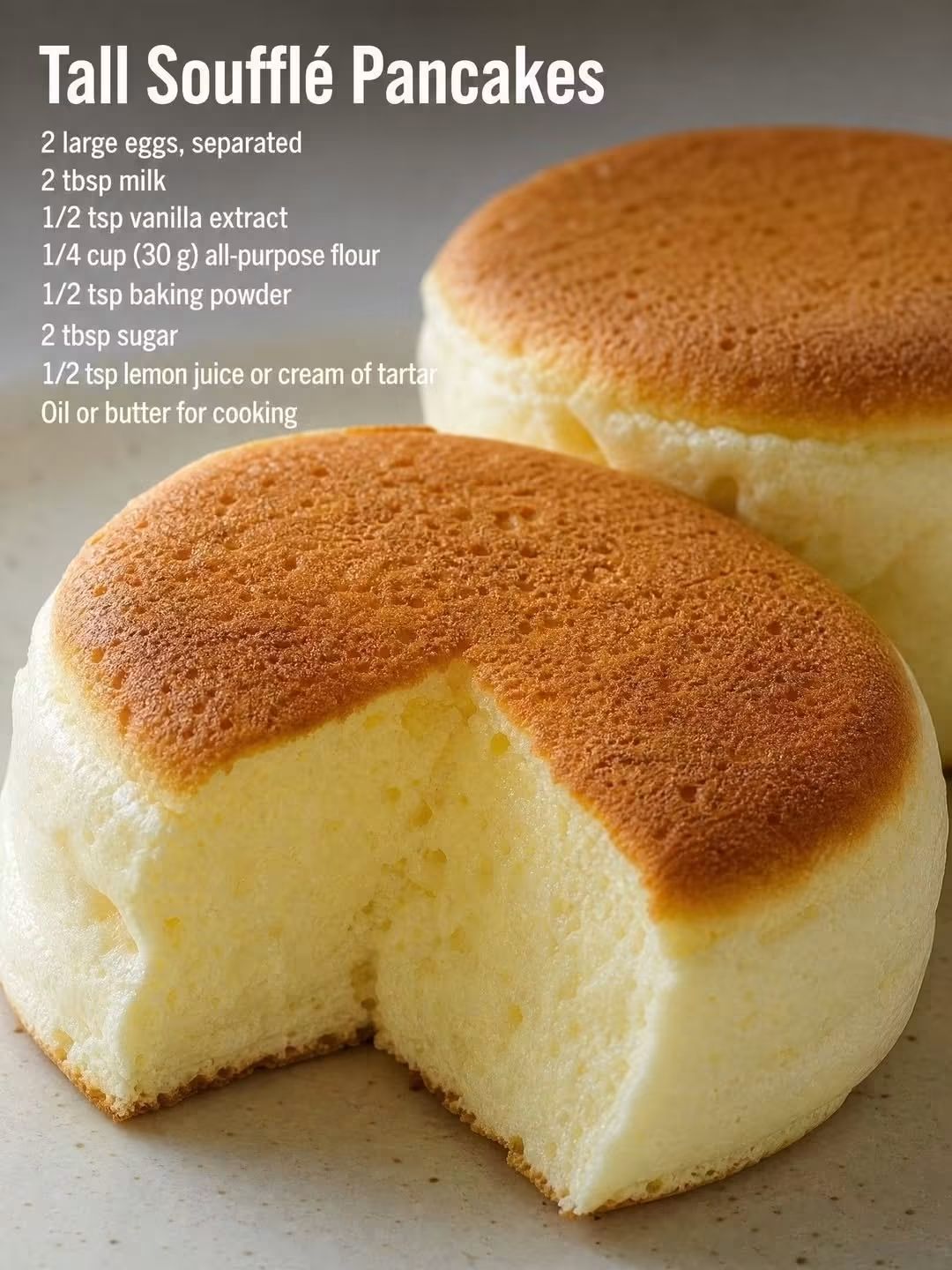
Light and Fluffy Vanilla Cloud Cake
Introduction
There is something wonderfully comforting about a simple homemade cake that is soft, delicate, and light enough to almost melt in your mouth. This Light and Fluffy Vanilla Cloud Cake is a beautiful example of how a few basic ingredients can be transformed into an elegant dessert.
The secret to its airy texture is separating the eggs and carefully incorporating the whipped egg whites into the batter. The result is a tender cake with a subtle vanilla aroma and a soft, cloud-like crumb.
It is perfect for breakfast, afternoon tea, a light dessert, or whenever you want something homemade without a complicated recipe.
Ingredients
Main Ingredients
- 2 large eggs, separated
- 2 tablespoons milk
- 1/2 teaspoon vanilla extract
Additional Ingredients
- 2 tablespoons granulated sugar for the egg yolks
- 2 to 3 tablespoons granulated sugar for whipping the egg whites
- 3 tablespoons cake flour or finely sifted all-purpose flour
- 1 tablespoon cornstarch
- 1/4 teaspoon baking powder
- A small pinch of salt
- 1 tablespoon melted unsalted butter, optional
- Powdered sugar for serving, optional
Instructions
1. Prepare the Oven and Pan
Preheat the oven to 325°F (165°C).
Lightly grease a small round cake pan, approximately 6 inches in diameter. Line the bottom with parchment paper. For an especially soft cake, avoid heavily greasing the sides of the pan.
2. Separate the Eggs
Carefully separate the two eggs, placing the yolks in one bowl and the whites in another.
Make sure the egg-white bowl is completely clean and dry. Even a small amount of egg yolk or grease can make it difficult to whip the whites properly.
3. Prepare the Egg-Yolk Mixture
Add the milk, vanilla extract, and 2 tablespoons of sugar to the egg yolks.
Whisk until the mixture becomes smooth and slightly lighter.
If using melted butter, allow it to cool slightly before whisking it into the mixture.
4. Add the Dry Ingredients
Sift together the flour, cornstarch, baking powder, and salt.
Add the dry ingredients gradually to the egg-yolk mixture. Stir gently until you have a smooth batter without large pockets of flour.
Do not overmix.
5. Whip the Egg Whites
Using a clean electric mixer, beat the egg whites on medium speed until they become foamy.
Gradually add the remaining sugar while continuing to beat.
Increase the speed slightly and continue whipping until the whites form glossy soft-to-medium peaks. When the beaters are lifted, the peaks should hold their shape but still have a slight curve at the tip.
Avoid overbeating the whites until they become dry or crumbly.
6. Combine the Mixtures
Add approximately one-third of the whipped egg whites to the egg-yolk batter.
Fold gently to loosen the batter.
Add another third of the egg whites and fold carefully. Finally, add the remaining egg whites and fold until just combined.
Use a spatula and make slow, sweeping movements from the bottom of the bowl upward. The goal is to preserve as much air as possible.
7. Fill the Pan
Pour the batter gently into the prepared cake pan.
Tap the pan very lightly once or twice on the counter to remove only large air pockets. Do not knock the pan hard because this can deflate the carefully whipped egg whites.
8. Bake
Place the cake in the center of the preheated oven.
Bake for approximately 25 to 35 minutes, depending on the size and depth of the pan.
The cake should become lightly golden and spring back gently when touched in the center.
A toothpick inserted into the middle should come out clean or with only a few moist crumbs attached.
9. Cool the Cake
Remove the cake from the oven and allow it to cool in the pan for several minutes.
Carefully loosen the edges with a thin knife or spatula.
Transfer the cake to a cooling rack and allow it to cool completely before slicing.
For an especially delicate texture, allow the cake to rest for a little while before serving.
Method
The main technique behind this cake is the separated-egg method.
The egg yolks provide richness and structure, while the whipped egg whites provide most of the cake’s lightness. When air is incorporated into the egg whites and then carefully folded into the batter, those tiny air bubbles expand during baking and help create the characteristic fluffy texture.
The flour provides enough structure to hold the cake together, while cornstarch keeps the crumb particularly tender.
The most important part of the method is gentle folding. Mixing aggressively after adding the whipped egg whites will remove much of the air and can result in a dense cake.
History and Background
Light sponge cakes have a long history in European and American baking traditions. Before modern chemical leaveners became common, bakers often depended on beaten eggs to provide lift and volume.
Separating eggs and whipping the whites became an important technique for producing cakes that were lighter and more delicate than traditional butter-based cakes.
Modern versions of these cakes can be found in many forms, including sponge cakes, chiffon-style cakes, Japanese-style cotton cakes, and various cloud cakes. Although the recipes differ, they share a similar principle: incorporate air into the eggs and preserve that air during baking.
This vanilla version follows that same classic idea while keeping the ingredient list simple and the finished cake delicate.
Formation and Texture
The formation of the cake happens in several stages.
First, the egg yolks are combined with the liquid ingredients to create a smooth base. The dry ingredients are then added to give the batter structure.
Meanwhile, the egg whites are whipped with sugar. Whipping introduces thousands of tiny air bubbles into the egg whites. During baking, the heat causes these bubbles to expand while the proteins in the eggs and the flour gradually set around them.
This creates the soft, airy structure that makes the cake resemble a cloud.
The final cake should be light but not completely fragile. It should have enough structure to hold a slice while remaining tender and moist.
Serving Suggestions
This cake is delicious served plain because the vanilla flavor and delicate texture are already enough to make it satisfying.
For a more elegant presentation, serve it with:
- A light dusting of powdered sugar
- Fresh strawberries
- Blueberries or raspberries
- Fresh whipped cream
- Greek yogurt
- A spoonful of fruit compote
- Honey
- Warm berry sauce
- Lemon curd
- Thinly sliced peaches
For a simple breakfast, serve a slice alongside coffee or tea.
For dessert, add fresh fruit and a small spoonful of whipped cream.
Tips for the Best Results
Use room-temperature eggs when possible. They generally whip more easily and can produce better volume.
Keep the egg whites completely free from yolk. Fat prevents the whites from developing their full volume.
Sift the flour and cornstarch before adding them to the batter. This helps create a smoother mixture and reduces the need for excessive stirring.
Do not overmix the batter after adding the whipped egg whites. Gentle folding is essential.
Do not open the oven repeatedly while the cake is baking. A sudden temperature change can cause a delicate cake to collapse.
Bake until the center is properly set. Removing it too early can cause the middle to sink.
Allow the cake to cool before cutting. The crumb continues to stabilize as it cools.
Variations
Lemon Vanilla Cloud Cake
Add 1 teaspoon of finely grated lemon zest to the egg-yolk mixture for a fresh citrus flavor.
Almond Vanilla Cake
Replace part of the vanilla extract with a small amount of almond extract.
Berry Cloud Cake
Serve the finished cake with fresh berries and lightly sweetened whipped cream.
Cinnamon Cloud Cake
Add a small pinch of ground cinnamon to the dry ingredients for a warm, comforting flavor.
Honey Vanilla Cake
Replace part of the sugar with a small amount of honey, keeping in mind that this can slightly change the cake’s texture.
Conclusion
This Light and Fluffy Vanilla Cloud Cake is proof that a simple recipe can still produce something truly special. The combination of separated eggs, gentle folding, vanilla, and a small amount of flour creates a cake that is soft, airy, delicate, and wonderfully comforting.
It is an excellent recipe for anyone who enjoys homemade desserts without an overly heavy texture. Serve it plain for a simple treat or dress it up with fruit, cream, or your favorite topping for a beautiful dessert.
For Cake Lovers
Cake lovers will appreciate this recipe because it focuses on texture as much as flavor. Every bite is tender, lightly sweet, and fragrant with vanilla.
It is the kind of cake that works equally well for a quiet morning, an afternoon gathering, a family dessert, or a special occasion. Once you learn the simple technique of whipping and folding egg whites, you can use the same method as a foundation for many other light and delicate cakes.