
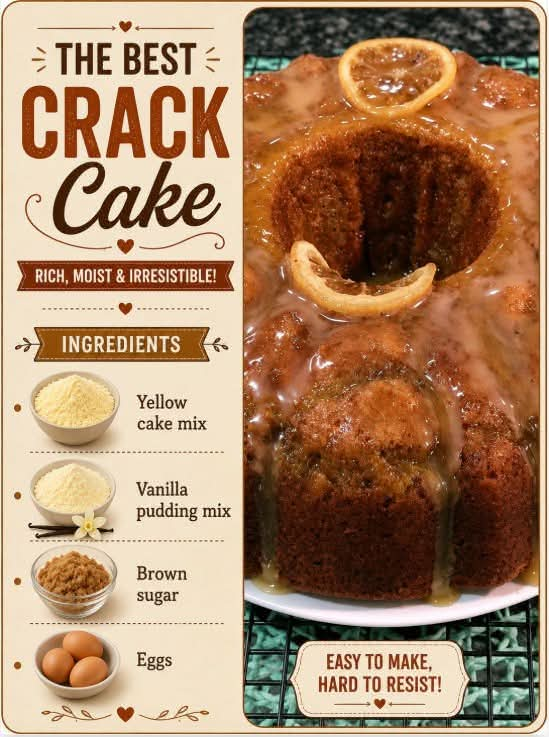
Best Crack Cake
Introduction
Crack Cake is a rich, buttery, cinnamon-scented cake with a wonderfully tender crumb and a sweet, slightly crisp exterior. It is the kind of old-fashioned dessert that looks simple when it comes out of the oven but quickly becomes the centerpiece of the dessert table.
This version begins with a yellow cake mix and vanilla pudding mix, which help create an exceptionally moist and soft texture. Brown sugar and cinnamon add a warm caramel-like flavor, while butter and vanilla give the cake its comforting homemade character.
The name “Crack Cake” is commonly used for cakes that are so rich and irresistible that people jokingly say they are difficult to stop eating. It is not a reference to an actual ingredient. This recipe is particularly popular for family gatherings, holidays, potlucks, brunches, and celebrations because it can be prepared without complicated baking techniques.
Ingredients
For the Cake
- 1 box yellow cake mix, approximately 15.25 ounces
- 1 box instant vanilla pudding mix, approximately 3.4 ounces
- 1 cup packed brown sugar
- 2 teaspoons ground cinnamon
- 4 large eggs
- 3/4 cup vegetable oil
- 1/2 cup melted unsalted butter
- 2 teaspoons vanilla extract
- 1 cup water
For the Cinnamon Butter Glaze
- 1/2 cup unsalted butter
- 1/2 cup packed brown sugar
- 1 teaspoon ground cinnamon
- 1 teaspoon vanilla extract
- 2 tablespoons water or milk
Instructions
1. Prepare the Oven and Pan
Preheat the oven to 350°F (175°C).
Grease a 10-inch Bundt pan generously with butter or nonstick baking spray. Pay special attention to the center tube and all the decorative grooves of the pan. A well-greased pan makes it much easier to release the cake after baking.
For extra insurance, lightly dust the greased pan with flour, tapping out any excess.
2. Combine the Dry Ingredients
In a large mixing bowl, add the yellow cake mix, instant vanilla pudding mix, brown sugar, and cinnamon.
Whisk everything together until the ingredients are evenly distributed.
The brown sugar should be broken up as much as possible so that it blends smoothly into the batter.
3. Add the Wet Ingredients
Add the eggs, vegetable oil, melted butter, vanilla extract, and water.
Using an electric mixer, beat the mixture on medium speed for about 2 minutes, scraping down the sides of the bowl once or twice.
The batter should become smooth, thick, and creamy.
Avoid overmixing once everything has been incorporated. Overmixing can make the finished cake slightly heavier than necessary.
4. Fill the Bundt Pan
Pour the batter evenly into the prepared Bundt pan.
Use a spatula to gently spread the batter around the pan and smooth the surface.
Tap the pan lightly on the counter once or twice to help remove any large air pockets.
5. Bake the Cake
Place the Bundt pan in the center of the preheated oven.
Bake for approximately 45 to 55 minutes, or until the cake is golden brown and a toothpick inserted into the thickest part comes out clean or with a few moist crumbs.
Because ovens vary, begin checking the cake around the 45-minute mark.
Do not rely only on the appearance of the top. The center should be properly baked before removing the cake from the oven.
6. Prepare the Glaze
While the cake is baking, prepare the cinnamon butter glaze.
Place the butter, brown sugar, cinnamon, and water or milk in a small saucepan over low to medium-low heat.
Stir gently until the butter has melted and the brown sugar has dissolved.
Remove the saucepan from the heat and stir in the vanilla extract.
The glaze should be smooth, buttery, and fragrant.
7. Glaze the Warm Cake
When the cake comes out of the oven, allow it to rest in the Bundt pan for approximately 10 minutes.
While it is still warm, carefully poke small holes throughout the cake using a skewer, wooden spoon handle, or toothpick.
Slowly spoon some of the warm glaze over the cake, allowing it to soak into the holes and absorb into the crumb.
Let the cake sit for another 10 to 15 minutes so the glaze can penetrate the cake.
8. Remove the Cake
Carefully place a serving plate over the Bundt pan and invert the cake.
Give the pan a gentle shake if necessary.
If the pan was properly prepared, the cake should release with its beautiful ridged shape intact.
Spoon any remaining glaze over the top.
Allow the cake to cool slightly before slicing.
Method
The secret to a successful Crack Cake is the combination of ingredients and the way they work together.
The yellow cake mix provides the basic structure and a delicate buttery flavor. Vanilla pudding mix contributes moisture and helps create the soft, tender texture that makes each slice almost melt in your mouth.
Brown sugar brings a deeper sweetness than ordinary granulated sugar. Its caramel-like flavor pairs especially well with cinnamon.
Vegetable oil helps keep the cake moist even after it has cooled, while melted butter adds richness. Eggs provide structure and help the cake rise into a soft, substantial Bundt cake.
Vanilla extract brings all the flavors together, and the cinnamon butter glaze adds an additional layer of sweetness and warmth.
The glaze is especially important because it is absorbed into the warm cake. Instead of simply sitting on the surface, it becomes part of the cake itself.
History and Background
The exact origin of Crack Cake is difficult to establish because many versions have circulated through American home kitchens, recipe cards, potlucks, and online cooking communities.
The recipe belongs to a long tradition of American cake-mix baking, where convenient packaged ingredients are combined with pantry staples to create desserts that taste homemade without requiring a complicated scratch recipe.
Bundt cakes became especially popular in American home baking during the second half of the twentieth century. Their distinctive ring shape made even simple cakes look elegant enough for holidays and entertaining.
Recipes using yellow cake mix, pudding, brown sugar, cinnamon, butter, and vanilla became popular because they produced consistently moist cakes with very little effort.
The phrase “Crack Cake” is generally a playful name suggesting that the cake is highly addictive or irresistible. It is a humorous description rather than a historical reference to a particular ingredient.
Formation of the Cake
The formation of this cake happens in several stages.
First, the dry ingredients are distributed throughout the cake mix. This ensures that the cinnamon and brown sugar do not form concentrated pockets in the finished cake.
Next, the eggs and liquid ingredients combine with the cake mix to create the batter. The oil and melted butter provide richness and moisture, while the pudding mix helps give the cake its soft texture.
During baking, the eggs and cake-mix ingredients create the structure of the cake while the butter, oil, brown sugar, vanilla, and cinnamon develop a warm, fragrant flavor.
Once the cake is removed from the oven, the warm glaze is absorbed into the crumb. This final step gives the cake its characteristic rich and moist finish.
Important Baking Tips
Use room-temperature eggs when possible. They blend more easily into the batter.
Grease the Bundt pan thoroughly. Bundt pans contain many grooves where cake can stick.
Do not overbake. Start checking around 45 minutes. A few moist crumbs on a toothpick are fine, but wet batter means the cake needs more time.
Let the cake rest before removing it. About 10 to 15 minutes is usually enough. Removing it immediately can cause the cake to break, while leaving it in the pan for too long can make it stick.
Glaze while warm. The warm cake absorbs the butter glaze much more effectively than a completely cooled cake.
Allow the cake to settle before serving. Giving it a little time after glazing allows the flavors to develop and the crumb to become even more moist.
Serving Suggestions
Crack Cake is delicious served slightly warm, at room temperature, or chilled.
For a simple presentation, slice the cake and serve it with coffee, tea, or milk.
For a more indulgent dessert, serve each slice with a spoonful of whipped cream or a scoop of vanilla ice cream.
Fresh berries can also provide a pleasant contrast to the rich cinnamon and brown-sugar flavor.
For holidays and special occasions, a light dusting of powdered sugar can make the cake look especially elegant.
Storage
Store the cooled cake in an airtight container at room temperature for up to 3 days.
For longer storage, refrigerate it in a tightly covered container for up to about 5 days. Allow refrigerated slices to come toward room temperature before serving, or warm individual pieces gently in the microwave.
The cake can also be frozen. Wrap individual slices or the whole cake tightly in plastic wrap and then place it in a freezer-safe container or bag. Freeze for up to 2 to 3 months for best quality.
Thaw the cake in the refrigerator or at room temperature before serving.
Conclusion
Best Crack Cake is a wonderful example of how a few convenient ingredients can be transformed into an impressive homemade dessert.
The combination of yellow cake, vanilla pudding, brown sugar, cinnamon, butter, and vanilla creates a cake that is moist, fragrant, rich, and incredibly comforting. The warm cinnamon butter glaze takes it one step further by soaking into the cake and giving every slice an extra layer of sweetness.
It is simple enough for an ordinary weekend but special enough for birthdays, holidays, family dinners, church gatherings, potlucks, and celebrations.
For Crack Cake Lovers
If you love cakes that are exceptionally moist, buttery, and full of warm cinnamon flavor, this recipe is one worth keeping in your regular baking collection.
It is particularly appealing to people who enjoy classic American desserts with a homemade, old-fashioned character. The beautiful Bundt shape makes it look impressive, while the simple preparation makes it approachable even for beginner bakers.
The best part is that the cake often tastes even better after it has had time to rest. The glaze continues to settle into the crumb, allowing the brown sugar, cinnamon, butter, and vanilla flavors to come together.
One slice is rarely enough for dessert lovers, which is exactly why this cake has earned its playful name.