
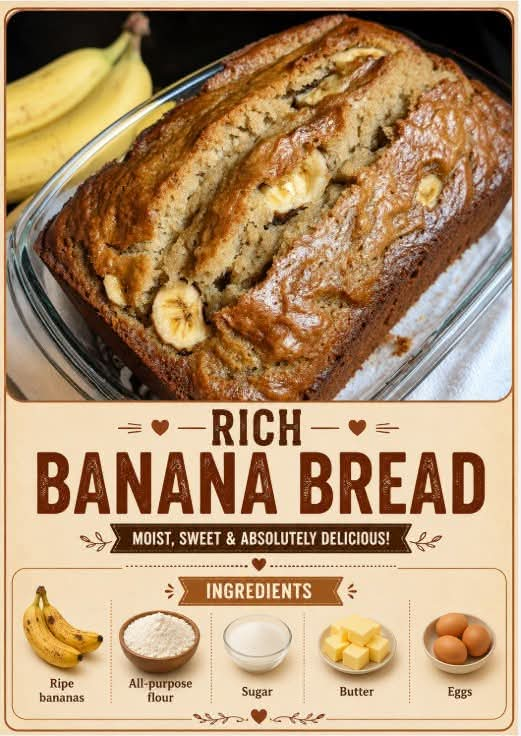
Rich Homemade Banana Bread
Introduction
Rich Banana Bread is one of those timeless homemade recipes that turns a few simple ingredients into something wonderfully comforting. Moist in the center, golden around the edges, tender with every bite, and filled with the natural sweetness and aroma of ripe bananas, this classic loaf is perfect for breakfast, an afternoon snack, or a simple homemade dessert.
The secret to excellent banana bread is using bananas that are very ripe. As bananas become softer and develop brown or dark spots, their natural sweetness becomes stronger and their flavor becomes deeper. Those bananas that might otherwise be considered too ripe are actually ideal for baking.
This recipe creates a rich, soft loaf with buttery flavor, a delicate crumb, and plenty of banana taste. It is simple enough for beginners but delicious enough to become a family favorite.
Ingredients
Main Ingredients
- 3 large very ripe bananas, mashed
- 1 1/2 cups all-purpose flour
- 3/4 cup granulated sugar
- 1/2 cup unsalted butter, softened or melted
- 2 large eggs
- 1 teaspoon vanilla extract
- 1 teaspoon baking soda
- 1/2 teaspoon salt
Optional Additions
For extra flavor or texture, you can add:
- 1/2 cup chopped walnuts or pecans
- 1/2 cup chocolate chips
- 1 teaspoon ground cinnamon
- 1/4 teaspoon nutmeg
- 1/2 teaspoon banana extract for a stronger banana flavor
The loaf is delicious without any additions, so these ingredients are completely optional.
Instructions
Step 1: Prepare the Oven and Pan
Preheat your oven to 350°F (175°C).
Grease a 9 x 5-inch loaf pan with butter or cooking spray. You can also line the bottom and two long sides with parchment paper, leaving a little paper hanging over the edges. This makes removing the finished banana bread much easier.
Set the pan aside while you prepare the batter.
Step 2: Mash the Bananas
Peel the ripe bananas and place them in a large mixing bowl.
Mash them with a fork until mostly smooth. A few small pieces of banana are perfectly fine and will add little pockets of moisture and flavor throughout the finished loaf.
For the best banana bread, use bananas that are very ripe and soft. Bananas with plenty of brown spots are especially good because they contain more natural sweetness and have a stronger banana flavor.
Step 3: Add the Butter
Add the softened or melted butter to the mashed bananas.
Mix until well combined.
If you are using melted butter, allow it to cool slightly before adding it to the eggs later. Very hot butter can cause the eggs to cook prematurely.
Step 4: Add the Sugar and Eggs
Add the sugar and mix well.
Add the eggs one at a time, mixing after each addition. Stir in the vanilla extract.
The mixture should become smooth, creamy, and fragrant.
Step 5: Combine the Dry Ingredients
In a separate bowl, whisk together the all-purpose flour, baking soda, and salt.
If you are adding cinnamon or another dry spice, add it to the flour mixture at this stage.
Mixing the dry ingredients separately helps distribute the baking soda and salt evenly throughout the flour.
Step 6: Combine Wet and Dry Mixtures
Gradually add the dry ingredients to the banana mixture.
Use a wooden spoon, rubber spatula, or large spoon to gently fold everything together.
Do not overmix the batter. Stop stirring as soon as you no longer see large streaks of dry flour.
A few small lumps are completely normal.
Overmixing can develop too much gluten and result in a dense or chewy loaf instead of a soft and tender banana bread.
Step 7: Add Optional Ingredients
If desired, gently fold in chopped walnuts, pecans, chocolate chips, or other additions.
For an especially attractive loaf, reserve a few nuts or chocolate chips to sprinkle over the top before baking.
Step 8: Fill the Loaf Pan
Pour the banana bread batter into the prepared loaf pan.
Spread the top evenly with a spatula.
If you like, place a sliced banana lengthwise on top of the batter before baking. This creates a beautiful homemade appearance and adds even more banana flavor.
Step 9: Bake
Place the loaf pan in the center of the preheated oven.
Bake at 350°F (175°C) for approximately 50 to 65 minutes.
Baking time can vary depending on your oven, the size of your bananas, and the type of loaf pan used.
Begin checking the bread around 50 minutes.
Insert a toothpick or wooden skewer into the center. If it comes out clean or with a few moist crumbs attached, the banana bread is ready.
If the toothpick comes out with wet batter, continue baking for another 5 to 10 minutes and check again.
Step 10: Cool
Remove the banana bread from the oven and allow it to cool in the pan for approximately 10 to 15 minutes.
Then carefully lift it from the pan and transfer it to a wire rack.
Allow it to cool further before slicing.
Although it can be difficult to resist cutting into a warm loaf, allowing it to cool helps the crumb finish setting and makes it easier to produce neat slices.
Method
The method behind this banana bread is simple but important.
First, the ripe bananas provide moisture, sweetness, and the characteristic banana flavor. Butter contributes richness and tenderness, while eggs provide structure and help bind the ingredients together.
The flour gives the loaf its framework. Baking soda acts as the leavening agent, helping the bread rise and giving it a lighter texture. Sugar sweetens the loaf while also contributing to its golden-brown crust.
The most important technique is gentle mixing. Once the flour is added, mix only until the ingredients are combined. This keeps the finished bread tender rather than tough.
Baking at a moderate temperature allows the center to cook gradually while the outside develops a beautiful golden crust.
History of Banana Bread
Banana bread became especially popular in American home baking during the twentieth century. The recipe became a practical way to use overripe bananas instead of throwing them away.
As bananas became more widely available in American households, home cooks discovered that very ripe bananas were excellent for baking. Their soft texture made them easy to incorporate into batter, while their natural sweetness reduced the need for additional flavoring.
Banana bread also became associated with the tradition of practical home cooking. Instead of wasting food, families could transform aging fruit into a completely new dish.
Over the years, countless versions appeared. Some included nuts, others used spices, chocolate chips, raisins, cream cheese, or different types of sweeteners. Despite these variations, the classic combination of bananas, flour, butter, eggs, sugar, vanilla, baking soda, and salt remains one of the most beloved versions.
Formation of the Banana Bread
The formation of this loaf happens in several stages.
The mashed bananas form the flavorful foundation of the batter. Butter gives the mixture richness, while sugar contributes sweetness and helps the crust brown beautifully.
The eggs help create structure as the bread bakes. When combined with flour, they help produce the soft but stable crumb that allows each slice to hold its shape.
Baking soda produces gas during baking, creating small pockets throughout the batter. These pockets expand in the heat of the oven, helping the loaf rise.
As the loaf continues to bake, the exterior becomes golden brown while the interior remains soft and moist. The banana flavor becomes more pronounced as the ingredients cook together.
The final result is a loaf with a lightly crisp exterior and a rich, tender center.
Tips for the Best Banana Bread
Use Very Ripe Bananas
The darker and softer the bananas, the better they usually are for banana bread. They provide stronger flavor and natural sweetness.
Measure the Flour Carefully
Too much flour can make banana bread dry and heavy. Spoon the flour into a measuring cup and level it rather than packing it tightly.
Do Not Overmix
Once the flour has been added, mix gently and stop as soon as everything is incorporated.
Do Not Overbake
Banana bread should remain moist. Start checking the loaf near the end of the suggested baking time.
Let It Cool
Cooling allows the structure to stabilize and makes slicing much easier.
Add Your Favorite Flavor
Walnuts and pecans are classic choices, but chocolate chips, cinnamon, or a small amount of nutmeg can also make this loaf special.
Serving Suggestions
Rich Banana Bread can be served in many different ways.
Serve a warm slice with a little butter for a simple breakfast. For dessert, add a spoonful of whipped cream or vanilla ice cream.
It is also delicious with:
- Cream cheese
- Peanut butter
- Almond butter
- Honey
- Greek yogurt
- Fresh berries
- Chopped nuts
- A light dusting of powdered sugar
For an especially comforting treat, warm a slice for a few seconds and serve it with butter while it is still soft and fragrant.
Storage
Allow the banana bread to cool completely before storing.
Keep it in an airtight container or wrap it tightly in plastic wrap. It can generally be kept at room temperature for several days.
For longer storage, wrap individual slices and place them in the freezer. Frozen slices can be thawed at room temperature or gently warmed before serving.
Freezing individual slices is especially convenient because you can take out only what you need.
Why People Love This Recipe
Banana bread is loved because it combines simplicity with homemade comfort.
It does not require complicated equipment, unusual ingredients, or advanced baking skills. The batter comes together quickly, and the aroma that fills the kitchen while the loaf is baking makes the entire house feel warm and welcoming.
It is also an excellent way to use bananas that have become too soft to enjoy on their own.
Families love this recipe because it works for almost any occasion. It can be prepared for a weekend breakfast, packed into lunchboxes, served with afternoon coffee, or enjoyed as a comforting dessert after dinner.
The combination of buttery richness, sweet banana flavor, vanilla aroma, and tender texture makes it difficult to stop at just one slice.
Conclusion
Rich Banana Bread is a classic homemade loaf that proves simple ingredients can create something truly special.
With ripe bananas, butter, eggs, flour, sugar, vanilla, baking soda, and salt, you can make a golden, fragrant loaf with a moist center and rich banana flavor.
The key is to use very ripe bananas, measure the ingredients carefully, avoid overmixing, and bake the loaf until it is fully cooked but still tender.
Whether enjoyed warm with butter, served alongside coffee, or saved for the next day’s breakfast, this banana bread is the kind of recipe that deserves a permanent place in your kitchen.
Once you make it, those overripe bananas sitting on the counter will never look like something to throw away again. They will look like the beginning of a warm, delicious homemade loaf.