
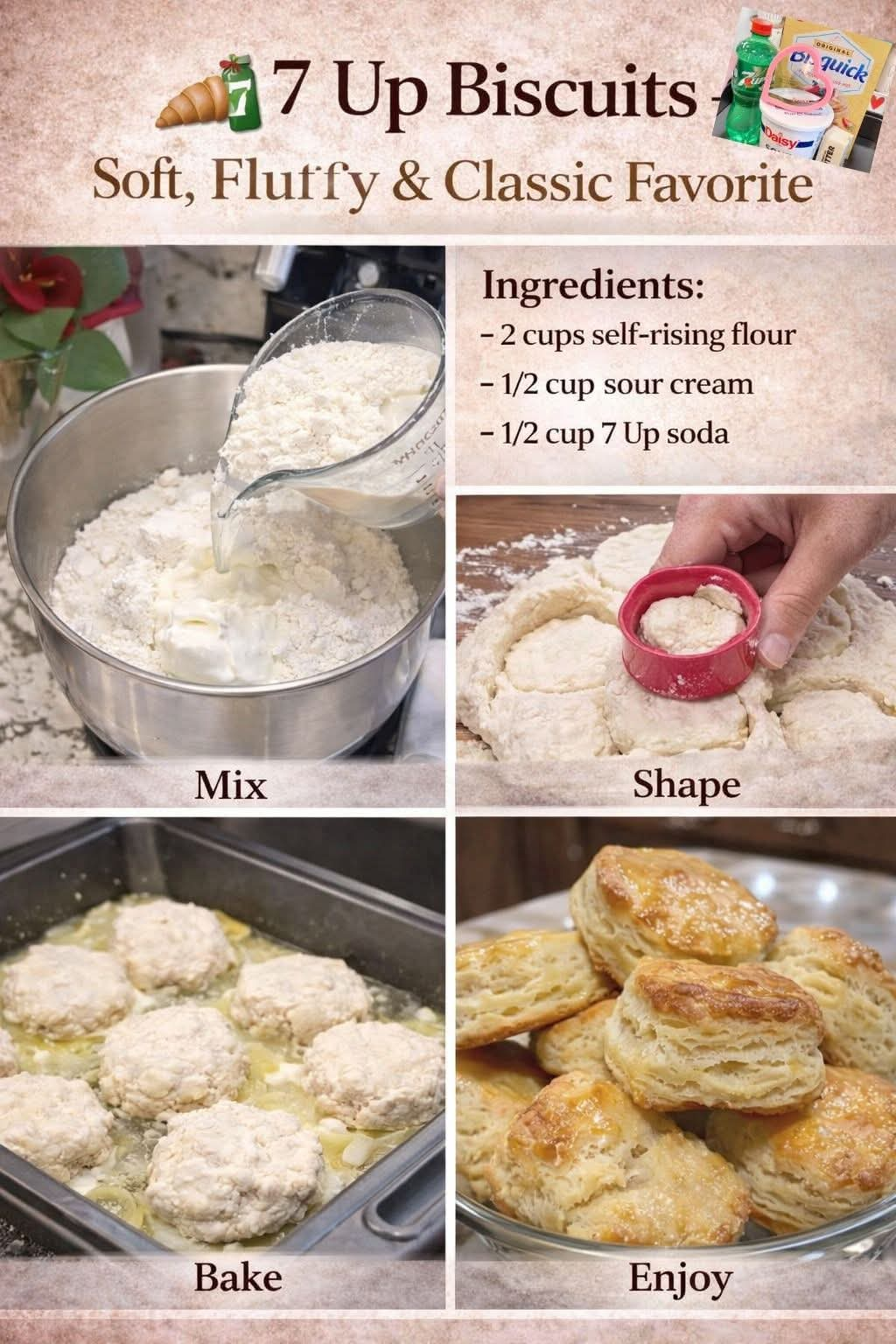
7 Up Biscuits — Soft, Fluffy and Classic
Introduction
7 Up Biscuits are a simple Southern-style biscuit recipe known for their remarkably soft, tender texture and easy preparation. Instead of requiring yeast or a complicated dough-making process, these biscuits combine self-rising flour, sour cream, and lemon-lime soda to create a dough that bakes into light, fluffy biscuits with a delicate golden exterior.
The recipe is especially appealing when you want homemade biscuits without spending a long time measuring ingredients or waiting for dough to rise. The sour cream contributes richness and tenderness, while the carbonation in the soda helps create a lighter texture. A little butter in the baking dish adds another layer of flavor and helps the bottoms develop a beautifully golden finish.
These biscuits are wonderful for breakfast with butter, jam, honey, or gravy, but they are equally useful as a side dish for fried chicken, roasted meats, soups, stews, casseroles, and holiday dinners.
Ingredients
For the Biscuits
- 2 cups self-rising flour
- 1/2 cup sour cream
- 1/2 cup 7 Up or another lemon-lime soda
- 1/4 cup melted butter, plus additional butter for the baking dish if desired
Optional Additions
- 1 tablespoon melted butter for brushing the tops
- 1/2 teaspoon garlic powder for savory biscuits
- 1 tablespoon chopped fresh parsley for serving
- Honey or jam for a sweeter presentation
Instructions
Step 1: Prepare the Oven
Preheat the oven to 425°F (220°C).
Place about 2 tablespoons of butter in a round or square baking dish and allow it to melt while the oven heats. Spread the melted butter across the bottom of the dish.
If you prefer, you can melt the butter directly in the baking dish, but watch it carefully so that it does not brown too much.
Step 2: Combine the Flour and Sour Cream
Place the self-rising flour in a large mixing bowl.
Add the sour cream and gently begin mixing. The sour cream may initially form small lumps, but continue folding it into the flour until it is distributed throughout the mixture.
Do not overmix at this stage.
Step 3: Add the 7 Up
Pour the 7 Up into the flour and sour cream mixture.
Using a wooden spoon or spatula, gently fold everything together until a soft, sticky dough forms.
The dough should not be completely smooth. A slightly rough dough is perfectly acceptable and will help produce tender biscuits.
Step 4: Form the Dough
Lightly flour a clean work surface.
Transfer the dough onto the surface and sprinkle a small amount of flour over the top. Gently pat the dough to approximately 1 inch thick.
Avoid kneading the dough like bread. Too much handling can make the biscuits dense instead of soft and fluffy.
Step 5: Cut the Biscuits
Use a biscuit cutter, round cookie cutter, or the rim of a drinking glass to cut the dough into rounds.
Press the cutter straight down rather than twisting it. Twisting can seal the edges of the dough and prevent the biscuits from rising as evenly.
Gather the remaining dough gently and cut additional biscuits.
Step 6: Arrange in the Baking Dish
Place the biscuits into the buttered baking dish.
For softer sides, arrange the biscuits close together so that they touch slightly. For more golden edges, leave a little space between them.
Brush the tops lightly with melted butter if desired.
Step 7: Bake
Place the baking dish in the preheated oven.
Bake for approximately 12 to 16 minutes, or until the biscuits have risen and the tops are lightly golden brown.
Because ovens vary, begin checking them around the 12-minute mark.
Step 8: Finish and Serve
Remove the biscuits from the oven and brush the tops with a little melted butter while they are still hot.
Allow them to cool for several minutes before serving.
Serve warm with butter, honey, jam, sausage gravy, or alongside your favorite meal.
Method
The secret to these biscuits is keeping the preparation simple and handling the dough gently.
Self-rising flour already contains the leavening ingredients needed to help the biscuits rise. Sour cream adds moisture, fat, and acidity, giving the biscuits a soft and tender crumb. The lemon-lime soda contributes additional moisture and carbonation, helping create the characteristic light texture.
The dough should remain soft rather than stiff. If you add too much flour while shaping, the finished biscuits can become heavy. Use just enough flour to prevent the dough from sticking to your hands and work surface.
Another important point is not to overwork the dough. Biscuit dough benefits from minimal handling. The less you knead and compress it, the more tender the finished biscuits will be.
History and Background
7 Up Biscuits belong to a broader tradition of easy American biscuit recipes that became popular because they could transform a few inexpensive pantry ingredients into a comforting homemade side dish.
Traditional biscuits have long been associated with Southern and American home cooking. Earlier recipes often relied on flour, a fat such as butter or shortening, and milk or buttermilk, along with a leavening agent.
The 7 Up variation became particularly popular as a shortcut biscuit recipe because it simplified the process by combining prepared self-rising flour with sour cream and a carbonated soft drink.
Although the recipe is associated with 7 Up, the important characteristics are the combination of self-rising flour, a creamy ingredient, and a carbonated lemon-lime beverage. Similar versions can therefore be prepared with other lemon-lime sodas.
Formation of the Biscuits
The formation of these biscuits begins when the flour comes into contact with the sour cream and soda.
The self-rising flour provides the structure and leavening. The sour cream adds moisture and richness while helping produce a tender interior. The soda provides additional liquid and carbonation.
As the biscuits enter the hot oven, the water in the dough turns into steam. The leavening ingredients also produce gases that expand within the dough. Together, these processes help the biscuits rise.
The butter in the baking dish helps prevent sticking while also contributing flavor and browning. The result is a biscuit with a soft interior and a lightly crisp, golden exterior.
Tips for Soft and Fluffy Biscuits
Use fresh self-rising flour for the best results. If your flour has been sitting in the pantry for a very long time, its leavening power may not be as strong.
Keep the dough soft. Avoid adding large amounts of extra flour simply because the dough feels sticky.
Do not overmix. Mix only until the ingredients come together.
Do not twist the biscuit cutter when cutting the dough. Press straight down and lift.
Bake the biscuits in a properly preheated oven. A hot oven helps the dough rise quickly and develop a golden exterior.
For especially tender biscuits, arrange them close together in the baking dish.
Brush the finished biscuits with butter immediately after baking for extra flavor.
Serving Ideas
These biscuits can be served in many different ways.
For breakfast, split them open and fill them with scrambled eggs, sausage, bacon, ham, or cheese.
For a classic Southern-style breakfast, serve them with sausage gravy.
For something sweet, serve warm biscuits with butter and honey, strawberry jam, blueberry preserves, or apple butter.
They also make an excellent accompaniment to fried chicken, roasted chicken, beef stew, vegetable soup, chili, mashed potatoes, or casseroles.
For holiday meals, place a basket of warm biscuits on the table alongside turkey, ham, roasted vegetables, and gravy.
Variations
Garlic Butter 7 Up Biscuits
Add a small amount of garlic powder to the dough. After baking, brush the biscuits with melted butter mixed with garlic powder and chopped parsley.
Cheddar Biscuits
Fold shredded cheddar cheese gently into the dough before shaping. Bake as directed and brush the finished biscuits with butter.
Honey Butter Biscuits
Bake the biscuits normally and serve them warm with a mixture of softened butter and honey.
Herb Biscuits
Add finely chopped parsley, chives, rosemary, or thyme for a savory version that pairs especially well with soups and roasted meats.
Storage
Allow leftover biscuits to cool completely before storing them.
Place them in an airtight container and keep them at room temperature for up to 2 days.
For longer storage, refrigerate them for several days or freeze them in a freezer-safe container.
To reheat, place the biscuits in a warm oven for several minutes. You can also microwave them briefly, although oven reheating generally gives them a better texture.
Conclusion
7 Up Biscuits are a wonderful example of how a few simple ingredients can create something that tastes homemade, comforting, and satisfying.
The combination of self-rising flour, sour cream, 7 Up, and butter produces biscuits that are tender inside, lightly golden outside, and easy enough for a beginner baker to prepare.
They require no yeast, no long rising time, and no complicated techniques. With gentle handling and a properly heated oven, you can have a warm batch of homemade biscuits ready for breakfast or dinner.
For Biscuit Lovers
For anyone who loves warm homemade biscuits, this recipe is particularly appealing because it delivers the comforting texture of traditional biscuits with a remarkably simple preparation method.
Serve them straight from the oven with butter and honey for a simple breakfast, or pair them with gravy, chicken, soup, or a hearty family dinner.
Once you try the basic version, the recipe also gives you plenty of opportunities to experiment with garlic, herbs, cheese, honey, or other favorite flavors.
These biscuits are best enjoyed warm, fresh from the oven, when the centers are soft and tender and the buttery edges are lightly golden.