
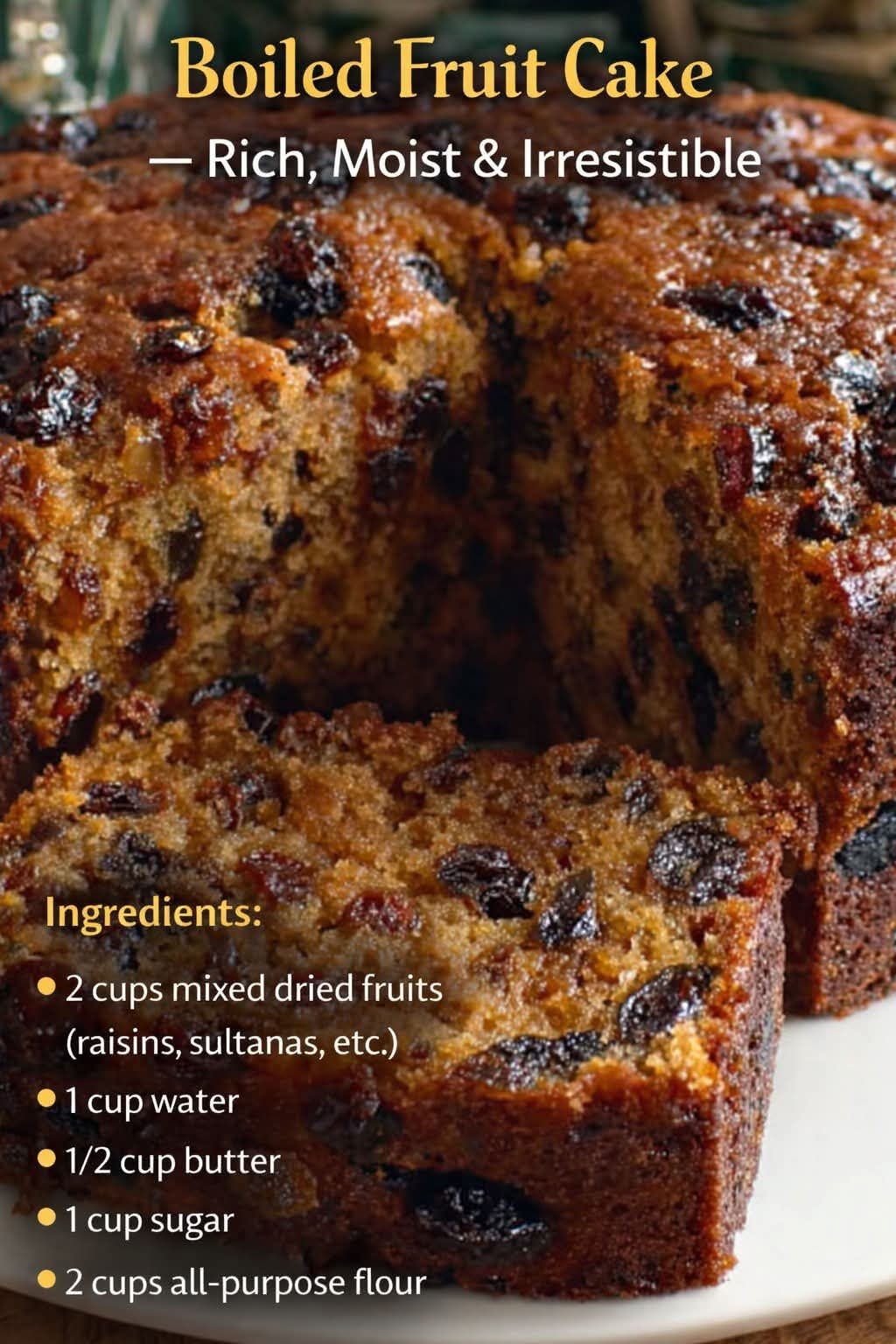
Boiled Fruit Cake — Rich, Moist & Irresistible
Introduction
Boiled Fruit Cake is a wonderfully rich, moist, old-fashioned cake made with dried fruits that are gently simmered with butter, sugar, and water before being combined with the remaining ingredients. This simple boiling method helps soften the fruit and allows its sweetness and flavor to blend beautifully throughout the cake.
The result is a soft, tender cake filled with juicy pieces of raisins, sultanas, and other dried fruits. Warm cinnamon adds a comforting aroma, while vanilla gives the cake a delicate sweetness. It is the kind of cake that tastes even better after it has rested and the flavors have had time to develop.
This cake is suitable for afternoon tea, family gatherings, holidays, celebrations, or simply whenever you want a homemade dessert that feels comforting and traditional.
Ingredients
For the Fruit Mixture
- 2 cups mixed dried fruits, such as raisins, sultanas, currants, or chopped dried fruit
- 1 cup water
- 1/2 cup butter
- 1 cup granulated sugar
For the Cake Batter
- 2 cups all-purpose flour
- 2 large eggs
- 1 teaspoon baking soda
- 1 teaspoon ground cinnamon
- 1/2 teaspoon vanilla extract
- 1/4 teaspoon salt
Optional Additions
Although the basic recipe is delicious on its own, you can customize it with additional ingredients if desired.
- 1/2 cup chopped walnuts or pecans
- 1/4 teaspoon ground nutmeg
- 1/4 teaspoon ground cloves
- 1 teaspoon grated orange or lemon zest
- 1 tablespoon orange juice
- A small handful of chopped dates or dried apricots
These additions are optional and can be adjusted according to your taste.
Instructions
Step 1: Prepare the Oven and Pan
Preheat your oven to 325°F (165°C).
Grease a 9-inch round cake pan or an 8-inch square baking pan. Line the bottom with parchment paper if desired. This makes removing the finished cake easier.
Set the prepared pan aside while you make the batter.
Step 2: Boil the Fruit Mixture
Place the mixed dried fruits, water, butter, and sugar into a medium saucepan.
Set the saucepan over medium heat and stir gently as the butter melts and the sugar dissolves.
Bring the mixture to a gentle boil. Once it begins bubbling, reduce the heat and allow it to simmer for approximately 3 to 5 minutes.
The purpose of this step is not simply to cook the fruit. The warm liquid helps soften the dried fruit and allows the butter and sugar to coat the fruit with a rich, flavorful mixture.
Remove the saucepan from the heat and allow the mixture to cool until it is warm rather than hot.
Step 3: Prepare the Dry Ingredients
While the fruit mixture is cooling, place the flour, baking soda, cinnamon, and salt in a large mixing bowl.
Whisk the ingredients together thoroughly so that the baking soda, cinnamon, and salt are evenly distributed throughout the flour.
This helps the cake rise evenly and prevents concentrated pockets of seasoning.
Step 4: Add the Eggs and Vanilla
Once the fruit mixture has cooled enough that it will not cook the eggs, add the eggs and vanilla extract.
Stir until everything is well combined.
Do not add the eggs while the fruit mixture is extremely hot, as the heat could cause them to begin cooking.
Step 5: Combine the Wet and Dry Ingredients
Gradually add the dry ingredients to the fruit mixture.
Stir gently with a wooden spoon or spatula until the flour is incorporated and a thick cake batter forms.
Do not overmix. Once there are no large areas of dry flour remaining, stop stirring.
If you are adding chopped nuts, dried apricots, citrus zest, or other optional ingredients, fold them into the batter at this stage.
Step 6: Transfer to the Pan
Pour the batter into the prepared cake pan.
Use a spatula to spread the mixture evenly and smooth the surface.
Because this is a fruit-filled cake, the batter will be fairly thick. Make sure the fruit is distributed evenly throughout the pan.
Step 7: Bake
Place the cake in the preheated oven.
Bake for approximately 50 to 65 minutes, depending on your oven and the size of your pan.
Begin checking the cake around the 50-minute mark.
The cake is ready when the center feels set and a toothpick inserted into the middle comes out clean or with only a few moist crumbs attached.
If the top begins browning too quickly while the center still needs more time, loosely cover the cake with aluminum foil and continue baking.
Step 8: Cool the Cake
Remove the cake from the oven and allow it to cool in the pan for approximately 10 to 15 minutes.
Carefully remove it from the pan and place it on a wire rack.
Allow it to cool completely before slicing.
Although it may be tempting to cut into the cake while it is still warm, allowing it to cool gives the crumb time to set and makes slicing easier.
Method
The defining feature of this recipe is the boiled-fruit method.
Instead of simply mixing dry dried fruits directly into a traditional cake batter, the fruit is simmered with water, butter, and sugar first. This process softens the fruit and creates a rich liquid that becomes part of the cake batter.
The method also reduces the need for complicated preparation. There is no requirement to cream butter and sugar separately or to soak the fruit overnight.
The boiled mixture is cooled, combined with eggs and vanilla, and then mixed with the dry ingredients. The cake is baked slowly until it becomes moist, tender, and richly flavored.
The History of Boiled Fruit Cake
Boiled fruit cakes belong to a long tradition of economical home baking, particularly in British and Commonwealth cooking. Fruit cakes have been prepared in many forms for generations, with dried fruits being especially useful because they could be stored for long periods without refrigeration.
The boiling method became popular because it offered a practical way to soften dried fruit while simultaneously creating a flavorful base for the cake.
Different families developed their own versions. Some included spices such as cinnamon, nutmeg, and cloves, while others added nuts, citrus peel, cherries, dates, or a splash of tea or fruit juice.
The recipe has continued to evolve over time, but the basic idea remains the same: create a flavorful cooked fruit mixture, combine it with simple cake ingredients, and bake it into a moist homemade dessert.
Formation and Texture
The texture of boiled fruit cake is one of its greatest qualities.
The dried fruit becomes soft and juicy during cooking, while the butter contributes richness and tenderness. The finished cake should be moist without being wet or gummy.
The crumb is generally denser than a light sponge cake, but it should still be tender enough to slice easily.
The fruit should be distributed throughout the cake rather than falling entirely to the bottom. Properly cooling the boiled mixture before adding the eggs and flour also helps produce a smooth batter.
Tips for the Best Boiled Fruit Cake
Use Good-Quality Dried Fruit
Raisins, sultanas, currants, chopped dates, dried apricots, and other dried fruits can all work beautifully.
If the fruit pieces are very large, chop them into smaller pieces so they are easier to distribute throughout the cake.
Do Not Skip the Boiling Step
The boiling process is an important part of the recipe. It softens the fruit and creates the rich base that gives the cake its characteristic texture.
Cool the Fruit Mixture Before Adding Eggs
The mixture should be warm rather than steaming hot when the eggs are added.
This simple step helps prevent the eggs from scrambling.
Avoid Overmixing
Once the flour is incorporated, stop mixing. Overmixing can make the cake heavier and less tender.
Bake Slowly
Fruit cakes benefit from moderate oven temperatures. Baking at approximately 325°F (165°C) allows the center to cook while reducing the risk of the outside becoming overly dark.
Let It Rest
For an even richer flavor, allow the completely cooled cake to rest for several hours before serving.
Some people prefer to wrap the cake tightly and enjoy it the following day, when the flavors have had more time to develop.
Serving Suggestions
Boiled Fruit Cake is delicious served at room temperature.
For a simple presentation, dust the cooled cake lightly with powdered sugar.
It can also be served with:
- A cup of tea
- Coffee
- Whipped cream
- Vanilla ice cream
- Custard
- Plain yogurt
- A light vanilla glaze
- A spoonful of fruit preserves
For a holiday presentation, you can decorate the top with additional dried fruit and chopped nuts.
Storage
Once completely cooled, store the cake in an airtight container.
At room temperature, it can generally be kept for several days. For longer storage, refrigerate the cake in a tightly sealed container.
Allow refrigerated cake to come toward room temperature before serving for the best texture and flavor.
The cake can also be wrapped well and frozen for longer storage. Thaw it completely before serving.
Why People Love This Cake
People love boiled fruit cake because it combines simplicity with a rich, homemade flavor.
There is no complicated decorating process, no need for specialized equipment, and no lengthy preparation. The boiling method does much of the work by transforming ordinary dried fruit into soft, flavorful pieces that become part of the cake.
It is also a wonderfully adaptable recipe. A mixture of raisins and sultanas creates a traditional flavor, while nuts, citrus zest, dates, or warm spices can give the cake a more personal character.
Most importantly, it is the kind of dessert that feels familiar. It brings together simple ingredients, warm spices, buttery richness, and sweet dried fruit in one comforting cake.
Conclusion
Boiled Fruit Cake is a classic homemade dessert that proves a simple method can produce an incredibly rich and satisfying result.
The combination of softened dried fruit, butter, sugar, cinnamon, vanilla, and tender cake creates a dessert that is moist, fragrant, and full of comforting flavor.
Whether served with afternoon tea, brought to a family gathering, prepared for a holiday table, or enjoyed as an everyday homemade treat, this cake is a dependable recipe worth keeping.
The beauty of this cake is its simplicity. A few basic ingredients and the traditional boiled-fruit method come together to create a cake that tastes as though it has been passed down through generations.
For Fruit Cake Lovers
If you love traditional fruit cakes, this recipe is an excellent starting point for experimenting with different flavors.
Try adding walnuts for crunch, orange zest for brightness, or a combination of cinnamon, nutmeg, and cloves for a deeper holiday flavor. You can also experiment with different combinations of raisins, sultanas, currants, dates, and dried apricots.
For a classic serving, simply slice the completely cooled cake and enjoy it with a warm cup of tea or coffee.
For an extra-special dessert, serve a warm slice with vanilla custard or a scoop of vanilla ice cream.
This is the kind of cake that is simple enough for everyday baking but special enough to become a family favorite.