
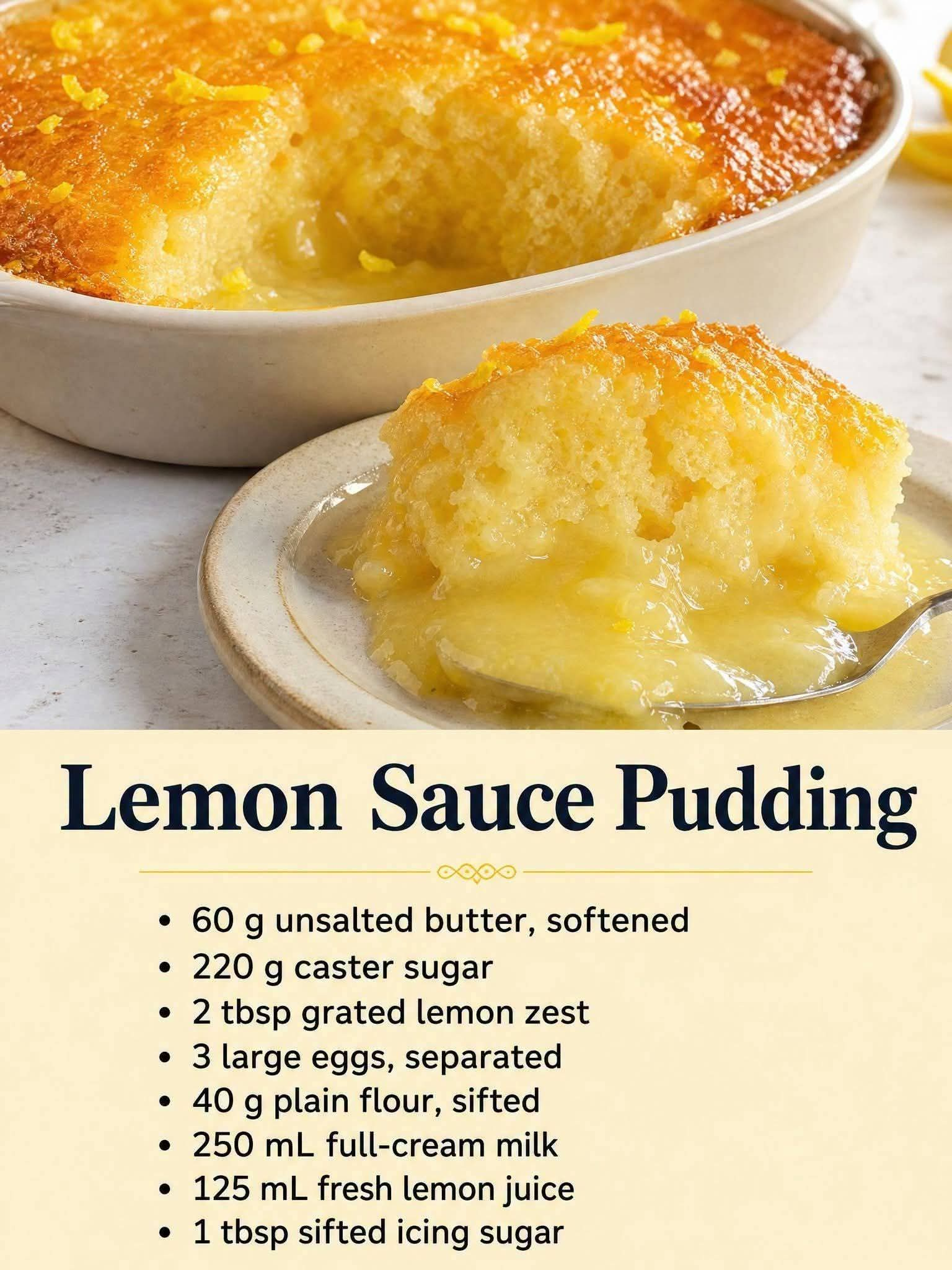
Lemon Sauce Pudding
Introduction
Lemon Sauce Pudding is a wonderfully comforting baked dessert that brings together two textures in one simple dish: a soft, lightly golden sponge on top and a warm, silky lemon sauce underneath. It is bright and refreshing from the fresh lemon juice and zest, yet still cozy enough to serve as a traditional winter pudding.
This recipe is especially appealing when you have fresh lemons available and want to turn them into something more special than an ordinary cake. The batter comes together with simple pantry ingredients, and during baking, something almost magical happens: the mixture separates into a tender lemon pudding layer and a naturally formed sauce beneath it.
Served warm with a dusting of icing sugar, this pudding is delicious on its own. It can also be enjoyed with cream, vanilla ice cream, or a spoonful of thick yogurt for an especially comforting dessert.
Ingredients
For the Lemon Pudding
- 60 g unsalted butter, softened
- 220 g caster sugar
- 2 tablespoons finely grated lemon zest
- 3 large eggs, separated
- 40 g plain flour, sifted
- 250 ml full-cream milk
- 125 ml freshly squeezed lemon juice
For Finishing
- 1 tablespoon icing sugar, sifted
Optional Serving Suggestions
- Lightly whipped cream
- Vanilla ice cream
- Thick natural yogurt
- Fresh lemon zest
- Thin lemon slices for decoration
Instructions
Step 1: Prepare the Oven and Baking Dish
Preheat the oven to 350°F (175°C). Lightly butter a medium-sized ovenproof baking dish.
Because this pudding becomes quite soft and saucy underneath, choose a dish with enough depth to comfortably hold the batter. A ceramic or glass baking dish works particularly well.
Step 2: Prepare the Lemon
Wash and dry the lemons thoroughly before zesting them. Finely grate the yellow outer skin, taking care not to grate too deeply into the white pith, which can have a bitter taste.
Measure 2 tablespoons of zest and set aside.
Juice enough fresh lemons to obtain approximately 125 ml of juice. Strain the juice if necessary to remove seeds.
Step 3: Cream the Butter and Sugar
Place the softened butter, caster sugar, and grated lemon zest into a large mixing bowl.
Beat until the mixture becomes lighter and creamy. The lemon zest will release its fragrant oils into the butter and sugar, creating a beautiful citrus aroma.
Step 4: Add the Egg Yolks
Separate the eggs carefully, placing the whites in a completely clean bowl.
Add the egg yolks to the butter and sugar mixture one at a time, beating well after each addition.
The mixture may look slightly uneven at this stage, but that is perfectly normal.
Step 5: Add the Flour, Milk, and Lemon Juice
Sift the plain flour into the mixture and gently combine.
Gradually add the milk while mixing, followed by the fresh lemon juice. Stir until you have a smooth, fairly thin batter.
Do not worry if the batter looks much thinner than ordinary cake batter. This pudding is designed to transform during baking.
Step 6: Whip the Egg Whites
Using clean beaters, whisk the egg whites until they form soft peaks.
The whites should be fluffy and hold their shape when the beaters are lifted, but they should not be beaten until dry or extremely stiff.
Step 7: Fold the Egg Whites Into the Batter
Add the whipped egg whites to the lemon mixture in two or three additions.
Use a large spoon or spatula to gently fold them through the batter. Avoid vigorous stirring because you want to retain as much air as possible.
The finished mixture may still look slightly foamy and uneven. This is exactly what you want.
Step 8: Bake the Pudding
Pour the batter into the prepared baking dish and place it in the preheated oven.
Bake for approximately 30 to 35 minutes, or until the top is lightly golden and set.
The center should still have a gentle softness rather than feeling completely firm. The pudding will continue to settle slightly as it cools.
Step 9: Let the Sauce Settle
Remove the pudding from the oven and allow it to rest for several minutes.
During baking, the ingredients naturally separate and create a warm lemon sauce beneath the soft sponge-like top.
This is what gives the dessert its distinctive self-saucing character.
Step 10: Finish and Serve
Sift the icing sugar over the warm pudding just before serving.
Spoon the pudding directly from the baking dish so that every serving contains some of the soft top and plenty of the lemon sauce underneath.
For an extra indulgent presentation, serve it with vanilla ice cream or lightly whipped cream.
Method
The secret to this pudding is the combination of separated eggs and a relatively thin batter.
First, the butter, sugar, lemon zest, and egg yolks are beaten together to create the rich base. Flour provides enough structure for the pudding, while milk and lemon juice give it its soft consistency and strong citrus flavor.
The egg whites are then whipped separately. Folding the air-filled whites into the batter helps create the delicate, light upper layer.
As the pudding bakes, the mixture undergoes a natural transformation. The upper portion becomes soft and sponge-like while the more liquid ingredients settle beneath it, producing the warm lemon sauce.
For the best texture, avoid overbaking. The pudding should be golden on top but still soft and moist underneath.
History and Background
Self-saucing puddings belong to a long tradition of simple baked desserts designed to create their own sauce during cooking. They became particularly popular in home kitchens because they could be made from inexpensive everyday ingredients while producing a dessert that felt much more elaborate than the preparation suggested.
Lemon versions are especially appealing because citrus provides freshness and acidity that balance the sweetness of the pudding. Lemon zest adds fragrant citrus oils, while fresh lemon juice gives the dessert its characteristic bright flavor.
This style of pudding is closely associated with comforting home baking, where a small collection of basic ingredients can be transformed into a warm dessert for family meals.
Formation of the Pudding
The formation of the pudding is what makes this recipe special.
The batter begins as a single mixture, but the different ingredients behave differently during baking. The whipped egg whites help create the lighter upper portion, while the milk and lemon juice contribute to the softer liquid layer below.
The result is a two-texture dessert without requiring a separate cake and sauce to be prepared.
The top becomes delicate, tender, and lightly golden, while underneath is a warm, creamy lemon sauce with a smooth consistency.
This contrast is best experienced while the pudding is still warm.
Tips for the Best Lemon Sauce Pudding
Use fresh lemons whenever possible. Freshly squeezed juice provides a much brighter flavor than bottled lemon juice.
Make sure the butter is softened rather than melted. Soft butter combines more effectively with the sugar and egg yolks.
Separate the eggs carefully. Even a small amount of yolk in the egg whites can make it difficult to whip them properly.
Do not overbeat the egg whites. Soft peaks are sufficient.
Fold the egg whites gently so you do not remove all the air you have incorporated.
Avoid overbaking. The pudding should have a golden top while remaining soft and saucy underneath.
Allow the pudding to rest for a few minutes before serving, but serve it warm for the best experience.
Serving Ideas
Lemon Sauce Pudding is wonderful served warm with a simple dusting of icing sugar.
For a richer dessert, add a spoonful of softly whipped cream. Vanilla ice cream is another excellent pairing because the cold creaminess contrasts beautifully with the warm lemon pudding.
For something lighter, serve it with thick natural yogurt.
A little freshly grated lemon zest over the top can intensify the citrus aroma and make the dessert look especially inviting.
Conclusion
Lemon Sauce Pudding is proof that a simple recipe can create an impressive dessert. With butter, sugar, eggs, flour, milk, and plenty of fresh lemon, you can create a warm pudding with a tender golden top and a naturally formed lemon sauce underneath.
It is comforting without being heavy, sweet without losing the refreshing character of lemon, and simple enough for an ordinary family dessert while still being special enough for guests.
The combination of soft pudding and warm lemon sauce makes every spoonful satisfying, especially when served fresh from the oven with cream or vanilla ice cream.
For Lemon Dessert Lovers
If you love desserts with a bright citrus flavor, this pudding is an excellent choice. The fresh lemon zest gives it fragrance, while the lemon juice provides the characteristic tang that keeps the sweetness balanced.
It is particularly lovely for anyone who enjoys old-fashioned homemade desserts where the texture and flavor come from straightforward ingredients rather than complicated techniques.
Once you make it, you may find yourself returning to this recipe whenever you have a few fresh lemons waiting in the kitchen.