
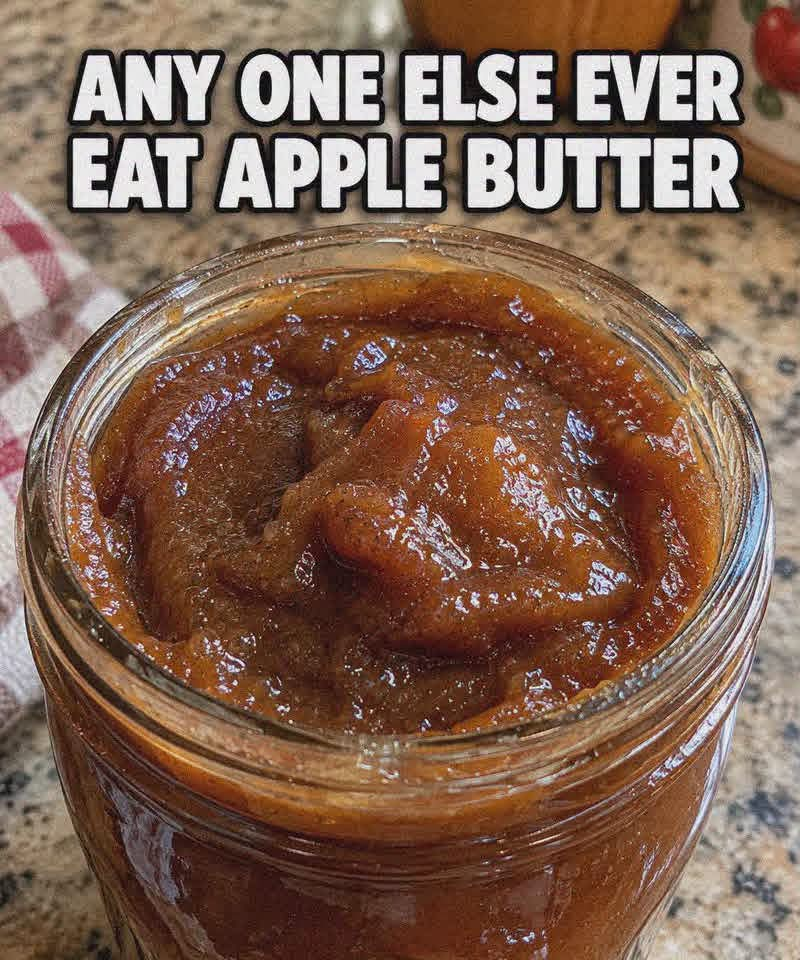
Homemade Apple Butter
Introduction
Homemade Apple Butter is one of those old-fashioned recipes that turns simple ingredients into something wonderfully rich, fragrant, and comforting. Despite its name, apple butter contains no dairy butter. The word “butter” describes its smooth, thick, spreadable consistency.
Made slowly from fresh apples, warm spices, sugar, and a little lemon juice, this recipe develops a deep apple flavor as the fruit cooks down. The long cooking process allows the apples to soften completely while their natural sugars caramelize, creating the beautiful dark color and concentrated flavor associated with traditional apple butter.
This slow cooker version is especially convenient because most of the cooking happens gently over several hours. Once the apples have cooked until tender, they are blended into a silky puree and cooked uncovered until thick enough to spread.
Apple butter is wonderful on toast and biscuits, but its uses go far beyond breakfast. It can be spooned over pancakes and waffles, stirred into oatmeal or yogurt, served alongside warm cornbread, or used as a flavorful topping for ice cream.
Ingredients
Main Ingredients
- 5 pounds apples, peeled, cored, and chopped
- 1/2 cup apple juice or water
- 3/4 cup packed brown sugar
- 1/4 cup granulated sugar
- 2 teaspoons ground cinnamon
- 1/2 teaspoon ground nutmeg
- 1/4 teaspoon ground cloves
- 1 teaspoon vanilla extract
- 1 tablespoon fresh lemon juice
- 1/4 teaspoon salt
Choosing the Apples
A mixture of sweet and slightly tart apples can give the finished apple butter a more interesting flavor. Apples such as Fuji, Gala, Golden Delicious, Honeycrisp, Granny Smith, Jonathan, or similar varieties can work well.
If using a very sweet variety, the amount of added sugar can be adjusted to taste. Likewise, tart apples may require slightly more sugar depending on your preference.
The most important thing is to use apples that are fresh and flavorful because their taste becomes concentrated during the long cooking process.
Instructions
Step 1: Prepare the Apples
Wash the apples thoroughly. Peel them, remove the cores and seeds, and chop the apples into relatively small pieces.
The pieces do not have to be perfectly uniform because they will eventually be blended. Smaller pieces simply help the apples soften more quickly and evenly.
Place the prepared apples into a large slow cooker.
Step 2: Add the Remaining Ingredients
Pour the apple juice or water over the apples.
Add the brown sugar, granulated sugar, cinnamon, nutmeg, cloves, vanilla extract, lemon juice, and salt.
Stir everything together so the spices and sugars are distributed throughout the apples.
At this stage, the mixture may look quite loose and the apples will still be firm. This is completely normal.
Step 3: Slow Cook the Apples
Cover the slow cooker and cook on LOW for approximately 8 to 10 hours.
Stir the apples occasionally when convenient. As they cook, they will gradually become softer and darker.
The apples should eventually become extremely tender and begin breaking apart when stirred. The mixture will also become darker as the fruit’s natural sugars concentrate and caramelize.
Cooking time can vary depending on the type of apples, the size of the pieces, and the slow cooker being used.
Step 4: Blend Until Smooth
Once the apples are completely soft, turn off the slow cooker or carefully prepare the mixture for blending.
An immersion blender is the easiest option. Blend directly in the slow cooker until the apple mixture becomes smooth and silky.
If using a standard blender, work in small batches and handle the hot mixture carefully. Hot liquids can create pressure inside a blender, so allow the mixture to cool somewhat and follow the blender manufacturer’s instructions for blending hot foods.
Continue blending until there are no large pieces remaining.
Step 5: Continue Cooking to Thicken
Remove the lid from the slow cooker.
Continue cooking the blended apple mixture on LOW for approximately 1 to 2 additional hours, stirring occasionally.
Leaving the lid off allows excess moisture to evaporate. This is an important part of creating the thick, concentrated consistency that makes apple butter different from ordinary applesauce.
The finished apple butter should be thick enough to spread easily without running like a sauce.
Step 6: Taste and Adjust
Taste the apple butter once it has thickened.
If desired, you can adjust the seasoning slightly with additional cinnamon or another small amount of sugar. Remember that the flavor will become somewhat more pronounced as the mixture cools.
Avoid adding large amounts at once. Small adjustments are easier to control.
Step 7: Cool the Apple Butter
Allow the finished apple butter to cool slightly.
As it cools, it will become thicker and more spreadable.
Spoon the apple butter into clean storage containers and allow it to cool completely before sealing and refrigerating.
Detailed Cooking Method
The secret to good apple butter is patience.
Unlike applesauce, which is generally cooked just until the apples become tender, apple butter is cooked much longer. The objective is to remove a significant amount of moisture while concentrating the apple flavor.
The first stage is the slow cooking process. During these hours, the apples soften and release their juices. The sugars, spices, and apple flavors gradually combine.
The second stage is blending. Turning the cooked apples into a smooth puree gives apple butter its characteristic silky texture.
The final stage is uncovered cooking. This allows moisture to escape and concentrates the mixture until it becomes thick, dark, and spreadable.
How to Know When Apple Butter Is Ready
The appearance and consistency are the best indicators.
Finished apple butter should have:
- A deep brown or caramel-like color
- A smooth texture
- A thick, spreadable consistency
- A concentrated apple flavor
- Warm cinnamon and spice notes
- Little to no excess liquid
If the mixture still looks like applesauce, it needs additional uncovered cooking.
Keep in mind that apple butter thickens further as it cools, so it does not need to be extremely firm while it is still hot.
The History of Apple Butter
Apple butter is an old-fashioned fruit preserve associated particularly with traditional American home cooking. Before modern refrigeration, families developed numerous ways to preserve seasonal fruits so they could enjoy them long after harvest.
Apples were especially useful because they were abundant in many regions and could be transformed into sauces, dried fruit, cider, preserves, and apple butter.
Traditional apple butter was often prepared in large quantities. Apples were slowly cooked in large pots or kettles, sometimes outdoors or over a fire, and stirred for hours. The long cooking process reduced the fruit considerably and produced a concentrated spread that could be stored and enjoyed over time.
The technique became closely associated with harvest season, family gatherings, and preserving the year’s apple crop.
Modern slow cookers make the same basic idea much easier. Instead of standing over a large kettle for hours, home cooks can allow the apples to cook slowly and then finish the mixture until it reaches the desired consistency.
Formation and Texture
The formation of apple butter happens through several stages.
First, heat breaks down the structure of the apples, making them soft and easy to puree.
Next, blending transforms the softened fruit into a smooth mixture.
Finally, extended cooking evaporates water and concentrates the natural sugars, creating the thick texture and deeper color.
The longer the mixture cooks, the more concentrated the flavor becomes. However, it is important to stir periodically during the uncovered stage so the thickening mixture does not stick or scorch.
Serving Ideas
Homemade apple butter is extremely versatile.
Spread it generously over:
- Toast
- English muffins
- Biscuits
- Pancakes
- Waffles
- Warm cornbread
- Bagels
- Oatmeal
It can also be used as a topping for vanilla ice cream or stirred into plain or vanilla yogurt.
For breakfast, try layering apple butter with oatmeal, yogurt, and chopped nuts. For a simple snack, spread it onto warm toast with a little butter or cream cheese.
Apple butter can also be incorporated into baked goods. A small amount can add moisture and concentrated apple flavor to muffins, quick breads, cakes, and cookies.
Tips for the Best Homemade Apple Butter
Use flavorful apples
Since the apples provide most of the flavor, choose ripe, flavorful fruit. A combination of apple varieties can create a more complex result.
Do not rush the cooking process
Low and slow cooking allows the apples to break down gradually and gives the mixture time to develop its deep flavor.
Keep the lid on during the first stage
The covered cooking stage helps the apples soften and release their juices.
Remove the lid for the final stage
The uncovered stage is necessary for reducing excess moisture and creating a thick spread.
Stir during the final cooking period
As apple butter becomes thicker, it can stick more easily. Occasional stirring helps prevent scorching.
Remember that it thickens as it cools
Do not judge the final consistency entirely while the apple butter is piping hot.
Storage
Allow the apple butter to cool before transferring it to clean containers.
For ordinary refrigerator storage, keep it refrigerated and use clean utensils whenever serving it.
For longer-term storage, follow a tested, food-safe canning recipe specifically designed for apple butter. Use proper sterilization, processing times, and water-bath canning procedures rather than relying on an improvised method.
If you notice mold, fermentation, an unusual smell, or other signs of spoilage, discard the product rather than tasting it.
Variations
Maple Apple Butter
Replace part of the brown sugar with pure maple syrup for a deeper maple flavor.
Extra-Spiced Apple Butter
Increase the cinnamon slightly and add a small amount of ground ginger or allspice for a stronger autumn spice profile.
Less-Sweet Apple Butter
Reduce the added sugar and allow the natural sweetness of the apples to become the focus.
Vanilla Apple Butter
Increase the vanilla slightly near the end of cooking for a softer, dessert-like flavor.
Chunky Apple Butter
For a less-smooth texture, blend only part of the cooked apples and leave some small pieces intact.
Ways to Use Apple Butter
Apple butter can become a useful ingredient rather than simply a spread.
Use it as a filling for crepes, a topping for French toast, or a layer between pancakes.
It can also be stirred into oatmeal or warm cereal for an instant apple-and-spice flavor.
For baking, add it to muffins, quick breads, spice cakes, or breakfast bars. It can also be used as a flavorful accompaniment to roasted pork or other savory dishes where a sweet apple component works well.
Why People Love Homemade Apple Butter
Apple butter has a comforting combination of qualities. It is sweet without tasting like ordinary jam, warmly spiced without being overwhelming, and intensely fruity because the apples have been cooked down for many hours.
Many people also appreciate the nostalgic quality of homemade apple butter. The aroma of apples, cinnamon, nutmeg, and cloves slowly filling the kitchen can make this recipe feel connected to autumn, harvest season, family kitchens, and traditional homemade food.
The slow cooker method makes it especially appealing because the preparation is simple while the finished result tastes as though it required much more effort.
Conclusion
Homemade Apple Butter is a beautiful example of how a few basic ingredients can become something deeply flavorful through slow cooking and patience.
Fresh apples are combined with brown sugar, spices, vanilla, lemon juice, and a little liquid before being slowly cooked until completely tender. After blending, the mixture is reduced further until it becomes dark, silky, concentrated, and spreadable.
Serve it on toast, biscuits, pancakes, waffles, oatmeal, or cornbread, or use it as an ingredient in desserts and baked goods.
Once you make a batch at home, you may find yourself looking for new ways to use it. It is simple enough for an ordinary breakfast but special enough to become part of a family tradition.
For Apple Butter Lovers
If you love the combination of apples and warm spices, this recipe is worth keeping in your collection. The finished apple butter can turn a simple piece of toast into something special, add extra flavor to pancakes and waffles, and bring a homemade touch to oatmeal, yogurt, and baked goods.
The best part is that the recipe begins with humble fresh apples and transforms them into a rich, concentrated spread through nothing more complicated than time, gentle heat, and careful cooking.
Homemade apple butter is a recipe made for slow mornings, cool weather, family breakfasts, and the comforting flavors of the apple harvest.