
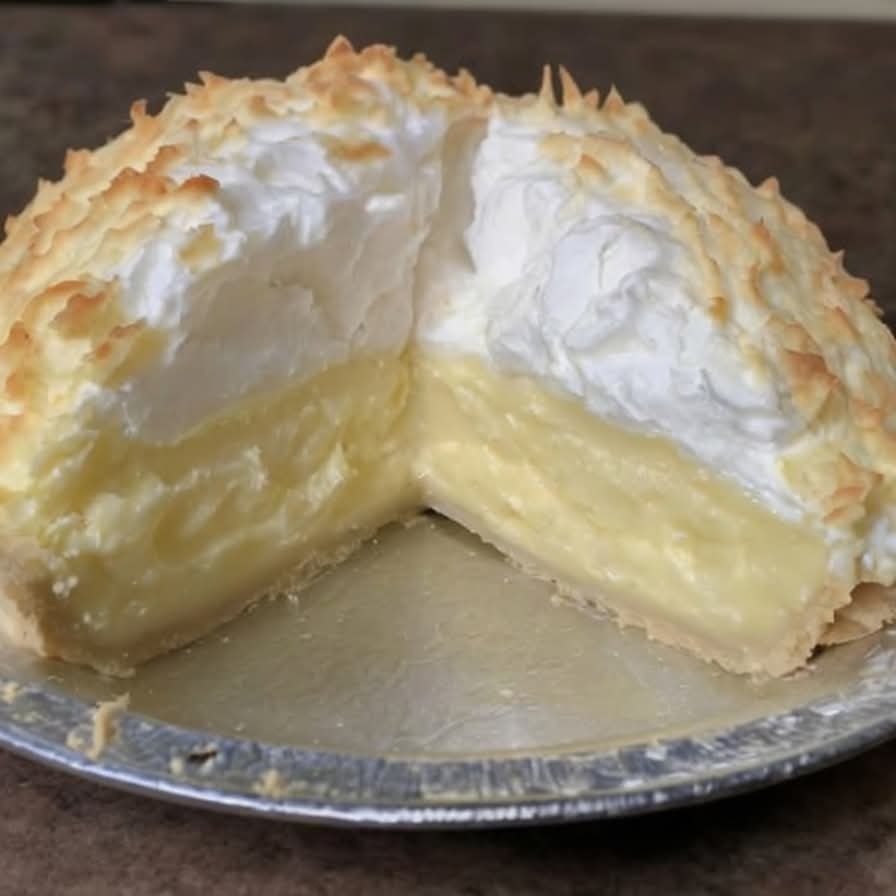
Old-Fashioned Coconut Cream Pie with Toasted Coconut Meringue
Introduction
There are some desserts that are more than just recipes. They carry memories, family traditions, holiday mornings, and the comforting feeling of being gathered around a kitchen table with people you love. This old-fashioned coconut cream pie is one of those desserts.
My grandmother used to make this exact pie for Easter Sunday, and the smell alone was enough to bring everyone into the kitchen. Before the meal was even served, the warm fragrance of toasted coconut, vanilla, buttery pastry, and golden meringue would drift through the house. She would carefully remove the pie from the oven, revealing those beautiful toasted peaks of meringue, and place it on the counter to cool.
Of course, nobody was particularly good at waiting.
The crust was buttery and tender, the coconut custard was silky and rich, and the meringue was light and fluffy with crisp, caramelized edges. Every bite offered a combination of creamy custard, tender coconut, flaky crust, and toasted sweetness.
Years later, I finally decided to make the pie myself. The first time I made it, I understood immediately why my grandmother had made it so often. It was familiar, comforting, and incredibly satisfying.
This is the kind of pie that belongs on a holiday table, but it is simple enough to make whenever you are craving an old-fashioned homemade dessert.
Why This Coconut Cream Pie Is Special
This pie combines several textures in one dessert.
The bottom is a pre-baked buttery pie crust that provides a crisp, tender foundation. The center is a smooth coconut custard made with milk, egg yolks, flour, sugar, and vanilla. Shredded coconut gives the filling a pleasant chew and unmistakable coconut flavor.
Then comes the meringue.
The egg whites are whipped with cream of tartar and sugar until they become glossy and firm. When spread over the warm filling and baked, the meringue develops beautifully browned peaks while remaining soft and marshmallow-like underneath.
A final layer of shredded coconut turns golden in the oven, adding even more toasted coconut flavor.
Ingredients
For the Pie Crust
- 1 pre-baked 9-inch pie crust, homemade or store-bought
If using a homemade crust, make sure it is fully baked and cooled slightly before adding the custard.
For the Coconut Custard
- 1/3 cup White Lily all-purpose flour, or another all-purpose flour
- 2/3 cup granulated sugar
- 3 large egg yolks
- 2 cups whole milk
- 1 teaspoon vanilla extract
- 1/2 cup sweetened shredded coconut
For the Meringue
- 3 large egg whites
- 1/4 teaspoon cream of tartar
- 6 tablespoons granulated sugar
- 1/2 cup sweetened shredded coconut, for topping
Preparation Before You Begin
Before making the filling, have your pie crust ready and fully baked.
Separate the eggs while they are cold, then allow the egg whites to come closer to room temperature before whipping. Room-temperature egg whites generally whip more easily and produce a lighter, fuller meringue.
Measure all of the ingredients before starting the custard because the filling needs regular stirring as it cooks.
It is also helpful to use a microwave-safe bowl that is large enough to allow you to whisk the mixture comfortably.
Method for Making the Coconut Custard
Begin by adding the flour and granulated sugar to a medium microwave-safe bowl.
Whisk them together thoroughly so the flour is evenly distributed through the sugar. Add the egg yolks and whisk until the mixture becomes smooth and creamy.
Slowly pour in the whole milk while continuing to whisk. Adding the milk gradually helps prevent lumps from forming. Continue whisking until the mixture is completely combined.
Place the bowl in the microwave and cook on high for 1 minute.
Carefully remove the bowl and whisk the mixture thoroughly.
Return it to the microwave and continue cooking in 1-minute intervals. Whisk well after every interval.
As the mixture heats, the flour and egg yolks will gradually thicken the milk into a creamy custard. Depending on the strength of your microwave, this usually takes approximately 4 to 6 minutes in total.
The custard is ready when it has noticeably thickened and coats the back of a spoon.
Do not rush this step. Short cooking intervals combined with frequent whisking help prevent scorching and encourage a smooth, even custard.
Once thickened, remove the bowl from the microwave.
Immediately stir in the vanilla extract and 1/2 cup shredded coconut.
Mix thoroughly so the coconut is evenly distributed throughout the filling.
Filling the Pie Crust
Pour the warm coconut custard into the pre-baked pie crust.
Use a spatula or the back of a spoon to gently smooth the surface.
At this point, the filling should be thick, creamy, and fragrant with vanilla and coconut.
Set the filled pie aside while you prepare the meringue.
Method for Making the Meringue
Place the egg whites in a clean mixing bowl.
Make certain that the bowl and beaters are completely free from grease and that there is no trace of egg yolk in the whites. Even a small amount of yolk can interfere with whipping.
Add the cream of tartar.
Using a hand mixer, beat the egg whites until they become foamy and begin forming soft peaks.
Once soft peaks have formed, begin adding the sugar gradually.
Add approximately 1 tablespoon at a time while continuing to beat the egg whites.
Continue beating until all the sugar has been incorporated and the meringue becomes thick, glossy, and capable of holding stiff peaks.
When you lift the beaters, the peaks should stand upright rather than immediately collapsing.
Forming the Meringue
Spread the meringue over the warm coconut custard.
An important step is making sure the meringue reaches all the way to the edges of the crust.
Gently press the meringue against the crust around the entire perimeter. This helps create a seal between the meringue and crust and gives the finished pie a beautiful, generous topping.
Use the back of a spoon to create decorative swirls and tall peaks across the surface.
The peaks are especially important because they become beautifully golden during baking.
Sprinkle the remaining 1/2 cup of shredded coconut evenly over the meringue.
For a more pronounced toasted-coconut flavor, distribute the coconut generously across the top while leaving some of the meringue peaks visible.
Baking the Pie
Preheat the oven to 350°F.
Place the assembled pie in the oven and bake for approximately 10 to 12 minutes.
Watch it carefully during the final few minutes.
The meringue should become lightly golden brown, with deeper golden color appearing on the raised peaks. The coconut on top should also become toasted and fragrant.
Avoid overbaking the meringue. You want the outside to be lightly crisp and golden while the interior remains soft and marshmallow-like.
Once beautifully browned, remove the pie from the oven.
Cooling and Setting
Allow the pie to cool at room temperature.
For the cleanest slices, let it cool completely before cutting. The custard continues to set as it cools, making it easier to slice and serve.
If you prefer a softer, warmer dessert, you can certainly enjoy a piece sooner.
That first warm forkful of creamy coconut custard, buttery crust, and freshly toasted meringue is part of the charm of homemade pie.
The History and Tradition of Coconut Cream Pie
Coconut cream pie belongs to the long tradition of American cream pies, which became especially popular as home cooks developed reliable methods for making rich custard fillings and pairing them with pastry crusts.
Coconut became a particularly beloved flavor in American baking because sweetened shredded coconut offered an easy way to add texture and tropical flavor to cakes, pies, cookies, candies, and puddings.
The combination of coconut custard and meringue became a classic because the two components complement each other so well. The custard is rich and creamy, while the meringue is light and airy.
For many families, coconut cream pie became associated with Sunday dinners, Easter celebrations, church gatherings, family reunions, and holiday tables.
Recipes like this were often passed from one generation to another, with each cook making small adjustments according to family preference.
Some families prefer a very coconut-heavy filling. Others use just enough coconut to give the custard a subtle flavor. Some add coconut to the meringue, while others leave the topping plain.
That flexibility is part of what makes this dessert such a lasting classic.
Formation of the Finished Pie
The finished pie is built in three distinct layers.
The first is the baked pastry crust. It provides structure and a buttery contrast to the creamy filling.
The second is the coconut custard. It is smooth, rich, and gently flavored with vanilla, with shredded coconut providing additional texture.
The third layer is the meringue. Whipped egg whites and sugar create a light topping that becomes golden and slightly crisp in the oven.
Finally, shredded coconut is scattered over the meringue. As it bakes, the coconut becomes lightly toasted and develops a deeper, nuttier flavor.
When sliced, each serving should reveal the crisp crust, creamy coconut center, and thick cloud of meringue on top.
Tips for the Smoothest Coconut Custard
Whisk the flour and sugar together before adding the liquid ingredients.
Add the milk gradually while whisking to prevent lumps.
Cook the custard in short microwave intervals rather than trying to cook it all at once.
Whisk thoroughly after each interval.
Do not walk away from the custard while it is cooking. It can change from thin to thick surprisingly quickly.
Add the vanilla after cooking so its flavor remains fresh and aromatic.
For an especially smooth filling, make sure the custard is completely lump-free before pouring it into the crust.
Tips for Perfect Meringue
Use a completely clean and dry bowl.
Make sure no egg yolk gets into the egg whites.
Room-temperature egg whites can help produce greater volume.
Add the sugar gradually rather than dumping it in all at once.
Continue beating until the meringue forms stiff, glossy peaks.
Spread the meringue completely to the crust edges.
Create peaks and swirls with the back of a spoon so the surface browns beautifully.
Keep a close eye on the pie while it is baking because meringue can go from golden to overly browned quickly.
Heavy Coconut or Light Coconut?
If you are a serious coconut lover, this recipe can easily be made more coconut-forward.
For a stronger coconut flavor, use the full amount of coconut in both the custard and the topping. You can also toast the coconut topping slightly more deeply, taking care not to burn it.
For a lighter coconut flavor, reduce the coconut in the custard and let the vanilla and creamy milk-based filling play a larger role.
For me, the ideal version has plenty of coconut but still keeps the custard silky and smooth. The coconut should be noticeable in every bite without completely overpowering the vanilla.
Serving Suggestions
This pie is delicious on its own, but it can also be served with a few simple additions.
A small spoonful of softly whipped cream can add extra richness.
For an even stronger coconut experience, sprinkle a little additional toasted coconut over each slice just before serving.
A cup of coffee pairs beautifully with the sweetness of the pie, while tea provides a lighter contrast.
For holidays such as Easter, the pie looks especially inviting when served whole on a simple cake stand, allowing the golden meringue peaks and toasted coconut to remain visible.
Storage
Because the pie contains a custard filling and meringue topping, it should be refrigerated after it has cooled.
Cover it loosely so the meringue is protected without pressing plastic wrap directly against the delicate topping.
For the best texture, serve it within a few days.
The crust may gradually soften as it sits, so this is a dessert that is particularly enjoyable when freshly prepared.
Why Everyone Loves This Pie
Coconut cream pie has something for almost every dessert lover.
People who love creamy desserts will appreciate the silky custard.
People who love coconut will enjoy the shredded coconut throughout the filling and across the toasted topping.
People who prefer traditional desserts will love the familiar combination of pastry, custard, and meringue.
And anyone who grew up with a grandmother, mother, aunt, or another family member making coconut pie may find that one bite brings back an entire collection of memories.
That is what makes old-fashioned desserts so special. They are not simply about flavor. They are about the moments connected to that flavor.
Conclusion
This old-fashioned coconut cream pie is the kind of dessert that deserves a permanent place in a family recipe collection.
It starts with a simple pre-baked crust, continues with a smooth vanilla coconut custard, and finishes with a generous layer of glossy meringue and toasted coconut.
The process is straightforward, but the result feels special enough for a holiday table.
Most importantly, it is the kind of recipe that can become part of your own family tradition.
Make it for Easter Sunday, a Sunday dinner, a family gathering, or simply because you are craving something comforting and homemade.
And if you find yourself standing at the kitchen counter with a fork in your hand before the pie has completely cooled, don’t feel guilty.
That may simply be part of the tradition.