
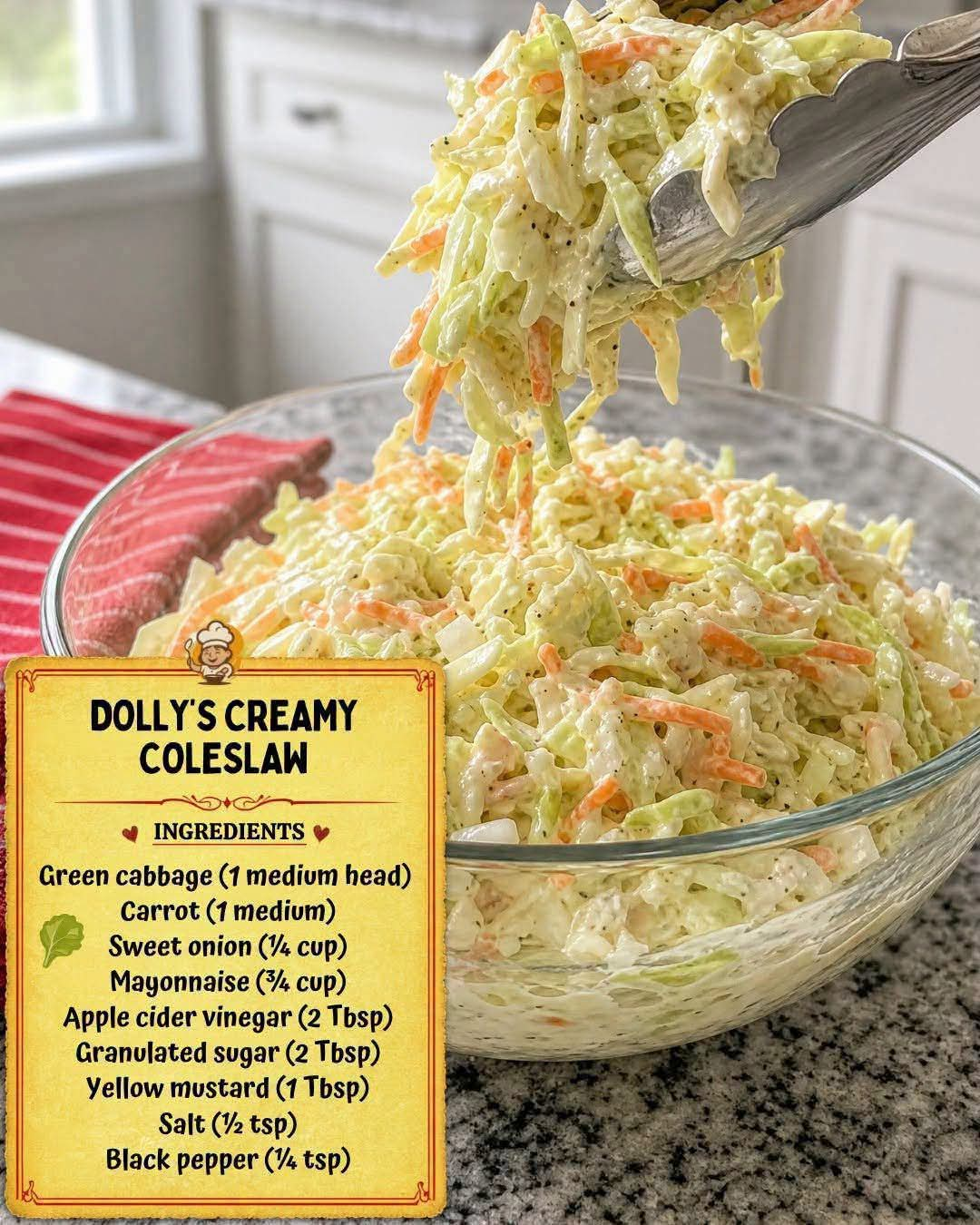
Dolly’s Creamy Coleslaw
Introduction
There are some side dishes that never go out of style, and creamy coleslaw is one of them. Crisp shredded cabbage, sweet carrot, finely chopped onion, and a smooth, tangy dressing come together to create a refreshing side dish that works beautifully with grilled meats, fried chicken, sandwiches, burgers, barbecue, and family-style dinners.
This creamy coleslaw is simple to prepare but delivers plenty of flavor. The cabbage stays pleasantly crisp while the creamy mayonnaise dressing brings together sweetness, acidity, mustard, salt, and black pepper. Allowing the finished slaw to rest in the refrigerator gives the flavors time to blend and lets the dressing gently coat every strand of vegetable.
The recipe is often shared online as “Dolly’s Creamy Coleslaw.” While the name connects it with the Southern-style cooking tradition associated with Dolly Parton, it should not be presented as an officially published Dolly Parton recipe unless a verified source confirms that attribution.
Ingredients
For the Coleslaw
- 1 medium head green cabbage, finely shredded
- 1 medium carrot, shredded
- 1/4 cup finely chopped sweet onion
For the Creamy Dressing
- 3/4 cup mayonnaise
- 2 tablespoons apple cider vinegar
- 2 tablespoons granulated sugar
- 1 tablespoon prepared yellow mustard
- 1/2 teaspoon salt
- 1/4 teaspoon black pepper
Instructions
Step 1: Prepare the Vegetables
Remove any damaged outer leaves from the cabbage and rinse the head thoroughly. Cut the cabbage into quarters and remove the tough central core.
Finely shred the cabbage using a sharp knife, mandoline, or food processor. The thinner the cabbage is shredded, the more easily it will combine with the creamy dressing.
Peel and shred the carrot. Finely chop the sweet onion so that its flavor is distributed throughout the coleslaw rather than appearing in large pieces.
Place the shredded cabbage, carrot, and onion into a large mixing bowl.
Step 2: Make the Creamy Dressing
In a separate bowl, combine the mayonnaise, apple cider vinegar, granulated sugar, yellow mustard, salt, and black pepper.
Whisk everything together until the dressing is completely smooth and evenly combined.
Taste the dressing before adding it to the vegetables. If you prefer a slightly sweeter coleslaw, a little additional sugar can be added. For a sharper flavor, a small amount of extra vinegar can be used.
Step 3: Combine the Coleslaw
Pour the prepared dressing over the shredded cabbage, carrot, and onion.
Using large spoons or salad tongs, gently toss everything together. Continue mixing until the dressing has coated the vegetables evenly.
Avoid crushing or overmixing the cabbage. The goal is to coat the vegetables while keeping their fresh texture.
Step 4: Refrigerate
Cover the bowl tightly and place the coleslaw in the refrigerator for at least 1 hour.
This resting period is important because it allows the flavors of the dressing to mingle with the cabbage, carrot, and onion. The cabbage also softens slightly while retaining some of its natural crunch.
For an even deeper flavor, the coleslaw can be prepared several hours before serving.
Step 5: Toss Before Serving
Remove the coleslaw from the refrigerator and give it another gentle toss before serving.
If the vegetables have released a little moisture, simply mix everything together again. Taste and adjust the seasoning if necessary.
Serve chilled as a side dish.
Method
The method behind this coleslaw is straightforward: prepare the vegetables, create a balanced creamy dressing, combine the two, and allow the mixture to rest.
The key to excellent coleslaw is balance. The cabbage provides crunch and freshness, the carrot adds natural sweetness and color, and the onion gives the mixture a savory bite. Mayonnaise provides the creamy foundation, while apple cider vinegar brings acidity. Sugar balances that acidity, mustard adds depth, and salt and pepper bring the flavors together.
Refrigeration is also an important part of the method. Although the coleslaw can technically be eaten immediately, giving it time to rest produces a more cohesive flavor.
The History of Coleslaw
Coleslaw has a long history and is closely connected with cabbage-based salads from Europe. The word “coleslaw” comes from the Dutch term “koolsla,” meaning cabbage salad.
Cabbage was an especially practical ingredient because it was inexpensive, readily available, and could be stored for relatively long periods. Cabbage salads gradually became popular in different forms, with recipes changing according to local ingredients and cooking traditions.
In the United States, creamy mayonnaise-based coleslaw became especially popular as a side dish served alongside barbecue, fried chicken, sandwiches, seafood, and other casual meals.
Southern-style versions often emphasize a creamy dressing with a combination of sweetness and acidity, creating the familiar flavor many people associate with classic American coleslaw.
The Formation of the Recipe
The beauty of this recipe comes from its simple formation.
First, the cabbage creates the main structure of the dish. Its crisp texture gives the coleslaw substance and makes it refreshing rather than heavy.
The carrot contributes color and natural sweetness, while the sweet onion provides a mild savory contrast.
The dressing is built around mayonnaise, which gives the recipe its creamy texture. Apple cider vinegar cuts through the richness of the mayonnaise, while sugar softens the acidity. Yellow mustard adds a gentle sharpness and additional depth.
Salt and black pepper complete the dressing without overpowering the vegetables.
Once the dressing is combined with the vegetables, refrigeration allows the flavors to develop together. This creates the familiar creamy, tangy, slightly sweet character of traditional coleslaw.
Tips for the Best Creamy Coleslaw
Shred the cabbage finely
Thinly shredded cabbage gives the finished coleslaw a more delicate texture and allows the dressing to distribute evenly.
Do not drown the vegetables
The dressing should coat the cabbage rather than leave it swimming in mayonnaise. If you prefer a lighter coleslaw, add the dressing gradually until you reach your preferred consistency.
Give it time to rest
At least one hour in the refrigerator makes a noticeable difference. The flavors become more integrated and the cabbage becomes slightly more tender.
Taste before serving
Cabbage can vary in size and moisture, so the final seasoning may need a small adjustment. Taste after refrigeration and add a little salt, pepper, sugar, or vinegar if needed.
Keep it cold
Because this recipe contains mayonnaise, keep the coleslaw refrigerated until it is ready to serve and return leftovers to the refrigerator promptly.
Serving Suggestions
This creamy coleslaw makes an excellent companion for many meals.
Serve it alongside:
- Barbecue chicken
- Pulled pork
- Burgers
- Grilled chicken
- Fried chicken
- Fried fish
- Grilled sausages
- Barbecue ribs
- Hot dogs
- Sandwiches
- Fish tacos
- Baked potatoes
- Picnic and potluck meals
It is particularly delicious next to smoky or savory foods because the cool, creamy, slightly tangy flavor provides a refreshing contrast.
Make-Ahead Method
One of the best features of this recipe is that it can be prepared ahead of time.
Prepare the vegetables and dressing separately if you want maximum freshness. Combine them several hours before serving and refrigerate.
Alternatively, prepare the complete coleslaw in advance, cover it tightly, and keep it refrigerated until mealtime.
Always give the coleslaw a good toss before serving so the dressing is evenly distributed.
Variations
Although the classic version is delicious on its own, the recipe can be adjusted according to personal preference.
For extra crunch, finely sliced celery or a small amount of shredded red cabbage can be added.
For additional sweetness, a little more carrot or a small amount of extra sugar can be incorporated.
For a sharper dressing, increase the apple cider vinegar slightly.
For a richer version, use a little more mayonnaise.
For a lighter version, some of the mayonnaise can be replaced with plain yogurt or another creamy ingredient.
These variations allow the basic recipe to become a family favorite while keeping the traditional creamy coleslaw character.
Why Coleslaw Lovers Enjoy This Recipe
Coleslaw lovers appreciate this recipe because it combines several textures and flavors in one simple dish.
The cabbage remains crisp, the carrot adds sweetness, the onion provides a gentle bite, and the creamy dressing brings everything together.
It is also an excellent recipe for gatherings because it can be prepared ahead of time and served cold. There is no complicated cooking process, no long list of ingredients, and no need for special equipment.
It is the kind of side dish that can quietly become a regular part of family dinners, summer barbecues, picnics, and holiday gatherings.
Conclusion
Dolly’s Creamy Coleslaw is a simple, comforting side dish built around fresh vegetables and a creamy, sweet-and-tangy dressing. With only a handful of ingredients, it delivers the classic flavor and texture that people expect from homemade coleslaw.
The most important steps are finely shredding the vegetables, thoroughly whisking the dressing, coating everything evenly, and allowing the finished coleslaw to rest in the refrigerator before serving.
Whether served at a backyard barbecue, family dinner, picnic, potluck, or alongside a favorite sandwich, this creamy coleslaw is an easy recipe worth keeping in your collection.
For Coleslaw Lovers
If you love classic creamy coleslaw, this is the kind of recipe that deserves a permanent place in your recipe box. It is affordable, simple, refreshing, and versatile enough to accompany almost any casual meal.
The combination of crunchy cabbage, sweet carrot, mild onion, creamy mayonnaise, tangy apple cider vinegar, mustard, and a touch of sugar creates a familiar homemade flavor that is difficult to resist.
Prepare it ahead, let the flavors come together in the refrigerator, toss it once more before serving, and enjoy a classic creamy coleslaw that pairs beautifully with almost everything from the grill to the dinner table.