
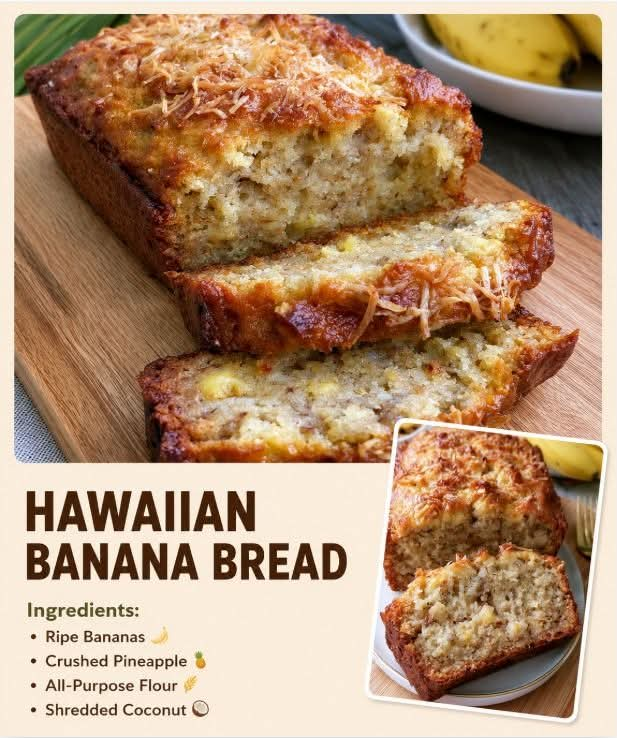
Hawaiian Banana Bread – Moist, Soft, and Packed with Tropical Flavor
Introduction
Hawaiian Banana Bread is a delicious homemade treat that brings together the comforting sweetness of ripe bananas and the bright, tropical flavors inspired by the Hawaiian islands. Every slice is soft, moist, tender, and full of wonderful flavor, making it perfect for breakfast, an afternoon snack, or a sweet ending to a family meal.
What makes this banana bread special is its tropical twist. Ripe bananas provide natural sweetness and moisture, crushed pineapple adds a refreshing fruity flavor, and shredded coconut brings a delightful island-inspired touch. Chopped macadamia nuts can also be added for a gentle crunch and a rich, buttery taste.
This is the kind of recipe that makes your kitchen smell incredible while it bakes. The outside develops a beautiful golden-brown crust, while the inside stays soft and tender. Serve it warm with a little butter, enjoy it with your morning coffee, or share it with family and friends.
Whether you are a longtime banana bread lover or simply looking for a new homemade baking recipe, Hawaiian Banana Bread is a wonderful choice. It is easy to prepare, uses familiar ingredients, and transforms everyday bananas into something truly special.
Ingredients
Preparation time: 15 minutes · Baking time: 55–70 minutes · Makes: 1 loaf

Dry Ingredients
- 2 cups all-purpose flour
- 1 teaspoon baking soda
- ½ teaspoon baking powder
- ½ teaspoon salt
- 1 teaspoon ground cinnamon, optional
Wet Ingredients
- 3 large ripe bananas, mashed
- ¾ cup granulated sugar
- ¼ cup packed brown sugar
- 2 large eggs, at room temperature
- ½ cup vegetable oil or melted unsalted butter
- 1 teaspoon vanilla extract
- ½ cup crushed pineapple, well drained
Tropical Add-Ins
- ½ cup sweetened shredded coconut
- ½ cup chopped macadamia nuts or chopped walnuts, optional
- ½ teaspoon coconut extract, optional
Optional Topping
- 2 tablespoons shredded coconut
- A few thin banana slices
- 1 tablespoon chopped macadamia nuts
Instructions
Step 1: Prepare the Oven and Pan
Preheat your oven to 350°F (175°C). Grease a 9-by-5-inch loaf pan with butter or cooking spray. You can also line the pan with parchment paper, leaving a little overhang on the sides to make removing the finished bread easier.
Preparing the pan before mixing the batter helps everything move smoothly once the ingredients are combined.
Step 2: Mash the Bananas
Peel the ripe bananas and place them in a large mixing bowl. Mash them with a fork until mostly smooth, leaving a few small pieces if you enjoy extra banana texture.
The best bananas for this recipe have plenty of brown spots on their skins. They are softer, sweeter, and more flavorful than bananas that are still green or completely yellow.
Stir in the granulated sugar and brown sugar until combined.
Step 3: Combine the Wet Ingredients
Add the eggs, vegetable oil or melted butter, and vanilla extract to the mashed banana mixture. Whisk until everything is well combined.
Add the well-drained crushed pineapple and stir gently.
Make sure the pineapple is drained thoroughly. Too much extra liquid can make the center of the bread overly wet and prevent it from baking properly.
If you want a stronger tropical flavor, add the optional coconut extract.
Step 4: Mix the Dry Ingredients
In a separate medium-sized bowl, combine the flour, baking soda, baking powder, salt, and cinnamon.
Whisk these ingredients together so the raising agents and seasonings are evenly distributed throughout the flour.
This step helps the bread rise evenly and prevents concentrated pockets of baking soda or salt in the finished loaf.
Step 5: Combine the Batter
Gradually add the dry ingredients to the wet mixture. Stir gently with a wooden spoon or spatula until the flour is just incorporated.
Do not overmix the batter. Excessive mixing can develop too much gluten, resulting in a dense or rubbery loaf instead of the soft, tender texture you want.
Fold in the shredded coconut and chopped macadamia nuts, if using.
The finished batter should be thick and moist, with the banana, pineapple, and coconut distributed throughout.
Step 6: Fill the Loaf Pan
Pour the batter into the prepared loaf pan and spread it evenly with a spatula.
If desired, sprinkle the top with shredded coconut and chopped macadamia nuts. You can also add a few thin banana slices for an attractive homemade finish.
Leave a little room at the top of the pan because the bread will rise as it bakes.
Step 7: Bake Until Golden
Place the loaf pan on the middle rack of the preheated oven.
Bake for approximately 55–70 minutes, depending on your oven and the moisture content of the bananas and pineapple.
Begin checking the bread around the 50-minute mark. If the top becomes too dark before the center is cooked, loosely cover it with aluminum foil.
Insert a toothpick into the center. It should come out clean or with a few moist crumbs, but not with wet batter.
If the center is still wet, continue baking in 5-minute increments until done.
Step 8: Cool the Bread
Remove the pan from the oven and allow the bread to cool for approximately 15 minutes.
Carefully lift the loaf from the pan and transfer it to a wire rack to cool further.
For the neatest slices, allow the bread to cool substantially before cutting. The interior continues to set as it cools, helping each slice hold together beautifully.
Step 9: Slice and Serve
Cut the loaf into thick or thin slices, depending on your preference.
Serve it plain, spread with softened butter, or lightly toasted for a warm, crisp edge and soft center.
For an extra tropical treat, enjoy a slice with fresh pineapple, sliced bananas, or a spoonful of yogurt.
Methods for Making the Perfect Hawaiian Banana Bread


1. Choose Very Ripe Bananas
Ripe bananas are the foundation of flavorful banana bread. Look for bananas with brown spots and soft flesh. Their sweetness and moisture create a rich banana flavor without needing excessive sugar.
2. Drain the Pineapple Well
Pineapple gives this recipe its tropical character, but excess juice can make the loaf heavy. Drain the crushed pineapple thoroughly before measuring it.
3. Avoid Overmixing
Once the flour is added, stir only until the dry ingredients disappear. A light hand produces a more tender crumb.
4. Measure Flour Correctly
Spoon the flour into your measuring cup and level it off rather than packing it down. Too much flour can make the bread dry and dense.
5. Watch the Baking Time
Every oven behaves differently. The loaf may need slightly more or less time depending on the pan, the ripeness of the bananas, and the moisture in the pineapple.
6. Let the Bread Rest
Cutting the loaf immediately while it is piping hot can cause the slices to crumble. Cooling allows the crumb to set and the tropical flavors to settle.
The History of Hawaiian Banana Bread
Banana bread became a popular home-baking favorite in the United States during the twentieth century, particularly as baking powder and baking soda became common pantry ingredients. It was also an excellent way to use overripe bananas instead of throwing them away.
Hawaii has a rich agricultural heritage, with bananas, pineapples, and macadamia nuts all playing important roles in the islands’ food culture. Pineapple cultivation expanded significantly in Hawaii during the nineteenth and twentieth centuries, while macadamia nuts became another familiar island-grown ingredient.
Combining bananas with pineapple and coconut is a natural way to create a tropical-inspired variation of traditional banana bread. However, this particular combination should be understood as a modern, island-inspired recipe rather than one single traditional Hawaiian dish with a definitively established origin.
Today, Hawaiian-style banana bread is enjoyed in many variations. Some recipes feature pineapple and coconut, while others include macadamia nuts, citrus zest, or additional spices. The common theme is a moist banana-rich loaf with flavors that evoke a tropical setting.
The Formation and Texture of Hawaiian Banana Bread
The magic of this recipe comes from the way its ingredients work together during baking.
Bananas provide moisture, sweetness, and body. As they soften in the oven, they help create a tender interior with a familiar banana aroma.
Pineapple adds fruity acidity and a bright tropical flavor. Because pineapple contains considerable water, draining it properly is important for achieving the right consistency.
Coconut contributes sweetness, fragrance, and a slightly chewy texture. As the loaf bakes, the coconut on top can become lightly toasted and aromatic.
Macadamia nuts add a buttery richness and a satisfying crunch that contrasts with the soft crumb.
Eggs help bind the ingredients together and provide structure, while the baking soda and baking powder help the loaf rise.
Oil or butter contributes richness and tenderness. Oil generally keeps the loaf moist for longer, while butter offers a more pronounced buttery flavor.
During baking, the batter rises and the outside develops a golden crust. Once cooled, the loaf should have a soft, moist center that slices cleanly without being gummy.
Tips, Variations, and Serving Ideas
Hawaiian Banana Bread with Chocolate Chips
Fold ½ cup of chocolate chips into the batter for a sweeter variation. The chocolate complements the bananas and coconut, creating a dessert-like loaf.
Extra Coconut Banana Bread
Increase the shredded coconut to ¾ cup if you love coconut flavor. Keep the pineapple well drained and check the texture of the batter before baking.
Pineapple Coconut Banana Bread
For an even stronger tropical profile, retain the crushed pineapple and coconut, and add a little finely grated lime zest. The citrus provides a fresh contrast to the sweetness.
Nut-Free Hawaiian Banana Bread
Simply leave out the macadamia nuts. The bread will still have plenty of flavor from the bananas, pineapple, and coconut.
Whole-Wheat Variation
Replace up to half of the all-purpose flour with whole-wheat flour. The bread will have a slightly heartier texture and a nuttier flavor.
How to Store It
- At room temperature: Keep the completely cooled loaf in an airtight container for up to 2 days in a cool environment.
- In the refrigerator: Store it in an airtight container for approximately 5–7 days.
- In the freezer: Wrap individual slices or the entire loaf tightly and freeze for up to 3 months for best quality.
To serve frozen slices, thaw them at room temperature or warm them gently in the oven.
What to Serve with Hawaiian Banana Bread
Hawaiian Banana Bread is versatile enough for breakfast, a snack, or dessert.
- For breakfast: Serve with coffee, tea, or a glass of milk.
- For brunch: Pair with fresh fruit, yogurt, and scrambled eggs.
- For an afternoon snack: Toast a slice and spread it with a little butter.
- For dessert: Serve slightly warm with vanilla ice cream.
- For a family gathering: Arrange slices on a serving platter and garnish with toasted coconut.
Conclusion
Hawaiian Banana Bread is a wonderful way to turn simple pantry ingredients and ripe bananas into a homemade treat with a tropical twist. Its soft texture, golden crust, sweet banana flavor, and combination of pineapple and coconut make every slice feel special.
The recipe is easy enough for everyday baking yet delicious enough to share at brunches, celebrations, potlucks, and family gatherings. You can keep it simple or customize it with macadamia nuts, chocolate chips, or a hint of lime.
Once you learn how to balance the moisture, avoid overmixing, and bake the loaf until the center is just right, you will have a dependable recipe to make whenever ripe bananas are waiting in your kitchen.
Enjoy a slice fresh from the oven, save some for tomorrow’s breakfast, or freeze a few portions for later. This homemade tropical banana bread is a delicious reminder that simple ingredients can create something memorable.
For Hawaiian Banana Bread Lovers
If you love moist banana bread, sweet pineapple, and the gentle flavor of coconut, this recipe deserves a place in your baking collection.
The best part is that every loaf can be a little different. Add nuts for crunch, extra coconut for a tropical aroma, or a touch of cinnamon for warmth. Serve it to guests, pack a slice for a snack, or enjoy it quietly with your favorite cup of coffee.
A little baking tip for banana bread lovers: The flavor often becomes even better the next day, once the loaf has cooled completely and the ingredients have had time to settle together.
Bake it, slice it, share it, and enjoy every tender bite of homemade Hawaiian Banana Bread.