
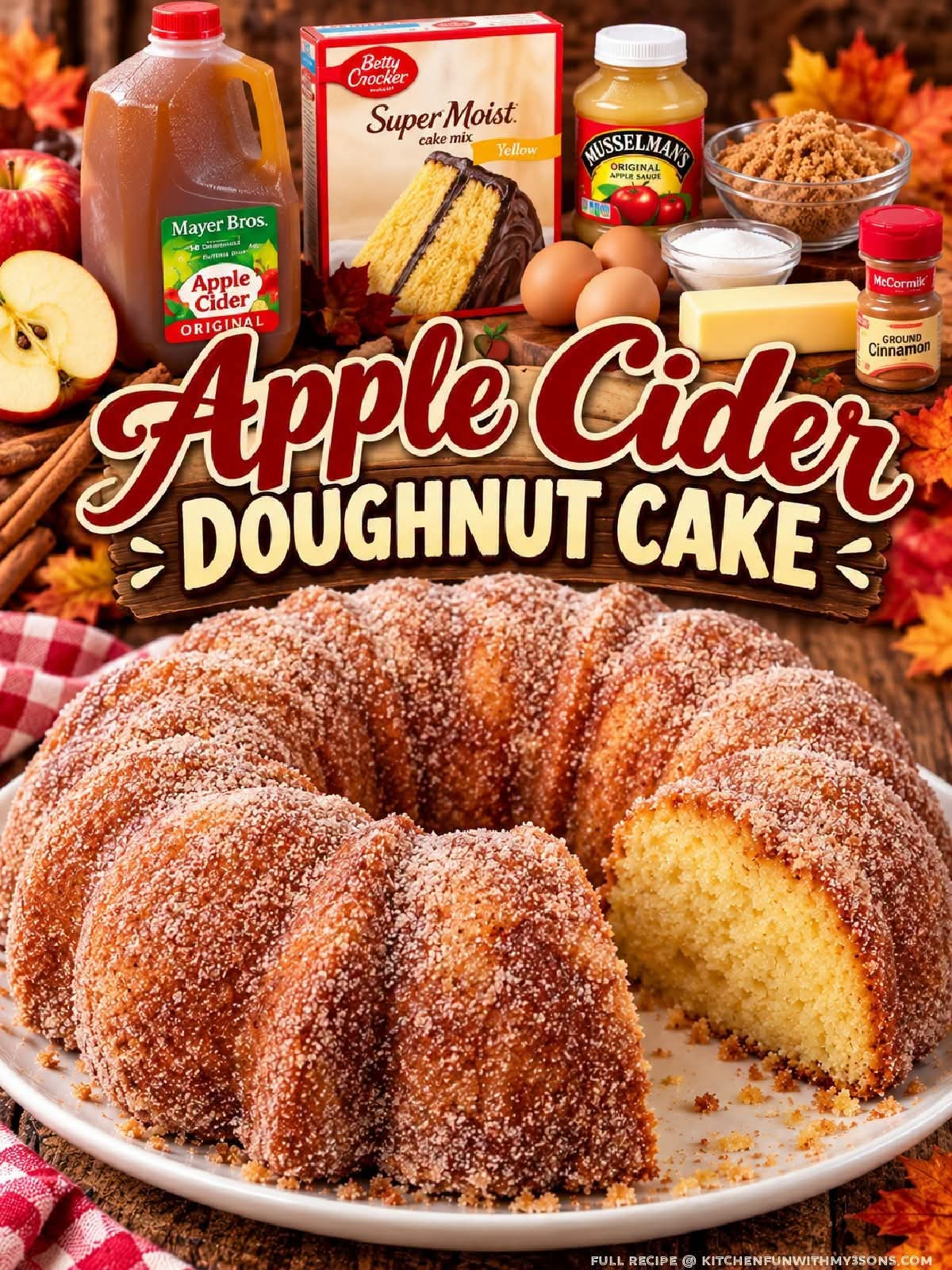
Apple Cider Donut Cake with Apple Cider Glaze and Cinnamon Sugar
Introduction
There is something special about the smell of apples, cinnamon, and warm sugar filling the kitchen on a cool autumn afternoon. This Apple Cider Donut Cake brings all the comforting flavors of a freshly made apple cider donut straight to your home, without the need to fry individual donuts or spend hours in the kitchen.
Inspired by the classic apple cider donuts sold at autumn cider mills, pumpkin patches, and farmers’ markets, this cake is soft, moist, buttery, and full of warm spices. It has that wonderful apple cider flavor that makes fall baking so memorable. The cake is finished with a sweet apple cider glaze and a generous coating of cinnamon sugar, creating a delicious combination of tender cake, sticky glaze, and lightly crisp sugary topping.
This is the kind of dessert that feels right at home on a Thanksgiving table, at a family gathering, during a weekend brunch, or beside a warm cup of coffee on a chilly morning. It is easy to prepare, beautiful to serve, and delicious enough to become a seasonal family tradition.
If you love traditional apple cider donuts, this cake gives you everything you enjoy about them in one easy-to-slice dessert.
Ingredients
For the Apple Cider Donut Cake
- 2 cups all-purpose flour
- 1 ½ teaspoons baking powder
- ½ teaspoon baking soda
- ½ teaspoon salt
- 2 teaspoons ground cinnamon
- ½ teaspoon ground nutmeg
- ¼ teaspoon ground allspice, optional
- ½ cup unsalted butter, softened
- ¾ cup granulated sugar
- ½ cup packed light brown sugar
- 2 large eggs, at room temperature
- 1 teaspoon pure vanilla extract
- ¾ cup apple cider, preferably fresh and unsweetened
- ½ cup sour cream or plain Greek yogurt
- ½ teaspoon ground ginger, optional
For the Apple Cider Glaze
- 1 cup powdered sugar
- 2–3 tablespoons apple cider
- ½ teaspoon vanilla extract, optional
- A small pinch of cinnamon, optional
For the Cinnamon Sugar Topping
- ¼ cup granulated sugar
- 1 ½ teaspoons ground cinnamon
- 2 tablespoons melted butter
Optional Additions
- ½ cup finely diced apples
- ½ cup chopped pecans or walnuts
- A pinch of extra nutmeg for a stronger autumn spice flavor
The optional additions can give the cake extra texture, but the basic recipe is delicious on its own.
Instructions
Step 1: Prepare the Oven and Pan
Preheat your oven to 350°F (175°C). Grease a 9-inch round cake pan or an 8-inch square baking pan with butter or nonstick cooking spray. Line the bottom with parchment paper if desired.
Preparing the pan properly helps the cake release easily after baking.
Step 2: Prepare the Dry Ingredients
In a medium bowl, whisk together the flour, baking powder, baking soda, salt, cinnamon, nutmeg, allspice, and ginger.
Mixing these ingredients before adding them to the batter helps distribute the spices evenly throughout the cake. Set the bowl aside.
Step 3: Cream the Butter and Sugars
In a large mixing bowl, beat the softened butter, granulated sugar, and brown sugar for about 2–3 minutes, until the mixture becomes light and fluffy.
This step helps create a tender cake with a pleasant, soft crumb. Scrape down the sides of the bowl as needed.
Step 4: Add the Eggs and Vanilla
Add the eggs one at a time, beating well after each addition. Stir in the vanilla extract.
The mixture should look smooth and creamy. If it appears slightly curdled, do not worry; adding the dry ingredients and liquids gradually should bring the batter together.
Step 5: Combine the Apple Cider and Sour Cream
In a separate bowl, stir together the apple cider and sour cream until combined.
The apple cider provides the characteristic fruity flavor, while the sour cream adds moisture and a slight tang that balances the sweetness.
Step 6: Mix the Batter
Add approximately one-third of the dry ingredients to the butter mixture and mix gently. Add half of the apple cider mixture, followed by another portion of the dry ingredients.
Continue alternating until everything has been incorporated, ending with the dry ingredients.
Mix only until the flour disappears. Avoid overmixing, as this can make the cake dense instead of soft and tender.
If using diced apples or chopped nuts, gently fold them into the batter at this stage.
Step 7: Fill the Cake Pan
Pour the batter into the prepared pan. Spread it evenly with a spatula, making sure the surface is level.
Tap the pan gently against the countertop to release any large air pockets.
Step 8: Bake the Cake
Place the pan in the preheated oven and bake for approximately 35–45 minutes, depending on the pan and your oven.
Begin checking around the 35-minute mark. Insert a toothpick into the center of the cake. If it comes out clean or with a few moist crumbs, the cake is ready.
If wet batter remains on the toothpick, continue baking for another 3–5 minutes before checking again.
Allow the cake to cool in the pan for about 10–15 minutes, then carefully transfer it to a wire rack.
Step 9: Prepare the Apple Cider Glaze
While the cake cools, place the powdered sugar in a small bowl.
Add 2 tablespoons of apple cider and whisk until smooth. If the glaze is too thick, add more cider a teaspoon at a time. If it becomes too thin, add a little more powdered sugar.
Stir in the vanilla extract and a pinch of cinnamon if desired.
The glaze should be thick enough to cling to the cake while still being easy to drizzle.
Step 10: Make the Cinnamon Sugar
In a small bowl, combine the granulated sugar and ground cinnamon.
Stir until the cinnamon is evenly distributed and the mixture looks uniform.
This simple topping gives the cake its familiar apple cider donut character.
Step 11: Glaze the Cake
Once the cake has cooled enough that it is no longer hot, drizzle the apple cider glaze over the top.
Allow the glaze to settle slightly. For a more pronounced cinnamon-sugar finish, brush the top lightly with melted butter and sprinkle the cinnamon sugar over the cake.
For a more traditional donut-inspired coating, apply the melted butter and cinnamon sugar while the cake is still slightly warm, then drizzle the glaze after it has cooled. This gives you both the buttery sugar coating and the sweet cider finish.
Step 12: Let the Topping Set
Allow the glaze to set for approximately 10–15 minutes before slicing.
The finished cake should have a tender, moist interior, a fragrant cinnamon-sugar topping, and a sweet apple cider glaze that adds a little extra flavor to every bite.
Methods of Preparation
The Creaming Method
This recipe uses the traditional creaming method. Butter and sugar are beaten together before the eggs and remaining ingredients are added.
The process incorporates air into the mixture, helping the cake develop a lighter texture. Using softened butter rather than melted butter is important for achieving the intended consistency.
The Alternating-Mixing Method
The dry ingredients and apple cider mixture are added in stages. Alternating them helps the batter combine evenly without becoming excessively wet or difficult to mix.
It also reduces the risk of overworking the flour, which can lead to a tougher cake.
The Baking Method
Baking allows the cake to rise gradually and develop a golden surface. The baking powder and baking soda help create a tender crumb, while the butter, eggs, and sour cream contribute richness and moisture.
The cake should be baked until the center is fully set but not dry.
The Glazing Method
The apple cider glaze is made by combining powdered sugar with a small amount of cider. It adds sweetness and reinforces the apple flavor.
Applying the glaze after baking preserves its fresh cider taste and creates an attractive finish.
The Cinnamon-Sugar Coating Method
Butter helps the cinnamon sugar adhere to the surface of the cake. The result is a sweet, fragrant topping inspired by the classic coating used on cider mill donuts.
For the best texture, avoid applying the glaze and cinnamon sugar while the cake is extremely hot, as the toppings may melt excessively or slide off.
The History of Apple Cider Donuts
Apple cider donuts are closely associated with autumn in the northeastern United States, particularly New England and regions known for apple orchards and cider production.
As apple harvesting became an important seasonal tradition, cider mills and orchards developed ways to celebrate the harvest with fresh apple cider and comforting baked goods. Apple cider donuts became a popular treat at orchard visits, harvest festivals, farm stands, and pumpkin patches.
Traditional cider donuts are generally fried and coated in cinnamon sugar. Their appeal comes from the combination of warm spices, sweetness, and the distinctive flavor of apple cider.
Over time, home bakers began adapting those flavors into other desserts, including muffins, quick breads, loaf cakes, and bundt cakes. These variations offer the familiar taste of cider donuts without requiring a deep fryer or individual donut molds.
Apple Cider Donut Cake is a natural extension of this tradition. It transforms the flavors of a seasonal favorite into a simple cake that can be baked in an ordinary kitchen and shared with family and friends.
Although this cake is inspired by the classic cider donut, it is a modern cake variation rather than an original historical donut recipe.
Formation and Texture of the Cake
The success of Apple Cider Donut Cake depends on how its ingredients work together.
Butter provides richness and helps create a tender crumb. Granulated sugar sweetens the cake, while brown sugar contributes moisture and a deeper caramel-like flavor.
Eggs bind the ingredients together and provide structure. Flour forms the framework of the cake, while baking powder and baking soda help it rise.
Apple cider supplies the distinctive apple flavor. Sour cream or Greek yogurt adds moisture and helps keep the cake soft. Cinnamon, nutmeg, allspice, and ginger create the warm spice profile associated with autumn baking.
The apple cider glaze adds another layer of sweetness and reinforces the cider flavor. Meanwhile, the cinnamon sugar contributes a lightly crisp, fragrant coating that contrasts with the soft cake beneath it.
When these components are balanced correctly, the result is a dessert that is rich without being overly heavy, sweet without losing its spice character, and moist without becoming soggy.
Tips for the Best Apple Cider Donut Cake
Use good-quality apple cider. Fresh, unsweetened cider generally gives the cake a more pronounced apple flavor than a very sweet apple drink.
Bring refrigerated ingredients to room temperature. Room-temperature eggs and sour cream blend more easily into the batter.
Do not overmix. Once the flour is added, mix gently and stop as soon as the ingredients are combined.
Check the cake early. Oven temperatures and pan materials vary, so begin checking for doneness before the maximum baking time.
Adjust the glaze gradually. A little cider goes a long way. Add it slowly until the glaze reaches your preferred consistency.
Choose your topping order. For a classic cinnamon-sugar finish, brush the cake with butter and add the sugar while the cake is slightly warm. Add the cider glaze after cooling if you want both toppings.
Let the cake cool before slicing. This helps the crumb set and keeps the glaze from running excessively.
Serving Suggestions
Apple Cider Donut Cake is delicious served at room temperature, but it can also be enjoyed slightly warm.
Serve a slice with freshly brewed coffee, black tea, or a mug of warm apple cider. For dessert, add a scoop of vanilla ice cream or a spoonful of softly whipped cream.
For an autumn brunch, arrange slices on a platter alongside fresh apples, toasted nuts, and other seasonal treats. The cake also makes a lovely addition to Thanksgiving dessert tables, family potlucks, and weekend gatherings.
If you enjoy a stronger spice flavor, add a small extra sprinkle of cinnamon immediately before serving.
Storage and Make-Ahead Instructions
At Room Temperature
Once completely cooled, store the cake in an airtight container for up to 2 days in a cool environment. If your kitchen is warm or the glaze contains ingredients requiring refrigeration, refrigerate the cake instead.
In the Refrigerator
Store the cake in an airtight container in the refrigerator for up to 5 days. Allow individual slices to sit at room temperature briefly before serving for a softer texture.
In the Freezer
For the best results, freeze the unglazed cake. Wrap it tightly in plastic wrap, then place it in a freezer-safe container or bag. Freeze for up to 2–3 months for best quality.
Thaw the cake overnight in the refrigerator or at room temperature until completely defrosted. Add the glaze and cinnamon-sugar topping after thawing.
Making It Ahead
You can bake the cake a day before serving. Let it cool completely, wrap it securely, and store it in an airtight container. Prepare the glaze and finishing sugar on the day you plan to serve it for the freshest appearance.
Variations to Try
Apple Cinnamon Donut Cake
Fold ½ cup of finely diced, peeled apple into the batter for small pockets of fruit and extra apple texture.
Brown Butter Apple Cider Cake
Brown the butter before using it, then let it cool until soft but not hot. The nutty flavor complements the cider and warm spices beautifully.
Apple Cider Bundt Cake
Use a well-greased 10- to 12-cup bundt pan. Baking time will vary, so begin checking for doneness after approximately 40 minutes and continue as needed.
Apple Cider Cake with Nuts
Add ½ cup of chopped pecans or walnuts for a pleasant crunch and a deeper autumn flavor.
Extra-Spiced Apple Cider Cake
Increase the cinnamon slightly and add a pinch of cloves or ginger. Keep the amounts moderate so the spices complement rather than overwhelm the apple cider.
Frequently Asked Questions
Can I use apple juice instead of apple cider?
Yes. Apple juice can work as a substitute, although the flavor may be lighter and sweeter. If you use apple juice, choose an unsweetened variety when possible.
Can I make this cake without sour cream?
Yes. Plain Greek yogurt is a good substitute. You can also use plain full-fat yogurt, although the texture may vary slightly.
Can I make this recipe in a loaf pan?
Yes. Divide the batter between two standard loaf pans if necessary, or use one larger pan only if it has sufficient capacity. Baking time will change with the depth of the batter, so check the center carefully.
Why is my cake dry?
Overbaking is a common cause. Measuring flour accurately and avoiding excessive mixing also help. Check the cake as soon as the center appears set.
How can I make the apple flavor stronger?
Use flavorful apple cider. For a more concentrated taste, simmer extra cider separately until reduced, then cool it completely before measuring the amount needed for the glaze. Do not substitute a larger quantity of liquid into the cake batter without adjusting the recipe.
Can I skip the glaze?
Absolutely. The cake is delicious with just melted butter and cinnamon sugar. The glaze simply adds another layer of sweetness and apple flavor.
Is this cake suitable for a holiday dessert table?
Yes. Its warm spices, golden color, and cinnamon-sugar topping make it a wonderful choice for fall gatherings, Thanksgiving, Christmas brunch, and casual family celebrations.
Conclusion
Apple Cider Donut Cake with Apple Cider Glaze and Cinnamon Sugar is a comforting dessert that captures the best flavors of autumn in one easy homemade treat.
With its buttery crumb, fragrant spices, sweet cider glaze, and familiar cinnamon-sugar coating, it offers the nostalgic taste of a freshly purchased apple cider donut in a convenient cake form.
It is simple enough for everyday baking yet special enough to serve to guests. Whether you bake it for a weekend family gathering, an autumn celebration, or a quiet afternoon at home, this cake is a lovely way to make the most of apple season.
Serve it with coffee, share it with friends, or save a slice for the next morning. Once you experience the combination of apple cider and warm cinnamon in this soft, tender cake, it may become one of your favorite fall baking traditions.
For Apple Cider Donut Cake Lovers
If you love apple desserts, cinnamon-sugar treats, and old-fashioned homemade cakes, this recipe deserves a place in your collection.
It brings together the flavors of orchard-fresh apples, warm autumn spices, buttery cake, and sweet glaze without the extra work of frying donuts.
Bake it for the people you love, bring it to your next gathering, or make it simply because the weather calls for something cozy and delicious.
This is the kind of cake that invites everyone to take another slice, pour another cup of coffee, and enjoy the simple pleasure of homemade baking.