
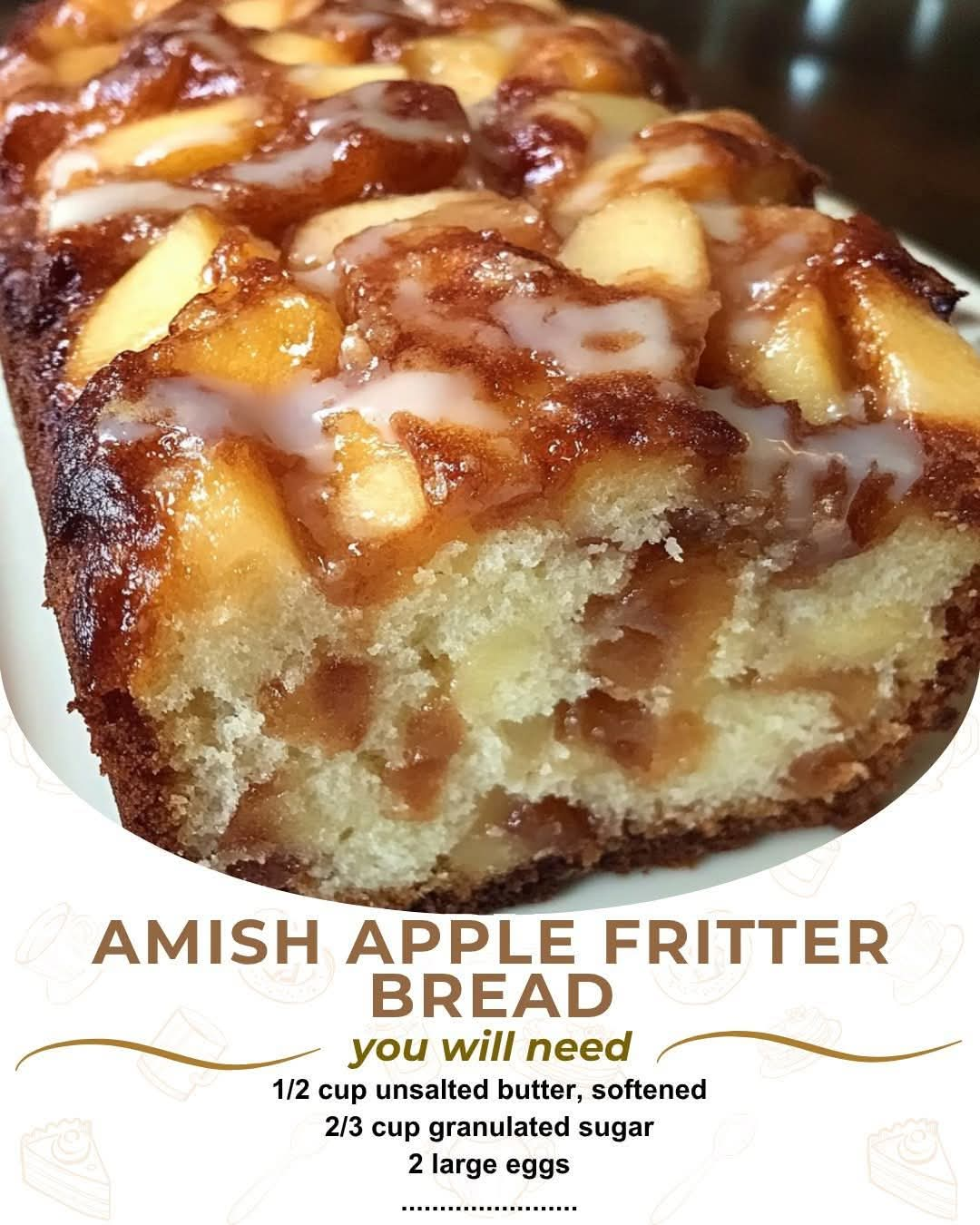
Amish Apple Fritter Bread
Introduction
Amish Apple Fritter Bread is a comforting homemade loaf that brings together everything people love about classic apple fritters in an easy-to-slice bread. It is tender, buttery, warmly spiced, and filled with small pieces of sweet apples and a cinnamon-brown-sugar filling. Once baked, the loaf is finished with a simple vanilla glaze that melts slightly over the warm bread and settles into the little ridges and cracks on top.
This recipe is especially wonderful during apple season, but it is simple enough to make throughout the year. Unlike traditional fried apple fritters, this version is baked in a loaf pan, making it less complicated and much easier to serve for breakfast, afternoon coffee, dessert, or a weekend family gathering.
The combination of soft apple bread, caramel-like brown sugar, cinnamon, and sweet glaze gives every slice the familiar flavor of an old-fashioned apple fritter while providing the convenient shape and texture of a quick bread.
Ingredients
For the Apple Bread
- 1/2 cup unsalted butter, softened
- 2/3 cup granulated sugar
- 2 large eggs
- 1 teaspoon alcohol-free vanilla extract
- 1 1/2 cups all-purpose flour
- 1 1/2 teaspoons baking powder
- 1/2 teaspoon salt
- 1/2 cup milk
- 2 medium apples, peeled, cored, and finely diced
For the Cinnamon Apple Filling
- 1/3 cup packed brown sugar
- 1 teaspoon ground cinnamon
- 1 medium apple, peeled, cored, and diced
For the Vanilla Glaze
- 1 cup powdered sugar
- 2 to 3 tablespoons milk
- 1/2 teaspoon alcohol-free vanilla extract
Choosing the Apples
The apples are one of the most important parts of this bread. Choose apples that hold their shape reasonably well during baking and provide a pleasant balance of sweetness and acidity.
Good choices include Granny Smith, Honeycrisp, Pink Lady, Braeburn, Fuji, or a combination of sweet and tart apples.
The apples should be cut into small, even pieces. Finely diced apples distribute throughout the loaf more evenly and make every slice moist and flavorful.
Avoid cutting the apples into very large chunks because they can release too much moisture and make the center of the bread difficult to bake properly.
Preparation
Step 1: Prepare the Oven and Loaf Pan
Preheat the oven to 350°F (175°C).
Grease a 9 x 5-inch loaf pan thoroughly with butter or nonstick cooking spray. Lightly flour the pan, tapping out any excess flour.
For easier removal, you can also place a strip of parchment paper along the bottom and up two sides of the pan.
Set the prepared pan aside.
Step 2: Prepare the Apples
Peel and core the apples.
Finely dice two apples for the bread and dice another apple for the cinnamon filling.
If the apples are particularly juicy, gently pat them with a paper towel after cutting them. This helps prevent excess moisture from affecting the texture of the loaf.
Keep the bread apples and filling apple separate.
Step 3: Cream the Butter and Sugar
Place the softened butter and granulated sugar in a large mixing bowl.
Beat them together until the mixture becomes noticeably lighter in color and fluffy in texture.
This step helps incorporate air into the batter and contributes to a lighter loaf.
Add the eggs one at a time, beating well after each addition. Scrape down the sides of the bowl as necessary.
Add the alcohol-free vanilla extract and mix until incorporated.
Step 4: Combine the Dry Ingredients
In a separate bowl, whisk together the all-purpose flour, baking powder, and salt.
Mixing the dry ingredients separately ensures that the baking powder and salt are distributed evenly throughout the flour.
Step 5: Make the Batter
Add approximately one-third of the dry ingredients to the butter mixture.
Mix gently until partially incorporated.
Add half of the milk and continue mixing.
Repeat with another portion of the dry ingredients, followed by the remaining milk, and finish with the remaining dry ingredients.
Mix only until the batter comes together.
Do not overmix. A few small streaks of flour are preferable to excessively mixing the batter, which can make the finished bread dense or tough.
Step 6: Fold in the Apples
Add the finely diced apples to the batter.
Using a spatula or wooden spoon, gently fold them through the mixture until the apples are evenly distributed.
The batter will be fairly thick, which is exactly what you want for a loaf containing fresh apples.
Preparing the Cinnamon Apple Filling
In a small bowl, combine the packed brown sugar and ground cinnamon.
Add the diced apple and stir until the apple pieces are coated evenly with the cinnamon and brown sugar mixture.
The brown sugar will begin to cling to the apples, creating a sweet, fragrant filling that will soften and become slightly caramelized during baking.
Forming and Layering the Bread
Spread approximately half of the apple bread batter into the prepared loaf pan.
Use the back of a spoon or spatula to gently spread it into an even layer.
Sprinkle the cinnamon-apple filling evenly over the batter.
Try to keep the filling slightly away from the extreme edges of the pan so that the loaf remains easy to slice.
Add the remaining batter over the apple filling.
Gently spread the batter across the surface, taking care not to disturb the filling underneath.
Smooth the top as evenly as possible.
For an especially attractive loaf, you can gently drag a butter knife through the top layer in a few places to create subtle swirls. Do not over-swirl because you want to maintain a distinct cinnamon-apple layer.
Baking Method
Place the loaf pan in the center of the preheated oven.
Bake for approximately 50 to 60 minutes.
Begin checking around the 50-minute mark because ovens and loaf pans can vary.
The bread is finished when the top is golden brown and a toothpick inserted into the center comes out clean or with a few moist crumbs attached.
If the toothpick hits a pocket of apple, test another area because moisture from the fruit can make the toothpick appear wet even when the bread itself is fully baked.
If the top becomes dark before the center is finished, loosely cover the loaf with aluminum foil for the remaining baking time.
Avoid opening the oven repeatedly during the first part of baking because frequent temperature changes can interfere with the loaf’s rise.
Cooling the Bread
Remove the loaf from the oven and allow it to cool in the pan for approximately 15 minutes.
Run a thin knife carefully around the edges if necessary.
Lift or turn the loaf out of the pan and place it on a wire rack.
Allow it to cool further before glazing.
Cooling is important because the interior continues to set after the bread leaves the oven. Cutting it too early can cause the center to appear gummy or cause the cinnamon filling to become difficult to slice cleanly.
Making the Vanilla Glaze
While the bread cools, prepare the glaze.
Place the powdered sugar in a small bowl.
Add 2 tablespoons of milk and the alcohol-free vanilla extract.
Whisk until smooth.
If the glaze is too thick, add additional milk a small amount at a time until it reaches a pourable consistency.
If it becomes too thin, add a little more powdered sugar.
The ideal glaze should be thick enough to coat the bread but thin enough to drizzle naturally over the surface.
Glazing the Apple Fritter Bread
Once the loaf has cooled sufficiently, place it on a serving plate or leave it on the wire rack with parchment underneath.
Use a spoon or whisk to drizzle the vanilla glaze over the top.
Allow some of the glaze to naturally run down the sides.
For a thicker glaze layer, let the first coating set for several minutes and then drizzle with a second layer.
Allow the glaze to firm slightly before slicing.
Serving Suggestions
This apple fritter bread is delicious at room temperature, but it can also be served slightly warm.
For breakfast, serve a thick slice with coffee, tea, or a glass of milk.
For dessert, warm a slice gently and serve it with vanilla ice cream or lightly sweetened whipped cream.
It also makes an excellent addition to a brunch table alongside fresh fruit, yogurt, eggs, or breakfast casseroles.
The bread is sweet enough to feel like dessert but substantial enough to work beautifully as a breakfast or afternoon treat.
Texture and Flavor
The finished loaf should have a soft, tender crumb with small pieces of baked apple throughout.
The cinnamon-brown-sugar layer provides a concentrated pocket of sweetness and spice through the center.
The vanilla glaze adds another layer of sweetness and gives the loaf its classic apple-fritter character.
The outside becomes lightly golden during baking while the inside remains moist from the apples and butter.
The goal is a loaf that is tender rather than heavy, moist rather than wet, and sweet without overwhelming the natural flavor of the apples.
History and Inspiration
Apple fritters have a long history as a beloved homemade treat. Versions of fried dough combined with fruit have appeared in many culinary traditions, while American apple fritters became particularly associated with home baking, diners, bakeries, fairs, and family kitchens.
The Amish-inspired approach to cooking is often associated with simple ingredients, traditional preparation, homemade baked goods, and food prepared for family and community gatherings.
This loaf takes the familiar flavors of an apple fritter and adapts them into a quick bread. Instead of frying individual portions of dough, the apple-filled batter is baked as one loaf and finished with a powdered-sugar glaze.
That transformation makes the recipe especially practical for home cooks. There is no hot frying oil to manage, no individual fritters to shape, and no need to fry batches separately.
The result is a rustic dessert bread with the comforting flavor profile of a traditional apple fritter.
Why This Recipe Works
The softened butter and sugar create the foundation of the batter.
The eggs provide structure and richness.
Baking powder gives the loaf its lift.
Milk keeps the crumb tender and helps bring the batter together.
Fresh apples provide moisture, natural sweetness, and a pleasant fruit texture.
Brown sugar and cinnamon create a warm, caramel-like filling that contrasts beautifully with the buttery bread.
Finally, the powdered-sugar glaze provides the characteristic sweet finish associated with apple fritters.
Each component has a simple purpose, and together they create a loaf that tastes much more elaborate than the preparation suggests.
Helpful Tips for Success
Use room-temperature butter so it creams properly with the sugar.
Do not melt the butter. Melted butter changes the structure of the batter and can produce a heavier loaf.
Bring the eggs and milk close to room temperature when possible. This helps them combine more smoothly with the creamed butter.
Do not overmix after adding the flour.
Dice the apples relatively small so they distribute throughout the loaf.
Do not skip the cooling period before removing the bread from the pan.
Let the loaf cool before adding the glaze so that the glaze remains visible instead of completely melting into the bread.
For clean slices, use a sharp serrated knife and allow the loaf to cool thoroughly before cutting.
Storage
Store the cooled and glazed bread in an airtight container at room temperature for up to about 2 days.
For longer storage, refrigerate it in a tightly covered container for several days.
The bread can also be frozen before glazing. Wrap the completely cooled loaf tightly in plastic wrap, followed by aluminum foil or a freezer-safe bag.
Thaw at room temperature and prepare the glaze just before serving.
Make-Ahead Method
The loaf can be baked a day before serving.
Allow it to cool completely, then cover it tightly.
Prepare the glaze shortly before serving and drizzle it over the loaf.
This makes the recipe convenient for brunches, family gatherings, holidays, potlucks, and weekend breakfasts.
Approximate Nutrition
Based on 10 slices, each serving contains approximately 330 calories.
Actual nutritional values will vary depending on the type and size of apples, milk, butter, glaze quantity, and exact portion size.
Recipe Timing
Preparation time: Approximately 20 minutes
Baking time: Approximately 50 to 60 minutes
Cooling and glazing time: Approximately 15 to 30 minutes
Total time: Approximately 1 hour 15 minutes to 1 hour 30 minutes
Yield: 1 loaf, approximately 10 slices
Conclusion
Amish Apple Fritter Bread is the kind of homemade recipe that fills the kitchen with the comforting aroma of apples, cinnamon, butter, and brown sugar.
It captures the best parts of an old-fashioned apple fritter without requiring deep frying. The tender apple-filled bread, sweet cinnamon center, and smooth vanilla glaze create a combination that is perfect for breakfast, dessert, afternoon coffee, or sharing with family and friends.
Every slice offers a little bit of everything: soft apple bread, warm cinnamon sweetness, caramel-like brown sugar, and a delicate vanilla glaze.
For Apple Fritter Bread Lovers
Anyone who loves apple desserts, cinnamon rolls, coffee cakes, muffins, or traditional homemade quick breads will find plenty to enjoy in this recipe.
It is particularly appealing to those who appreciate old-fashioned baking and recipes made with simple pantry ingredients.
Serve it warm for the softest, most comforting experience, or let it cool completely for neat slices and a more defined cinnamon-apple layer.
This is a recipe worth keeping in the family collection because it is simple enough for an ordinary weekend and special enough to serve when guests arrive. The combination of apples, cinnamon, brown sugar, and vanilla glaze makes every slice taste like a freshly baked apple fritter transformed into a beautiful homemade loaf.