
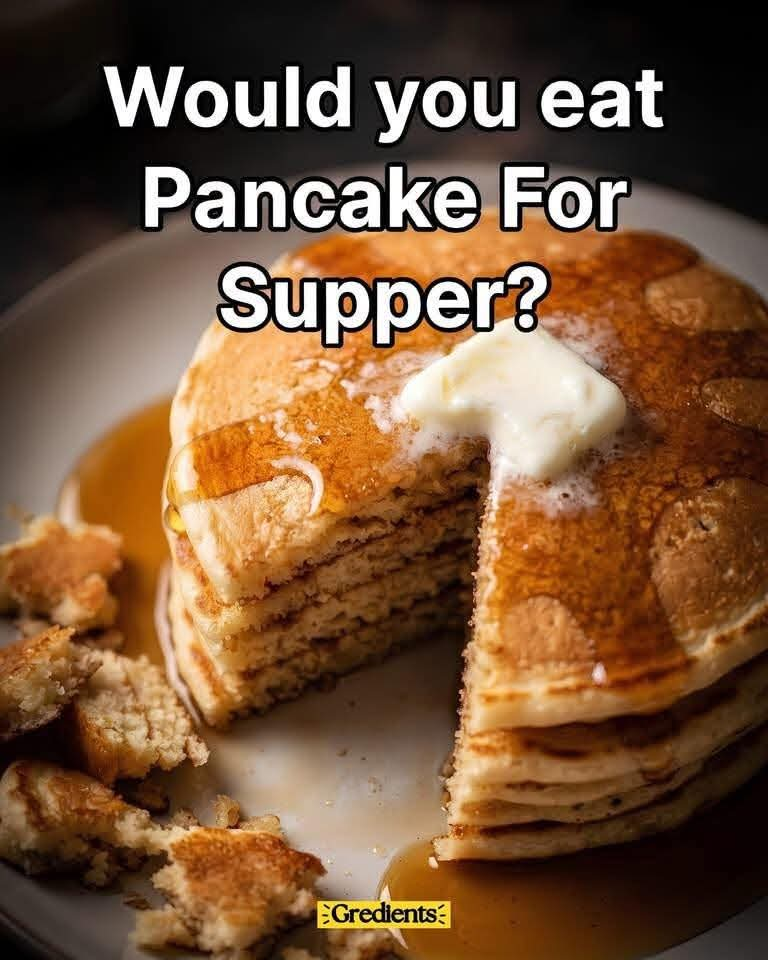
Based on the image provided, here is a comprehensive, detailed recipe and guide for a classic, fluffy Buttermilk Pancake stack.
Since the prompt asked for “big recipe,” we will cover everything from the history to the exact science of making them perfect for “supper.”
The Ultimate “Breakfast for Supper” Buttermilk Pancake Stack
Introduction
There is a universal truth in the culinary world: Breakfast foods taste infinitely better when eaten at dinner time. This phenomenon, known as “Breakfast for Supper” (or “Brinner”), transforms a humble morning staple into a comforting, hearty evening meal. The image above features a towering stack of golden-brown, fluffy pancakes, glistening with melting butter and dripping with warm maple syrup, accompanied by crispy, torn pieces of bacon or sausage. This recipe will teach you how to achieve that exact diner-style perfection in your own kitchen.
History
The history of the pancake is ancient. Evidence of pancakes made from wild buckwheat and bird eggs has been found in the stomach of a 5,300-year-old Iceman (Ötzi). However, the fluffy American-style pancake we know today evolved in the 19th century. Before the invention of baking powder in the mid-1800s, pancakes were flat, dense, and often made with yeast or sourdough. The discovery of chemical leaveners (baking soda and baking powder) birthed the tall, airy, cake-like texture that became a staple of American breakfast culture and later, a beloved dinner-time comfort food.
Ingredients
To achieve the stack in the picture, you need the right balance of chemistry and fat.
For the Pancakes (Makes 8-10 large pancakes):
· 2 cups All-purpose flour
· 2 tablespoons Granulated sugar
· 2 teaspoons Baking powder
· 1/2 teaspoon Baking soda
· 1/2 teaspoon Salt
· 2 cups Buttermilk (or 2 cups milk + 2 tbsp lemon juice, let sit 5 mins)
· 2 large Eggs
· 4 tablespoons Unsalted butter, melted (plus more for the pan)
· 1 teaspoon Vanilla extract
For the “Supper” Sides (As seen in the image):
· 1 lb thick-cut bacon or breakfast sausage links
· Real maple syrup (warmed)
· Salted butter for topping
Formation (The Science of the Stack)
“Formation” refers to how the ingredients chemically bond to create the tall structure:
- Acid-Base Reaction: The buttermilk (acid) reacts with the baking soda (base) to create carbon dioxide bubbles. This is the primary lift.
- Gluten Development: Stirring the flour creates gluten. For pancakes, you want minimal gluten formation. Overmixing creates a tough, chewy pancake rather than a fluffy one. The lumps in the batter are your friends.
- The Rise: When the batter hits the hot pan, the heat causes the baking powder to release more gas, and the eggs to coagulate (set), trapping those bubbles inside. This creates the height seen in the image.
Instructions & Methods
Method 1: The Dry Ingredients
In a large bowl, whisk together the flour, sugar, baking powder, baking soda, and salt. Set aside.
Method 2: The Wet Ingredients
In a separate medium bowl, whisk the buttermilk, eggs, melted butter, and vanilla extract until well combined.
Method 3: The Batter (Crucial Step)
Pour the wet ingredients into the dry ingredients. Stir gently with a wooden spoon or spatula just until combined. Do not overmix. The batter should be lumpy and thick. Let the batter rest for 5–10 minutes while you cook the meat. This rest allows the flour to hydrate and the bubbles to start forming.
Method 4: Cooking the Supper
- The Meat: In a large skillet over medium heat, cook your bacon or sausage until crispy. Remove from pan and set aside on paper towels to drain. (If using bacon, you can cook the pancakes in the leftover bacon grease for incredible flavor, or wipe the pan clean and use butter).
- The Pan: Heat a griddle or non-stick skillet over medium-low heat. Add a small knob of butter.
- The Pour: Pour 1/3 cup of batter onto the hot griddle. Do not spread it.
- The Flip: Cook until bubbles form on the surface and the edges look dry (about 2-3 minutes). Flip carefully and cook for another 1-2 minutes until golden brown.
- The Stack: As seen in the image, stack them high on a plate. Top with a generous pat of butter and pour warm maple syrup over the top so it cascades down the sides.
Benefits
· Comfort Food: High in carbohydrates, providing immediate energy and a psychological sense of comfort and warmth.
· Customizable: You can add blueberries, chocolate chips, or nuts to the batter.
· Economic: Flour, milk, and eggs are inexpensive staple ingredients, making this a budget-friendly meal for a family.
· Versatility: It serves as a sweet main course or a savory base (if you omit the sugar and add herbs/cheese).
Nutrition (Approximate per serving)
Note: This is for the pancake stack alone, without syrup or meat.
· Calories: 320
· Total Fat: 12g
· Saturated Fat: 7g
· Cholesterol: 95mg
· Sodium: 480mg
· Total Carbohydrates: 42g
· Protein: 9g
(Adding syrup and bacon will significantly increase calories, sugar, and sodium).
For The Lovers (Serving Suggestions)
For the ultimate “Pancake Supper” experience:
· The Sweet Lover: Top with whipped cream, fresh strawberries, and a dusting of powdered sugar.
· The Savory Lover: Serve the pancakes under fried chicken (Chicken and Waffles style) or top with a fried egg and hot sauce.
· The Textural Lover: Add crushed pecans or walnuts to the batter for a crunch, as seen by the crumbled bits on the plate in the photo.
Conclusion
The image asks, “Would you eat Pancake For Supper?” The answer is a resounding yes. Whether you are a busy parent looking for a quick, filling meal, or a culinary enthusiast seeking the perfect fluffy texture, the pancake is a versatile champion. By respecting the chemistry of the ingredients and mastering the flip, you can turn a simple batter into a magnificent, syrup-drenched tower that satisfies the soul at any time of day. Enjoy your supper