
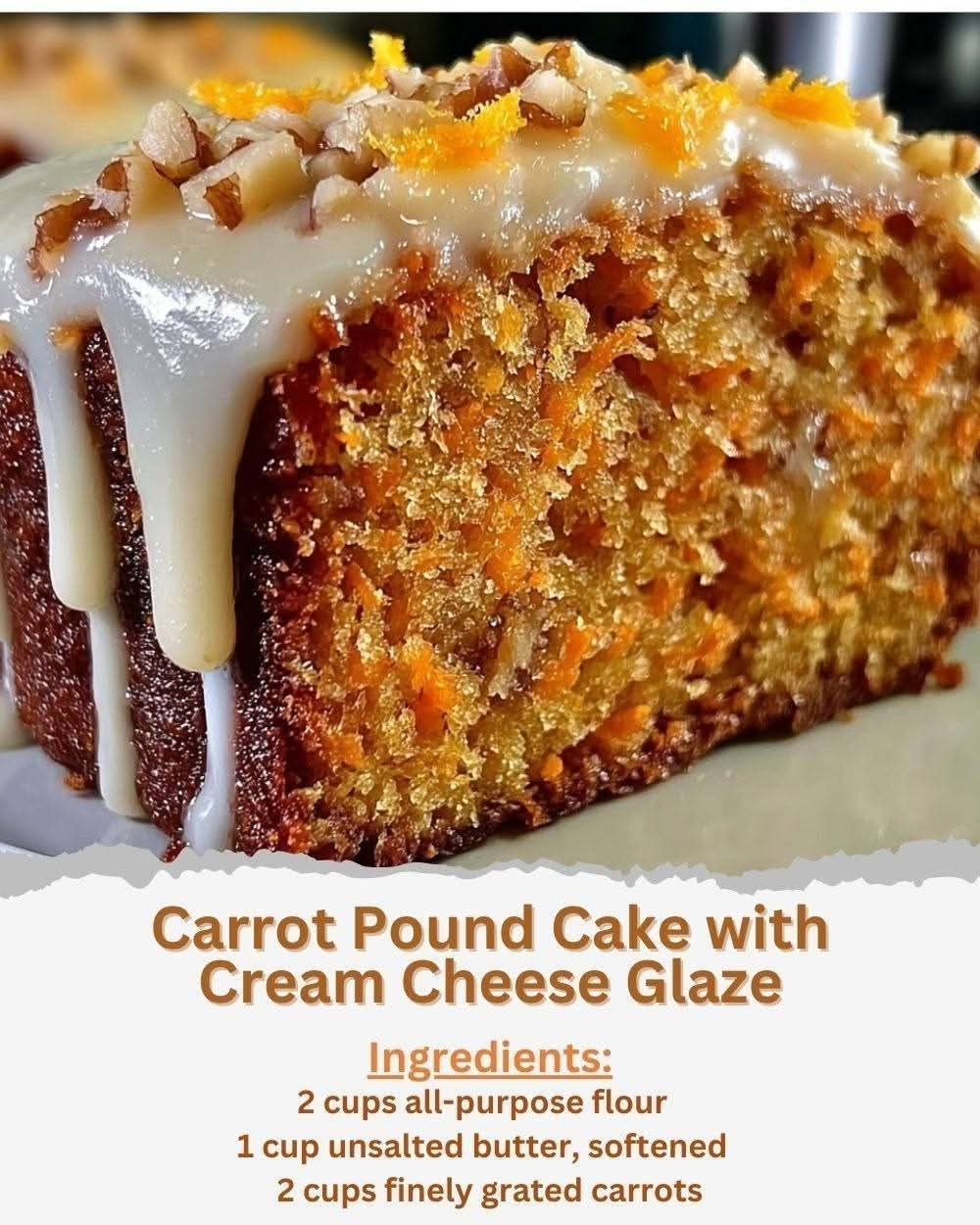
Carrot Pound Cake with Cream Cheese Glaze
Introduction
Carrot Pound Cake with Cream Cheese Glaze is a rich, tender, old-fashioned dessert that combines the comforting flavor of homemade pound cake with the natural sweetness and moisture of freshly grated carrots. Warm cinnamon and nutmeg give the cake a cozy spice flavor, while the smooth cream cheese glaze adds a tangy sweetness that perfectly complements the buttery cake.
This is the kind of dessert that feels equally appropriate for a family dinner, Sunday afternoon coffee, holiday gathering, potluck, or special celebration. The carrots add beautiful color and moisture without overpowering the classic pound-cake flavor.
The cake has a dense but tender crumb, a golden exterior, and plenty of warm spice throughout. Once cooled, it is finished with a creamy glaze that slowly drips over the sides, making every slice look as inviting as it tastes.
Ingredients
For the Carrot Pound Cake
- 2 cups all-purpose flour
- 1 teaspoon baking powder
- 1/2 teaspoon salt
- 1 teaspoon ground cinnamon
- 1/2 teaspoon ground nutmeg
- 1 cup unsalted butter, softened
- 1 3/4 cups granulated sugar
- 4 large eggs, room temperature
- 2 cups finely grated carrots
- 2 teaspoons vanilla extract
- 1/2 cup sour cream or plain Greek yogurt
Optional Additions
For extra texture and flavor, you can also add:
- 1/2 cup chopped pecans or walnuts
- 1/2 cup shredded sweetened coconut
- 1/2 cup raisins
- 1/4 teaspoon ground ginger
These additions are optional, so the cake can easily be made as a simple carrot pound cake.
For the Cream Cheese Glaze
- 4 ounces cream cheese, softened
- 1 cup powdered sugar
- 2 tablespoons milk
- 1/2 teaspoon vanilla extract
- 1 tablespoon melted butter, optional
- 1 to 2 teaspoons fresh lemon juice, optional
Instructions
Step 1: Prepare the Oven and Pan
Preheat your oven to 325°F (165°C).
Grease a 10-inch Bundt pan or tube pan thoroughly with butter or nonstick baking spray. Make sure to coat the corners and detailed areas of the pan carefully so the finished cake releases easily.
For extra insurance, lightly dust the greased pan with flour and shake out the excess.
Step 2: Prepare the Carrots
Wash, peel, and finely grate the carrots.
For the best texture, use the small or medium holes on a box grater rather than purchasing pre-shredded carrots. Freshly grated carrots are softer and release moisture into the batter more effectively.
If the carrots seem particularly wet, gently blot them with a paper towel. Do not squeeze them completely dry because some of their natural moisture helps keep the cake tender.
Step 3: Combine the Dry Ingredients
In a medium bowl, whisk together the flour, baking powder, salt, cinnamon, and nutmeg.
Mixing these ingredients separately helps distribute the baking powder and spices evenly throughout the flour.
Set the bowl aside.
Step 4: Cream the Butter and Sugar
Place the softened butter in a large mixing bowl.
Beat the butter until smooth and creamy. Gradually add the granulated sugar and continue beating for approximately 3 to 5 minutes, until the mixture becomes lighter and fluffy.
This step is important because properly creamed butter helps create the characteristic texture of a pound cake.
Step 5: Add the Eggs
Add the eggs one at a time, mixing well after each addition.
Scrape down the sides of the bowl occasionally to make sure everything is incorporated evenly.
Add the vanilla extract and mix briefly.
If the mixture looks slightly curdled after adding the eggs, do not worry. The batter will come together once the dry ingredients are incorporated.
Step 6: Add the Sour Cream
Add the sour cream or Greek yogurt and mix until just combined.
The sour cream adds richness and helps produce a moist, tender crumb.
Step 7: Combine Wet and Dry Ingredients
Gradually add the dry ingredients to the butter mixture.
Mix on low speed until just combined. Avoid overmixing because excessive mixing can develop the gluten in the flour and make the finished cake heavier or tougher.
Fold in the finely grated carrots using a spatula.
If using nuts, coconut, raisins, or ginger, fold them in at this stage as well.
Step 8: Fill the Pan
Transfer the batter to the prepared Bundt pan.
Use a spatula to spread the batter evenly and gently smooth the top.
Tap the pan lightly against the counter once or twice to help remove any large air pockets.
Step 9: Bake
Place the cake in the preheated oven and bake for approximately 65 to 80 minutes.
Baking time can vary depending on the size and shape of your pan.
Begin checking the cake around the 65-minute mark. Insert a long wooden skewer or cake tester into the thickest part of the cake. It should come out clean or with only a few moist crumbs attached.
If the top begins browning too quickly, loosely cover it with aluminum foil for the remaining baking time.
Step 10: Cool the Cake
Remove the cake from the oven and allow it to cool in the pan for approximately 15 to 20 minutes.
Carefully run a thin knife around the edges if necessary, then invert the cake onto a cooling rack.
Allow it to cool completely before adding the cream cheese glaze.
This is important because glazing a warm cake can cause the glaze to melt excessively and slide completely off.
Method for the Cream Cheese Glaze
Place the softened cream cheese in a mixing bowl.
Beat until completely smooth.
Gradually add the powdered sugar and continue mixing until creamy.
Add the milk, vanilla extract, and melted butter if using.
Mix until the glaze is smooth and pourable.
For a slightly brighter flavor, add a teaspoon or two of fresh lemon juice.
If the glaze is too thick, add milk a few drops at a time.
If it is too thin, add a little more powdered sugar.
The ideal consistency should be thick enough to coat the back of a spoon while still being fluid enough to drizzle over the cake.
Forming and Finishing the Cake
Once the pound cake has cooled completely, place it on a serving plate or cake stand.
Slowly drizzle the cream cheese glaze over the top of the cake, allowing it to naturally run down the sides.
For a thicker glaze, allow the first layer to set for several minutes and then add a second drizzle.
If desired, sprinkle finely chopped pecans or walnuts over the glaze before it sets.
For an especially attractive presentation, you can also add a light dusting of powdered sugar around the serving plate.
The Best Method for Perfect Carrot Pound Cake
The secret to a successful carrot pound cake is controlling moisture while developing a rich buttery batter.
Use room-temperature butter and eggs whenever possible. Room-temperature ingredients blend more evenly and create a smoother batter.
Finely grate the carrots rather than leaving them in large shreds. Smaller pieces distribute throughout the cake and contribute moisture without creating large wet pockets.
Do not overmix after adding the flour. Once the flour disappears, stop mixing.
Bake the cake at a moderate temperature rather than using a very high temperature. Pound cakes are relatively thick, so they need enough time for the center to cook without the outside becoming overly dark.
Most importantly, allow the cake to cool completely before glazing.
History and Inspiration
Carrot desserts have a long history because carrots have traditionally been used as a naturally sweet ingredient in baked goods. Before modern refined sweeteners became inexpensive and widely available, naturally sweet vegetables and fruits were often incorporated into cakes, puddings, and other desserts.
Carrot cake became particularly popular as a recognizable dessert in the twentieth century, especially as home bakers embraced grated carrots for their sweetness, moisture, and color.
The pound cake itself has much older roots. Traditional pound cakes were famously based on a simple proportion of flour, butter, sugar, and eggs. Modern versions often adjust those proportions and incorporate ingredients such as sour cream, vanilla, spices, citrus, fruits, and vegetables.
This carrot pound cake brings those two traditions together. Instead of the lighter, more layered style of many traditional carrot cakes, this version has the substantial buttery crumb associated with pound cake.
The cream cheese glaze adds another familiar carrot-cake element, giving the dessert a balance of rich, sweet, and slightly tangy flavors.
Serving Suggestions
Carrot Pound Cake is delicious at room temperature, but it can also be served slightly chilled.
For an afternoon dessert, serve a slice with coffee or tea.
For a holiday table, arrange slices on a large serving platter and garnish with chopped pecans.
For a special dessert, serve each slice with a spoonful of whipped cream or a small scoop of vanilla ice cream.
You can also add a light drizzle of caramel sauce for an extra indulgent presentation.
Storage
Store the glazed cake in an airtight container in the refrigerator because of the cream cheese glaze.
It will generally keep well for several days when properly refrigerated.
Before serving, allow individual slices to sit at room temperature for a short time so the cake can soften and the flavors can become more pronounced.
The unglazed cake can also be wrapped tightly and stored separately, then glazed shortly before serving.
Make-Ahead Method
This cake is an excellent make-ahead dessert.
Bake the cake one day before serving and allow it to cool completely.
Wrap the cooled cake tightly and store it properly.
Prepare the cream cheese glaze separately and refrigerate it in a covered container.
When ready to serve, bring the glaze to a workable consistency, drizzle it over the cake, and garnish as desired.
Making the cake ahead of time can actually improve its flavor because the spices have additional time to settle into the crumb.
Tips for Success
Use fresh carrots for the best flavor and moisture.
Do not pack the flour too tightly into measuring cups. For the most accurate results, spoon the flour into the measuring cup and level it.
Make sure your butter is softened but not melted.
Add the eggs gradually.
Do not overmix the batter after adding flour.
Grease the Bundt pan thoroughly, especially around the center tube and decorative grooves.
Allow the cake to cool before removing it from the pan.
Always cool the cake completely before glazing.
Adjust the glaze consistency according to your preference. A thicker glaze creates a more substantial topping, while a thinner glaze produces delicate drips.
Why Lovers of Carrot Cake Will Enjoy This Recipe
Carrot cake lovers will appreciate the familiar combination of carrots, cinnamon, nutmeg, and cream cheese, but this version has the richer, more substantial texture of a pound cake.
The cake is buttery without being overly heavy, moist without being soggy, and warmly spiced without allowing the spices to overpower the carrots.
The cream cheese glaze provides a creamy tang that balances the sweetness of the cake.
It is also versatile enough to customize with pecans, walnuts, raisins, coconut, or additional spices.
Conclusion
Carrot Pound Cake with Cream Cheese Glaze is a comforting homemade dessert that brings together the best qualities of two classic cakes. The buttery pound-cake base provides a rich and tender foundation, while finely grated carrots add moisture, natural sweetness, and beautiful color.
Cinnamon and nutmeg create a warm, nostalgic flavor, and the smooth cream cheese glaze adds the perfect finishing touch.
Whether served at a family gathering, holiday dinner, afternoon coffee, birthday celebration, or weekend meal, this cake is the kind of dessert that looks beautiful on the table and disappears quickly once sliced.
For the best experience, serve generous slices with plenty of cream cheese glaze and let the homemade flavors speak for themselves.
Carrot Pound Cake Lovers
If you love traditional carrot cake, buttery pound cakes, cream cheese frosting, warm spices, and old-fashioned homemade desserts, this recipe is made for you.
The combination of fresh carrots, butter, cinnamon, nutmeg, and cream cheese creates a dessert that feels familiar while still being something a little different from an ordinary carrot cake.
One slice is rich enough to feel special, yet comforting enough to enjoy with a simple cup of coffee.
This is a recipe worth saving for family gatherings, holiday baking, Sunday desserts, and whenever you want a homemade cake that everyone will ask you to make again.