
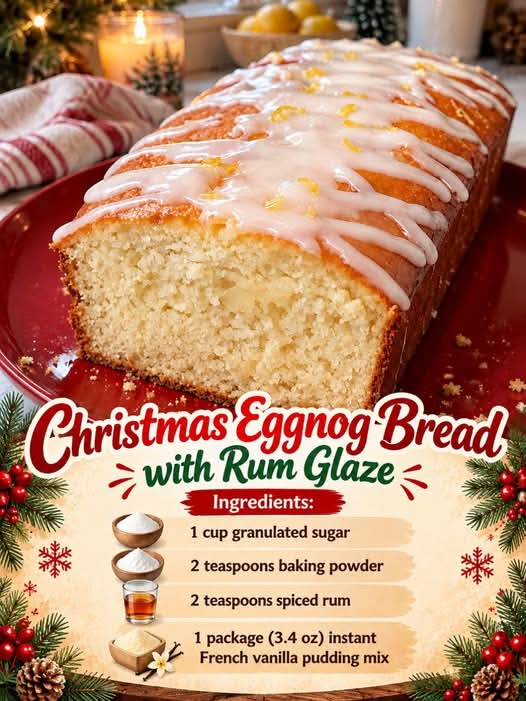
Christmas Eggnog Bread with Rum Glaze
Introduction
Christmas Eggnog Bread with Rum Glaze is a wonderfully moist, tender, and flavorful holiday quick bread that brings the comforting taste of traditional eggnog into every slice. With its rich vanilla aroma, delicate nutmeg spice, buttery crumb, and sweet rum glaze, this festive loaf is perfect for Christmas morning, holiday brunches, afternoon coffee, or a cozy evening dessert.
The secret to this delicious bread is the combination of full-fat eggnog and instant French vanilla pudding mix. The eggnog adds a creamy richness and a subtle blend of holiday spices, while the pudding mix helps create a soft texture and a lovely vanilla flavor. Melted butter adds tenderness, and a small amount of spiced rum brings warmth and depth to the batter.
The finishing touch is a smooth rum glaze drizzled over the cooled loaf. It settles into the top of the bread, creating a sweet, flavorful coating that makes every slice feel special. For an alcohol-free version, you can replace the rum with rum extract or additional eggnog.
One of the best things about this recipe is that it does not require yeast, kneading, or complicated baking techniques. Simply mix the ingredients, pour the batter into a loaf pan, bake until golden, and finish with the glaze.
Whether you are preparing a homemade Christmas breakfast, looking for a thoughtful edible gift, or adding something new to your holiday baking traditions, this Christmas Eggnog Bread is a recipe worth saving.
Ingredients

For the Eggnog Bread
- 2 cups (250 g) all-purpose flour
- 1 cup (200 g) granulated sugar
- 2 teaspoons baking powder
- 1 package (3.4 oz / 96 g) instant French vanilla pudding mix
- 1½ cups (360 ml) full-fat eggnog
- 2 large eggs, at room temperature
- ½ cup (113 g) unsalted butter, melted and cooled
- 2 teaspoons spiced rum
- 1 teaspoon vanilla extract
- ½ teaspoon ground nutmeg
- ¼ teaspoon ground cinnamon
- ¼ teaspoon salt
For the Rum Glaze
- 1 cup (120 g) powdered sugar, sifted
- 1–2 tablespoons spiced rum
- 1 tablespoon eggnog or milk, as needed
- ¼ teaspoon vanilla extract
- A small pinch of ground nutmeg, optional
Optional Christmas Decorations
- A light dusting of powdered sugar
- A small pinch of freshly grated nutmeg
- White chocolate shavings
- Finely chopped pecans or walnuts
- A few festive sprinkles, if desired
Instructions
Step 1: Prepare the Oven and Loaf Pan
Preheat your oven to 350°F (175°C).
Grease a standard 9-by-5-inch loaf pan with butter or nonstick baking spray. For easier removal, line the pan with parchment paper, leaving a little overhang on the long sides.
Set the prepared pan aside while you mix the batter.
Make sure your oven is fully preheated before placing the bread inside. A consistent oven temperature helps the loaf rise evenly and develop a lightly golden crust.
Step 2: Combine the Dry Ingredients
In a large mixing bowl, combine the all-purpose flour, granulated sugar, baking powder, instant French vanilla pudding mix, ground nutmeg, cinnamon, and salt.
Whisk the ingredients together until evenly blended.
Breaking up any lumps in the pudding mix is important because you want the vanilla flavor and moisture-retaining ingredients distributed throughout the batter.
The nutmeg gives the bread its familiar eggnog character, while the cinnamon adds a gentle warmth that complements the vanilla and butter.
Step 3: Prepare the Wet Ingredients
In a separate medium bowl, whisk together the eggs, full-fat eggnog, melted butter, spiced rum, and vanilla extract.
The melted butter should be cooled slightly before adding it to the eggs. If the butter is too hot, it may partially cook the eggs and create an uneven mixture.
Whisk until the ingredients are well combined and the mixture looks smooth.
The eggnog provides creaminess and a rich dairy flavor, while the eggs help bind the ingredients together and contribute to the bread’s structure.
Step 4: Make the Bread Batter
Pour the wet ingredients into the bowl containing the dry ingredients.
Using a spatula or wooden spoon, stir gently until the flour is just incorporated. The batter should be thick but pourable.
Avoid beating the mixture excessively. Overmixing can develop too much gluten in the flour, which may make the finished bread dense or tough.
Scrape the sides and bottom of the bowl to make sure there are no pockets of dry flour remaining.
If the batter appears slightly thicker than a typical cake batter, that is normal for this rich quick bread.
Step 5: Transfer the Batter to the Pan
Pour the batter into the prepared loaf pan.
Use a spatula to spread it evenly into the corners. Gently tap the pan against the counter once or twice to release any large air pockets.
If desired, sprinkle a tiny pinch of nutmeg over the surface before baking.
Place the pan on the center rack of the preheated oven.
Step 6: Bake Until Golden
Bake for approximately 50–65 minutes, depending on your oven and the type of loaf pan used.
Begin checking the bread around the 50-minute mark. The top should be golden, and a toothpick inserted into the center should come out clean or with a few moist crumbs. It should not have wet batter clinging to it.
If the top becomes too brown before the center is cooked, loosely cover the loaf with aluminum foil and continue baking.
For the most reliable result, the center should reach approximately 200–205°F (93–96°C) when checked with an instant-read thermometer.
Avoid opening the oven repeatedly during the first 40 minutes, as sudden temperature changes can affect the rise.
Step 7: Cool the Bread Properly
Remove the loaf pan from the oven and place it on a wire rack.
Allow the bread to rest in the pan for 10–15 minutes. Then carefully lift it out using the parchment paper or turn it out gently onto the rack.
Let the loaf cool completely before adding the glaze.
This step is important because glazing warm bread can cause the icing to melt and run off instead of forming a beautiful coating.
Step 8: Prepare the Rum Glaze
Place the sifted powdered sugar in a small bowl.
Add one tablespoon of spiced rum and the vanilla extract. Whisk until smooth.
If the glaze is too thick, add eggnog or milk a teaspoon at a time until it reaches a consistency that can be drizzled over the loaf.
If you prefer a stronger rum flavor, add a little more rum while reducing the amount of other liquid accordingly.
For a family-friendly, alcohol-free glaze, use eggnog or milk instead of rum and add a small amount of rum extract if desired.
The finished glaze should be smooth, glossy, and thick enough to cling to the bread without becoming watery.
Step 9: Glaze the Eggnog Bread
Place the completely cooled loaf on a serving plate or leave it on the cooling rack with parchment paper underneath.
Use a spoon to drizzle the glaze across the top, allowing some of it to run naturally down the sides.
For a thicker coating, let the first layer set for about 10 minutes before adding a second drizzle.
Finish with a light dusting of nutmeg or powdered sugar if desired.
Allow the glaze to set for 15–20 minutes before slicing.
Step 10: Slice and Serve
Use a sharp serrated knife to cut the loaf into even slices.
Serve the bread at room temperature with hot coffee, tea, hot chocolate, or a cup of warm eggnog.
The texture should be soft and tender, with a buttery vanilla flavor and a gentle holiday spice aroma. The glaze adds sweetness and a delicate rum note that complements the richness of the loaf.
Methods of Preparation
1. The Traditional Quick-Bread Method
This recipe follows the traditional quick-bread method, which uses chemical leavening rather than yeast.
The dry ingredients are mixed separately from the wet ingredients, then combined just until incorporated. The batter is baked immediately so the baking powder can help the bread rise.
This technique is simple, reliable, and ideal for home bakers who want a homemade holiday loaf without the time required for yeast bread.
2. The Creamy Eggnog Method
Full-fat eggnog is the main source of the bread’s signature flavor.
Its creamy dairy base contributes richness, while its traditional vanilla and spice notes complement the nutmeg and cinnamon in the recipe.
Using room-temperature eggs and properly cooled melted butter helps the ingredients combine evenly, creating a smoother batter and a more consistent crumb.
3. The Pudding-Mix Method
Instant French vanilla pudding mix adds concentrated vanilla flavor and ingredients that help the bread retain moisture.
It also gives the loaf a softer, dessert-like texture.
Use instant pudding mix as specified, rather than cook-and-serve pudding, because the two products are formulated differently.
The package size in this recipe is important. If your pudding mix weighs less than 3.4 ounces, check the label and adjust your measurements rather than assuming the smaller package will produce the same result.
4. The Rum-Glaze Method
The glaze is made separately after the bread has cooled.
Powdered sugar creates the base, while rum adds warmth and flavor. A little eggnog or milk can be used to adjust the consistency.
Drizzling the glaze over a completely cooled loaf helps it settle into an attractive layer instead of disappearing into the warm bread.
Important: Baking does not guarantee that all alcohol from the rum disappears. For a completely alcohol-free version, use eggnog or milk in both the bread and glaze, with alcohol-free flavoring if desired.
5. The Make-Ahead Method
This bread is convenient for busy holiday schedules because it can be baked a day ahead.
Once cooled, wrap the unglazed loaf tightly and store it at room temperature if your kitchen is cool. Prepare the glaze and add it shortly before serving for the freshest appearance.
You can also freeze the unglazed loaf. Wrap it securely in plastic wrap and then in foil or a freezer-safe bag. Freeze for up to 2–3 months for best quality.
Thaw it overnight in the refrigerator or at room temperature while still wrapped, then glaze after it has completely thawed.
History of Christmas Eggnog Bread
Eggnog has a long association with winter celebrations and holiday entertaining. Its origins are commonly traced to European milk-and-egg drinks, including posset and other rich beverages that were enjoyed by people who could afford their ingredients.
Over time, egg-based dairy drinks evolved into different regional traditions. Eggnog became particularly associated with Christmas in North America, where milk, cream, eggs, sugar, nutmeg, and sometimes spirits became familiar seasonal ingredients.
Baking with eggnog is a more modern way of bringing those traditional flavors into desserts. Home bakers began using eggnog in cakes, muffins, cookies, custards, and quick breads to create festive treats with less effort than making a separate custard or traditional yeast loaf.
Quick breads themselves became popular because they rely on baking powder or baking soda rather than yeast. This allows home cooks to prepare sweet loaves relatively quickly, using ordinary pantry ingredients and a single mixing bowl or two.
Vanilla pudding mix is another convenient ingredient associated with modern home baking. It can provide consistent flavor and a soft texture without requiring a separate custard preparation.
Christmas Eggnog Bread with Rum Glaze brings these ideas together: a traditional seasonal flavor, the convenience of quick-bread baking, and a sweet glaze inspired by classic holiday desserts.
Although this exact combination is a contemporary recipe rather than a historically documented Christmas bread, it fits naturally into the tradition of preparing rich, warmly spiced treats for family gatherings during the festive season.
Formation and Texture: What Makes This Bread Special?
The success of Christmas Eggnog Bread depends on how its ingredients work together during mixing and baking.
The flour provides structure. All-purpose flour forms the framework of the loaf. When combined with liquid and mixed, its proteins develop gluten, which helps the bread hold its shape. Gentle mixing keeps that structure tender.
The baking powder creates lift. As the batter heats in the oven, the baking powder releases gas that expands and helps the loaf rise. This creates the light, cake-like texture associated with quick breads.
The eggs bind the ingredients. Eggs contribute moisture, structure, and richness. They help the bread hold together while developing a tender crumb.
The eggnog adds richness. The milk and cream in eggnog provide dairy richness, while its flavorings complement the vanilla, nutmeg, and cinnamon.
The pudding mix enhances the flavor and softness. Instant French vanilla pudding mix adds concentrated vanilla flavor and helps create a moist, tender texture.
The butter contributes tenderness. Melted butter coats some of the flour particles and gives the bread a richer mouthfeel. Allowing it to cool before mixing helps prevent unwanted cooking of the eggs.
The rum adds aromatic depth. Spiced rum contributes warm notes that pair well with vanilla and nutmeg. The amount can be adjusted or omitted according to preference.
The glaze finishes the loaf. Powdered sugar creates a sweet outer layer that contrasts with the soft interior. As the glaze sets, it gives each slice an attractive finish and a little extra sweetness.
When baked correctly, the bread should have a lightly golden exterior, a moist and tender center, and a delicate aroma of vanilla, nutmeg, and holiday spices.
Tips for the Best Christmas Eggnog Bread
1. Measure the flour accurately. Weighing the flour is best. If measuring with cups, spoon it into the cup and level it rather than packing it down.
2. Use room-temperature eggs. They blend more evenly into the batter.
3. Let the butter cool. Hot butter can partially cook the eggs and create an uneven mixture.
4. Do not overmix. Stir only until the flour disappears. A few small lumps are preferable to an overworked batter.
5. Use the correct pudding mix. Instant French vanilla pudding mix is recommended for the intended texture and flavor.
6. Check the center before removing the loaf. A golden top does not always mean the middle is fully baked. Use a toothpick or thermometer.
7. Protect the top from overbrowning. If needed, tent the loaf loosely with foil during the final portion of baking.
8. Cool completely before glazing. This helps the glaze remain visible instead of melting into the bread.
9. Adjust the glaze gradually. Add liquid a little at a time. It is easier to thin a thick glaze than to correct one that has become too watery.
10. Let the flavors settle. The bread can taste even better after resting overnight, as the vanilla and spices become more pronounced.
Delicious Variations

1. Classic Nutmeg Eggnog Bread
Emphasize the traditional eggnog flavor by increasing the nutmeg slightly and leaving out the cinnamon. Finish with a simple eggnog glaze for a classic holiday loaf.

2. Eggnog Pecan Bread
Fold ½ cup of finely chopped pecans into the finished batter. The nuts provide a pleasant crunch and complement the buttery flavor.

3. Cinnamon Swirl Eggnog Bread
Mix 2 tablespoons of brown sugar with 1 teaspoon of cinnamon. Layer half the batter in the pan, sprinkle the cinnamon mixture over it, add the remaining batter, and gently swirl with a knife. Avoid overfilling the pan.

4. White Chocolate Eggnog Bread
Fold ½ cup of white chocolate chips into the batter before baking. Their creamy sweetness pairs well with the nutmeg and vanilla.

5. Mini Christmas Eggnog Loaves
Divide the batter between greased mini loaf pans, filling each about two-thirds full. Begin checking for doneness after 25–30 minutes, as baking time will depend on pan size.
How to Serve Christmas Eggnog Bread
This festive loaf can be served in many ways, making it suitable for breakfast, dessert, and holiday entertaining.
- Christmas morning breakfast: Serve slices with coffee, tea, or fresh fruit.
- Holiday brunch: Add the bread to a table with scrambled eggs, fruit salad, yogurt, and other breakfast favorites.
- Afternoon treat: Pair a slice with hot chocolate or a warm cup of tea.
- Dessert platter: Cut the loaf into small slices and arrange them alongside cookies, brownies, and other Christmas treats.
- Edible holiday gift: Bake the bread in a disposable loaf pan or wrap individual slices in food-safe packaging after they have cooled completely.
- After-dinner dessert: Warm a slice very briefly and serve it with a spoonful of whipped cream or a scoop of vanilla ice cream.
For a beautiful presentation, place the loaf on a wooden serving board or a simple white platter. The pale glaze and golden crust create an elegant appearance without requiring elaborate decoration.
Storage and Freezing Instructions
At room temperature: If the loaf is unglazed and contains no perishable topping, wrap it tightly and store it in a cool place for up to 2 days. Because this recipe contains a moist dairy-rich batter, refrigerating it is a sensible option if your kitchen is warm.
In the refrigerator: Store the cooled, glazed bread in an airtight container and refrigerate for up to 4–5 days for best quality. Allow individual slices to come closer to room temperature before serving.
In the freezer: Freeze the cooled, unglazed loaf, tightly wrapped, for up to 2–3 months for best quality. Thaw before glazing.
For reheating: Warm an individual slice in the microwave for about 10–15 seconds, adjusting as needed. Avoid overheating, which can make the bread dry or rubbery.
Frequently Asked Questions
Can I make this bread without rum?
Yes. Replace the rum in the batter with additional eggnog or use a small amount of alcohol-free rum flavoring according to its label. For the glaze, use eggnog or milk instead of rum.
Can I use homemade eggnog?
Yes, provided it has a similar consistency to commercial eggnog. A very thin homemade version may change the moisture balance. Use pasteurized eggs or a properly cooked eggnog preparation when making homemade eggnog.
Why is my eggnog bread dense?
Dense bread can result from too much flour, overmixing, expired baking powder, or removing the loaf before it has fully baked. Measure carefully, stir gently, and test the center before taking the bread out of the oven.
Why did my bread sink in the middle?
The center may have been underbaked, the oven door may have been opened too early, or the batter may have contained too much liquid relative to the dry ingredients. Make sure your oven temperature is accurate and avoid opening the door during the initial rise.
Can I make the batter ahead of time?
It is best to bake the batter soon after mixing because the baking powder begins working once it becomes wet. If you want to prepare ahead, mix the dry ingredients and wet ingredients separately, refrigerate the wet mixture, and combine them shortly before baking.
Can I make this recipe without pudding mix?
You can experiment with omitting the pudding mix, but the texture and vanilla flavor will change. Because the mix contributes both dry ingredients and thickening agents, a direct substitution may not give the same result.
Is the rum glaze very strong?
The two tablespoons of rum in the bread provide a subtle flavor rather than an overpowering one. The glaze can be adjusted to taste, or made entirely without alcohol. Remember that baking does not guarantee complete alcohol removal.
Conclusion
Christmas Eggnog Bread with Rum Glaze is a comforting, flavorful holiday treat that combines the classic taste of eggnog with the simplicity of homemade quick bread.
The rich eggnog, fragrant nutmeg, smooth vanilla, and buttery crumb create a loaf that feels special without requiring complicated techniques. The sweet rum glaze adds a beautiful finishing touch, making the bread suitable for Christmas breakfasts, holiday brunches, afternoon coffee, and homemade gifts.
Its greatest advantage is its versatility. You can keep it traditional, add pecans or white chocolate, create a cinnamon swirl, or make a completely alcohol-free version for the whole family.
Bake it ahead, let the flavors develop, and serve it sliced on a festive platter. This easy Christmas loaf is a wonderful way to bring warmth and homemade flavor to the holiday season.
For Eggnog Bread Lovers
If you love the flavor of traditional eggnog, warm spices, and soft homemade cakes, this recipe is worth adding to your Christmas baking collection.
Every slice offers a tender crumb, rich vanilla notes, a hint of nutmeg, and a sweet glaze that makes an ordinary loaf feel like a holiday celebration.
Serve it with a warm drink, share it with family and friends, or wrap it as a thoughtful homemade gift. Once you discover how easy it is to prepare, this Christmas Eggnog Bread with Rum Glaze may become a festive favorite you look forward to baking every year.