
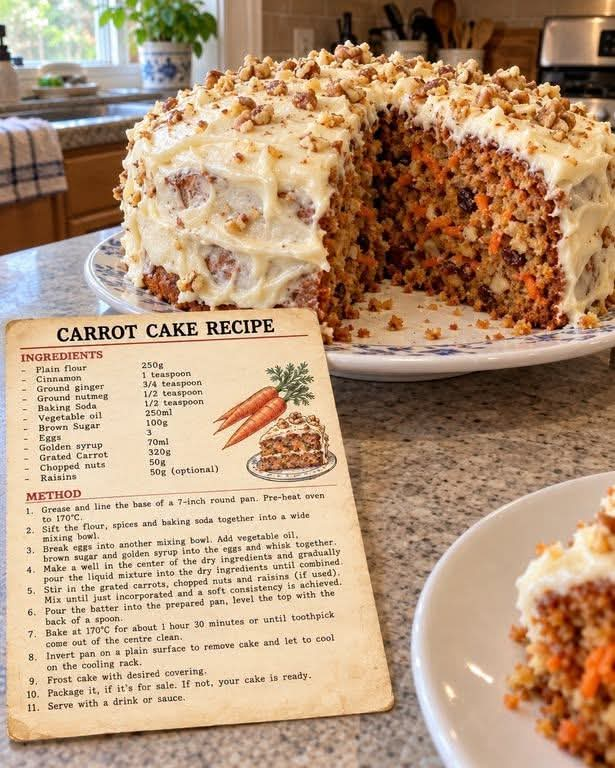
Classic Homemade Carrot Cake – Moist, Spiced, and Full of Homemade Goodness
Introduction
There is something wonderfully comforting about a homemade carrot cake. With its soft, moist texture, warm spices, sweet grated carrots, crunchy nuts, and optional juicy raisins, this classic cake is a delicious treat for almost any occasion. Every slice offers a beautiful balance of sweetness and spice, making it perfect for afternoon tea, family gatherings, birthdays, holidays, or a simple weekend dessert.
This old-fashioned carrot cake recipe uses everyday ingredients and a straightforward mixing method. Vegetable oil helps keep the cake moist, while brown sugar and golden syrup add a rich sweetness and beautiful depth of flavor. Cinnamon, ginger, and nutmeg bring warmth to every bite, creating the familiar taste that makes carrot cake such a beloved dessert.
Enjoy it plain for a simple homemade treat, or finish it with a generous layer of creamy cream cheese frosting for a more traditional bakery-style cake.
Ingredients
For the Carrot Cake
- 250 g plain flour
- 1 teaspoon ground cinnamon
- 3/4 teaspoon ground ginger
- 1/2 teaspoon ground nutmeg
- 1/2 teaspoon baking soda
- 250 ml vegetable oil
- 100 g brown sugar
- 3 large eggs
- 70 ml golden syrup
- 320 g finely grated carrots
- 50 g chopped nuts, such as walnuts or pecans
- 50 g raisins, optional
For the Cream Cheese Frosting (Optional)
- 200 g full-fat cream cheese, softened but still cool
- 75 g unsalted butter, softened
- 150–200 g icing sugar, sifted
- 1 teaspoon vanilla extract
- A little orange zest, optional
For Decoration (Optional)
- A few chopped walnuts or pecans
- A light dusting of cinnamon
- A small amount of finely grated carrot
Instructions
Step 1: Prepare the Oven and Cake Pan
Preheat your oven to 170°C (340°F). If using a fan-assisted oven, consider reducing the temperature to approximately 160°C.
Grease a 7-inch round cake pan with a little butter or oil. Line the bottom and sides with baking parchment to help prevent the cake from sticking.
Because this cake is deep and contains plenty of grated carrots, it requires a relatively long baking time. Make sure your pan is deep enough to hold the batter without overflowing.
Step 2: Combine the Dry Ingredients
Place the plain flour in a large mixing bowl. Add the cinnamon, ground ginger, nutmeg, and baking soda.
Sift the ingredients together to remove lumps and distribute the spices evenly throughout the flour.
This step helps ensure that every slice has a consistent flavor and that the cake rises evenly during baking.
Step 3: Prepare the Wet Ingredients
In a separate large bowl, crack in the eggs and add the brown sugar.
Whisk until the mixture is well combined. Pour in the vegetable oil and golden syrup, then continue whisking until everything forms a smooth, glossy mixture.
The golden syrup gives the cake a rich sweetness and helps contribute to its moist texture. The oil keeps the crumb tender, even after the cake has cooled.
Step 4: Combine the Wet and Dry Mixtures
Gradually pour the wet mixture into the bowl containing the dry ingredients.
Use a wooden spoon, spatula, or hand whisk to combine everything gently. Mix only until the flour disappears and the batter becomes evenly blended.
Avoid overmixing, as excessive mixing can make the finished cake tougher than desired.
Step 5: Add the Grated Carrots
Peel the carrots and grate them finely using a box grater.
Add the grated carrots to the cake batter and fold them in until evenly distributed. The carrots provide natural sweetness and moisture, helping create the characteristic soft texture of carrot cake.
If your grated carrots release a large amount of liquid, drain off any obvious excess without squeezing them completely dry.
Step 6: Add the Nuts and Raisins
Fold in the chopped walnuts or pecans. If you enjoy a little extra sweetness and chewiness, add the raisins as well.
The nuts provide a pleasant crunch that contrasts with the tender cake, while the raisins contribute little pockets of fruity sweetness.
Make sure the additions are distributed evenly throughout the batter so every slice contains a delicious mixture of flavors and textures.
Step 7: Fill the Cake Pan
Pour the finished batter into the prepared cake pan.
Use a spatula to scrape the sides of the mixing bowl and spread the batter evenly. Gently level the surface so the cake bakes as uniformly as possible.
Tap the pan lightly against the counter to release any large air pockets.
Step 8: Bake the Cake
Place the pan on the middle rack of the preheated oven.
Bake for approximately 1 hour to 1 hour 30 minutes, checking the cake as it approaches the one-hour mark. The exact baking time depends on your oven, the depth of the pan, and the moisture content of the carrots.
The cake is ready when the top is golden brown, the center feels set, and a skewer inserted into the middle comes out clean or with a few moist crumbs.
If the top begins to brown too quickly while the center is still baking, loosely cover it with aluminum foil.
Avoid opening the oven door repeatedly during the first part of baking, as this can affect how the cake rises.
Step 9: Cool the Cake
Remove the cake from the oven and leave it in the pan for approximately 15–20 minutes.
Carefully turn it out onto a wire rack, remove the parchment paper, and allow it to cool completely before adding frosting.
This step is important because frosting a warm cake can cause the cream cheese mixture to melt and slide off.
For an even better texture, you can wrap the completely cooled cake and let it rest overnight before frosting. The flavors will have more time to develop.
How to Make Cream Cheese Frosting
Step 1: Beat the Butter
Place the softened butter in a mixing bowl and beat until smooth and creamy.
Step 2: Add the Cream Cheese
Add the cream cheese and beat briefly until the mixture is smooth. Avoid overbeating, because cream cheese can become too soft when mixed for too long.
Step 3: Add the Icing Sugar
Gradually add the sifted icing sugar, mixing gently until the frosting reaches your preferred sweetness and consistency.
Stir in the vanilla extract and, if desired, a little orange zest for a fresh citrus note.
If the frosting is too soft, refrigerate it briefly before spreading.
Step 4: Frost and Decorate
Once the carrot cake is completely cool, spread the frosting over the top. You can cover the sides as well if you prefer a fully frosted cake.
Finish with chopped walnuts, pecans, a light dusting of cinnamon, or a few decorative carrot shavings.
For a simpler finish, leave the cake unfrosted and serve it with tea or coffee.
Methods for the Best Carrot Cake
The Mixing Method
This recipe uses a simple wet-and-dry mixing method. The dry ingredients are combined separately from the eggs, oil, sugar, and golden syrup before everything is brought together.
This method is easy to follow and helps distribute the spices and raising agent evenly.
The Moisture Method
Vegetable oil provides a tender crumb, while the grated carrots contribute moisture and natural sweetness. Brown sugar and golden syrup give the cake a richer flavor than white sugar alone would provide.
For the best result, grate the carrots finely and measure the ingredients accurately.
The Gentle Folding Method
Once the flour mixture and wet ingredients have been combined, fold in the carrots, nuts, and raisins gently.
This keeps the batter from being overworked and helps maintain a soft texture.
The Slow Baking Method
Carrot cake is relatively dense, especially when baked in a deep 7-inch pan. A moderate oven temperature allows the center to cook without excessively darkening the outside.
Begin checking for doneness after approximately one hour, and allow additional baking time when necessary.
The Cooling and Finishing Method
Allow the cake to cool fully before frosting. If you want neat slices, chill the frosted cake briefly before cutting it with a sharp knife.
Wipe the knife between slices for a cleaner presentation.
History of Carrot Cake
Carrot cake has a long history connected to the use of vegetables and naturally sweet ingredients in baking.
Carrots have been used in sweet dishes for centuries. Before refined sugar became widely affordable, cooks sometimes relied on naturally sweet vegetables and fruits to add flavor to puddings and baked desserts.
Carrot-based puddings appeared in European cooking traditions, and carrot cake gradually developed into the recognizable baked dessert enjoyed today. During periods when certain ingredients were expensive or difficult to obtain, carrots provided a practical way to add sweetness and moisture.
Over time, carrot cake became especially popular in Britain and North America. Recipes evolved to include warm spices, nuts, raisins, and, eventually, the cream cheese frosting now strongly associated with the dessert.
Modern versions range from simple tea cakes to elaborate layered celebration cakes. This recipe follows the comforting homemade tradition, combining grated carrots, warm spices, brown sugar, and optional nuts and raisins.
Formation and Texture of the Cake
The formation of a good carrot cake depends on how its ingredients work together.
The flour provides the structure, while the eggs help bind the batter and support the cake as it sets in the oven. Baking soda contributes to the rise when the batter’s ingredients provide sufficient acidity.
Vegetable oil coats the flour and helps produce a moist, tender crumb. Brown sugar and golden syrup contribute sweetness, color, and a deeper caramel-like flavor.
The grated carrots soften during baking and become part of the cake’s tender interior. Their moisture helps prevent the crumb from becoming dry, while the cinnamon, ginger, and nutmeg create a warm aroma.
Nuts add texture and a slightly earthy flavor. Raisins, when included, provide extra sweetness and a soft, chewy contrast.
As the cake bakes, the eggs and flour set into a stable structure. During cooling, the crumb becomes more settled and easier to slice.
The final result should be moist without being soggy, tender without falling apart, and rich in flavor without being overwhelmingly sweet.
Helpful Tips and Variations
Choose Fresh Carrots
Fresh carrots generally provide better flavor and moisture. Finely grated carrots blend more easily into the batter than thick shreds.
Select Your Favorite Nuts
Walnuts are a classic choice, but pecans also work beautifully. If you have a nut allergy or prefer a smoother texture, simply leave them out.
Make It Without Raisins
Raisins are optional. You can omit them entirely or replace them with chopped dates or dried cranberries.
Add a Citrus Note
A little orange zest in the batter or frosting complements the warm spices and adds a fresh flavor.
Avoid Overbaking
Start checking the center at around 60 minutes. Every oven behaves differently, and the cake may need more or less time than expected.
Store It Properly
An unfrosted carrot cake can be kept in an airtight container at room temperature for approximately 2–3 days in a cool environment.
Once frosted with cream cheese frosting, refrigerate the cake in a covered container. For best quality, enjoy it within about 4–5 days.
You can also freeze unfrosted slices, wrapped securely, for approximately 2–3 months. Thaw them in the refrigerator or at room temperature while still wrapped.
Serving Suggestions
Carrot cake is delicious served in thick slices with a cup of tea, freshly brewed coffee, or a glass of milk.
For a special occasion, serve it with cream cheese frosting and chopped pecans. For a more casual afternoon treat, enjoy it plain or with a small spoonful of whipped cream.
It is also a lovely dessert for Easter celebrations, autumn gatherings, birthdays, family dinners, and holiday dessert tables.
For a beautiful presentation, place the cake on a serving stand and decorate the top with a simple swirl of frosting and a scattering of chopped nuts.
Conclusion
This classic homemade carrot cake is a wonderful combination of soft texture, warm spices, natural carrot sweetness, and rich flavor. The vegetable oil and grated carrots help keep the cake moist, while brown sugar and golden syrup add depth and sweetness.
The recipe is flexible enough to suit different tastes. Add walnuts for crunch, include raisins for extra sweetness, or finish the cake with smooth cream cheese frosting for a traditional bakery-style dessert.
Whether you prepare it for a family gathering, a weekend baking project, or a quiet afternoon at home, this carrot cake is a comforting treat that deserves a place in your collection of favorite homemade recipes.
For Carrot Cake Lovers
If you love old-fashioned cakes that fill the kitchen with a warm, inviting aroma, this carrot cake is worth making again and again.
Every slice offers something special: tender cake, gentle cinnamon and ginger, sweet carrots, and the satisfying crunch of nuts. The optional cream cheese frosting adds a creamy finish that complements the spices beautifully.
Make it for the people you love, share it around the family table, and enjoy the simple pleasure of a homemade dessert made from familiar ingredients.
A good carrot cake does not need complicated techniques or expensive ingredients. It simply needs a little care, a little patience, and plenty of homemade goodness.