
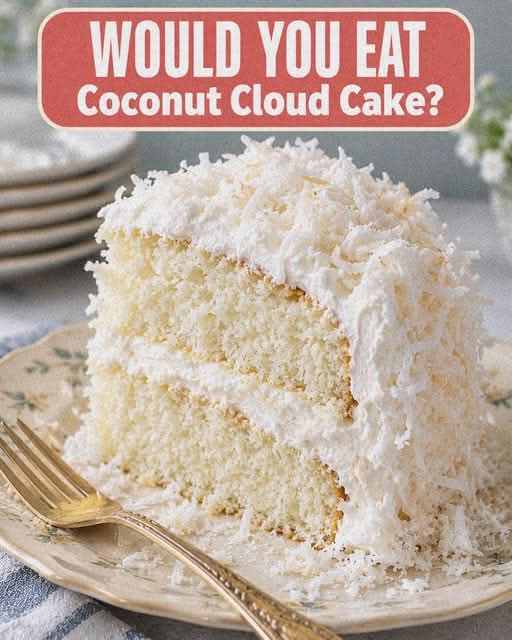
Coconut Cloud Cake – A Soft, Fluffy Coconut Dream with Creamy Coconut Frosting
Introduction
If you love coconut desserts, this Coconut Cloud Cake is a recipe worth keeping. Imagine two layers of soft, tender vanilla-coconut cake, filled and covered with a rich yet airy coconut frosting, then finished with a generous blanket of sweet shredded coconut. Every slice looks beautiful, tastes delicate, and feels wonderfully light.
This homemade coconut cake combines the comforting flavor of traditional butter cake with the tropical sweetness of coconut milk and coconut extract. The cake itself is moist and fluffy, while the frosting blends smooth cream cheese, whipped cream, and shredded coconut into a creamy topping that melts in your mouth.
What makes this dessert special is the balance of textures. The cake is soft without being heavy, the frosting is creamy without feeling overly dense, and the coconut flakes provide a pleasant texture in every bite. A little vanilla brings warmth, while the coconut flavor gives the entire dessert its signature tropical character.
Coconut Cloud Cake is perfect for birthdays, family gatherings, holidays, afternoon tea, Sunday dinners, and special celebrations. It is also a wonderful dessert to prepare when you want something homemade that looks elegant without requiring complicated decorating techniques.
Whether you serve it with coffee, tea, or a glass of cold milk, this cake brings a little sweetness to the table and makes ordinary moments feel special.
Preparation Details
- Preparation time: 35 minutes
- Baking time: 25–30 minutes
- Cooling time: Approximately 1 hour
- Chilling time: At least 1 hour
- Total time: Approximately 3 hours, including cooling and chilling
- Servings: 12–14 slices
- Difficulty: Intermediate
- Baking temperature: 350°F (175°C)
- Cake pans: Two 9-inch round cake pans
Ingredients
For the Soft Coconut Cloud Cake
Dry ingredients
- 2½ cups all-purpose flour
- 1½ cups granulated sugar
- 2½ teaspoons baking powder
- ½ teaspoon salt
Wet ingredients
- ½ cup unsalted butter, softened to room temperature
- ¼ cup vegetable oil
- 4 large egg whites, at room temperature
- 1 cup coconut milk, well mixed
- ½ cup whole milk, at room temperature
- 2 teaspoons vanilla extract
- 1 teaspoon coconut extract
These ingredients create a tender cake with a delicate crumb and a balanced coconut flavor. Butter contributes richness, while the vegetable oil helps keep the cake moist. The egg whites help create a lighter texture and a beautiful pale color.
For the Fluffy Coconut Cream Cheese Frosting
- 1½ cups heavy whipping cream, very cold
- 8 ounces cream cheese, softened
- 1 cup powdered sugar
- 1 teaspoon vanilla extract
- 1 teaspoon coconut extract
- 2 cups sweetened shredded coconut
The combination of cream cheese and whipped cream creates a smooth, airy frosting with enough structure to cover the cake. The shredded coconut adds sweetness and gives the frosting its characteristic coconut texture.
For the Garnish
- ½–1 cup additional shredded coconut, as needed
- White chocolate curls, optional
- A little toasted coconut, optional, for extra flavor and decoration
You can use plain shredded coconut for a snowy appearance or lightly toasted coconut for a more pronounced nutty flavor.
Instructions
Step 1: Prepare the Oven and Cake Pans
Preheat your oven to 350°F (175°C).
Grease two 9-inch round cake pans with butter or nonstick baking spray. Line the bottoms with parchment paper to help the cakes release easily after baking.
Measure all the ingredients before beginning. Allow the butter, egg whites, and milk to reach room temperature, while keeping the heavy whipping cream refrigerated until it is time to make the frosting.
Step 2: Combine the Dry Ingredients
In a medium mixing bowl, whisk together the all-purpose flour, baking powder, and salt.
Whisking distributes the baking powder evenly throughout the flour and helps prevent concentrated pockets of leavening in the finished cake.
Set the mixture aside.
Step 3: Cream the Butter, Oil, and Sugar
In a large mixing bowl, beat the softened butter and granulated sugar with an electric mixer for approximately 3–4 minutes.
Continue beating until the mixture becomes pale, fluffy, and creamy. Scrape down the sides of the bowl as needed.
Add the vegetable oil and beat briefly until incorporated.
This step introduces air into the batter, helping the cake develop a lighter texture. Make sure the butter is softened rather than melted, as melted butter will not cream properly with the sugar.
Step 4: Add the Egg Whites
Add the egg whites gradually, beating well after each addition.
Room-temperature egg whites blend more easily into the batter than cold ones. Once all four egg whites have been incorporated, the mixture should look smooth and slightly fluffy.
Add the vanilla extract and coconut extract, then mix until combined.
Avoid adding extra coconut extract without tasting the finished frosting and considering the strength of the extract. Too much can create an artificial flavor.
Step 5: Alternate the Dry Ingredients and Milk
Add approximately one-third of the flour mixture to the butter mixture and mix on low speed until just combined.
Pour in half of the coconut milk and mix gently. Add another third of the flour mixture, followed by the whole milk, and then finish with the remaining flour mixture.
Mix only until the ingredients are incorporated. Scrape the sides and bottom of the bowl with a spatula to make sure no dry flour remains.
Do not overmix. Excessive mixing can develop gluten and make the cake firmer instead of soft and tender.
The finished batter should be smooth, thick, and easy to spread.
Step 6: Divide the Batter
Divide the batter evenly between the two prepared cake pans.
Use a spatula to spread the batter toward the edges and gently level the tops.
Tap each pan lightly on the counter to release any large air bubbles.
For the most even layers, try to place the same amount of batter in each pan.
Step 7: Bake the Cake Layers
Place the pans on the center rack of the preheated oven.
Bake for 25–30 minutes, checking near the end of the baking time.
The cakes are ready when the tops are lightly golden, the centers spring back gently when touched, and a toothpick inserted into the middle comes out clean or with a few moist crumbs.
If one cake finishes before the other, remove it first rather than allowing it to dry out.
Avoid opening the oven repeatedly during the first 20 minutes, because sudden temperature changes can affect how the cakes rise.
Step 8: Cool the Cake Completely
Remove the pans from the oven and allow the cakes to cool in their pans for about 10 minutes.
Carefully run a thin knife around the edges, then invert the cakes onto wire racks. Remove the parchment paper and turn the layers upright.
Allow both cakes to cool completely before frosting.
This is an essential step. Warm cake can melt the whipped cream frosting, causing it to slide off or become runny.
Step 9: Prepare the Cream Cheese Base
Place the softened cream cheese in a large bowl.
Beat until completely smooth, scraping down the sides of the bowl as necessary.
Add the powdered sugar gradually and continue beating until creamy and free of lumps.
Mix in the vanilla extract and coconut extract.
The cream cheese should be soft enough to blend easily but not warm or melted.
Step 10: Whip the Heavy Cream
Pour the cold heavy whipping cream into a separate chilled mixing bowl.
Using an electric mixer, beat until stiff peaks form. When the beaters are lifted, the whipped cream should hold its shape without collapsing.
Watch the cream carefully. Overwhipping can cause it to become grainy and eventually separate.
For best results, use heavy whipping cream with approximately 35% milk fat or more.
Step 11: Make the Fluffy Coconut Frosting
Add about one-third of the whipped cream to the cream cheese mixture and stir gently to lighten it.
Fold in the remaining whipped cream using a spatula. Use slow, sweeping movements from the bottom of the bowl upward to preserve the airiness.
Add the 2 cups of sweetened shredded coconut and fold until evenly distributed.
The finished frosting should be thick, creamy, and fluffy enough to spread over the cooled cake.
If it feels too soft, refrigerate it for 15–20 minutes before assembling the cake.
Step 12: Assemble the First Layer
Place one completely cooled cake layer on a serving plate or cake stand.
Spread a generous amount of coconut frosting over the top, creating an even layer from the center toward the edges.
Keep the frosting slightly thicker in the middle if you want a more generous filling.
Make sure the cake layer is stable before placing the second layer on top.
Step 13: Add the Second Cake Layer
Carefully place the second cake layer over the frosting, with the flatter side facing upward if possible.
Press very gently to secure the layers without squeezing out the filling.
Spread frosting over the top of the cake, then cover the sides with the remaining frosting.
Use an offset spatula or the back of a spoon to create smooth sides or soft decorative swirls.
The cake does not need perfectly smooth edges. A fluffy, cloud-like finish suits this dessert beautifully.
Step 14: Decorate the Cake
Sprinkle shredded coconut generously over the top and sides of the frosted cake.
Gently press the coconut against the sides so that it adheres to the frosting.
For an elegant finish, add white chocolate curls to the top. You can also create a small mound of toasted coconut in the center or decorate the edges with a light border of frosting.
Keep the decoration simple enough to let the soft white frosting and coconut flakes remain the main attraction.
Step 15: Chill Before Serving
Place the assembled cake in the refrigerator for at least one hour.
Chilling allows the frosting to firm up and helps the layers hold together when sliced.
For neat slices, use a sharp knife warmed under hot water and wiped dry between cuts.
Serve the cake chilled or allow individual slices to stand at room temperature for approximately 10–15 minutes before eating, if you prefer a softer frosting.
Methods for the Best Coconut Cloud Cake
The Creaming Method
The cake uses the creaming method, in which softened butter and sugar are beaten together to incorporate air. The oil adds additional moisture, while the egg whites help create a lighter-colored crumb.
This method works best when the ingredients are measured accurately and the butter is softened but not melted.
The Alternating-Mixing Method
The flour mixture is added in stages, alternating with the coconut milk and whole milk.
This technique helps the ingredients combine evenly without placing too much stress on the batter. Mixing on low speed and stopping as soon as the flour disappears helps prevent a tough cake.
The Whipped Cream Folding Method
The frosting uses whipped cream folded into a sweetened cream cheese base.
Whipping the cream separately gives the frosting its airy texture. Folding rather than beating it vigorously helps preserve the air bubbles that make the topping feel light.
The Layering and Chilling Method
Once the cake layers have cooled completely, they are stacked with frosting between them and covered with the remaining frosting.
Refrigeration helps stabilize the filling and gives the cake a cleaner appearance when sliced.
The History and Inspiration Behind Coconut Cloud Cake
Coconut cake has a long tradition in home baking, particularly in American kitchens, where layered cakes covered in coconut have been popular for generations.
Coconut became a common ingredient in many baking traditions as packaged shredded coconut, canned coconut milk, and coconut extracts became more accessible to home cooks. These ingredients made it easier to create desserts with a recognizable tropical flavor without needing a fresh coconut.
Traditional coconut layer cakes often feature butter cake, sweet coconut filling, and a thick frosting covered with shredded coconut. Some versions use buttercream, while others use whipped cream, cream cheese, or cooked frostings.
Coconut Cloud Cake draws inspiration from these classic desserts but emphasizes a softer crumb and a lighter, creamier topping. The name describes its appearance and texture rather than a single established historical recipe.
The addition of coconut milk enriches the cake with coconut flavor, while the combination of whipped cream and cream cheese gives the frosting a balance of lightness, tanginess, and sweetness.
Today, coconut layer cakes remain popular for family celebrations, holiday tables, birthdays, and gatherings where a beautiful homemade dessert is welcome.
Formation and Texture: What Makes This Cake Special?
The formation of Coconut Cloud Cake depends on several ingredients working together.
The flour provides structure. When combined with liquid, flour forms the framework that holds the cake together. Using the correct amount helps the cake remain tender while supporting two layers.
The baking powder helps the cake rise. It releases gas during baking, creating small air pockets throughout the crumb. These pockets contribute to the cake’s soft texture.
The butter and oil contribute richness and moisture. Butter gives the cake a familiar buttery flavor, while vegetable oil helps it stay moist after cooling.
The egg whites help bind and lighten the batter. Their proteins set during baking, helping the cake maintain its shape. Their use also produces a pale interior that complements the white coconut frosting.
The coconut milk adds flavor and richness. Together with whole milk, it supplies moisture and helps the dry ingredients combine into a smooth batter.
The whipped cream creates an airy frosting. Beating cold cream incorporates air, increasing its volume and creating a light texture.
The cream cheese gives the frosting body. It adds a gentle tang that balances the sweetness of the powdered sugar and shredded coconut.
The shredded coconut completes the dessert. It contributes chewiness, visible texture, and the familiar coconut flavor that makes every slice distinctive.
When these elements are combined carefully, the result is a layered cake with a soft interior, a creamy filling, and a fluffy exterior.
Helpful Tips for Perfect Results
- Measure the flour correctly. Spoon it into the measuring cup and level the top rather than packing it down. Too much flour can make the cake dense.
- Use room-temperature cake ingredients. Softened butter, room-temperature egg whites, and milk help the batter combine evenly.
- Mix the coconut milk before measuring. Canned coconut milk can separate in the container, so stir or shake it thoroughly first.
- Do not overmix the batter. Stop as soon as the ingredients are incorporated to keep the cake tender.
- Cool the layers completely. Frosting a warm cake can melt the cream and make the layers slide.
- Keep the whipping cream cold. Cold cream whips more easily and holds its shape better.
- Use full-fat cream cheese. It generally produces a richer and more stable frosting than low-fat alternatives.
- Fold the frosting gently. Vigorous mixing after adding the whipped cream can deflate the frosting.
- Chill the assembled cake. The frosting becomes firmer, making the cake easier to slice and serve.
- Taste before adding extra sweetness. Sweetened shredded coconut and powdered sugar already provide plenty of sweetness.
Variations to Try
Toasted Coconut Cloud Cake
Lightly toast some of the garnish coconut in a dry skillet over low heat, stirring frequently until golden. Allow it to cool before sprinkling it over the cake. Toasted coconut adds a deeper, nuttier flavor.
White Chocolate Coconut Cake
Add white chocolate curls to the top or sprinkle finely chopped white chocolate between the layers. White chocolate pairs beautifully with coconut, although it will make the dessert sweeter.
Pineapple Coconut Cloud Cake
For a tropical variation, serve each slice with a spoonful of well-drained crushed pineapple or pineapple compote. Keep excess liquid away from the frosting so the cake does not become soggy.
Almond Coconut Cake
Replace a small portion of the vanilla flavoring with almond extract, using only a few drops at first because almond extract can be strong. Almond and coconut create a classic bakery-style flavor combination.
Extra-Coconut Celebration Cake
For a stronger coconut taste, use coconut milk in both the cake and a small amount in the serving accompaniment, while keeping the frosting recipe unchanged. Avoid adding too much liquid directly to the frosting.
Serving Suggestions
Coconut Cloud Cake is delicious served on its own, but it also pairs well with simple accompaniments.
- Serve with freshly brewed coffee or black tea.
- Add fresh strawberries, raspberries, or sliced mango alongside each slice.
- Serve with a small spoonful of pineapple compote for a tropical finish.
- Offer thin slices after a rich holiday meal.
- Decorate the serving platter with a light scattering of coconut flakes for a bakery-style presentation.
Because the frosting is rich and creamy, modest slices are often enough to satisfy a sweet craving.
Storage Instructions
Refrigerator: Store the frosted cake in an airtight cake container or cover it carefully and refrigerate for up to 3–4 days. The cream cheese and whipped cream frosting should remain refrigerated.
Freezing: For best quality, freeze unfrosted cake layers individually, wrapped tightly, for up to 2 months. Thaw them in the refrigerator before assembling. The whipped cream and cream cheese frosting may change texture after freezing, so freezing the finished cake is less reliable.
Serving leftovers: Keep the cake refrigerated between servings. Avoid leaving it at room temperature for extended periods, especially in warm weather.
Common Mistakes and How to Avoid Them
The cake is dense. This may happen if too much flour is added or the batter is overmixed. Measure carefully and mix only until combined.
The cake layers sink. Opening the oven too early, underbaking, or inaccurate ingredient measurements can contribute to sinking. Check for doneness before removing the cake.
The frosting is runny. The cream may not have been whipped sufficiently, or the ingredients may have become too warm. Chill the bowl and frosting briefly, and whip the cream to stiff peaks before folding.
The frosting contains lumps. The cream cheese may have been too cold. Allow it to soften before beating it with the powdered sugar.
The cake slides while assembling. The layers may still be warm or the frosting may be too soft. Cool the cake completely and chill the frosting if necessary.
The coconut flavor is too strong. Coconut extracts vary in intensity. Measure carefully and avoid adding extra extract without tasting.
Conclusion
Coconut Cloud Cake is a beautiful homemade dessert that combines everything coconut lovers enjoy: a tender, fluffy cake, a creamy coconut filling, and a generous coating of sweet shredded coconut.
The recipe may look impressive, but its techniques are straightforward. By preparing the batter carefully, allowing the layers to cool completely, folding the whipped cream gently, and chilling the finished cake, you can create a dessert that looks as wonderful as it tastes.
It is suitable for birthdays, holidays, family dinners, potlucks, and quiet afternoons when you want a special slice of homemade cake. The delicate coconut flavor and cloud-like frosting make it memorable without requiring complicated decorations.
Make it for a celebration, share it with family and friends, or save the recipe for the next time you want a soft, creamy coconut dessert. One slice may be all you planned to enjoy, but the combination of fluffy cake and coconut frosting makes it tempting to reach for another.
For Coconut Cake Lovers
If you love creamy desserts, tropical flavors, and traditional homemade cakes, this Coconut Cloud Cake deserves a place in your recipe collection.
The soft layers, sweet coconut flakes, and light cream cheese frosting come together in a dessert that feels both comforting and elegant. It is a wonderful choice for anyone who enjoys coconut cake but wants a lighter-style frosting instead of a heavy buttercream.
Serve it chilled, share it generously, and enjoy the simple pleasure of a homemade dessert made with care.
Recipe reminder: Keep the heavy cream cold, let the cake layers cool completely, and refrigerate the finished cake before slicing. These three details make a real difference in the final texture and presentation.
Final Recipe Summary
- Two soft coconut cake layers
- A creamy whipped cream and cream cheese frosting
- Sweet shredded coconut throughout the frosting
- Extra coconut and optional white chocolate curls for decoration
- At least one hour of chilling before serving
- Approximately 12–14 generous or smaller celebration slices
This Coconut Cloud Cake is a lovely combination of softness, creaminess, and delicate tropical sweetness. Make it once, share it with the people you love, and enjoy a classic coconut-inspired dessert with a beautiful cloud-like finish.