
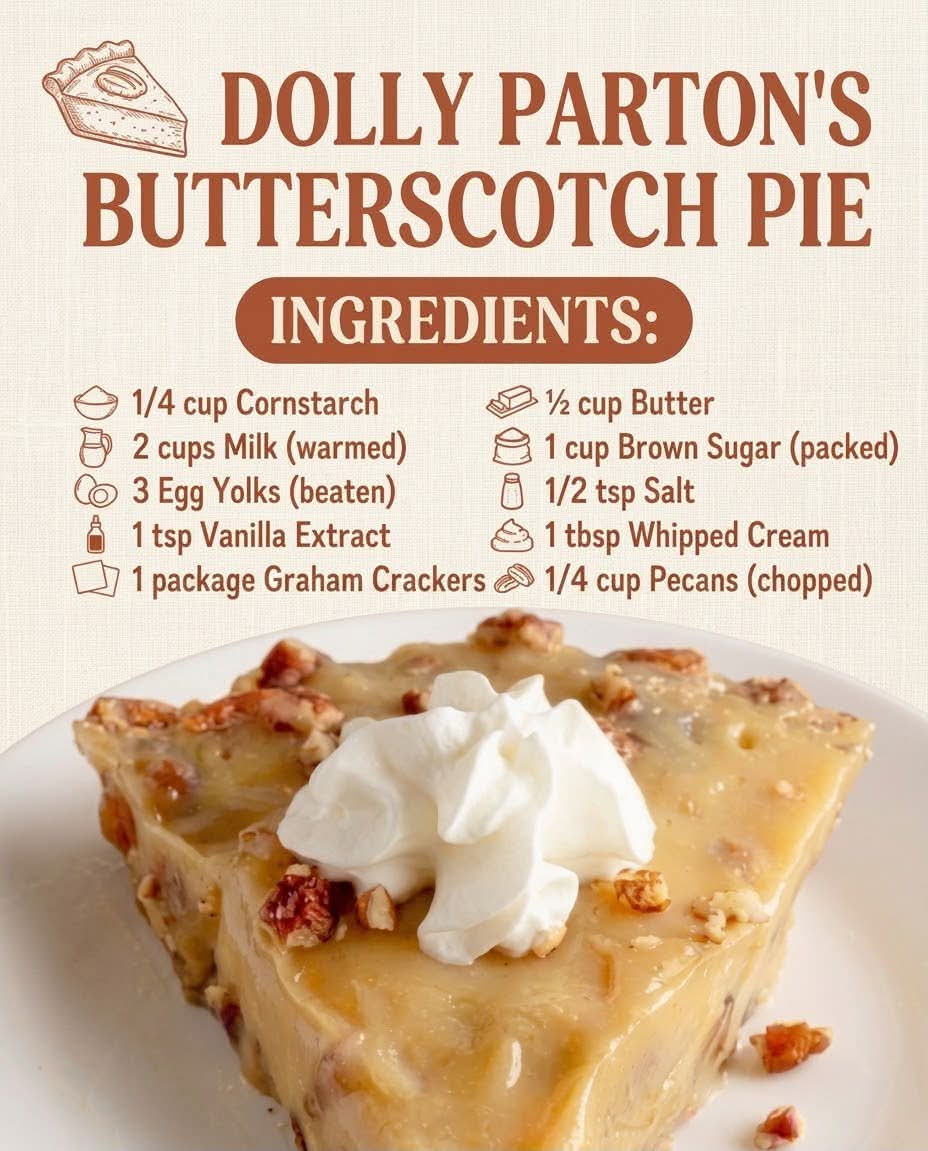
Dolly Parton’s Butterscotch Pie
Introduction
Dolly Parton’s Butterscotch Pie is the kind of dessert that celebrates everything wonderful about old-fashioned Southern baking: simple ingredients, deep caramelized flavor, a tender pastry crust, and a filling that tastes rich without requiring complicated techniques.
This pie is built around brown sugar and butter, the two ingredients responsible for its unmistakable butterscotch character. Heavy cream gives the filling richness, while eggs help it set into a soft, sliceable custard. Vanilla and a small amount of salt round everything out and keep the sweetness balanced.
The finished pie is wonderfully comforting. The crust becomes golden and flaky while the filling develops a smooth, buttery texture with warm notes of caramel and brown sugar. Served slightly chilled or at room temperature with whipped cream, it makes a beautiful dessert for family dinners, holidays, potlucks, and special occasions.
Ingredients
For the Pie
- 1 (9-inch) unbaked refrigerated pie crust
- 1/2 cup (1 stick) unsalted butter, melted
- 2 cups packed brown sugar
- 1/2 cup heavy cream
- 2 large eggs, lightly beaten
- 1 teaspoon vanilla extract
- 1/4 teaspoon salt
Optional Garnishes
- Freshly whipped cream
- A light sprinkle of brown sugar
- Finely chopped pecans
- Caramel sauce
- A small pinch of flaky sea salt
Preparation
Begin by taking the refrigerated pie crust out of the refrigerator according to the package directions. It should be flexible enough to fit comfortably into the pie dish without cracking.
Preheat the oven to 350°F (175°C).
Place the crust into a 9-inch pie plate. Gently press it against the bottom and sides of the dish, then crimp or decorate the edges as desired.
There is no need to fully blind-bake the crust for this recipe.
Instructions
Step 1: Melt the Butter
Place the butter in a small saucepan or microwave-safe bowl and melt it gently.
Allow the butter to cool for a few minutes. It should remain liquid but should not be extremely hot when combined with the other ingredients.
This prevents the butter from overheating the eggs later in the preparation.
Step 2: Combine the Brown Sugar and Butter
In a large mixing bowl, combine the melted butter and packed brown sugar.
Stir until the butter is evenly incorporated into the brown sugar.
The mixture should be thick, glossy, and fragrant.
This is the foundation of the pie’s butterscotch flavor.
Step 3: Add the Cream
Pour the heavy cream into the brown sugar and butter mixture.
Whisk gently until the ingredients are thoroughly combined.
The cream softens the richness of the butter and helps create the smooth texture that makes this pie so enjoyable.
Step 4: Add the Eggs
In a separate bowl, lightly beat the two eggs.
Gradually add the eggs to the brown sugar mixture while stirring continuously.
Do not vigorously whip the mixture. The goal is simply to incorporate the eggs smoothly without creating excessive air bubbles.
Step 5: Add Vanilla and Salt
Add the vanilla extract and salt.
Stir until everything is evenly combined.
The salt is especially important because it balances the sweetness of the brown sugar and makes the buttery butterscotch flavor more pronounced.
Step 6: Fill the Pie Crust
Pour the prepared filling into the unbaked pie crust.
Fill the crust carefully and avoid disturbing the edges.
If you notice bubbles on the surface, gently tap the pie plate against the counter once or twice to encourage them to rise.
Step 7: Bake
Place the pie carefully on the center rack of the preheated oven.
Bake for approximately 40 to 50 minutes.
The exact baking time can vary depending on your oven and the depth of your pie dish.
The pie is ready when the edges are set and the center has a slight jiggle when the dish is gently moved.
The filling should not look completely liquid in the center.
Avoid overbaking. The filling will continue to firm as it cools.
Step 8: Cool
Remove the pie from the oven and place it on a wire rack.
Allow it to cool completely before slicing.
For the cleanest slices and the best custard texture, refrigerate the cooled pie for at least 1 to 2 hours before serving.
Method
The preparation of this pie is relatively simple, but the technique is important.
The melted butter is first combined with brown sugar to distribute the fat throughout the sweet base. Heavy cream then gives the mixture additional richness and creates a smoother filling.
The eggs are added last because they are responsible for setting the custard during baking.
As the pie heats in the oven, the proteins in the eggs gradually coagulate. At the same time, the sugar dissolves and the butter and cream contribute richness.
The result is a soft, dense filling that is firm enough to slice but tender enough to melt pleasantly in the mouth.
The Formation of the Pie
The pie develops its final structure in several stages.
First, the raw filling is a thick, glossy mixture of butter, brown sugar, cream, and eggs.
Once it enters the oven, the heat begins setting the egg proteins. The filling gradually changes from liquid to a soft custard.
Meanwhile, the brown sugar develops deeper caramel-like flavors as the pie bakes.
The crust becomes golden and crisp around the edges while remaining tender underneath the filling.
During cooling, the custard continues to firm. This is why cutting the pie while it is still hot can result in a filling that appears too loose.
Allowing it to cool completely gives the pie its characteristic smooth, sliceable texture.
A Brief History of Butterscotch Desserts
Butterscotch is traditionally associated with the combination of butter and brown sugar, which produces a rich flavor reminiscent of caramel but with a deeper molasses character.
Brown sugar and butter have long been staples of American home baking because they are inexpensive, readily available, and capable of creating wonderfully rich desserts.
Southern cooks have historically used these ingredients in pies, cakes, puddings, candies, cookies, and sauces.
Butterscotch pie fits naturally into this tradition. It is a dessert based on pantry staples rather than complicated ingredients, making it particularly suited to home kitchens and family gatherings.
Dolly Parton is strongly associated with Southern food traditions and nostalgic home cooking, and recipes presented under her name or inspired by her culinary style have helped bring classic Southern desserts to modern audiences.
Individual versions of butterscotch pie can vary considerably. Some use cornstarch-thickened fillings, some use milk, while others rely on eggs to create a baked custard such as this version.
Tips for the Best Butterscotch Pie
Use Real Butter
Unsalted butter gives the filling its rich, unmistakable flavor. Because the recipe contains very few ingredients, the quality of the butter can make a noticeable difference.
Pack the Brown Sugar
When measuring brown sugar, press it firmly into the measuring cup before leveling it. Properly packed brown sugar gives the pie its intended sweetness and butterscotch flavor.
Do Not Overmix
Once the eggs are added, whisk just until everything is incorporated. Excessive mixing can introduce air bubbles that may affect the appearance of the finished pie.
Do Not Overbake
The center should retain a gentle jiggle when the pie comes out of the oven. It will become firmer as it cools.
Allow Plenty of Cooling Time
Patience is one of the most important parts of this recipe. A completely cooled pie will slice much more cleanly than one served immediately from the oven.
Serving Suggestions
This pie is delicious by itself, but a creamy topping makes it even more indulgent.
Serve each slice with a generous spoonful of freshly whipped cream.
For additional texture and flavor, you can sprinkle the top with finely chopped toasted pecans.
A small drizzle of caramel sauce also complements the brown sugar filling beautifully.
For a more sophisticated presentation, finish each slice with a tiny pinch of flaky sea salt. The salt provides a pleasant contrast to the sweetness of the filling.
Another wonderful option is to serve the pie slightly chilled with a scoop of vanilla ice cream.
Make-Ahead Method
Butterscotch Pie is an excellent make-ahead dessert.
Bake the pie earlier in the day and allow it to cool completely. Cover it loosely and refrigerate until ready to serve.
Chilling the pie allows the filling to become firm and makes slicing easier.
Remove it from the refrigerator shortly before serving if you prefer a slightly softer texture.
Add whipped cream or other toppings immediately before serving.
Storage
Store leftover pie covered in the refrigerator.
It is best enjoyed within several days for the freshest crust and filling.
Because the pie contains eggs and dairy, refrigeration is important once it has cooled.
If the crust softens slightly after refrigeration, the rich butterscotch filling will still remain delicious.
For Butterscotch Lovers
If you are a true butterscotch lover, this pie is especially satisfying because the flavor comes from the simple combination of butter and brown sugar rather than relying on artificial flavoring.
For an even more pronounced butterscotch experience, serve the pie with whipped cream and a light drizzle of homemade caramel or butterscotch sauce.
Toasted pecans are another excellent addition because their buttery, nutty flavor complements the brown sugar filling.
A cup of coffee or unsweetened tea alongside a slice also works beautifully, especially when the pie is served after dinner.
Common Mistakes to Avoid
One common mistake is using butter while it is extremely hot. Allow it to cool slightly before combining it with the eggs.
Another mistake is overbaking. A butterscotch custard should be tender rather than dry or rubbery.
Cutting the pie immediately after baking can also lead to messy slices because the filling needs time to set.
Finally, do not underestimate the salt. Even a small amount helps balance the brown sugar and allows the butterscotch flavor to stand out.
Conclusion
Dolly Parton’s Butterscotch Pie is a beautiful example of simple, old-fashioned baking. With only a handful of familiar ingredients, it creates a dessert with remarkable depth of flavor.
The combination of buttery brown sugar, rich cream, vanilla, and tender baked eggs produces a smooth filling with warm caramel-like notes. The flaky pie crust provides the perfect contrast to the soft center.
For the best experience, let the pie cool completely, chill it until beautifully set, and serve each slice with whipped cream or vanilla ice cream.
It is comforting, nostalgic, rich, and wonderfully uncomplicated—the kind of dessert that feels right at a family table and is sure to win over anyone who loves classic butterscotch flavors.