
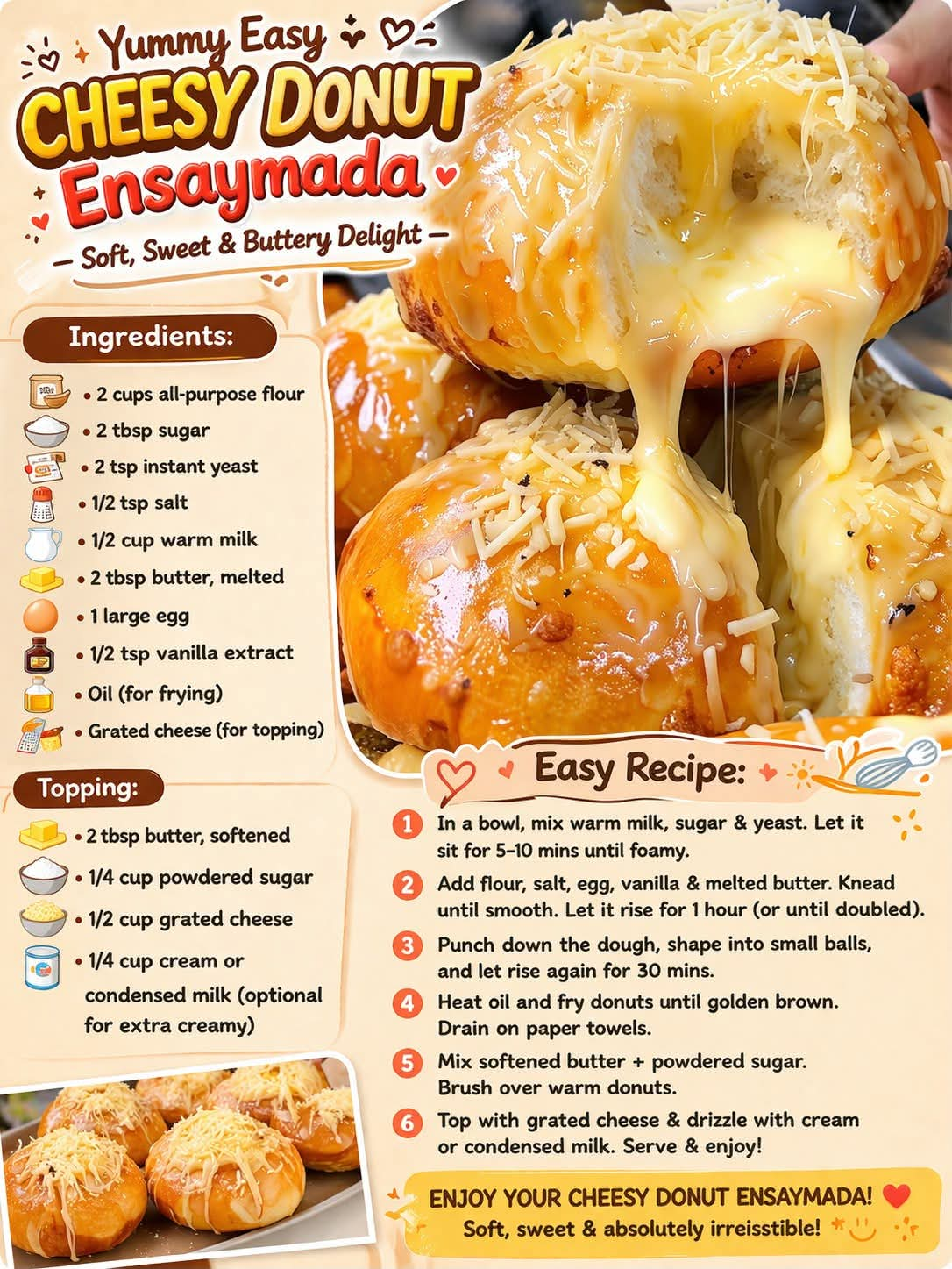
Easy Cheesy Donut Ensaymada
Introduction
Easy Cheesy Donut Ensaymada is a delightful twist on the classic Filipino ensaymada, transforming the traditional soft, buttery bread into a fun donut-inspired treat. These homemade pastries are light, fluffy, tender, and rich with buttery flavor, then finished with a sweet creamy topping and a generous layer of cheese.
Ensaymada is especially loved for its combination of soft bread, butter, sugar, and cheese. This version keeps those familiar flavors while giving the bread a rounded donut-style shape that makes it perfect for breakfast, afternoon snacks, celebrations, or sharing with family and friends.
The dough is made with simple pantry ingredients and allowed to rise until soft and airy. After baking, each ensaymada is brushed or spread with softened butter, dusted with powdered sugar, and finished with grated cheese for the signature sweet-and-savory flavor.
Ingredients
For the Dough
- 2 cups all-purpose flour
- 2 tablespoons granulated sugar
- 1 teaspoon instant yeast
- 1/2 teaspoon salt
- 1/2 cup warm milk
- 1 large egg
- 2 tablespoons unsalted butter, softened
- 1 teaspoon vanilla extract
For the Butter-Sugar Topping
- 2 tablespoons unsalted butter, softened
- 1/4 cup powdered sugar
For the Cheese Topping
- 1/2 to 1 cup finely grated cheddar cheese or your preferred mild cheese
Optional additions:
- 1 tablespoon granulated sugar for a sweeter topping
- 1 tablespoon milk powder for extra richness
- A small amount of melted butter for brushing the freshly baked bread
Instructions
Step 1: Prepare the Dough
Place the flour, sugar, instant yeast, and salt in a large mixing bowl. Whisk the dry ingredients together until evenly distributed.
Add the warm milk, egg, softened butter, and vanilla. Mix until the ingredients come together and form a soft dough.
The dough may initially feel slightly sticky. Avoid adding too much flour because this can make the finished ensaymada dense instead of soft and fluffy.
Step 2: Knead the Dough
Transfer the dough to a lightly floured work surface.
Knead for approximately 8 to 10 minutes, or until the dough becomes smooth, elastic, and soft.
If using a stand mixer, knead with a dough hook on low to medium speed until the dough becomes elastic and pulls away from the sides of the bowl.
A properly kneaded dough should feel soft and supple rather than stiff.
Step 3: First Rise
Place the dough in a lightly greased bowl and cover it with plastic wrap or a clean kitchen towel.
Allow it to rise in a warm, draft-free place for approximately 1 to 1 1/2 hours, or until it has noticeably increased in size.
The exact rising time depends on the temperature of your kitchen.
Step 4: Shape the Donut Ensaymadas
Once the dough has risen, gently press it down to release excess air.
Divide the dough into 6 to 8 equal portions, depending on the size you prefer.
Roll each portion into a smooth ball. Using your finger or the handle of a wooden spoon, make a hole in the center of each ball and gently stretch the dough into a donut shape.
Do not make the center hole too large because the dough will expand during the second rise and baking.
Place the shaped dough pieces on a parchment-lined baking tray, leaving enough space between them.
Step 5: Second Rise
Cover the shaped dough loosely with a clean towel.
Allow the ensaymadas to rest for approximately 30 to 45 minutes, or until they look noticeably puffy.
This second rise helps create a lighter and softer interior.
Step 6: Bake
Preheat the oven to 350°F (175°C).
Bake the donut ensaymadas for approximately 15 to 20 minutes, depending on their size.
They should become lightly golden on the surface and sound slightly hollow when gently tapped.
Avoid overbaking because the bread can become dry.
Step 7: Prepare the Topping
While the ensaymadas are still slightly warm, prepare the topping.
Place the softened butter in a small bowl and mix until smooth and creamy.
Spread a thin but generous layer of butter over the top of each baked ensaymada.
Dust each piece with powdered sugar.
Finally, sprinkle generously with finely grated cheese.
For an especially rich finish, you can add a second light layer of butter before adding the sugar and cheese.
Method
The secret to good ensaymada is creating a soft, well-developed dough without making it overly firm with excess flour.
Begin by combining the dry ingredients, then incorporate the wet ingredients and butter. Knead until the dough becomes elastic. The yeast then gives the dough time to ferment and develop its characteristic airy texture.
After the first rise, gently deflate the dough and divide it into portions. Shaping the pieces into rings gives this version its distinctive donut appearance.
The second rise allows the shaped dough to become light and puffy before it enters the oven. Baking at a moderate temperature helps the bread cook evenly while maintaining a tender center.
The final stage is what gives the pastry its classic character. Softened butter provides richness, powdered sugar adds sweetness, and grated cheese creates the familiar sweet-and-savory contrast.
Formation and Shaping
Traditional ensaymada can be shaped in several ways, but the donut-style version is particularly fun and easy to serve.
For an attractive shape, roll each portion into a smooth ball first. Make a small opening through the center and gradually stretch the dough outward until you have a neat ring.
Try to keep the thickness relatively even around the ring. If one section is much thinner than another, it may bake faster and become dry.
During the second rise, the hole will naturally become smaller as the dough expands. This creates a soft, rounded donut-like pastry after baking.
History of Ensaymada
Ensaymada is a well-known Filipino pastry with historical connections to Spanish baking traditions. The name and basic concept are associated with the Spanish ensaimada, a spiral-shaped pastry traditionally made with a rich, soft dough.
Over time, Filipino bakers adapted the pastry to local tastes and ingredients. The Filipino-style ensaymada became particularly associated with butter, sugar, and cheese, creating the combination that many people recognize today.
Ensaymada is commonly enjoyed during breakfast, merienda, holidays, birthdays, family gatherings, and other celebrations. Different bakeries and households have developed their own versions, ranging from simple butter-and-sugar varieties to elaborate versions topped with cheese, salted egg, ube, or other ingredients.
This donut-style preparation is a playful modern variation that keeps the beloved buttery, sweet, and cheesy character while presenting it in a different shape.
Tips for Soft and Fluffy Ensaymada
Use warm rather than hot milk. Very hot liquid can interfere with yeast activity.
Do not add excessive flour while kneading. A slightly soft dough generally produces a more tender pastry.
Give the dough enough time to rise. Rushing the fermentation can result in heavier bread.
Use softened butter for the topping rather than cold butter. Soft butter spreads easily without tearing the delicate surface.
Finely grate the cheese so that it distributes evenly across the topping.
For a sweeter version, increase the powdered sugar slightly.
For a richer version, brush the warm baked ensaymadas with melted butter before adding the powdered sugar and cheese.
Serving Suggestions
These cheesy donut ensaymadas are delicious while slightly warm, when the bread is soft and the butter melts into the surface.
They can be served alongside coffee, tea, hot chocolate, or a glass of milk. They also make a wonderful addition to a breakfast table or afternoon snack platter.
For gatherings, arrange them on a large serving plate and add the toppings shortly before serving for the freshest appearance.
Storage
Store completely cooled ensaymadas in an airtight container at room temperature for up to 2 days.
For longer storage, place them in an airtight freezer-safe container and freeze them without the final topping when possible. Thaw at room temperature and gently warm before serving.
If already topped with butter, sugar, and cheese, refrigeration is possible, but the bread may become firmer. Allow it to return toward room temperature before serving.
Conclusion
Easy Cheesy Donut Ensaymada combines the softness of homemade sweet bread with the richness of butter, the sweetness of powdered sugar, and the savory flavor of grated cheese.
Its donut-inspired shape makes it especially appealing for breakfast tables, snack time, parties, and family gatherings. Although the recipe uses simple ingredients, careful kneading, proper rising, and gentle baking transform them into soft and satisfying pastries.
The result is a homemade treat with a tender center, lightly golden exterior, buttery topping, and cheesy finish that captures the comforting character of Filipino-style ensaymada in a fun new form.
For Ensaymada Lovers
For anyone who loves soft bread with a sweet and savory finish, this recipe offers plenty of opportunities to experiment.
You can make the ensaymadas smaller for bite-sized snacks, larger for breakfast portions, or prepare them as a batch for celebrations. You can also experiment with different cheeses, adjust the sweetness of the topping, or add a little extra butter for a richer pastry.
The most important part is maintaining the soft texture of the dough. Once you master the basic method, this donut-style ensaymada can become a reliable homemade favorite that you can prepare whenever you want something buttery, fluffy, sweet, and cheesy.