
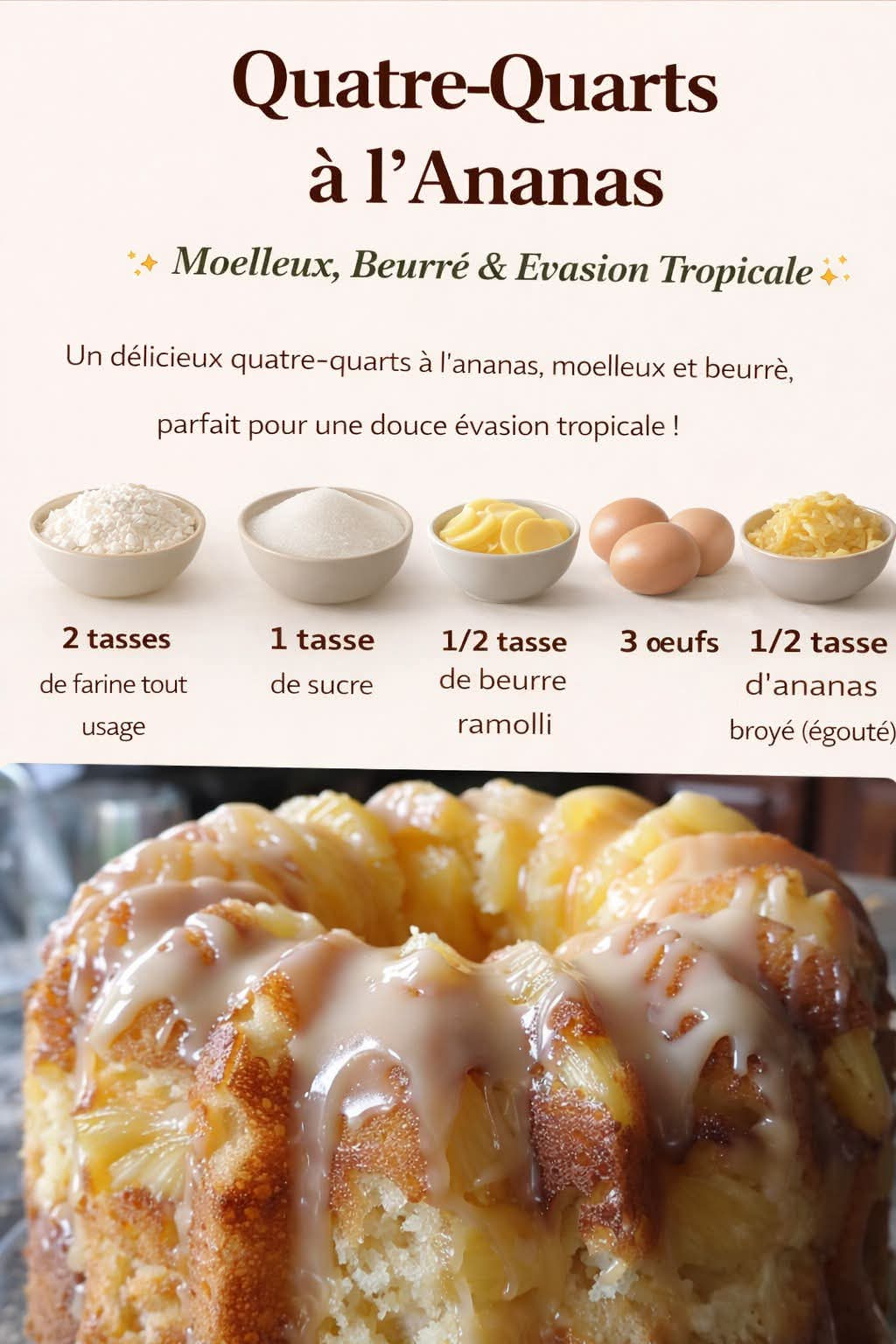
Easy Pineapple Pound Cake
Introduction
Easy Pineapple Pound Cake is a classic-style homemade dessert with a soft, buttery crumb and a gentle tropical sweetness from crushed pineapple. It is simple enough for an everyday family dessert, yet delicious enough to serve at birthdays, holidays, afternoon gatherings, or Sunday dinners.
The pineapple adds moisture and a naturally fruity flavor while the butter gives the cake its rich, comforting pound-cake character. Each slice is tender, flavorful, and satisfying without requiring complicated ingredients or advanced baking techniques.
This cake is especially enjoyable when served slightly warm, at room temperature, or chilled with a cup of coffee or tea.
Ingredients
For the Cake
- 2 cups all-purpose flour
- 1 cup granulated sugar
- 1/2 cup unsalted butter, softened
- 3 large eggs, preferably at room temperature
- 1/2 cup crushed pineapple, very well drained
- 1 teaspoon vanilla extract
- 1 1/2 teaspoons baking powder
- 1/4 teaspoon salt
Optional Pineapple Glaze
- 1 cup powdered sugar
- 2 to 3 tablespoons pineapple juice
- 1/2 teaspoon vanilla extract
Optional Garnish
- A few tablespoons of finely crushed pineapple, well drained
- Lightly toasted coconut
- Thin pineapple pieces
Instructions
Step 1: Prepare the Oven and Pan
Preheat the oven to 350°F (175°C).
Grease a standard 8 1/2-by-4 1/2-inch loaf pan or a small Bundt pan thoroughly with butter or nonstick baking spray. Lightly dust the pan with flour and shake out the excess.
Preparing the pan carefully helps prevent the cake from sticking when it is removed after baking.
Step 2: Prepare the Pineapple
Place the crushed pineapple in a fine-mesh strainer and press gently with the back of a spoon to remove excess liquid.
This step is important because too much pineapple juice can make the batter overly wet and may affect the texture of the finished cake.
Reserve a little pineapple juice if you plan to make the optional glaze.
Step 3: Cream the Butter and Sugar
Place the softened butter and sugar in a large mixing bowl.
Beat them together for approximately 3 to 5 minutes, until the mixture becomes lighter, smoother, and slightly fluffy.
Properly creaming the butter and sugar helps create a lighter texture in the finished cake.
Step 4: Add the Eggs
Add the eggs one at a time, mixing well after each addition.
Add the vanilla extract and mix until incorporated.
If the mixture looks slightly separated after adding the eggs, do not worry. It will come together when the dry ingredients are added.
Step 5: Combine the Dry Ingredients
In a separate bowl, whisk together the flour, baking powder, and salt.
This distributes the baking powder and salt evenly throughout the flour and helps prevent pockets of leavening in the cake.
Step 6: Combine the Batter
Gradually add the dry ingredients to the butter mixture.
Mix gently just until the flour is incorporated. Do not overmix the batter, as excessive mixing can make the pound cake dense or tough.
Fold in the well-drained crushed pineapple using a spatula.
The finished batter should be thick, smooth, and evenly combined.
Step 7: Fill the Pan
Transfer the batter to the prepared pan and spread it evenly.
Gently tap the pan against the counter once or twice to remove any large air pockets.
Smooth the surface with a spatula.
Step 8: Bake
Place the cake in the preheated oven and bake for approximately 45 to 55 minutes.
The exact baking time will depend on the size and material of your pan.
Begin checking the cake toward the end of the baking time. Insert a toothpick into the center. It should come out clean or with only a few moist crumbs attached.
If the top begins browning too quickly while the center still needs time to bake, loosely cover the cake with aluminum foil.
Step 9: Cool the Cake
Remove the cake from the oven and allow it to cool in the pan for approximately 10 to 15 minutes.
Carefully turn it onto a cooling rack and allow it to cool completely before glazing or slicing.
Cooling allows the crumb to set and makes the cake easier to cut cleanly.
Method
The secret to a good pineapple pound cake is controlling the moisture while keeping the batter rich and tender.
First, soften the butter naturally rather than melting it. Softened butter creams properly with the sugar and helps create the desired pound-cake texture.
Second, drain the crushed pineapple thoroughly. Pineapple contains considerable moisture, and removing excess liquid keeps the cake from becoming heavy or gummy.
Third, avoid overmixing after the flour is added. Once the flour is incorporated, stop mixing as soon as the batter is smooth.
Finally, allow the cake to cool before cutting. The flavors become more developed as the cake rests, and the texture becomes pleasantly firm while remaining moist.
Optional Pineapple Glaze
For an extra layer of tropical flavor, prepare a simple pineapple glaze.
Place the powdered sugar in a small bowl. Add pineapple juice one tablespoon at a time, stirring until the glaze reaches a smooth, pourable consistency.
Add vanilla extract and mix well.
Once the cake has cooled completely, drizzle the glaze over the top and allow it to set for several minutes.
For a more decorative presentation, sprinkle a small amount of toasted coconut over the glaze.
History and Inspiration
Pound cake is one of the oldest and most recognizable types of butter-rich cake. Traditional pound cakes were associated with a simple formula based on equal proportions of flour, butter, sugar, and eggs.
Over time, home bakers adapted the basic pound cake by adding ingredients such as vanilla, citrus zest, sour cream, cream cheese, nuts, berries, and tropical fruits.
Pineapple became a particularly popular addition to American baking because its sweet-tart flavor pairs naturally with rich buttery cakes. Canned crushed pineapple also made it convenient for home cooks to add tropical flavor without needing fresh fruit.
This pineapple version follows that tradition while keeping the ingredient list straightforward and the preparation accessible.
Formation and Texture
The formation of this cake depends on several important steps.
The creamed butter and sugar provide the foundation of the batter. The eggs contribute richness, structure, and moisture. The flour provides the framework that allows the cake to hold its shape.
Baking powder supplies additional lift, while crushed pineapple contributes moisture and fruity flavor.
Because pineapple contains water, draining it carefully is particularly important. The goal is to retain the fruit itself while removing enough excess liquid to maintain a balanced batter.
The finished cake should have a golden exterior, a tender interior, and small pieces of pineapple distributed throughout each slice.
Serving Suggestions
This cake can be served in several ways.
For a simple presentation, slice it and serve it plain with coffee or tea.
For a richer dessert, serve each slice with whipped cream or a scoop of vanilla ice cream.
For a tropical variation, add toasted coconut and a light pineapple glaze.
Fresh berries can also be placed alongside each slice for color and a contrasting fruity flavor.
For an elegant dessert table, cut the cake into thin slices and arrange them on a serving platter with a small bowl of glaze on the side.
Storage
Store the cooled cake in an airtight container at room temperature for up to 2 days.
For longer storage, refrigerate it in a tightly covered container for approximately 4 to 5 days.
The cake can also be frozen. Wrap individual slices or the entire cooled cake tightly in plastic wrap and place it in a freezer-safe container or bag. Freeze for up to 2 to 3 months.
Thaw the cake in the refrigerator or at room temperature before serving.
Tips for Success
Use softened butter rather than melted butter.
Drain the pineapple thoroughly before adding it to the batter.
Bring the eggs to room temperature when possible.
Measure the flour accurately. Too much flour can make the cake dry and dense.
Do not overmix after adding the flour.
Do not remove the cake from the oven too early. The center should be fully baked.
Allow the cake to cool before slicing for the best texture.
If making the glaze, add the pineapple juice gradually so it does not become too thin.
Conclusion
Easy Pineapple Pound Cake is a comforting homemade dessert that combines the richness of buttery pound cake with the bright sweetness of pineapple. Its straightforward preparation makes it suitable for beginner bakers, while its tender texture and tropical flavor make it special enough for gatherings and celebrations.
A slice is delicious on its own, but a light pineapple glaze, whipped cream, vanilla ice cream, or toasted coconut can make it even more indulgent.
For Pineapple Cake Lovers
Anyone who enjoys moist fruit cakes, classic pound cakes, or tropical desserts will appreciate this recipe. The pineapple brings a refreshing fruity note without overpowering the buttery flavor of the cake.
It is the kind of dessert that works equally well for breakfast-style gatherings, afternoon coffee, family dinners, potlucks, and holiday dessert tables.
Once you make it, you can easily adapt the recipe with coconut, chopped pecans, lemon zest, or a pineapple glaze to create your own favorite version.
Final Method at a Glance
- Preheat the oven to 350°F (175°C).
- Grease and flour the baking pan.
- Drain the crushed pineapple thoroughly.
- Cream softened butter and sugar until light and fluffy.
- Add the eggs one at a time, then add vanilla.
- Whisk together flour, baking powder, and salt.
- Gradually combine the dry ingredients with the wet mixture.
- Fold in the drained pineapple.
- Transfer the batter to the prepared pan.
- Bake for approximately 45 to 55 minutes, or until a toothpick comes out clean.
- Cool in the pan for 10 to 15 minutes.
- Transfer to a rack and cool completely.
- Add the optional pineapple glaze.
- Slice and serve.