
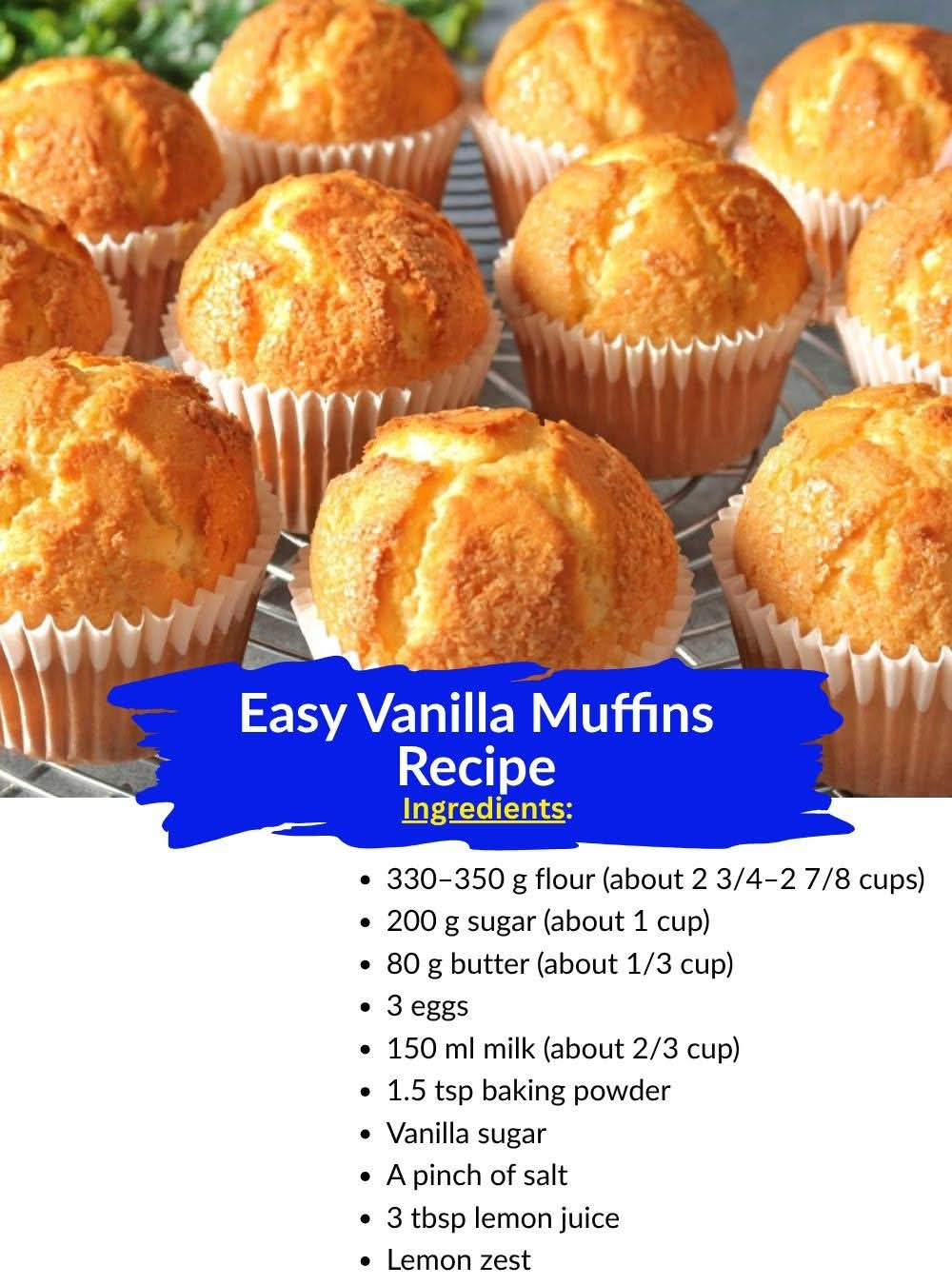
Easy Vanilla Muffins
Introduction
These Easy Vanilla Muffins are simple, tender, buttery, and wonderfully fragrant. They are made with everyday ingredients and come together without complicated techniques. The combination of vanilla, lemon zest, and a little fresh lemon juice gives the muffins a delicate aroma and a light, fresh flavor.
They are perfect for breakfast, afternoon tea, school snacks, family gatherings, or simply as a homemade treat when you want something quick and comforting. The finished muffins have a lightly golden exterior, a soft crumb, and a pleasant vanilla flavor.
Ingredients
Dry Ingredients
- 330–350 g all-purpose flour, approximately 2 3/4 to 2 7/8 cups
- 200 g granulated sugar, approximately 1 cup
- 1 1/2 teaspoons baking powder
- 1 packet vanilla sugar, or approximately 1–2 teaspoons vanilla sugar
- 1 small pinch of salt
- Finely grated zest of 1 lemon
Wet Ingredients
- 80 g unsalted butter, approximately 1/3 cup, melted and slightly cooled
- 3 large eggs, preferably at room temperature
- 150 ml milk, approximately 2/3 cup
- 3 tablespoons fresh lemon juice
Optional for Finishing
- A little vanilla sugar for sprinkling
- Powdered sugar for dusting
- Additional finely grated lemon zest
Preparation
1. Prepare the Oven and Muffin Pan
Preheat the oven to 180°C (350°F).
Line a 12-cup muffin pan with paper liners. If you do not have paper liners, lightly grease the muffin cups with butter or baking spray.
Preparing the pan before making the batter is important because the baking powder begins working once the wet and dry ingredients are combined.
2. Prepare the Butter
Melt the butter gently and allow it to cool for several minutes.
The butter should be liquid but not extremely hot. Very hot butter can partially cook the eggs when the ingredients are combined.
3. Combine the Dry Ingredients
In a large bowl, combine the flour, sugar, baking powder, vanilla sugar, salt, and lemon zest.
Whisk everything together thoroughly so that the baking powder and other ingredients are evenly distributed throughout the flour.
If your flour contains small lumps, sift it before adding it to the bowl.
4. Combine the Wet Ingredients
In a separate bowl, whisk the eggs lightly.
Add the milk, melted butter, and fresh lemon juice. Mix until the ingredients are well combined.
The mixture should be smooth and evenly blended.
5. Make the Muffin Batter
Gradually add the wet mixture to the dry ingredients.
Using a wooden spoon, spatula, or whisk, gently mix until the flour is almost completely incorporated.
Do not overmix the batter. A few small lumps are perfectly acceptable.
Overmixing develops too much gluten and can result in muffins that are dense, chewy, or tough instead of soft and tender.
If the batter appears unusually thick, add a tablespoon or two of milk. The exact amount of flour needed can vary depending on the flour and how it is measured.
6. Fill the Muffin Cups
Divide the batter evenly between the prepared muffin cups.
For nicely rounded muffins, fill each cup approximately two-thirds to three-quarters full.
If desired, sprinkle a small amount of vanilla sugar over the tops before baking.
7. Bake
Place the muffin pan in the preheated oven.
Bake for approximately 18–23 minutes, depending on the size of the muffins and your oven.
The muffins are ready when:
- The tops are lightly golden.
- They have risen nicely.
- A toothpick inserted into the center comes out clean or with only a few moist crumbs.
- The tops gently spring back when lightly touched.
Avoid overbaking because excessive baking can make the muffins dry.
8. Cool the Muffins
Remove the muffin pan from the oven and allow the muffins to rest in the pan for approximately 5 minutes.
Then transfer them to a wire rack and allow them to cool further.
They can be served warm, but allowing them to cool slightly gives the crumb time to set while keeping the muffins tender.
Detailed Method
The key to successful vanilla muffins is gentle mixing. Start by preparing all ingredients before you begin. Measure the flour carefully because adding too much flour can produce a heavy muffin.
The dry ingredients should be thoroughly combined before the wet ingredients are introduced. Once the two mixtures meet, mix only until no large areas of dry flour remain.
The lemon juice and zest are not intended to make the muffins strongly lemon-flavored. Instead, they complement the vanilla and butter, giving the muffins a brighter and more balanced flavor.
The batter should be thick enough to hold its shape when spooned into the muffin cups but soft enough to spread naturally during baking.
History of Muffins
Muffins have a long history and have developed into several different styles around the world.
The word “muffin” is associated with traditional baked goods from Britain and later with the American-style quick breads that became particularly popular in the United States. British muffins are typically yeast-raised and cooked on a griddle, while American muffins are generally made with chemical leaveners such as baking powder or baking soda and are baked in an oven.
American-style muffins became especially popular because they could be prepared relatively quickly. Unlike yeast breads, they do not require a long fermentation or rising period.
Vanilla muffins represent one of the simplest forms of this tradition. Their mild flavor makes them suitable for breakfast, snacks, and desserts and also provides an excellent base for additions such as chocolate chips, berries, nuts, coconut, or dried fruit.
Formation and Texture
The texture of these muffins comes from the balance between flour, eggs, butter, milk, sugar, and baking powder.
The flour provides the structure. Eggs contribute structure and richness, while butter adds tenderness and flavor. Milk provides moisture and helps create a soft crumb. Sugar contributes sweetness while also helping the muffins remain tender.
Baking powder produces carbon dioxide during baking, which expands inside the batter and creates the characteristic light, airy texture.
The lemon juice contributes acidity and flavor, while the lemon zest provides aromatic oils that complement the vanilla.
The final result should be a muffin that is soft and tender inside with a lightly golden surface.
Important Baking Tips
Use the Correct Amount of Flour
Begin with approximately 330 g of flour rather than immediately adding the maximum amount. If the batter is too loose, you can add a little more.
Flour measurements can vary considerably depending on how the flour is packed into a measuring cup.
Do Not Overmix
This is one of the most important rules for muffins.
Once the flour is added to the wet ingredients, mix only until combined. Excessive mixing can develop gluten and make the muffins tough.
Use Room-Temperature Eggs
Room-temperature eggs generally combine more easily with the butter and milk, helping create a smoother batter.
Do Not Overbake
Begin checking the muffins around the 18-minute mark. Every oven is different, so baking time may vary.
Allow Them to Cool
Freshly baked muffins continue to finish setting as they cool. Letting them rest for several minutes before eating helps preserve their delicate texture.
Variations
Vanilla Chocolate Chip Muffins
Add approximately 100–150 g of chocolate chips to the batter before filling the muffin cups.
Blueberry Vanilla Muffins
Gently fold 125–150 g of fresh or frozen blueberries into the finished batter.
Almond Vanilla Muffins
Add 1/2 teaspoon of almond extract and approximately 50 g of finely chopped almonds.
Coconut Vanilla Muffins
Add approximately 75 g of unsweetened shredded coconut to the batter.
Lemon Vanilla Muffins
For a stronger citrus flavor, increase the lemon zest slightly and finish the cooled muffins with a simple lemon glaze made from powdered sugar and lemon juice.
Serving Suggestions
These vanilla muffins are delicious served warm with butter.
They can also be served with:
- Fresh berries
- Fruit preserves
- Honey
- Whipped cream
- Greek yogurt
- Lemon curd
- A light dusting of powdered sugar
- A cup of coffee or tea
For a simple dessert, cut a muffin in half and serve it with fresh fruit and a spoonful of lightly sweetened whipped cream.
Storage
Store completely cooled muffins in an airtight container at room temperature for up to 2–3 days.
For longer storage, place the muffins in a freezer-safe container or bag and freeze them for up to approximately 2–3 months.
To serve, allow frozen muffins to thaw at room temperature or warm them gently in the oven or microwave.
Conclusion
These Easy Vanilla Muffins are a wonderful example of how simple ingredients can create a delicious homemade bake. Their soft texture, buttery richness, fragrant vanilla, and subtle lemon flavor make them versatile enough for breakfast, afternoon tea, snacks, or dessert.
The recipe is also easy to adapt. Once you have mastered the basic vanilla muffin, you can add chocolate chips, berries, nuts, coconut, or citrus to create many different variations.
For Vanilla Muffin Lovers
If you love classic homemade baking, these muffins are an excellent recipe to keep in your collection. They require no complicated equipment, use familiar ingredients, and can be prepared quickly.
For the best results, remember three things: measure the flour carefully, avoid overmixing the batter, and remove the muffins from the oven as soon as they are properly baked.
The result is a batch of soft, fragrant vanilla muffins with a tender crumb and a beautiful homemade character.
Final Method at a Glance
- Preheat the oven to 180°C (350°F).
- Prepare a 12-cup muffin pan.
- Melt the butter and allow it to cool slightly.
- Combine flour, sugar, baking powder, vanilla sugar, salt, and lemon zest.
- Whisk eggs, milk, melted butter, and lemon juice separately.
- Combine the wet and dry ingredients gently.
- Do not overmix.
- Divide the batter between the muffin cups.
- Bake for approximately 18–23 minutes.
- Check with a toothpick for doneness.
- Cool for 5 minutes in the pan.
- Transfer to a wire rack and cool further.
- Serve plain or with your favorite toppings.
These simple vanilla muffins are best enjoyed fresh, when their delicate crumb and warm vanilla aroma are at their peak.