
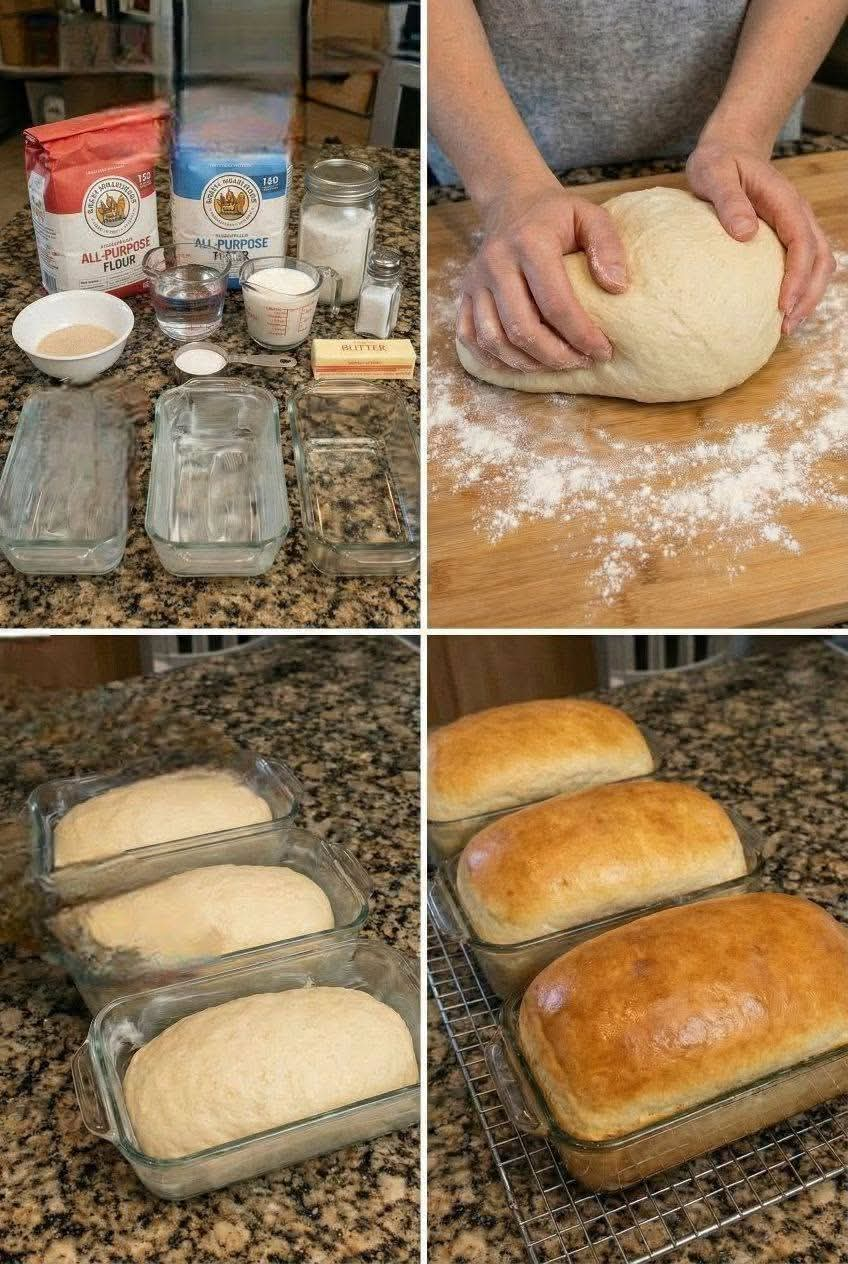
Grandma’s Homemade Bread Recipe 🍞
A Soft, Warm, Old-Fashioned Loaf Made With Love
Introduction
There is something truly special about the smell of homemade bread baking in the oven. Grandma’s homemade bread is more than just a recipe — it is a memory, a tradition, and a symbol of comfort. For generations, families have gathered around the kitchen table to enjoy fresh bread made with simple ingredients, patience, and care.
This classic homemade bread recipe creates a soft, fluffy loaf with a golden crust and a tender inside. It is perfect for sandwiches, toast, dipping into soups, or simply enjoying warm with butter. Made with everyday pantry ingredients, this recipe proves that the best foods are often the simplest.
Ingredients
For the Bread Dough:
- 2 cups warm water (about 105–110°F / 40–43°C)
- 2 tablespoons granulated sugar
- 1½ tablespoons active dry yeast
- 1½ teaspoons salt
- ¼ cup vegetable oil or melted butter
- 5½–6 cups all-purpose flour (add gradually as needed)
Optional Toppings:
- Melted butter for brushing the crust
- Sesame seeds
- Poppy seeds
- Herbs or garlic butter for extra flavor
History of Homemade Bread
Bread is one of the oldest foods in human history, dating back thousands of years to ancient civilizations. Families around the world developed their own bread traditions, passing recipes from one generation to another.
Grandmothers often became the keepers of these treasured recipes, teaching younger generations the importance of kneading dough, waiting patiently for the rise, and sharing food with loved ones.
Homemade bread became a symbol of family, hospitality, and warmth. A fresh loaf on the table meant there was always something comforting waiting at home.
Formation of the Bread
The formation of this bread comes from four simple steps:
1. Activating the Yeast
Warm water and sugar help wake up the yeast. The yeast feeds on the sugar and creates bubbles, which helps the bread rise and become light and fluffy.
2. Creating the Dough
Flour is added slowly until the dough becomes soft and slightly sticky. The oil or butter adds richness and keeps the bread tender.
3. Kneading and Rising
Kneading develops gluten, which gives the bread its structure. The dough then rests while the yeast works, allowing it to expand and become airy.
4. Baking
The oven transforms the dough into a beautiful golden loaf with a soft center and delicious homemade flavor.
Instructions and Method
Step 1: Prepare the Yeast
- In a large mixing bowl, add warm water.
- Stir in sugar.
- Sprinkle active dry yeast over the water.
- Let it sit for 5–10 minutes until foamy.
This shows that the yeast is active and ready.
Step 2: Make the Dough
- Add salt and vegetable oil or melted butter to the yeast mixture.
- Begin adding flour, one cup at a time.
- Mix until a soft dough forms.
- Transfer the dough onto a lightly floured surface.
Step 3: Knead the Dough
- Knead the dough for about 8–10 minutes.
- Continue until the dough becomes smooth and elastic.
- If the dough feels too sticky, add a little more flour.
A well-kneaded dough creates the perfect texture.
Step 4: First Rise
- Place the dough into a lightly greased bowl.
- Cover with a clean towel.
- Let it rise in a warm place for about 1–1½ hours.
- The dough should double in size.
Step 5: Shape the Bread
- Punch down the risen dough to remove extra air.
- Divide into two equal portions if making two loaves.
- Shape into loaf forms.
- Place into greased bread pans.
Step 6: Second Rise
- Cover the shaped dough.
- Let it rise again for 30–45 minutes.
- The dough should rise above the edge of the pan.
Step 7: Bake
- Preheat oven to 375°F (190°C).
- Bake bread for 30–35 minutes until golden brown.
- Remove from the oven.
- Brush the top with melted butter for a soft crust.
- Allow bread to cool before slicing.
Helpful Tips for Perfect Homemade Bread
❤️ Use warm water, not hot water, because high temperatures can kill the yeast.
❤️ Do not add too much flour. A slightly soft dough creates a lighter loaf.
❤️ Allow enough rising time. Patience gives bread its beautiful texture.
❤️ Store cooled bread in an airtight bag to keep it fresh.
❤️ Freeze extra loaves and thaw when needed for fresh homemade flavor.
Ways to Enjoy Grandma’s Bread
This bread is delicious served:
- Warm with butter and honey
- As homemade toast for breakfast
- With soups and stews
- As sandwich bread
- With jam or peanut butter
- As French toast
- With garlic butter and herbs
Conclusion
Grandma’s homemade bread is a reminder that simple ingredients can create something unforgettable. The process of mixing, kneading, rising, and baking connects us to traditions that have been shared for generations.
Every slice carries the warmth of the kitchen, the love of family, and the joy of homemade cooking. Whether you make it for your family, friends, or simply for yourself, this bread is sure to become a recipe you treasure.
For Bread Lovers ❤️
If you love homemade bread, this recipe is a must-keep. There is nothing better than pulling a warm loaf from the oven and sharing it with the people you love.
Fresh bread brings people together — from family breakfasts to holiday dinners, from simple snacks to special celebrations.
A homemade loaf is not just food; it is love baked into every slice. 🍞❤️