
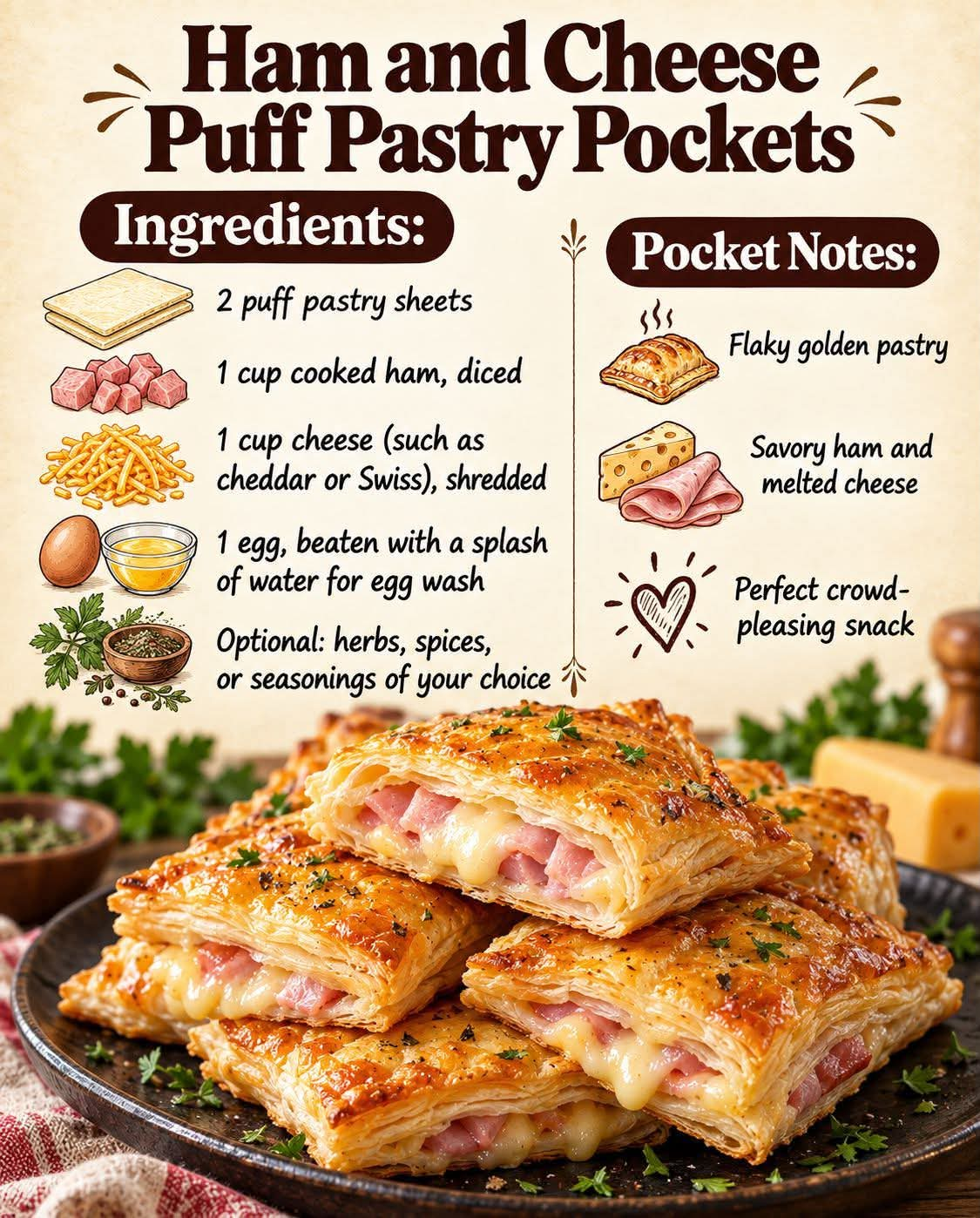
Ham and Cheese Puff Pastry Pockets: Golden, Crispy, and Delicious
Introduction
There is something special about freshly baked puff pastry filled with savory ham and melted cheese. These Ham and Cheese Puff Pastry Pockets are golden on the outside, flaky with every bite, and filled with a delicious combination of tender ham and warm, gooey cheese. They are simple to prepare, require only a handful of ingredients, and taste like something you would find in a bakery.
This easy recipe is perfect for busy mornings, quick lunches, afternoon snacks, family gatherings, picnics, or party appetizers. The buttery layers of puff pastry bake into a beautiful golden crust, while the ham and cheese create a rich, savory filling that everyone can enjoy.
A little Dijon mustard adds a pleasant tang, while mayonnaise creates a creamy flavor if you prefer a milder filling. You can use cheddar for a bold taste, mozzarella for a stretchy cheese filling, or Gruyère for a richer, slightly nutty flavor.
The best part is that these homemade pastry pockets look impressive without requiring complicated techniques. With a sheet of ready-made puff pastry and a few everyday ingredients, you can prepare a delicious snack that is easy enough for beginners and satisfying enough for the whole family.
Ingredients
For the Puff Pastry Pockets
- 1 sheet puff pastry, approximately 250 g, thawed
- 150 g (5 oz) ham, thinly sliced or diced
- 150 g (5 oz) grated cheese, such as cheddar, mozzarella, or Gruyère
- 1 large egg, beaten, for the egg wash
- 1 tablespoon Dijon mustard or mayonnaise, optional
- Freshly ground black pepper, to taste
Optional Ingredients for Extra Flavor
- 1 teaspoon dried oregano or Italian seasoning
- 1 tablespoon finely chopped fresh parsley
- 1 teaspoon garlic powder
- 1 tablespoon grated Parmesan cheese for the topping
- 1 teaspoon sesame seeds for sprinkling
- A small pinch of paprika for extra color and flavor
These additional ingredients are optional. The original combination of puff pastry, ham, cheese, and black pepper is already delicious.
Equipment Needed
- A baking tray
- Baking parchment
- A sharp knife or pizza cutter
- A small mixing bowl
- A pastry brush
- A fork for sealing the edges
- A clean work surface or cutting board
Instructions
Step 1: Preheat the Oven
Preheat your oven to 200°C (400°F). Line a baking tray with parchment paper to prevent the pastry pockets from sticking.
Make sure the oven is fully heated before baking. A hot oven helps the butter layers in the puff pastry expand, creating a crisp, flaky texture.
Step 2: Prepare the Puff Pastry
Remove the thawed puff pastry from its packaging and place it on a lightly floured work surface.
If necessary, gently roll the pastry to smooth out any folds and create an even thickness. Avoid rolling it too thin because the pastry needs enough structure to hold the filling.
Cut the pastry into equal-sized squares or rectangles. Depending on the size of your pastry sheet, you can make approximately four to six generous pockets or more smaller appetizers.
Keep the pastry cool while you prepare the filling. If it becomes too warm and sticky, place it in the refrigerator for a few minutes.
Step 3: Prepare the Ham and Cheese Filling
Place the sliced or diced ham in a bowl. Add the grated cheese and a little freshly ground black pepper.
If you want a more flavorful filling, add the Dijon mustard or mayonnaise. Dijon mustard gives the pockets a gentle tang, while mayonnaise adds creaminess.
You can also mix in a little dried oregano, garlic powder, or chopped parsley if desired.
Stir gently until the ingredients are evenly distributed. If your ham is already salty, you probably will not need additional salt.
For the best results, use grated cheese rather than thick slices. Grated cheese melts more evenly and makes it easier to distribute the filling throughout each pocket.
Step 4: Fill the Pastry Squares
Arrange the pastry squares on your prepared baking tray or work surface.
Place a portion of the ham and cheese mixture in the center of each square, leaving a border around the edges. Do not overfill the pastry, because too much filling can cause the pockets to open during baking.
For square pockets, place the filling on one half of each piece. Fold the other half over the filling to form a rectangle or triangle.
For a bakery-style appearance, keep the filling compact and avoid allowing cheese to touch the outer edges.
Step 5: Seal the Edges
Dip your finger lightly in water and moisten the edges of the pastry if necessary.
Press the edges together firmly with your fingers. Then use the tines of a fork to crimp the edges, creating a decorative border while helping to keep the filling inside.
Check each pocket carefully. Well-sealed edges help prevent melted cheese from escaping onto the baking tray.
Step 6: Apply the Egg Wash
Transfer the filled pockets to the lined baking tray, leaving a little space between each one.
Brush the tops lightly with the beaten egg. The egg wash gives the pastry a beautiful golden-brown finish and makes it look glossy after baking.
For additional texture, sprinkle a few sesame seeds or a little grated Parmesan over the top.
If you are using sesame seeds, press them gently into the egg wash so that they adhere during baking.
Step 7: Bake Until Golden
Place the tray in the preheated oven and bake for approximately 18–25 minutes, depending on the size and thickness of your pockets.
Watch for the following signs of doneness:
- The pastry has puffed up into distinct, flaky layers.
- The tops are golden brown.
- The bottoms are crisp and fully baked.
- The filling is hot and the cheese has melted.
If the pockets are browning too quickly, check the oven temperature and move the tray to the middle rack if necessary.
Avoid removing them too early. Puff pastry should be thoroughly baked so that the interior layers are crisp rather than doughy.
Step 8: Cool and Serve
Remove the tray from the oven and allow the pockets to cool for approximately five minutes before serving.
The filling will be extremely hot immediately after baking, so a short resting period makes them easier and safer to eat.
Serve warm while the pastry is crisp and the cheese is still soft and melted.
Detailed Cooking Method
The secret to excellent Ham and Cheese Puff Pastry Pockets is balancing three important elements: cold pastry, a well-prepared filling, and a properly heated oven.
First, keep the pastry cool enough to handle. Puff pastry contains layers of dough and fat. During baking, the moisture in the dough turns into steam, helping the layers separate and rise. If the pastry becomes excessively warm before baking, the fat may soften too much, reducing the flaky texture.
Second, avoid using a wet filling. If the ham releases moisture or the cheese mixture contains too much mayonnaise, the pastry may become soggy. Patting the ham dry when necessary and using a moderate amount of filling helps maintain a crisp crust.
Third, seal the edges carefully. Pressing the pastry together with a fork creates a secure border and gives each pocket a neat, professional appearance.
Finally, allow the oven to reach the correct temperature before placing the tray inside. The initial heat helps the pastry rise quickly, producing a light, airy interior and a golden exterior.
For particularly neat results, you can refrigerate the assembled pockets for 10–15 minutes before baking. This optional step helps the pastry retain its shape.
The History of Ham and Cheese Pastry
Ham and cheese pastries belong to a long tradition of savory baked foods found in bakeries and home kitchens throughout Europe and beyond.
Puff pastry itself is associated with European baking traditions, particularly French pastry techniques. Its characteristic lightness comes from repeatedly folding dough with layers of butter or another pastry fat. When baked at a high temperature, the layers separate and create a delicate, crisp structure.
Ham and cheese have long been popular partners in European cooking. Both ingredients are convenient, flavorful, and adaptable to many dishes, from sandwiches and omelets to baked pastries and savory tarts.
In France, croque-monsieur sandwiches and various savory pastries demonstrate the enduring popularity of this combination. Other European cuisines have their own versions of cheese-filled pastries, meat pies, and handheld baked snacks.
Modern puff pastry pockets are a practical adaptation of these traditions. Ready-made puff pastry allows home cooks to enjoy the texture of layered pastry without preparing it entirely from scratch.
Although this particular recipe is a simple modern variation rather than a single historically documented traditional dish, it reflects a timeless idea: wrapping a savory filling in pastry to create something convenient, comforting, and delicious.
Formation: How These Pastry Pockets Come Together
The formation of these pockets involves several simple stages, each contributing to the finished texture and appearance.
1. The Outer Shell
The puff pastry creates the structure. When exposed to oven heat, its layers expand, giving the pockets their characteristic flaky crust.
2. The Savory Center
The ham provides a tender, salty, meaty flavor. It pairs beautifully with the richness of melted cheese and the buttery pastry surrounding it.
3. The Melted Cheese Layer
As the cheese heats, it softens and binds the filling together. Cheddar provides a strong, savory taste, mozzarella creates a softer and stretchier texture, and Gruyère contributes a rich, nutty flavor.
4. The Sealed Border
The folded and crimped edges keep the filling contained. They also create a decorative frame around each pocket.
5. The Golden Finish
The egg wash helps the surface develop an attractive golden color. Combined with the crisp pastry layers, it gives the pockets their bakery-style appearance.
When all these elements work together, the result is a crisp, buttery exterior surrounding a warm, cheesy, savory filling.
Tips for Perfect Ham and Cheese Puff Pastry Pockets
Keep the pastry cold. Cold pastry is easier to handle and generally produces better layers.
Do not overfill. A smaller, well-balanced amount of filling is easier to seal and less likely to leak.
Choose a cheese that melts well. Cheddar, mozzarella, and Gruyère are excellent options. You can also combine two cheeses for a more complex flavor.
Avoid excessive moisture. Drain or pat dry any ingredients that might make the filling watery.
Seal firmly. Use a fork to press the edges together and check for gaps before baking.
Use egg wash sparingly. Brush the tops rather than pouring egg wash over the sides, which can interfere with the pastry’s rise if it pools along the edges.
Bake until fully golden. Pale pastry may be underbaked and less crisp.
Allow a short resting period. Five minutes helps the pockets settle before serving.
Delicious Variations
Ham and Cheddar Pockets
Use sharp cheddar for a rich, tangy flavor. This version is particularly good for lunchboxes, picnics, and casual family meals.
Ham and Mozzarella Pockets
Choose mozzarella for a mild flavor and soft, stretchy cheese filling. A little oregano adds an Italian-inspired touch.
Ham and Gruyère Pockets
Gruyère creates a deeper, nuttier flavor that pairs especially well with Dijon mustard.
Creamy Ham and Cheese Pockets
Mix a small amount of cream cheese with the grated cheese before adding the ham. The result is a creamier center, although the filling should remain thick enough to prevent soggy pastry.
Ham, Cheese, and Mustard Pockets
Spread a thin layer of Dijon mustard over the pastry before adding the filling. This creates a pleasant contrast between the savory ham, rich cheese, and buttery crust.
Mini Party Pockets
Cut the pastry into smaller squares and use a teaspoon of filling for each one. Seal, brush with egg wash, and bake until golden. Start checking them earlier because smaller pockets may cook faster.
Ham and Cheese Breakfast Pockets
Add a small amount of cooked scrambled egg to the filling for a breakfast-inspired variation. Make sure the egg is not wet, and avoid overfilling the pastry.
What to Serve With Ham and Cheese Puff Pastry Pockets
These pockets are versatile enough to serve as a snack, light meal, or appetizer.
For breakfast, pair them with fresh fruit, yogurt, or a simple cup of tea or coffee.
For lunch, serve them alongside a crisp green salad, sliced tomatoes, cucumber, or a light vegetable soup.
For a party, arrange them on a platter with mustard, a mild dipping sauce, or a tomato-based dip.
For a family dinner, combine them with roasted vegetables or a fresh salad to create a simple, satisfying meal.
They are also excellent for picnics and casual gatherings because they can be made in advance and transported easily once cooled.
Storage and Reheating
Refrigeration
Allow leftover pockets to cool completely. Place them in an airtight container and refrigerate for up to three days.
Reheating
For the crispiest results, reheat them in an oven at 180°C (350°F) for approximately 8–12 minutes, or until heated through.
An air fryer can also restore their crispness. Reheat at approximately 160–170°C (320–340°F) for several minutes, checking frequently to avoid overbrowning.
Microwaving is possible, but it tends to soften the pastry rather than restore its flaky texture.
Freezing
You can freeze the assembled, unbaked pockets on a tray until firm, then transfer them to a freezer-safe container. Bake from frozen, adding extra cooking time and checking that the pastry is fully cooked.
Alternatively, freeze fully baked pockets after cooling. Reheat them in the oven until hot and crisp.
For food safety, refrigerate leftovers promptly and ensure the ham and cheese filling is thoroughly reheated before serving.
Common Mistakes to Avoid
Using warm pastry: Warm dough can become sticky and difficult to seal. Chill it briefly if needed.
Adding too much filling: Overfilled pockets may split, leak cheese, or bake unevenly.
Skipping the egg wash: Egg wash is optional, but without it, the tops may look paler and less glossy.
Opening the oven too often: Frequent temperature changes can affect how well the pastry rises.
Serving immediately from the oven: The filling retains considerable heat, so let the pockets rest briefly before eating.
Using too much sauce: Mustard or mayonnaise should enhance the filling rather than make it watery.
Frequently Asked Questions
Can I make these pockets ahead of time?
Yes. Assemble them, cover, and refrigerate for several hours before baking. For the best texture, brush with egg wash just before they go into the oven.
Which cheese works best?
Cheddar is ideal for a strong flavor, mozzarella for a mild and stretchy filling, and Gruyère for a richer, nuttier taste. A mixture of cheddar and mozzarella is another excellent choice.
Can I make them without mustard or mayonnaise?
Absolutely. The ham and cheese provide plenty of flavor on their own. Simply omit the optional condiment.
Can I use homemade puff pastry?
Yes. Homemade puff pastry works well as long as it is rolled to an appropriate thickness and kept cool before baking.
Why did my pastry pockets open?
The edges may not have been sealed firmly, or the pockets may have contained too much filling. Leave a clear border around the filling and crimp the edges thoroughly.
Can I make them in an air fryer?
Yes, provided the pockets fit comfortably in the basket. Air-fry at approximately 180°C (350°F), checking after 10 minutes and continuing until puffed and golden. Cooking times vary by appliance and pocket size.
How many servings does this recipe make?
A single 250 g sheet of puff pastry generally makes four to six large pockets, depending on how you cut it, or a larger number of smaller appetizers.
Conclusion
Ham and Cheese Puff Pastry Pockets are proof that a simple recipe can deliver wonderful flavor and texture without requiring hours in the kitchen. With golden, flaky pastry on the outside and a warm, savory ham and cheese filling inside, these homemade treats are perfect for breakfast, lunch, snacks, and entertaining.
The recipe is easy to customize with different cheeses, a touch of mustard, fresh herbs, or your favorite seasonings. You can prepare large pockets for a quick meal or make miniature versions for a party platter.
Once you master the simple technique of filling, folding, sealing, and baking, you will have a versatile recipe that can be adapted to many occasions.
Serve them warm, enjoy the buttery crunch, and savor the combination of melted cheese and delicious ham in every bite.
For the Lovers of Homemade Savory Pastries
If you love easy recipes that use simple ingredients and deliver bakery-style results, these Ham and Cheese Puff Pastry Pockets deserve a place in your kitchen.
They are ideal for anyone who enjoys flaky pastry, comforting fillings, and quick homemade food. Whether you prepare them for your family on a quiet morning, pack them for lunch, or serve them to guests, they bring a little extra warmth to the table.
The beauty of this recipe lies in its simplicity. A single sheet of puff pastry, some ham, grated cheese, and a little egg wash can become a delicious homemade treat that looks beautiful and tastes even better.
Make a batch, experiment with your favorite cheese combinations, and discover which variation your family enjoys most.
Final Serving Suggestion
For the best presentation, arrange the golden pockets on a serving plate, cut one open to reveal the melted cheese, and serve while warm with a fresh salad or your favorite dipping sauce.
These Ham and Cheese Puff Pastry Pockets are simple, comforting, and wonderfully versatile—a recipe worth keeping for busy weekdays, relaxed weekends, and every occasion in between.