
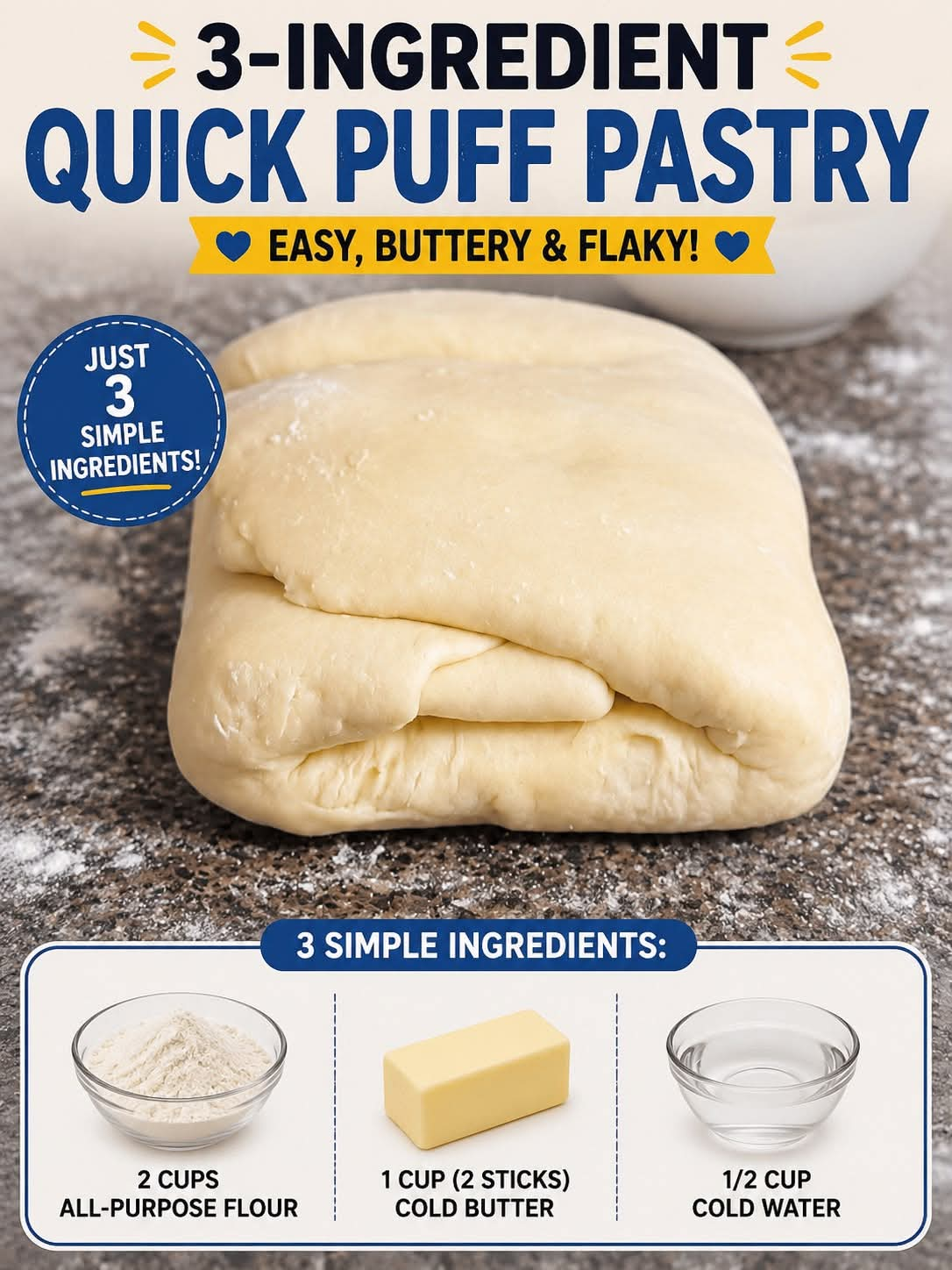
🥐 Homemade From-Scratch Puff Pastry — Flaky, Buttery & Beautifully Layered
🌟 Introduction
Few things are as magical in baking as watching a simple dough transform into hundreds of delicate, golden layers. Homemade puff pastry may sound like a recipe reserved for professional bakers, but with patience and a few basic ingredients, anyone can create this classic pastry at home.
The secret behind puff pastry is the careful layering of butter and dough. When baked, the water in the butter turns into steam, gently lifting the layers and creating that famous crisp, airy texture. Perfect for sweet and savory creations, homemade puff pastry brings a special touch to every recipe.
🧈 Ingredients
For the Dough:
- 2 ½ cups (315 g) all-purpose flour
- 1 teaspoon salt
- 1 tablespoon sugar (optional, for sweet pastries)
- ¾ cup (180 ml) cold water
- 2 tablespoons melted butter
- 1 teaspoon lemon juice or vinegar (helps create tender layers)
For the Butter Layer:
- 1 cup (225 g) cold unsalted butter
- 1–2 tablespoons flour (to help shape the butter)
For Finishing:
- 1 egg beaten with 1 tablespoon water (egg wash, optional)
👩🍳 Instructions
Step 1: Make the Dough
- In a large bowl, combine flour, salt, and sugar if using.
- Add cold water, melted butter, and lemon juice.
- Mix until a rough dough forms.
- Knead gently for 2–3 minutes until smooth.
- Shape into a rectangle, cover, and refrigerate for at least 30 minutes.
Step 2: Prepare the Butter Block
- Place cold butter between two sheets of baking paper.
- Gently pound and roll it into a flat rectangle about half the size of your dough.
- Keep it chilled but flexible.
Step 3: Create the Layers
- Roll the dough into a rectangle.
- Place the butter in the center.
- Fold the dough over the butter like an envelope, sealing the edges.
- Roll into a long rectangle.
- Fold into thirds like a letter.
- Chill for 30 minutes.
- Repeat the rolling and folding process 4–6 times, chilling between each fold.
Step 4: Shape and Bake
- Roll the finished puff pastry to your desired thickness.
- Cut and shape into pastries, turnovers, croissants, pies, or appetizers.
- Brush with egg wash if desired.
- Bake at 200°C (400°F) until golden, crisp, and beautifully puffed.
🥐 Methods of Making Puff Pastry
1. Lamination Method
The traditional method uses repeated folding to create thin layers of butter between layers of dough.
2. Resting Method
Chilling the dough allows the gluten to relax and keeps the butter cold, which helps the pastry rise properly.
3. Baking Method
High heat creates steam from the butter and water, separating the layers and producing the signature flaky texture.
📜 History of Puff Pastry
Puff pastry has a long and fascinating history connected to European baking traditions. Early forms of layered dough appeared in Mediterranean and Middle Eastern cuisines, but the technique became especially refined in French pastry kitchens.
French bakers perfected the art of lamination, creating the delicate pastry known today as pâte feuilletée. Over time, puff pastry became a foundation for famous desserts and dishes, including mille-feuille, palmiers, vol-au-vents, and countless modern pastries.
✨ Formation of Puff Pastry
The beauty of puff pastry comes from its structure:
- Flour and water create the dough framework.
- Butter layers create richness and separation.
- Folding creates hundreds of layers.
- Heat transforms moisture into steam, lifting the pastry into light, crispy sheets.
Every fold builds the final texture, making patience the most important ingredient.
❤️ Why Pastry Lovers Love This Recipe
🥐 Flaky lovers enjoy the crisp golden layers.
🧈 Butter lovers appreciate the rich flavor.
👩🍳 Baking lovers love mastering a classic technique.
🍓 Dessert lovers can use it for endless sweet creations.
🧀 Savory food lovers can turn it into delicious appetizers and meals.
🌟 Helpful Tips for Perfect Puff Pastry
- Always keep the butter cold.
- Do not rush the chilling steps.
- Use gentle pressure when rolling.
- Avoid adding too much flour while rolling.
- Bake in a fully preheated oven for the best rise.
- If the dough becomes soft or sticky, refrigerate it before continuing.
🍓 Ideas to Use Your Homemade Puff Pastry
- Apple turnovers
- Chocolate-filled pastries
- Strawberry mille-feuille
- Cheese twists
- Vegetable tart
- Sausage rolls
- Cream-filled pastries
- Mini fruit pies
📝 Conclusion
Making puff pastry from scratch is a rewarding baking adventure. Although it requires time and care, the result is worth every fold: crisp layers, rich buttery flavor, and a pastry that tastes far better than many store-bought versions.
Once you master this classic recipe, you open the door to countless delicious creations. A little flour, butter, and patience can create something truly extraordinary. 🥐✨