
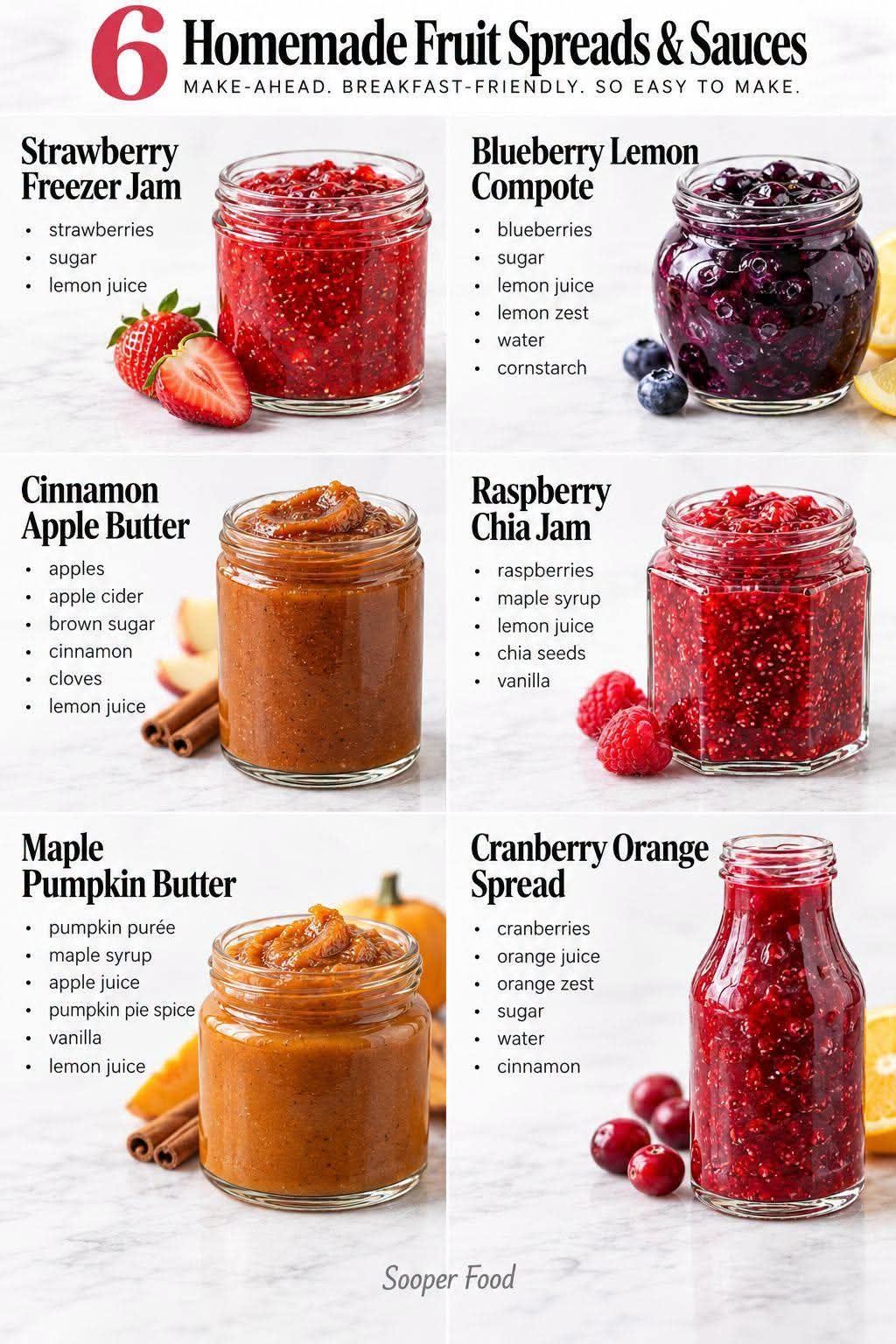
6 Homemade Fruit Spreads and Sauces: Easy, Delicious Recipes for Every Season
Introduction
There is something special about homemade fruit spreads and sauces. Whether you are spreading sweet strawberry jam over warm toast, pouring blueberry compote over fluffy pancakes, or adding a spoonful of cinnamon apple butter to your morning oatmeal, these simple homemade creations can turn an ordinary breakfast into something wonderful.
Making fruit spreads at home allows you to enjoy fresh fruit flavors, adjust the sweetness to your taste, and prepare delicious toppings whenever you have a little extra time. These six recipes are perfect for busy mornings, weekend brunches, afternoon snacks, and homemade desserts. They require simple ingredients, straightforward cooking methods, and no special canning equipment.
This collection includes Strawberry Freezer Jam, Blueberry Lemon Compote, Cinnamon Apple Butter, Raspberry Chia Jam, Maple Pumpkin Butter, and Cranberry Orange Spread. Each recipe has its own unique flavor, texture, and personality, making it easy to find the perfect topping for almost any occasion.
Best of all, these recipes are designed for refrigerator or freezer storage rather than shelf-stable canning. You can prepare them ahead, store them safely, and enjoy homemade fruit goodness throughout the week.
1. Strawberry Freezer Jam
Introduction
Strawberry Freezer Jam is a beautiful, sweet, fruity spread that captures the familiar taste of ripe strawberries. With just three basic ingredients, you can create a delicious homemade topping for toast, biscuits, waffles, pancakes, and desserts.
Unlike traditional shelf-stable preserves, this version is intended for refrigeration or freezing. The strawberries retain their fresh, fruity character, while the sugar and lemon juice help create a soft, spoonable consistency.
Ingredients
- 3 cups chopped strawberries (450 g)
- 1/2 cup granulated sugar (100 g)
- 2 tablespoons fresh lemon juice (30 ml)
Instructions
- Wash the strawberries thoroughly, remove the green tops, and chop them into small pieces.
- Place the strawberries in a large bowl and mash them with a fork or potato masher until they reach your preferred texture.
- Add the sugar and lemon juice, stirring until everything is evenly combined.
- Transfer the mixture to a saucepan and place it over medium-low heat.
- Bring it to a gentle simmer, stirring frequently to prevent sticking.
- Cook for 15–20 minutes, allowing the fruit to soften and the mixture to thicken.
- Remove the saucepan from the heat and allow the jam to cool completely.
- Spoon the cooled jam into clean, freezer-safe containers, leaving a little space at the top for expansion.
- Refrigerate the portion you plan to use soon and freeze the remainder.
Method
The secret to delicious strawberry freezer jam is gentle cooking. Heating the strawberries slowly helps release their natural juices and allows the sugar to dissolve evenly. Lemon juice contributes brightness and balances the sweetness.
For a smoother texture, mash the strawberries thoroughly before cooking. If you prefer a rustic jam with pieces of fruit, leave some of the berries intact.
The mixture may seem slightly loose while hot, but it will become thicker as it cools. Avoid expecting the firm texture of commercial jam because this simple recipe does not use added commercial pectin.
Serving Suggestions
Serve this homemade strawberry jam with buttered toast, English muffins, scones, pancakes, French toast, or warm biscuits. It also makes a wonderful filling for sponge cakes, thumbprint cookies, and simple sandwich cookies.
You can swirl a spoonful into plain yogurt or spread it between cake layers for a fruity finish.
History
Fruit preservation has been practiced for centuries as a way to enjoy seasonal harvests long after fresh fruit becomes unavailable. Traditional jams often relied on sugar, heat, and sometimes pectin to help preserve fruit.
Freezer jam became a convenient home-kitchen alternative because it requires less specialized equipment than traditional canning. This cooked strawberry version offers a simple approach for anyone who wants homemade jam without the complications of processing jars for pantry storage.
Formation and Texture
The final jam should have a rich red color, a fresh strawberry aroma, and a soft, spreadable consistency. As the fruit cooks, it releases juice and gradually thickens.
Cooling is an important part of the formation process. Allow the jam to cool fully before judging its final consistency.
Conclusion
Strawberry Freezer Jam is an easy recipe that makes the most of sweet, ripe strawberries. With only three ingredients, it delivers a homemade flavor that works beautifully for breakfast and dessert.
For Strawberry Jam Lovers
If you love the taste of fresh strawberries, this recipe is an excellent addition to your collection. Make a batch during strawberry season and keep small portions ready for toast, pancakes, and homemade treats.
2. Blueberry Lemon Compote
Introduction
Blueberry Lemon Compote combines juicy blueberries with the bright, refreshing flavor of lemon. The result is a glossy fruit topping that tastes delicious over pancakes, cheesecake, oatmeal, yogurt, waffles, and ice cream.
Unlike a traditional thick jam, compote usually contains recognizable pieces of fruit suspended in a soft, syrupy sauce. It is quick to prepare and can be adjusted to suit your preferred consistency.
Ingredients
- 3 cups blueberries (450 g)
- 1/4 cup granulated sugar (50 g)
- 2 tablespoons lemon juice (30 ml)
- 1 teaspoon finely grated lemon zest (2 g)
- 2 tablespoons water (30 ml)
- 1 teaspoon cornstarch (3 g), optional
- 1 tablespoon cold water for mixing the cornstarch, if using
Instructions
- Rinse the blueberries and remove any stems or damaged berries.
- Place the blueberries, sugar, lemon juice, lemon zest, and 2 tablespoons of water in a medium saucepan.
- Heat over medium heat until the berries begin releasing their juices.
- Reduce the heat and simmer for 8–12 minutes, stirring occasionally.
- Gently mash about one-third of the blueberries with the back of a spoon to release more juice while leaving the remaining berries whole.
- If you prefer a thicker compote, mix the cornstarch with 1 tablespoon of cold water in a small bowl.
- Stir the cornstarch mixture into the simmering blueberries.
- Cook for approximately one additional minute, stirring continuously, until the sauce thickens.
- Remove from the heat and allow the compote to cool.
- Transfer to a clean container and refrigerate promptly.
Method
Blueberry compote relies on the natural juices released by the berries during cooking. Sugar helps balance the fruit’s natural tartness, while lemon juice adds brightness and complements the blueberry flavor.
Lemon zest contributes an extra layer of citrus aroma without requiring additional liquid. For a thinner sauce, omit the cornstarch. For a thicker topping suitable for cheesecake, add the optional cornstarch slurry.
Frozen blueberries can be used without completely thawing them first. They may release additional liquid, so allow a little extra simmering time if necessary.
Serving Suggestions
Blueberry Lemon Compote is especially delicious over cheesecake, pancakes, waffles, French toast, oatmeal, rice pudding, and vanilla ice cream.
It can also be layered into parfaits with Greek yogurt and granola or spooned over a simple vanilla cake.
History
Compotes have a long culinary history, particularly in European cooking, where cooked fruit has been served as a dessert, side dish, or accompaniment to other foods.
The technique is simple: soften fruit with a little liquid and sweetener until it develops a pleasant consistency. Modern fruit compotes often feature citrus, spices, or herbs to create additional flavor combinations.
Blueberries and lemon make a particularly appealing pairing because the fruit’s deep sweetness contrasts with the citrus’s fresh acidity.
Formation and Texture
A successful blueberry compote should be glossy, spoonable, and full of tender berries. The liquid thickens as the fruit releases its juices and some of the moisture evaporates.
If cornstarch is used, the sauce becomes more cohesive and holds its shape better when spooned over desserts.
Conclusion
Blueberry Lemon Compote is a quick and versatile topping that brings color and fruity flavor to everyday meals. It is simple enough for weekday breakfasts and elegant enough to serve with a homemade cheesecake.
For Blueberry Lovers
Anyone who enjoys the combination of sweet berries and fresh citrus will appreciate this recipe. Keep a container in the refrigerator for an easy way to make pancakes, yogurt bowls, and desserts feel more special.
3. Cinnamon Apple Butter
Introduction
Cinnamon Apple Butter is a comforting, deeply flavored spread made from tender apples, warm spices, and a touch of brown sugar. Its smooth texture and rich apple flavor make it perfect for cool mornings, autumn breakfasts, and homemade baked goods.
Despite its name, apple butter contains no dairy butter. The name describes its smooth, buttery consistency rather than its ingredients.
This recipe begins with fresh apples cooked slowly until soft, then blended and reduced until thick enough to spread. Cinnamon, cloves, and lemon juice provide warmth and balance.
Ingredients
- 2 pounds apples, peeled, cored, and diced (900 g)
- 1/2 cup apple cider or unsweetened apple juice (120 ml)
- 1/3 cup packed brown sugar (65 g)
- 1 1/2 teaspoons ground cinnamon (3 g)
- 1/8 teaspoon ground cloves (0.25 g)
- 1 tablespoon lemon juice (15 ml)
Instructions
- Wash, peel, core, and dice the apples into small, evenly sized pieces.
- Place the apples in a heavy-bottomed saucepan or Dutch oven.
- Add the apple cider or juice, brown sugar, cinnamon, and ground cloves.
- Stir well to distribute the spices and sugar.
- Cover and cook over low heat for 45–60 minutes, stirring occasionally, until the apples become very soft and begin to collapse.
- Remove the pan from the heat and carefully blend the mixture until smooth. Use an immersion blender or allow the mixture to cool slightly before transferring it to a regular blender.
- Return the purée to the saucepan.
- Simmer uncovered over low heat for another 20–35 minutes, stirring frequently to prevent sticking and splattering.
- Continue cooking until the mixture becomes darker, thicker, and spreadable.
- Stir in the lemon juice.
- Remove from the heat and cool before transferring to clean containers.
- Refrigerate promptly or freeze in suitable portions.
Method
The key to excellent apple butter is slow cooking. The apples first soften in a small amount of liquid, then become a smooth purée.
The second stage of cooking removes excess moisture and concentrates the apple flavor. As the mixture reduces, its color deepens and its consistency becomes richer.
Use a combination of sweet and tart apples for a more balanced result. Varieties such as Fuji, Gala, Granny Smith, or Honeycrisp can work well, depending on your preferred flavor.
Stir frequently during the final stage because thick fruit purée can stick to the bottom of the pan. If the mixture begins splattering, lower the heat and use a partially covered saucepan with care.
Serving Suggestions
Spread cinnamon apple butter on toast, biscuits, muffins, pancakes, or warm homemade bread.
It also makes a flavorful filling for thumbprint cookies, a topping for oatmeal, or a layer inside cinnamon rolls. You can even serve a small spoonful alongside roasted pork or other savory dishes that pair well with apples.
History
Apple butter has deep roots in traditional European and North American cooking. Before modern refrigeration, families developed ways to preserve seasonal fruit by cooking it down into concentrated spreads.
In parts of the United States, particularly communities influenced by German and other European food traditions, apple butter became a familiar autumn preparation. Large batches were often made after apple harvests, allowing families to enjoy the fruit for longer periods.
The slow-cooking technique also helped develop the deep color and concentrated flavor that distinguish apple butter from ordinary applesauce.
Formation and Texture
The finished apple butter should be smooth, thick, and easy to spread. It should hold its shape on a spoon without looking watery.
Its dark golden-brown color develops as the apples cook and their natural sugars become more concentrated. The cinnamon and cloves provide a warm fragrance without overpowering the fruit.
Conclusion
Cinnamon Apple Butter is a classic homemade spread that brings warmth and comfort to breakfast tables. Although it takes longer to cook than some of the other recipes in this collection, most of the preparation is hands-off.
Remember that this recipe is intended for refrigerator or freezer storage. It is not a validated shelf-stable canning recipe.
For Apple Butter Lovers
If you love apple pie, cinnamon rolls, or warm spiced desserts, this spread deserves a place in your kitchen. Prepare a batch when apples are plentiful and enjoy its comforting flavor on bread, pancakes, and baked treats.
4. Raspberry Chia Jam
Introduction
Raspberry Chia Jam is a bright, fruity spread that combines the natural flavor of raspberries with maple syrup, lemon juice, and chia seeds. It is an excellent option for people who want a simple homemade fruit topping without using traditional granulated sugar.
Chia seeds absorb liquid and form a gel-like texture, helping the jam thicken naturally. This means there is no need for commercial pectin or a long cooking process.
The result is a vibrant raspberry spread with a slightly textured consistency and a fresh, tangy taste.
Ingredients
- 3 cups fresh or frozen raspberries (375 g)
- 3 tablespoons maple syrup (45 ml)
- 1 tablespoon lemon juice (15 ml)
- 3 tablespoons chia seeds (36 g)
- 1/2 teaspoon vanilla extract (2.5 ml)
Instructions
- Place the raspberries, maple syrup, and lemon juice in a small saucepan.
- Heat over medium-low heat for 5–7 minutes, stirring gently as the berries soften.
- Use a fork or spoon to mash the raspberries to your preferred consistency.
- Remove the saucepan from the heat.
- Stir in the chia seeds and vanilla extract until evenly distributed.
- Let the mixture stand for approximately 15 minutes so the chia seeds can absorb liquid.
- Stir again to break up any clumps and distribute the seeds evenly.
- Transfer the jam to a clean container.
- Refrigerate until fully chilled and thickened.
- Keep refrigerated and use within 4–5 days, or freeze in suitable portions for longer storage.
Method
Raspberry Chia Jam depends on the natural thickening ability of chia seeds rather than the traditional combination of sugar and pectin.
Heating the raspberries helps release their juices and soften their structure. Maple syrup provides sweetness, while lemon juice balances the fruit’s flavor.
Once the chia seeds are added, they absorb moisture and develop a gel-like coating. This gradually turns the fruit mixture into a spreadable jam.
For a smoother texture, mash the berries thoroughly before adding the chia seeds. If the jam becomes thicker than you prefer, stir in a small amount of water until it reaches the desired consistency.
Serving Suggestions
Spread Raspberry Chia Jam over whole-grain toast, oatmeal, pancakes, waffles, or yogurt. It is also delicious in overnight oats, chia pudding, and homemade breakfast sandwiches with nut butter.
For dessert, use it as a topping for cheesecake, a filling for crepes, or a swirl in vanilla yogurt.
History
Traditional jam-making developed as a way to preserve fruit using sugar and cooking. In more recent years, chia seeds have become popular in modern home cooking because of their ability to absorb liquid and create a thick texture.
Chia jam is a contemporary alternative inspired by traditional fruit preserves. It is especially appealing to home cooks who prefer simple ingredient lists and want greater control over sweetness.
Formation and Texture
The jam begins as a loose mixture of softened raspberries. After the chia seeds absorb the liquid, it becomes thicker and more spoonable.
The seeds remain visible, creating a slightly textured spread. Chilling helps the mixture set further, so give it sufficient time in the refrigerator before deciding whether it needs adjustment.
Conclusion
Raspberry Chia Jam is quick, colorful, and easy to customize. Its fruity flavor and naturally thickened texture make it a useful addition to breakfast and snack routines.
Because it is not a shelf-stable preserve, store it in the refrigerator or freezer and follow the recommended storage period.
For Raspberry Lovers
If you enjoy fresh raspberries and prefer a jam with a little less added sweetener, this recipe is worth trying. Its bright flavor pairs beautifully with creamy yogurt, oatmeal, and nut butter.
5. Maple Pumpkin Butter
Introduction
Maple Pumpkin Butter is a smooth, warmly spiced spread that brings the flavors of autumn into your kitchen. Made with pumpkin purée, maple syrup, apple juice, pumpkin pie spice, vanilla, and lemon juice, it is a delicious alternative to ordinary fruit jam.
Its rich pumpkin flavor and gentle sweetness make it ideal for breakfast, baking, and seasonal desserts. Unlike recipes that require peeling and cooking whole pumpkin, this version uses canned pumpkin purée to keep preparation simple.
It is particularly convenient during the fall and holiday seasons, when warm spices and pumpkin desserts are especially popular.
Ingredients
- 1 can pumpkin purée (15 oz/425 g)
- 1/3 cup maple syrup (80 ml)
- 1/4 cup apple juice (60 ml)
- 1 1/2 teaspoons pumpkin pie spice (3 g)
- 1 teaspoon vanilla extract (5 ml)
- 1 teaspoon lemon juice (5 ml)
Instructions
- Place the pumpkin purée, maple syrup, apple juice, and pumpkin pie spice in a medium saucepan.
- Stir until the mixture is smooth and evenly combined.
- Set the pan over low to medium-low heat.
- Bring the mixture to a gentle simmer, stirring frequently.
- Partially cover the saucepan to help limit splattering while allowing moisture to escape.
- Cook for 15–20 minutes, stirring often, until the mixture becomes thicker and spreadable.
- Remove the saucepan from the heat.
- Stir in the vanilla extract and lemon juice.
- Taste the mixture and adjust the spices slightly if desired.
- Allow it to cool before transferring it to a clean container.
- Refrigerate promptly and use within a few days, or freeze in suitable portions for longer storage.
Method
The preparation begins by combining pumpkin purée with maple syrup and apple juice. The liquid helps loosen the thick pumpkin, while gentle simmering allows the flavors to blend.
As the mixture cooks, excess moisture evaporates, producing a thicker spread. Pumpkin pie spice contributes warmth, vanilla adds aroma, and lemon juice provides a little acidity to balance the sweetness.
Keep the heat moderate and stir frequently because pumpkin purée can bubble and splatter as it thickens.
Always use plain pumpkin purée rather than pumpkin pie filling, which already contains added sugar and spices.
Serving Suggestions
Spread Maple Pumpkin Butter on toast, English muffins, biscuits, or pancakes. Spoon it over oatmeal, stir it into plain yogurt, or use it as a filling for crepes and pastries.
It can also be added in small amounts to muffin batter, swirled into a cheesecake mixture, or served alongside cinnamon-flavored baked goods.
History
Pumpkin has long been used in North American cooking, especially in autumn dishes and holiday desserts. Traditional pumpkin preparations include pies, puddings, breads, and savory dishes.
Fruit butters, meanwhile, developed from older methods of slowly cooking produce into concentrated spreads. Pumpkin butter is a modern variation that applies this technique to pumpkin purée, often combining it with maple syrup and familiar baking spices.
Formation and Texture
The finished pumpkin butter should be thick, smooth, and easy to spread. It will look slightly darker and more concentrated than the original purée.
Because pumpkin contains substantial moisture, simmering is essential to create the correct consistency. The spread may thicken a little more as it cools.
Conclusion
Maple Pumpkin Butter is an easy way to enjoy pumpkin beyond traditional pie. Its smooth texture, maple sweetness, and warm spices make it an inviting addition to autumn breakfasts and holiday baking.
Important storage note: pumpkin butter is a low-acid food and must not be treated as a shelf-stable preserve. Do not store it at room temperature or attempt ordinary home water-bath canning with this recipe. Refrigerate promptly or freeze it.
For Pumpkin Lovers
If pumpkin bread, pumpkin muffins, and spiced autumn desserts are among your favorites, this homemade spread is a wonderful seasonal addition. Keep a small portion in the refrigerator for breakfast and freeze the rest for later use.
6. Cranberry Orange Spread
Introduction
Cranberry Orange Spread combines tart cranberries with sweet orange juice, fragrant orange zest, and a hint of cinnamon. The result is a vibrant red spread that tastes especially wonderful during the fall and winter holidays.
Its balance of sweet, tart, citrusy, and warmly spiced flavors makes it suitable for both sweet and savory dishes. It can be served with toast in the morning, spooned over cheesecake, or paired with roasted meats at a holiday dinner.
Fresh or frozen cranberries both work well, so you can prepare this recipe whenever cranberries are available.
Ingredients
- 12 ounces fresh or frozen cranberries (340 g)
- 1/2 cup orange juice (120 ml)
- 1 teaspoon finely grated orange zest (2 g)
- 1/2 cup granulated sugar (100 g)
- 1/4 cup water (60 ml)
- 1/4 teaspoon ground cinnamon (0.5 g)
Instructions
- Rinse the cranberries and discard any damaged or shriveled berries.
- Place the cranberries, orange juice, orange zest, sugar, water, and cinnamon in a medium saucepan.
- Stir gently to combine the ingredients.
- Bring the mixture to a gentle simmer over medium heat.
- Reduce the heat and cook for 10–15 minutes, stirring occasionally.
- As the cranberries heat, listen for the berries to pop and watch as they release their juices.
- Continue cooking until most of the berries have burst and the mixture begins to thicken.
- For a rustic spread, mash the berries with a spoon or potato masher.
- For a smoother texture, briefly blend the mixture after allowing it to cool slightly, using suitable equipment and taking care with hot liquids.
- If the spread is still too thin, simmer it for a few additional minutes, stirring frequently.
- Remove from the heat and allow it to cool.
- Transfer to a clean container and refrigerate promptly, or freeze in appropriate portions.
Method
Cranberries naturally contain pectin, which helps the mixture thicken as it cooks. Their sharp, tart flavor pairs particularly well with orange juice and zest.
Sugar balances the cranberries’ acidity, while cinnamon provides gentle warmth. The water helps the berries begin cooking without sticking before they release their own juices.
For a chunky spread, mash the berries lightly and leave some pieces intact. For a smooth spread, blend carefully and return the mixture to the saucepan for a short additional simmer if necessary.
Remember that the spread will thicken further as it cools, so avoid reducing it excessively while it is still hot.
Serving Suggestions
Cranberry Orange Spread is delicious on toast, biscuits, pancakes, and muffins. It also makes a beautiful topping for cheesecake, vanilla pudding, yogurt, and pound cake.
For savory meals, serve it alongside roast turkey, chicken, or pork. You can also use it as a flavorful filling for sandwiches made with leftover holiday meat.
History
Cranberries have a long history in North American food traditions. Their naturally tart flavor makes them well suited to sauces and preserves, particularly when balanced with sweeteners.
Cranberry sauce became closely associated with American Thanksgiving and other holiday meals. Over time, cooks developed many variations using orange juice, citrus zest, spices, and other fruits.
This cranberry orange version combines familiar seasonal ingredients to create a versatile spread that works equally well at breakfast and dinner.
Formation and Texture
As the cranberries heat, their skins burst and release juice. The fruit softens, the mixture becomes more concentrated, and natural pectin helps it develop a thicker consistency.
The final spread should be glossy, richly colored, and thick enough to spoon onto bread or desserts. The orange zest adds fragrance, while the cinnamon provides a subtle background flavor.
Conclusion
Cranberry Orange Spread is a simple but flavorful recipe that brings together two classic seasonal ingredients. Its bright color and balanced taste make it an excellent choice for holiday breakfasts, homemade desserts, and savory meals.
For Cranberry Lovers
If you enjoy the sweet-tart flavor of cranberry sauce, this spread offers another delicious way to use cranberries. Make it ahead for a holiday gathering or keep a small container ready to add a little seasonal flavor to everyday meals.
Tips for Making All Six Fruit Spreads Successfully
1. Choose Good-Quality Fruit
Use ripe, flavorful fruit whenever possible. Fresh fruit should be free from mold and spoilage. Frozen berries are also suitable for most of these recipes and can be particularly convenient when fresh fruit is out of season.
2. Adjust the Sweetness
Fruit varies naturally in sweetness and acidity. Taste your mixture as it cooks, when safe to do so, and adjust the sweetness where appropriate. Remember that reducing sugar may affect the final consistency of traditional jam-style preparations.
3. Use the Right Cooking Temperature
Gentle simmering helps soften fruit without scorching it. Thick spreads such as apple butter and pumpkin butter require frequent stirring because they can stick or splatter as moisture evaporates.
4. Allow Time for Cooling
Many spreads look thinner while hot than they will after cooling. Let them cool before deciding whether further cooking is necessary.
5. Store Them Safely
These recipes are intended for refrigerator or freezer storage, not pantry storage. Transfer the spreads into clean containers, cool them appropriately, and refrigerate promptly.
As a general rule, cooked leftovers and homemade fruit preparations should be refrigerated within two hours, or within one hour when the surrounding temperature exceeds 90°F (32°C).
For best quality, use the strawberry jam, blueberry compote, apple butter, and cranberry spread within about one week when refrigerated, unless a shorter recipe-specific period is given. Raspberry chia jam should be used within 4–5 days. For pumpkin butter, use a conservative period of about 3–4 days and freeze portions you will not use promptly.
These are practical quality guidelines, not guarantees of safety. Discard any spread that develops mold, an unusual odor, or other signs of spoilage. Do not taste food to determine whether it is safe.
6. Freeze in Small Portions
Freezing small amounts makes it easier to thaw only what you need. Leave room for expansion in freezer-safe containers, label each container with the recipe name and date, and thaw frozen spreads in the refrigerator.
7. Keep Your Flavors Creative
Once you are comfortable with the basic methods, experiment with complementary ingredients. A little ginger can brighten apple butter, additional citrus zest can enhance berry compote, and a pinch of nutmeg can deepen pumpkin butter.
Make small adjustments so the fruit remains the main flavor.
Conclusion: Six Simple Recipes for Homemade Goodness
Homemade fruit spreads and sauces are an easy way to add variety, color, and flavor to everyday meals. From the sweet familiarity of Strawberry Freezer Jam to the citrusy brightness of Blueberry Lemon Compote, the warmth of Cinnamon Apple Butter, the simplicity of Raspberry Chia Jam, the seasonal comfort of Maple Pumpkin Butter, and the festive flavor of Cranberry Orange Spread, every recipe offers something different.
Prepare them for breakfast, use them in desserts, or serve them alongside your favorite baked goods. Because they can be made ahead and refrigerated or frozen, these spreads are practical additions to a busy kitchen.
You do not need complicated equipment or advanced cooking skills. A saucepan, a few fresh ingredients, and a little time are enough to create a collection of delicious homemade toppings.
For All Homemade Spread Lovers
If you love homemade jams, fruit sauces, cozy breakfast recipes, and simple kitchen projects, these six recipes are worth keeping in your recipe collection. Try one at a time, discover your favorite flavor, and enjoy finding new ways to serve each spread.
Whether you prefer strawberries, blueberries, apples, raspberries, pumpkin, or cranberries, there is a homemade topping here for every season and every occasion.
Make a batch, share it with family and friends, and bring a little homemade comfort to your table.