
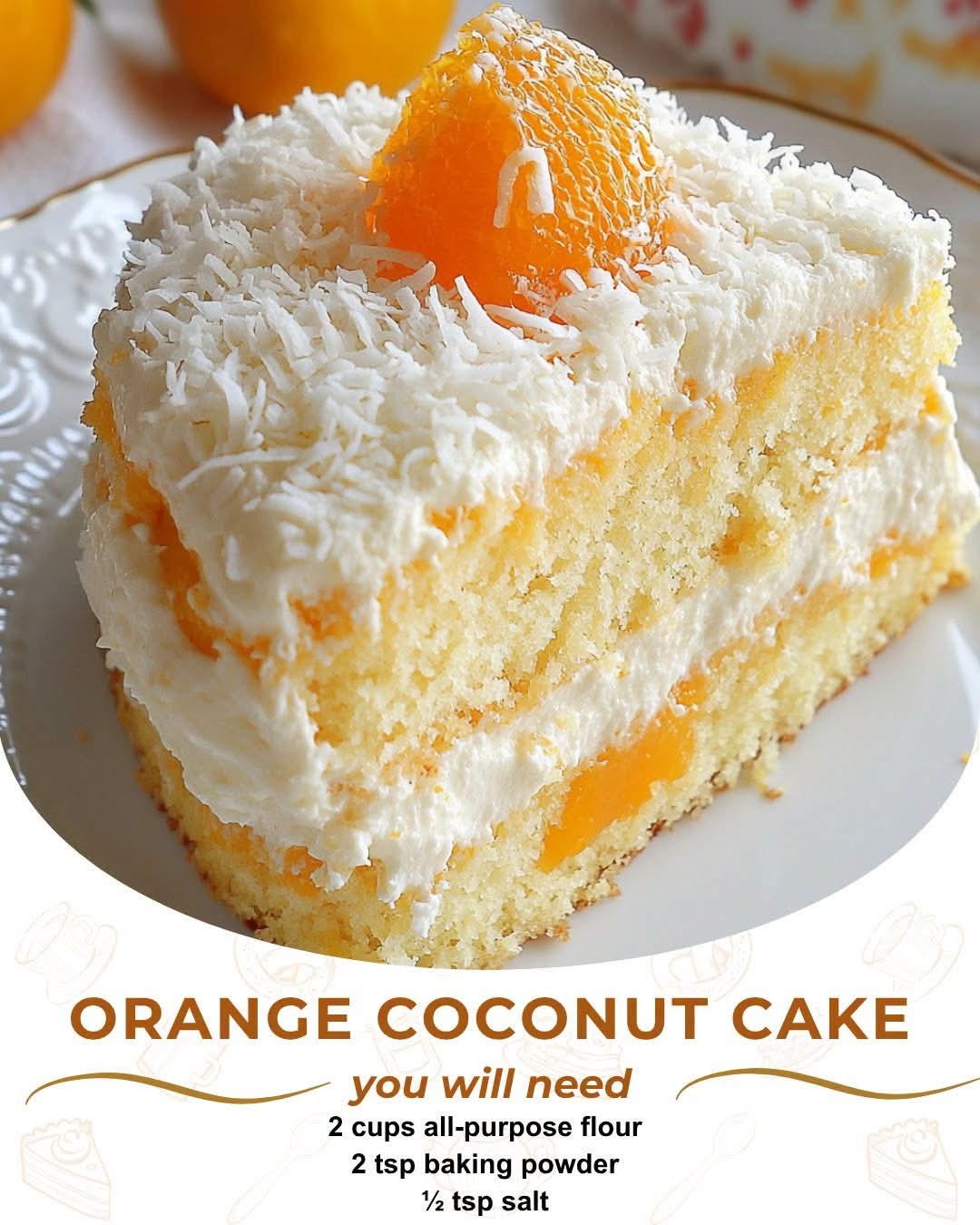
Orange Coconut Cake
Introduction
Orange Coconut Cake is a wonderfully moist and tender dessert that brings together two classic flavors: bright, fragrant orange and sweet, tropical coconut. Fresh orange zest gives the cake a lively citrus aroma, while orange juice adds natural flavor and moisture. Shredded coconut provides a delicate chewiness and a pleasant texture throughout the cake.
Finished with a creamy orange glaze, this cake is beautiful enough for celebrations but simple enough to prepare for an afternoon treat. It pairs especially well with coffee, tea, or a cold glass of milk.
Ingredients
For the Cake
- 2 cups all-purpose flour
- 2 teaspoons baking powder
- 1/2 teaspoon baking soda
- 1/2 teaspoon salt
- 1 cup granulated sugar
- 1/2 cup unsalted butter, softened
- 1/4 cup vegetable oil
- 3 large eggs, room temperature
- 1 tablespoon finely grated orange zest
- 1/2 cup fresh orange juice
- 1 teaspoon vanilla extract
- 3/4 cup sweetened shredded coconut
- 1/2 cup sour cream or plain full-fat yogurt
- 2 tablespoons milk, if needed
For the Orange Coconut Glaze
- 1 1/2 cups powdered sugar
- 2 to 3 tablespoons fresh orange juice
- 1 teaspoon finely grated orange zest
- 1/2 teaspoon vanilla extract
- 1/4 cup shredded coconut, for topping
Instructions
Step 1: Prepare the Oven and Pan
Preheat the oven to 350°F (175°C).
Grease a 9-inch round cake pan or a 9×13-inch baking pan. Line the bottom with parchment paper if desired, then lightly flour the pan.
Allow the butter, eggs, sour cream, and other refrigerated ingredients to come close to room temperature before beginning. Room-temperature ingredients generally blend more evenly and help create a smoother batter.
Step 2: Combine the Dry Ingredients
In a medium bowl, whisk together the flour, baking powder, baking soda, and salt.
Set the mixture aside while preparing the wet ingredients.
Step 3: Cream the Butter and Sugar
Place the softened butter and granulated sugar in a large mixing bowl.
Beat for approximately 3 to 4 minutes until the mixture becomes lighter, creamy, and fluffy. Add the vegetable oil and continue mixing until well incorporated.
The combination of butter and oil helps provide both rich flavor and a moist texture.
Step 4: Add the Eggs and Orange
Add the eggs one at a time, beating well after each addition.
Add the orange zest and vanilla extract. Mix gently until everything is combined.
The orange zest is especially important because much of the fruit’s concentrated aroma is found in the oils contained in the peel.
Step 5: Build the Batter
Add approximately one-third of the dry ingredients to the butter mixture and mix gently.
Add half of the orange juice and sour cream. Mix briefly.
Continue alternating the remaining dry ingredients with the remaining orange juice and sour cream, beginning and ending with the dry ingredients.
Do not overmix the batter. Stop mixing as soon as the flour disappears.
Fold in the shredded coconut using a spatula.
If the batter appears unusually thick, add 1 to 2 tablespoons of milk.
Step 6: Fill the Pan
Transfer the batter into the prepared pan.
Smooth the surface with a spatula and gently tap the pan on the counter once or twice to remove large air pockets.
Step 7: Bake
Place the cake in the preheated oven.
For a 9-inch round cake, bake for approximately 35 to 45 minutes.
For a 9×13-inch cake, begin checking around 30 to 35 minutes.
The cake is ready when the top is golden and a toothpick inserted into the center comes out clean or with a few moist crumbs attached.
Avoid overbaking because excessive baking can make the cake dry.
Step 8: Cool the Cake
Remove the cake from the oven and allow it to cool in the pan for approximately 10 to 15 minutes.
Carefully transfer it to a wire rack and allow it to cool completely before adding the glaze.
Preparing the Orange Glaze
Place the powdered sugar in a bowl.
Add 2 tablespoons of fresh orange juice, orange zest, and vanilla extract. Whisk until smooth.
If the glaze is too thick, add another teaspoon of orange juice at a time until it reaches a thick but pourable consistency.
If it becomes too thin, add a little more powdered sugar.
Finishing the Cake
Drizzle the orange glaze generously over the completely cooled cake.
Immediately sprinkle shredded coconut over the glaze so that it adheres while the glaze is still wet.
For an even stronger orange flavor, add a small amount of freshly grated orange zest over the finished cake.
Allow the glaze to set for approximately 15 to 20 minutes before slicing.
Method
The success of this cake comes from several simple techniques.
First, creaming the butter and sugar incorporates air into the mixture, helping create a tender crumb. Vegetable oil contributes additional moisture, while sour cream or yogurt gives the cake richness and softness.
Fresh orange zest provides a stronger citrus aroma than orange juice alone. The orange juice contributes both flavor and moisture, while coconut adds texture and a subtle tropical sweetness.
The dry and wet ingredients should be incorporated gradually and mixed only until combined. Overmixing can develop too much gluten and result in a heavier cake.
Finally, allowing the cake to cool completely before glazing prevents the glaze from melting excessively and running off the cake.
History and Inspiration
Orange and coconut have been popular baking companions for generations. Citrus fruits became especially valued in baking because their juice and fragrant zest could add freshness to rich cakes and sweet pastries.
Coconut became a favorite ingredient in many dessert traditions because dried shredded coconut was convenient to store and could add sweetness, texture, and a distinctive tropical character.
The combination eventually found its way into countless home-style cakes, cupcakes, cookies, pies, and quick breads. Orange Coconut Cake is a modern expression of that classic pairing, combining the bright character of citrus with the comforting richness of coconut.
Formation and Texture
When properly prepared, the finished cake should have a soft, tender crumb with enough structure to hold together beautifully when sliced.
The exterior should be lightly golden, while the inside should remain moist and fragrant. Small pieces of coconut should be distributed throughout the cake rather than settling heavily at the bottom.
The orange glaze creates a smooth, sweet finish that complements the slightly tangy citrus flavor of the cake.
Helpful Tips
Use fresh oranges whenever possible. Freshly grated zest and freshly squeezed juice provide a much brighter flavor.
When zesting the orange, grate only the colorful outer layer. Avoid the white pith underneath because it can taste bitter.
Do not pack the flour tightly into the measuring cup. Spoon it into the cup and level it with a knife, or use a kitchen scale for the most accurate measurement.
Do not overmix after adding the flour.
Make sure the cake is completely cool before glazing.
For a more coconut-forward cake, use unsweetened coconut in the batter and add a little extra coconut to the topping.
For a stronger orange flavor, add another teaspoon of orange zest to the batter.
Variations
Orange Coconut Bundt Cake
Pour the batter into a greased and floured Bundt pan. Bake until a toothpick inserted into the thickest portion comes out clean. Cool thoroughly before turning the cake out and covering it with orange glaze.
Orange Coconut Layer Cake
Bake the batter in two prepared 8-inch round cake pans. Once completely cool, place one layer on a serving plate, spread with orange or coconut frosting, and place the second layer on top. Finish with frosting and shredded coconut.
Orange Coconut Loaf
Pour the batter into a greased 9×5-inch loaf pan. Bake until the center is fully set. Once cooled, drizzle with orange glaze and sprinkle with coconut.
Extra-Coconut Version
Add an additional 1/4 cup of shredded coconut to the batter. You can also toast some coconut lightly and use it as a topping for a deeper nutty flavor.
Serving Suggestions
Serve slices at room temperature with coffee or tea.
For a special dessert, add a spoonful of whipped cream or vanilla ice cream alongside each slice.
The cake can also be decorated with thin orange slices, additional orange zest, or toasted coconut.
Storage
Store the finished cake in an airtight container at room temperature for up to 2 days.
For longer storage, refrigerate it in a tightly covered container for approximately 4 to 5 days. Allow refrigerated slices to sit at room temperature for a short time before serving for the best texture.
The cake can also be frozen without the glaze. Wrap it tightly and freeze for up to 2 months. Thaw completely, then prepare and add the glaze before serving.
Conclusion
Orange Coconut Cake is a comforting homemade dessert with a beautiful balance of citrus brightness and sweet coconut richness. The soft crumb, fragrant orange zest, tender coconut, and creamy orange glaze make every slice satisfying without requiring complicated baking techniques.
It is an excellent choice for family gatherings, birthdays, afternoon tea, holidays, bake sales, or simply when you want a homemade cake with something a little different.
For everyone who loves the combination of orange and coconut, this cake is a recipe worth keeping and making again.
Thank you for sharing, saving, and enjoying homemade recipes. If you love simple cakes with fresh flavor and a tender texture, this Orange Coconut Cake deserves a place in your recipe collection.