
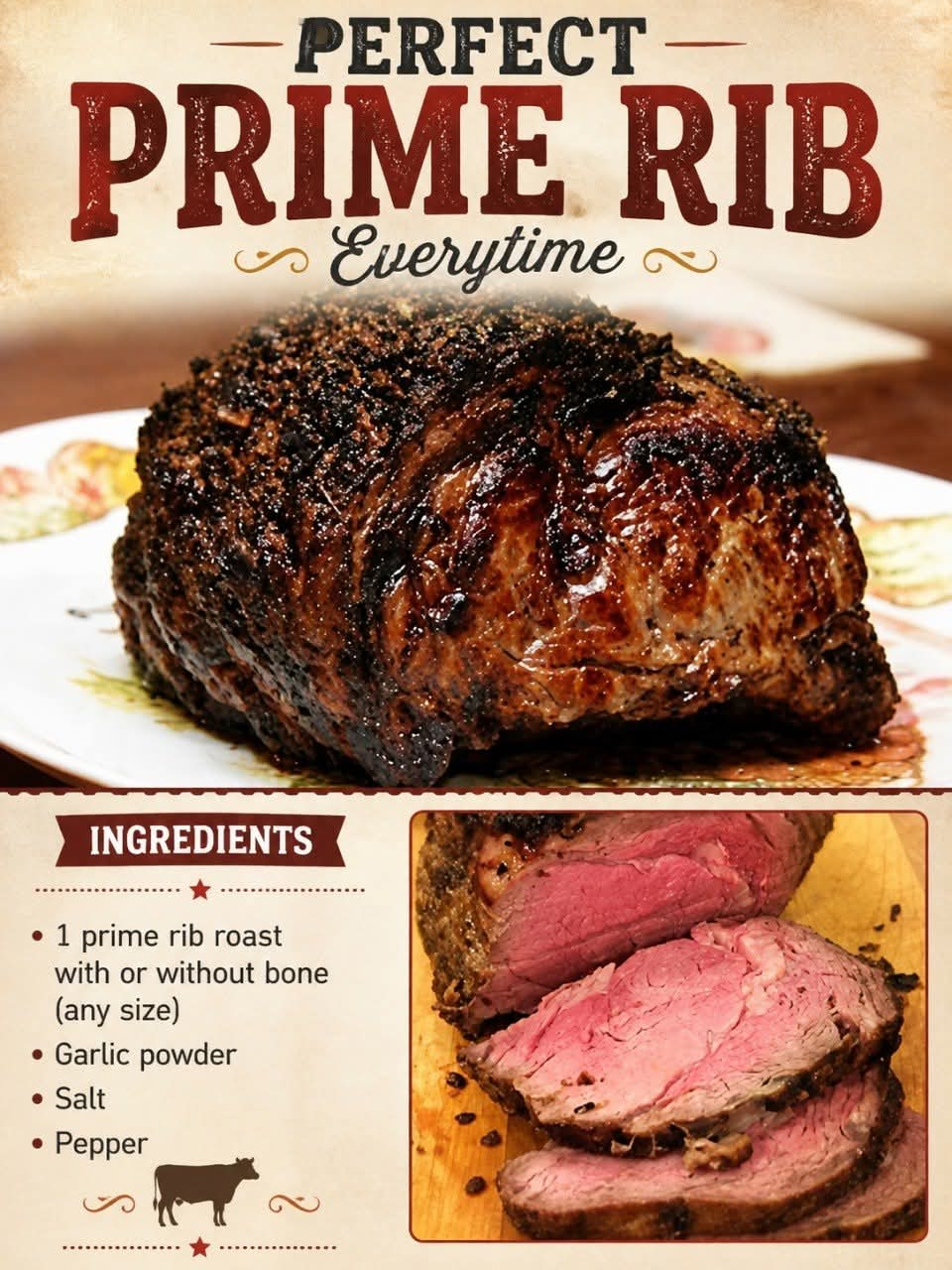
Perfect Prime Rib Every Time
Introduction
There are some recipes that feel like more than just food. They carry memories, family traditions, Sunday dinners, holidays, and the comforting feeling of gathering around the table with people you love. My grandma’s “Perfect Prime Rib Every Time” is one of those recipes.
This prime rib is beautifully seasoned, roasted until the outside develops a flavorful, savory crust, while the center remains tender, juicy, and rich. The secret is not complicated ingredients or a difficult technique. It is all about choosing a good roast, seasoning it generously, allowing it to come toward room temperature before roasting, and paying close attention to the internal temperature.
Whether you’re preparing Christmas dinner, a special Sunday meal, a birthday celebration, or simply want to make an unforgettable roast, this classic prime rib is a recipe worth keeping.
Ingredients
For the Prime Rib
- 4 pounds prime rib roast
- 1/4 cup unsalted butter, softened
- 1 tablespoon freshly ground black pepper
- 1 tablespoon kosher salt
- 1 tablespoon garlic powder
- 1 tablespoon fresh rosemary, finely chopped
- 1 tablespoon fresh thyme leaves
- 4 cloves garlic, minced
- 1 tablespoon Worcestershire sauce
- 1 teaspoon onion powder
- 1 teaspoon paprika
- 1 teaspoon dried thyme, optional
Optional Pan Ingredients
- 1 medium onion, roughly chopped
- 2 carrots, roughly chopped
- 2 celery stalks, roughly chopped
- 1 cup beef broth
- 1/2 cup red wine or additional beef broth, optional
Instructions
1. Prepare the Roast
Remove the prime rib from the refrigerator about 1 to 2 hours before cooking. Allowing it to lose some of its refrigerator chill helps the roast cook more evenly.
Pat the surface of the roast thoroughly dry with paper towels. This is an important step because a dry surface helps the seasoning stick and encourages a beautifully browned crust.
Place the roast bone-side down in a roasting pan. If your roast is boneless, place the fat side facing upward.
2. Make the Seasoned Butter
Place the softened butter in a small bowl.
Add the freshly ground black pepper, kosher salt, garlic powder, rosemary, thyme, minced garlic, Worcestershire sauce, onion powder, and paprika.
Mix everything together until you have a thick, fragrant seasoned butter.
The butter helps carry the herbs and seasonings across the surface of the roast while also contributing to the rich browned exterior.
3. Season the Prime Rib
Spread the seasoned butter generously over every exposed surface of the roast.
Use your hands or a spatula to create an even coating. Make sure the seasoning reaches the sides as well as the top.
For an especially flavorful roast, gently make a few shallow cuts in the surface and rub a little of the seasoned mixture into them.
If time allows, place the seasoned roast uncovered in the refrigerator for several hours or overnight. This allows the salt and seasonings to penetrate more deeply into the meat.
If you refrigerate it overnight, remove it from the refrigerator about 1 to 2 hours before roasting.
4. Prepare the Oven
Preheat the oven to 450°F (230°C).
If desired, scatter the chopped onion, carrots, and celery around the roast. Add a little beef broth to the bottom of the roasting pan.
The vegetables are optional, but they can add wonderful flavor to the pan juices.
5. Begin Roasting at High Heat
Place the roast in the fully preheated oven.
Roast at 450°F for approximately 15 to 20 minutes. This initial high-temperature cooking helps develop a deeply browned exterior.
After the initial browning period, reduce the oven temperature to 325°F (165°C).
Continue roasting until the center reaches your preferred internal temperature.
6. Check the Internal Temperature
For the most reliable result, use an instant-read or oven-safe meat thermometer inserted into the thickest part of the roast, avoiding direct contact with the bone.
For a medium-rare prime rib, remove the roast from the oven when it reaches approximately 125°F (52°C).
For medium, remove it around 135°F (57°C).
Remember that the temperature will continue to rise during resting, so do not wait until the roast reaches your final desired serving temperature while it is still in the oven.
Cooking time can vary considerably depending on the shape of the roast, its starting temperature, and your oven, so temperature is a much better guide than the clock.
7. Let the Roast Rest
Remove the prime rib from the oven and transfer it to a cutting board.
Loosely tent it with aluminum foil.
Allow the roast to rest for approximately 20 to 30 minutes before carving.
Do not skip this step. Resting gives the juices time to redistribute throughout the meat, helping keep each slice moist and flavorful.
8. Carve the Prime Rib
If the roast has bones, carefully separate the roast from the bones before slicing.
Using a sharp carving knife, cut the roast across the grain into slices of your preferred thickness.
For a special dinner, slightly thicker slices make a beautiful presentation.
Spoon some of the flavorful pan juices over the slices just before serving.
Cooking Method
The traditional method begins with a short blast of very high heat to brown the outside of the roast. The temperature is then lowered so the interior can cook more gently.
This two-stage roasting method creates the contrast that makes prime rib so special: a deeply seasoned, browned exterior surrounding a tender and juicy center.
The most important tool is a meat thermometer. Prime rib is an expensive cut of beef, so relying only on cooking time can lead to disappointing results. Different ovens and roasts cook at different rates.
For the best results, monitor the internal temperature carefully and allow the roast to rest before slicing.
Optional Au Jus
While the prime rib rests, place the roasting pan over low to medium heat if it is stovetop-safe.
Add beef broth and, if desired, a small amount of red wine.
Scrape the browned bits from the bottom of the pan with a wooden spoon.
Simmer for several minutes, then strain the liquid into a serving container.
Taste and adjust the seasoning if necessary.
Serve the warm au jus alongside the sliced prime rib.
Optional Horseradish Cream Sauce
For a classic accompaniment, combine:
- 1/2 cup sour cream
- 2 tablespoons prepared horseradish
- 1 teaspoon Dijon mustard
- 1 teaspoon lemon juice
- A pinch of salt
- Freshly ground black pepper to taste
Mix everything together and refrigerate until ready to serve.
The cool, tangy sauce provides a wonderful contrast to the rich beef.
The History of Prime Rib
Prime rib has long been associated with traditional celebratory meals. Large roasted cuts of beef were historically prized because they could feed an entire family or gathering from a single roast.
The term “prime rib” can sometimes be confusing. It refers to a cut from the rib section of the beef carcass, while “Prime” with a capital P is a specific USDA quality grade in the United States. A roast can be called prime rib without necessarily being USDA Prime grade.
The rib roast became particularly popular for holiday meals and special occasions because of its tenderness, rich marbling, and impressive presentation.
Many families developed their own versions over generations, changing the seasonings and roasting methods according to personal taste.
The Formation of the Perfect Crust
The wonderful crust on prime rib comes from several processes happening during roasting.
First, the surface must be relatively dry. Excess moisture can interfere with browning.
Second, the high initial oven temperature encourages browning reactions on the exterior of the meat. Butter, garlic, herbs, salt, and pepper contribute additional flavor.
Finally, reducing the oven temperature allows the center to cook more gently without excessively overcooking the outer portions.
The result is a roast with a flavorful exterior and a tender interior.
Tips for Perfect Prime Rib
Choose a Well-Marbled Roast
Look for a roast with good marbling throughout the meat. Fat contributes greatly to the flavor and tenderness of prime rib.
Season Generously
Prime rib is a large piece of meat, so a light sprinkle of seasoning may not be enough. Make sure the seasoning covers the entire exterior.
Dry the Surface
Patting the roast dry before seasoning helps encourage better browning.
Use a Thermometer
A thermometer is the easiest way to avoid overcooking an expensive roast.
Do Not Rush the Resting Period
Allow the meat to rest before slicing. This is one of the simplest ways to improve the final texture.
Slice Against the Grain
Cutting against the grain produces more tender slices that are easier to chew.
What to Serve With Prime Rib
This roast pairs beautifully with classic side dishes such as:
- Creamy mashed potatoes
- Roasted garlic potatoes
- Yorkshire pudding
- Creamed spinach
- Green beans
- Roasted carrots
- Honey-glazed vegetables
- Macaroni and cheese
- Buttered dinner rolls
- Horseradish cream
- Homemade au jus
For a complete holiday-style dinner, serve the prime rib with mashed potatoes, roasted vegetables, warm rolls, au jus, and a crisp green salad.
Leftover Prime Rib Ideas
If you are lucky enough to have leftovers, do not let them go to waste.
Thinly slice cold prime rib and use it for sandwiches with horseradish sauce and caramelized onions.
You can also chop the beef and add it to breakfast potatoes, eggs, omelets, quesadillas, or a hearty beef hash.
Leftover prime rib can also be gently reheated with a little beef broth to help keep it moist.
Conclusion
My grandma’s “Perfect Prime Rib Every Time” is the kind of recipe that deserves a permanent place in the family recipe collection.
It is rich, tender, flavorful, and impressive enough for a holiday table, yet the method itself is straightforward once you understand the basics.
The biggest secrets are simple: season well, brown the outside, cook according to internal temperature, and let the roast rest before carving.
Most importantly, recipes like this are about more than the finished plate. They are about the people gathered around the table, the stories shared while dinner is being served, and the family traditions that continue from one generation to the next.
For Prime Rib Lovers
If you love a perfectly cooked roast with a deeply seasoned crust and a tender, juicy center, this is a recipe you will want to make again and again.
Serve it for Christmas, Thanksgiving, New Year’s Eve, Easter, birthdays, anniversaries, or a special Sunday dinner. Once you master the technique, you may find yourself reaching for this recipe whenever you want to make a meal that feels truly special.
And if Grandma made this for your family, give her some love in the comments. A recipe passed down through generations deserves more than a place in the kitchen drawer. It deserves to be celebrated.
If you want to keep getting my recipes, please leave a kind comment, share this recipe with someone who loves a good homemade meal, and let me know what you think when you make it. Thank you for supporting and enjoying these recipes with me.